

Georgia, a land of hidden wonders in the Caucasus
When we think of tourist destinations in Europe or Asia, we tend to picture the most popular, well-trodden countries. Yet hidden among those travel giants lies a true treasure that is too often overlooked: Georgia. Yes, Georgia is a country — and one of the most fascinating places you have probably never explored.
In this complete guide to Georgia, we will dive into the secrets of this Caucasus country, uncover its rich history, discover its vibrant culture, and reveal why this small corner between Europe and Asia deserves a prime spot on your travel list.
Georgia is a country: location and geography
Before we explore the captivating details of Georgia, there is one essential fact to clear up: Georgia is an independent country. Often confused with the US state of the same name, Georgia as a nation has its own unique identity and a history stretching back thousands of years.
Where is Georgia?
One of the most common questions is: "Where exactly is Georgia?" The answer is part of what makes this country so special. Georgia is strategically located at the crossroads of Eastern Europe and Western Asia, specifically in the Caucasus region. This privileged position gives it characteristics of both continents, creating a truly singular cultural blend.
More precisely:
- To the north, Georgia borders Russia
- To the south, it shares borders with Turkey and Armenia
- To the east, it borders Azerbaijan
- To the west, it is washed by the Black Sea
This strategic location has played a crucial role in Georgia's history, shaping its culture, politics, and economy throughout the centuries.
Is Georgia a European or Asian country?
Whether Georgia is a European or Asian country remains a matter of debate. Geographically, it sits on the threshold between both continents, making any classification somewhat ambiguous. Culturally and politically, however, Georgia maintains strong ties with Europe.

Some factors that contribute to Georgia's European identity include:
- Its membership in the Council of Europe
- Its aspirations for European Union integration (it obtained candidate status in December 2023, although the process is currently on hold due to internal political tensions) [VERIFY]
- Strong cultural and historical ties with other European countries
- The adoption of democratic values and institutions aligned with European standards
On the other hand, its geographical position in the Caucasus and its historical connections to Asian civilisations also lend it an Eastern character. This duality is part of what makes Georgia such a unique and fascinating destination for travellers.
The map of Georgia: a geographical overview
Looking at the map of Georgia, the geographical diversity of this small country becomes immediately apparent. With a total area of approximately 69,700 km², Georgia offers a surprising variety of landscapes:
- The majestic Caucasus mountains in the north, home to some of Europe's highest peaks
- Fertile plains in the east and southeast
- A subtropical coastal strip along the Black Sea
- Picturesque valleys and dense forests spread across the territory

This geographical diversity not only adds to the country's natural beauty, but also significantly influences the climate, agriculture, and even the cultural traditions of Georgia's different regions.
The Georgian language: a unique linguistic treasure
One of the most fascinating aspects of Georgian culture is, without doubt, its language. Georgian, the country's official language, is remarkable for its singularity and complexity.
Features of the Georgian language
- Unique alphabet: Georgian has its own script, called Mkhedruli, made up of 33 letters.
- Ancient roots: it is one of the oldest languages still in use, with a history spanning more than 2,500 years.
- Linguistic isolation: Georgian is not related to any of the world's major language families; it belongs to the Kartvelian language family.
- Grammatical complexity: the language stands out for its intricate grammatical structure, including a highly sophisticated verb system.
Although Georgian is the official and most widely spoken language, Georgia is a multilingual country. Azerbaijani, Armenian, and Russian are also widely spoken in certain regions.
Georgia's currency: the lari
Georgia's official currency is the lari (GEL), introduced in 1995 following the country's independence from the Soviet Union. Understanding Georgia's currency is essential for anyone planning a visit.
Key facts about the lari
- Symbol: ₾
- Subdivision: 1 lari = 100 tetri
- Banknotes: available in denominations of 5, 10, 20, 50, 100, and 200 lari
- Coins: coins exist in values of 1, 2, 5, 10, 20, and 50 tetri, as well as 1 and 2 lari
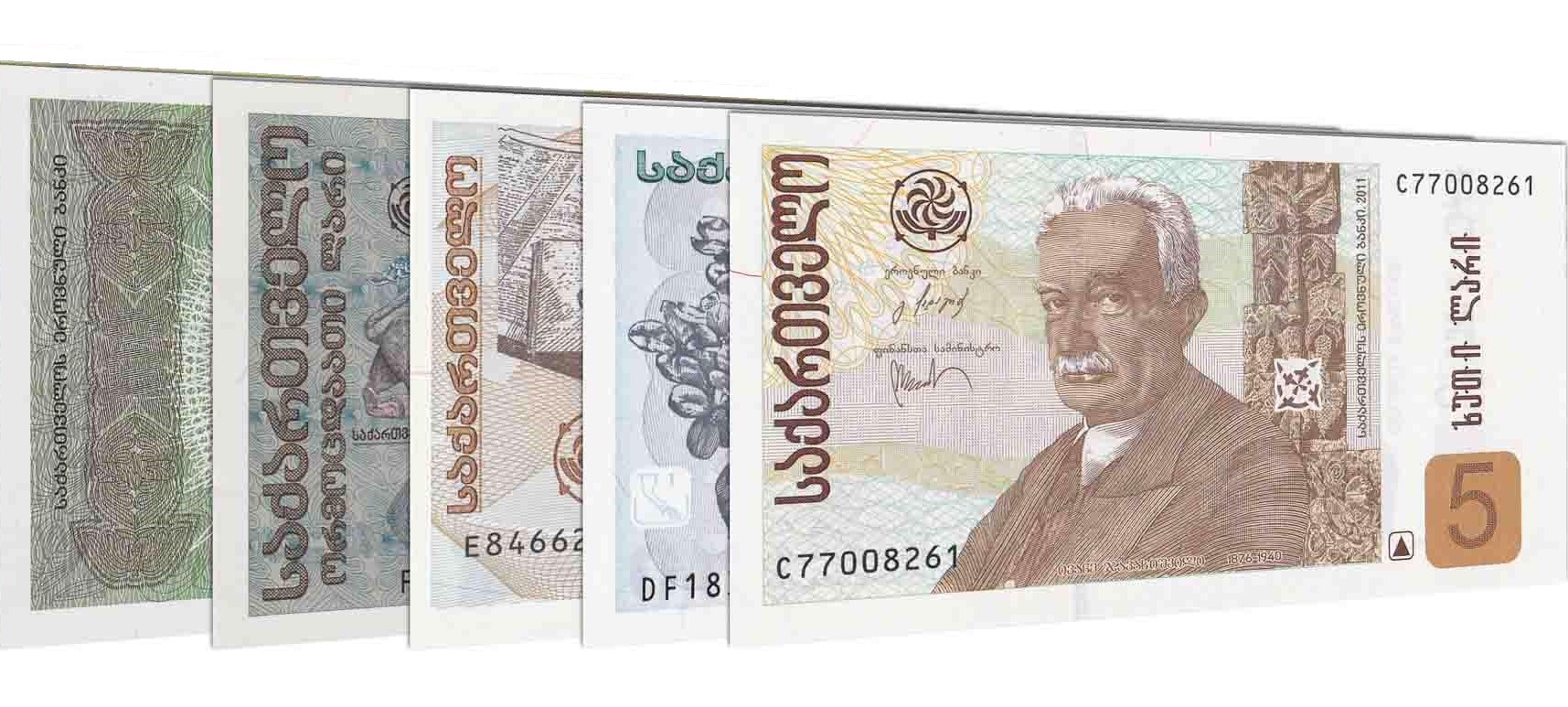
The value of the lari against other international currencies can fluctuate, so it is always advisable to check updated exchange rates before travelling to Georgia.
The Georgian flag: symbolism and history
The Georgian flag is a powerful symbol of national identity, reflecting the country's rich and complex history. The current flag, adopted in 2004, is known as the "Five Cross Flag".
Description of the flag
- White background with a large central red cross
- Four smaller red crosses in each quadrant
Symbolism
The central cross represents Christianity, the predominant religion in Georgia. The four smaller crosses symbolise the five wounds of Christ or the four Evangelists. The design also evokes the Crusader flag and the ancient banner of the Kingdom of Georgia.

It is worth noting that this flag is a modified version of a medieval Georgian banner, demonstrating the country's deep connection to its past.
Tourist attractions in Georgia: a treasure trove of sights
Despite its relatively modest size, Georgia offers an impressive variety of tourist attractions. From ancient cities to breathtaking natural scenery, the country has something for every type of traveller.
Top places to visit in Georgia
-
Tbilisi
Georgia's capital is a fascinating blend of old and new. Do not miss:
- The Old Town with its traditional houses and sulphur baths
- Narikala Fortress, offering panoramic views over the city
- Rustaveli Avenue, the beating heart of cultural and commercial life
-
Mtskheta
The ancient capital and spiritual heart of Georgia, Mtskheta is a UNESCO World Heritage Site. Must-sees include:
- Svetitskhoveli Cathedral, one of the largest Orthodox churches in the world
- Jvari Monastery, with views over the confluence of the Mtkvari and Aragvi rivers
-
Kazbegi (Stepantsminda)
A picturesque village in the Caucasus mountains, famous for:
- Gergeti Trinity Church, with Mount Kazbek as its dramatic backdrop
- Spectacular hiking trails and sweeping mountain panoramas
These are just a few of the many attractions Georgia has to offer. The country is also renowned for its wine regions, Black Sea beaches, ski resorts, and much more.
History of Georgia: a journey through the centuries
Georgia's history is as rich and complex as its geography. This ancient country's past stretches back thousands of years, shaped by a succession of civilisations and empires.
Key historical periods
- Antiquity (6th century BC – 4th century AD): the first Georgian kingdoms, Colchis and Iberia, are established. Georgia adopts Christianity as its official religion in 337 AD, becoming one of the first countries to do so.
- Golden Age (11th–13th centuries): under the reign of Queen Tamar, Georgia reaches its political and cultural zenith, expanding its territory and influence.
- Period of fragmentation (13th–18th centuries): Mongol invasions and conflicts with neighbouring empires lead to the fragmentation of the Georgian kingdom.
- Russian protectorate and Soviet era (1801–1991): Georgia is incorporated into the Russian Empire and later becomes part of the Soviet Union.
- Modern independence (1991–present): following the dissolution of the USSR, Georgia declares independence and begins its journey as a modern nation.
This rich history has profoundly shaped Georgia's culture, architecture, and traditions, making it a fascinating destination for history lovers.
Georgian culture and traditions
Georgian culture is a unique blend of ancient and modern influences, reflecting its position at the crossroads of Europe and Asia.
Cultural highlights
- Hospitality: Georgians are renowned for their warm hospitality. A popular saying goes: "A guest is a gift from God".
- Supra: the traditional Georgian feast, known as supra, is a cornerstone of social life, presided over by a tamada (toastmaster) who leads elaborate toasts.
- Music and dance: Georgian polyphonic singing is recognised by UNESCO as Intangible Cultural Heritage. Traditional Georgian dances are celebrated worldwide for their energy and precision.
- Wine: Georgia is considered the cradle of wine, with an 8,000-year-old winemaking tradition. The traditional method of fermenting wine in qvevri (buried clay vessels) is unique in the world and recognised as UNESCO Intangible Heritage.
Georgian cuisine: a feast for the senses
Georgian cooking reflects the country's rich history and unique geographical position. It is known for its bold flavours, generous use of herbs and spices, and distinctive dishes you will not find anywhere else in the world.
Traditional Georgian dishes
- Khachapuri: cheese-filled bread with several regional variations. The adjaruli khachapuri, boat-shaped and topped with a raw egg, is especially iconic.
- Khinkali: dumplings stuffed with spiced meat — typically pork and beef — served with freshly ground black pepper.
- Mtsvadi: grilled meat skewers, traditionally made with pork, though lamb and beef versions are also popular.
- Badrijani Nigvzit: fried aubergine rolls filled with a walnut and spice paste.
Georgian cuisine is an essential part of the country's cultural experience, and exploring these unique flavours is a delicious way to connect with Georgia's history and traditions.
Georgia's economy: a country in transformation
Georgia's economy has undergone significant transformation since the country's independence in 1991. After an initially difficult period, the country implemented sweeping economic reforms that drove substantial growth.
Key economic sectors
- Tourism: one of the fastest-growing sectors, attracting visitors with its rich history, culture, and natural beauty.
- Agriculture: Georgia is known for its production of wine, citrus fruits, tea, and hazelnuts.
- Hydroelectric power: the country has significant hydroelectric potential thanks to its mountainous terrain.
- Transport: Georgia's strategic location makes it an important transport corridor between Europe and Asia.
In recent years, Georgia has worked to diversify its economy and attract foreign investment, implementing reforms to improve the business environment and reduce bureaucracy.
Nature and geography of Georgia: a remarkable diversity
Georgia is a country of striking geographical contrasts, offering a wide variety of landscapes within a relatively small territory. This diversity not only adds to the country's beauty, but also significantly influences its climate, biodiversity, and even its culture.
Key geographical features
- Caucasus mountains: the Caucasus range dominates northern Georgia, with peaks exceeding 5,000 metres. Mount Shkhara, at 5,193 metres, is the country's highest point.
- Black Sea coast: to the west, Georgia has 310 km of Black Sea coastline, characterised by pebble beaches and lush subtropical vegetation.
- Eastern plains: Georgia's eastern lowlands are drier and well suited to agriculture, particularly wine production in the Kakheti region.
- Prometheus Cave: located in western Georgia, these karst caves are one of the country's natural wonders, with impressive stalactite and stalagmite formations.
Climate
Thanks to its diverse geography, Georgia has several microclimates:
- The coastal region enjoys a humid subtropical climate, with mild winters and warm summers.
- Mountain areas have cool summers and cold, snowy winters, ideal for winter sports.
- The east of the country has a more continental climate, with hot summers and moderately cold winters.
Georgian art and literature: a centuries-old cultural heritage
Georgia has a long and rich artistic and literary tradition that reflects its complex history and unique position at the crossroads of Europe and Asia.
Art
- Architecture: Georgian architecture is distinguished by its medieval churches and monasteries, many of them UNESCO World Heritage Sites. The Georgian architectural style is characterised by stone structures with tall domes and intricate decorations.
- Painting: Georgian painting has ancient roots, with medieval frescoes preserved in numerous churches. In the 20th century, artists such as Niko Pirosmani gained international recognition for their unique naïve style.
- Sculpture: Georgian sculpture dates back to antiquity, with notable examples of metalwork and stonework. The contemporary sculptures of Zurab Tsereteli are internationally recognised.
Literature
Georgian literature has a history reaching back to the 5th century AD. Some key milestones:
- "The Knight in the Panther's Skin": this 12th-century epic poem by Shota Rustaveli is considered the masterpiece of Georgian literature.
- Modern literature: in the 20th century, writers such as Galaktion Tabidze, Konstantine Gamsakhurdia, and Nodar Dumbadze gained recognition for works capturing the complexities of life in Soviet and post-Soviet Georgia.
Sports in Georgia: passion and tradition
Sports play an important role in Georgian culture, with the country achieving notable success in various disciplines at international level.
Popular sports
- Football: the most popular sport in Georgia. The national team has shown significant progress in recent years, qualifying for the European Championship for the first time in 2024.
- Rugby: rugby is enormously popular in Georgia. The national team, known as "The Lelos", is one of the strongest outside the traditional rugby nations.
- Wrestling: Georgia has a strong tradition in wrestling, having won several Olympic medals in the discipline.
- Chess: although not a physical sport, chess is very popular in Georgia. The country has produced several grandmasters, including world champions in the women's category.
Education in Georgia: a commitment to knowledge
Georgia has a long tradition of valuing education, with a system that has undergone significant reforms since independence.
The education system
- Basic education: education is compulsory from age 6 to 16. The system includes primary education (6 years) and lower secondary education (3 years).
- Higher education: Georgia has several recognised universities, including Tbilisi State University, founded in 1918 and considered one of the leading higher education institutions in the Caucasus.
- Recent reforms: in recent years, Georgia has implemented reforms to align its education system with European standards, including the adoption of the Bologna Process in higher education.
Education in Georgia faces ongoing challenges, but the country continues to invest in improvements, recognising the crucial role education plays in economic and social development.
Practical information for travelling to Georgia
If you are planning to travel to Georgia, here are some essential practical tips:
- Visa: citizens of the European Union and most Latin American countries can enter Georgia without a visa for stays of up to one year.
- Travel insurance: from 1 January 2026, all foreign nationals entering Georgia are required to have mandatory health and accident insurance.
- Language: the official language is Georgian, although English is spoken in tourist areas and Russian is understood in many regions.
- Safety: Georgia is considered a safe country for tourists. Walking around Tbilisi at night is perfectly comfortable.
- Best time to visit: May to October is the ideal season, with summer being perfect for hiking in the Caucasus and relaxing on the Black Sea beaches.
Georgia is waiting to welcome you with open arms. Are you ready to discover this fascinating Caucasus country?