

What is Georgia like? This question has many answers, because we are talking about one of the most fascinating and surprising countries on the planet. Situated between Eastern Europe and Western Asia, Georgia brings together snow-capped mountains, Black Sea beaches, ancient vineyards, monasteries perched on cliff faces, and legendary hospitality.
Below we share 40 interesting facts to help you discover what Georgia is like through its geography, history, culture, wine, gastronomy, and tourism. An ideal guide both for planning your first trip and for going deeper into a destination that gets under your skin from the very first moment.
What Is Georgia's Geography Like?
1. Its Location
Georgia is located in the Caucasus, at the crossroads of Europe and Asia. It borders Russia to the north, Turkey and Armenia to the south, Azerbaijan to the east, and the Black Sea to the west. This strategic position has shaped its history across the centuries.
2. Georgia's Landscapes
With around 69,700 km², Georgia surprises with its diversity: snow-covered mountains, green valleys, dense forests, plains, and a subtropical coastline. Forests cover approximately 40% of its surface and are home to a rich fauna including bears, wolves, lynxes, and birds.
3. Tbilisi, the Capital
Tbilisi is the capital and largest city of Georgia, with over 1,500 years of history. It blends medieval neighborhoods, sulfurous baths, Art Nouveau architecture, and modern buildings, making it one of the most original capitals in Eurasia.
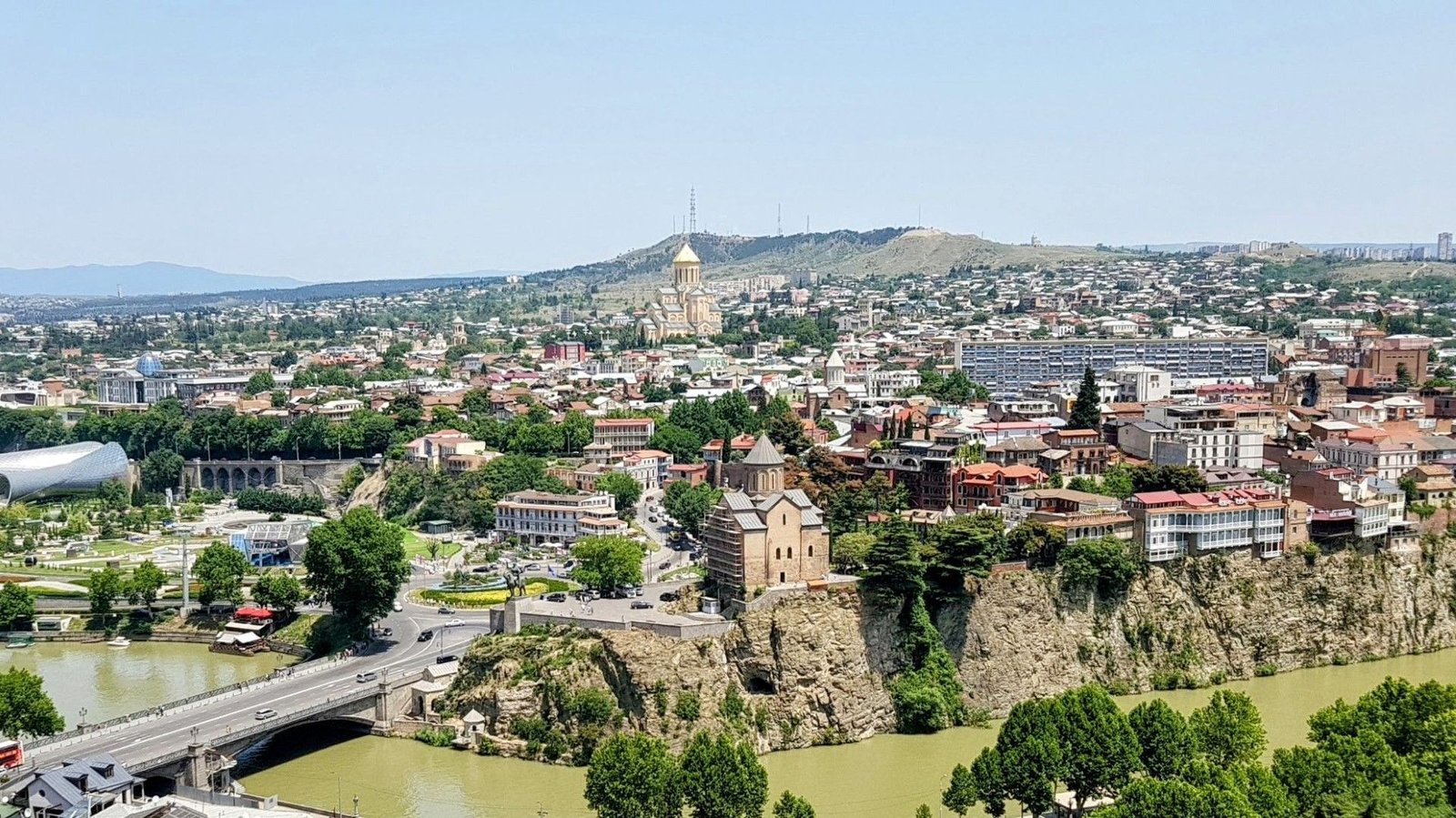 Tbilisi, the capital of Georgia.
4. The Kakheti Region
Kakheti, in the east of the country, is the main wine-growing region and the cradle of wine. Its highlights include the fortified town of Signagi and the cave monastery of Davit Gareja. Learn more in our Kakheti guide.
5. Georgia's Climate
Georgia offers climates for all tastes: subtropical on the Black Sea coast, continental inland, alpine in the high mountains, and semi-arid in Kakheti. Every season has its own magic.
6. The Svaneti Region
Svaneti is one of the most magical regions of the Caucasus: villages with UNESCO-listed medieval defensive towers, peaks over 5,000 meters, and a centuries-old Svan culture.
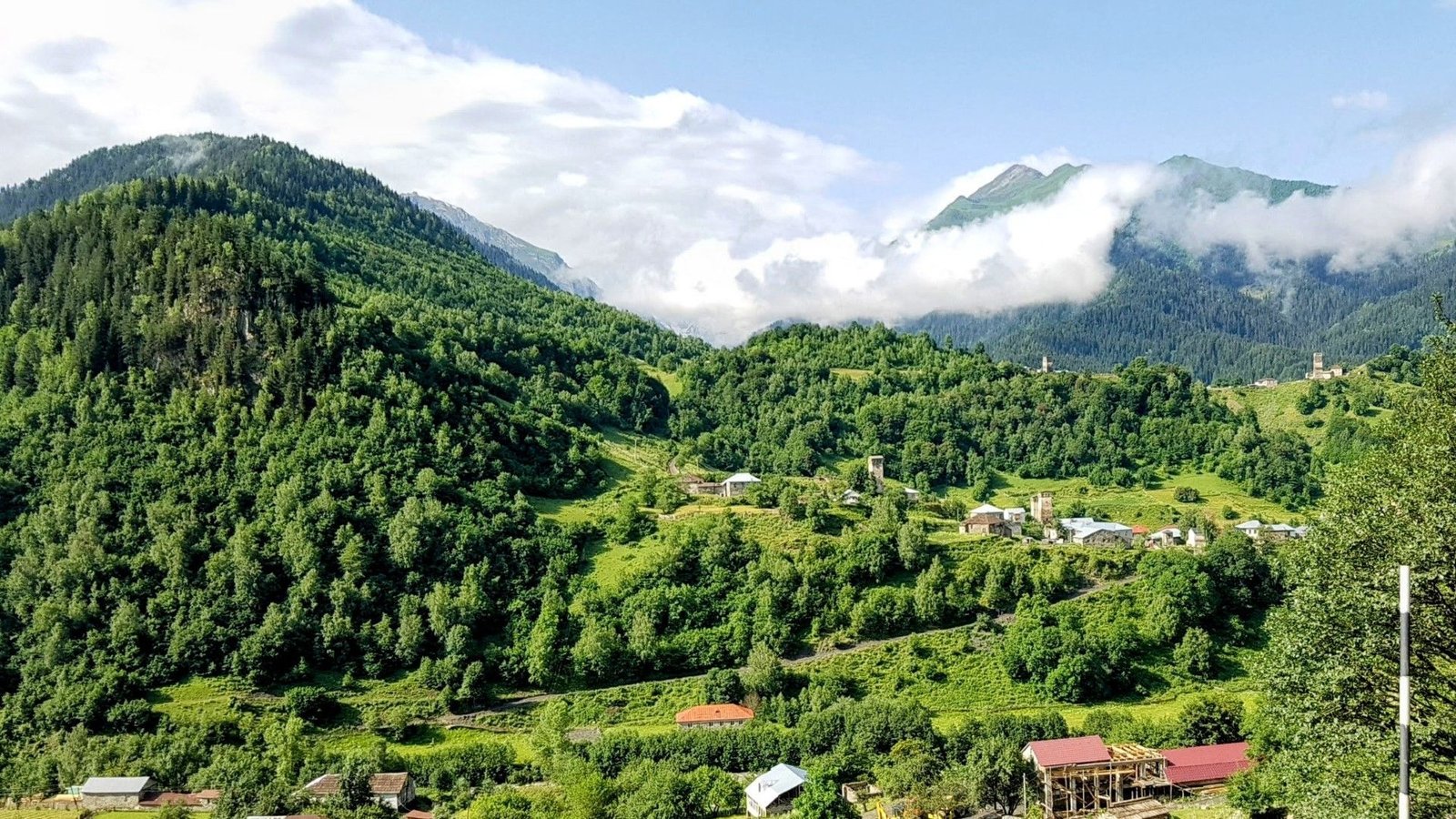 Svaneti, in the heart of the Greater Caucasus.
7. Strategic Position
Georgia is a crossroads between the Black Sea and the Caspian Sea, and a bridge between Europe and Asia. Important energy and trade corridors pass through its territory. In antiquity it was a key stop on the Silk Road.
8. A Spectacular Relief
The Greater Caucasus runs across the country from west to east, with summits such as Mount Shkhara (5,193 m, the highest peak in Georgia). There are deep gorges, canyons like Okatse or Martvili, and powerful rivers such as the Mtkvari, the Rioni, and the Alazani.
9. Flora and Fauna
Georgia is home to exceptional biodiversity: brown bears, wolves, lynxes, Caucasian ibex, and golden eagles coexist with forests of beech, oak, chestnut, and cedar.
10. National Parks and Nature Reserves
Borjomi-Kharagauli National Park, one of the largest in Europe, and the parks of Kazbegi, Vashlovani, Mtirala, and Tusheti protect much of this natural heritage.
What Is the Georgian Language Like?
11. Georgian, the Official Language
Georgian (kartuli) is the official language and belongs to the Kartvelian family, not Indo-European. It is spoken by around 4 million people worldwide.
12. A Unique Alphabet
Georgia has one of the 14 alphabets still in active use in the world today, with 33 letters. The mkhedruli, the most widely used form today, was inscribed by UNESCO as Intangible Cultural Heritage in 2016.
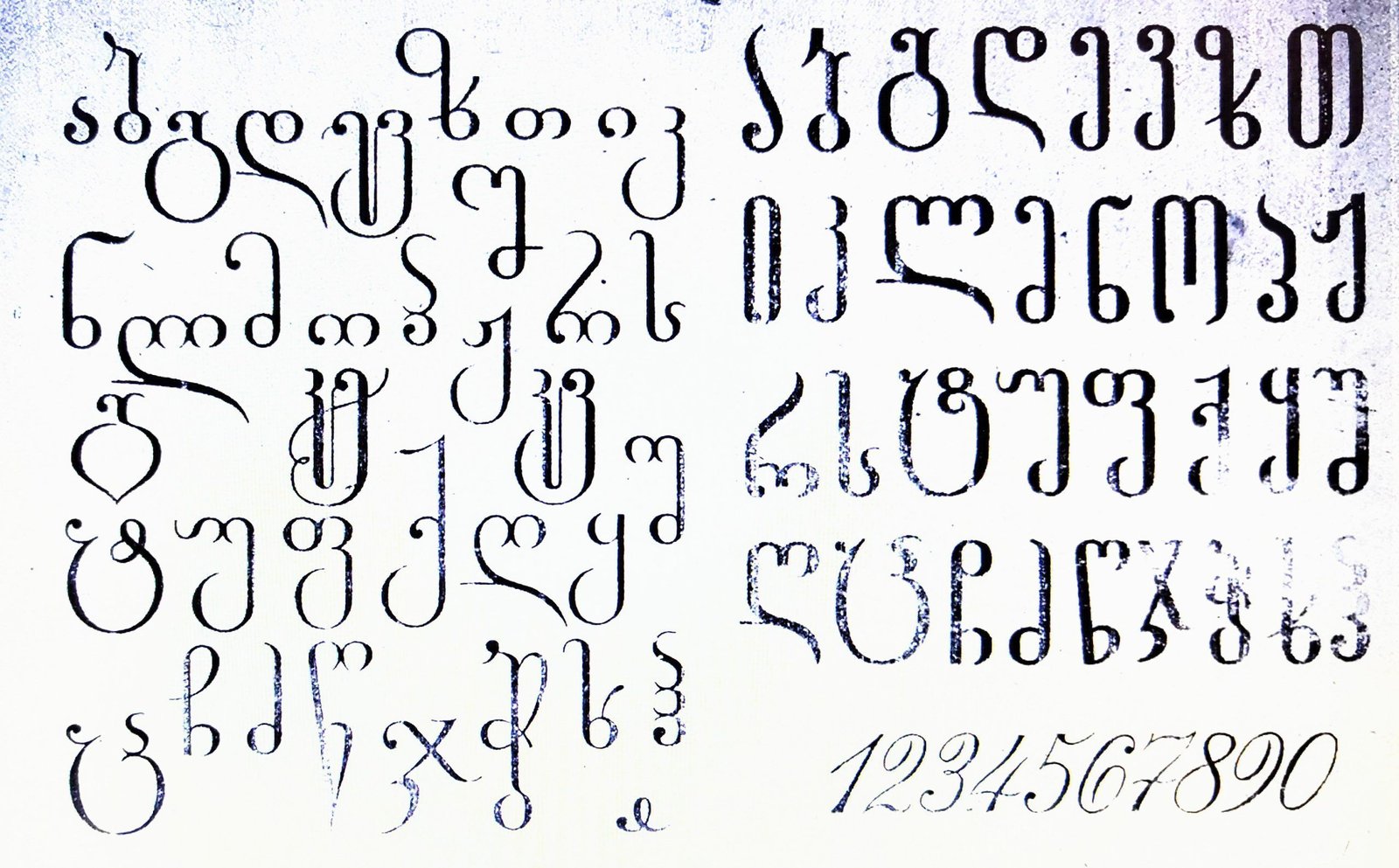 The Georgian alphabet.
13. Great Georgian Poets
Georgia is a land of poets. Shota Rustaveli, author of The Knight in the Panther's Skin (12th century), is the national literary symbol. Other great names include Galaktion Tabidze and Akaki Tsereteli.
14. Learn More About the Alphabet
If this script fascinates you, don't miss our dedicated article on the Georgian alphabet.
15. A Language with Personality
Georgian has no grammatical gender, features a rich phonology, and combines consonants in unusual clusters. A language as musical as it is ancient.
16. Languages and Dialects
Armenian, Azerbaijani, and Russian are also spoken in Georgia, alongside local languages such as Mingrelian, Laz, and Svan.
What Is Georgia's Political System Like?
17. Parliamentary System
Georgia is a parliamentary republic. The Prime Minister leads the government and the unicameral parliament has 150 seats.
18. From Soviet Past to a European Future
Georgia regained its independence in 1991, following the collapse of the USSR. Since then it has followed a path of democratic reforms and modernization. In December 2023 it received the status of EU candidate country.
19. Member of International Organizations
Georgia is a member of the UN, the Council of Europe, the OSCE, and the WTO, and maintains a clear pro-European and pro-Western profile.
What Is Georgian Wine Like?
20. The Birthplace of Wine
Georgia is considered the birthplace of wine, with a winemaking tradition spanning more than 8,000 years, recognized by UNESCO as Intangible Cultural Heritage.
21. Kakheti Wine
Kakheti is home to the majority of wineries. Here, unique wines are produced from indigenous grape varieties such as Saperavi, Rkatsiteli, and Kisi.
22. Wine Tourism in Georgia
Wine routes combine tastings, visits to family wineries, local gastronomy, and vineyard landscapes with the Caucasus as a backdrop. An unforgettable experience.
23. Wines in Kvevri Clay Vessels
The traditional Georgian method ferments wine in large clay amphorae called kvevri, buried underground. This process produces amber and red wines with a unique character.
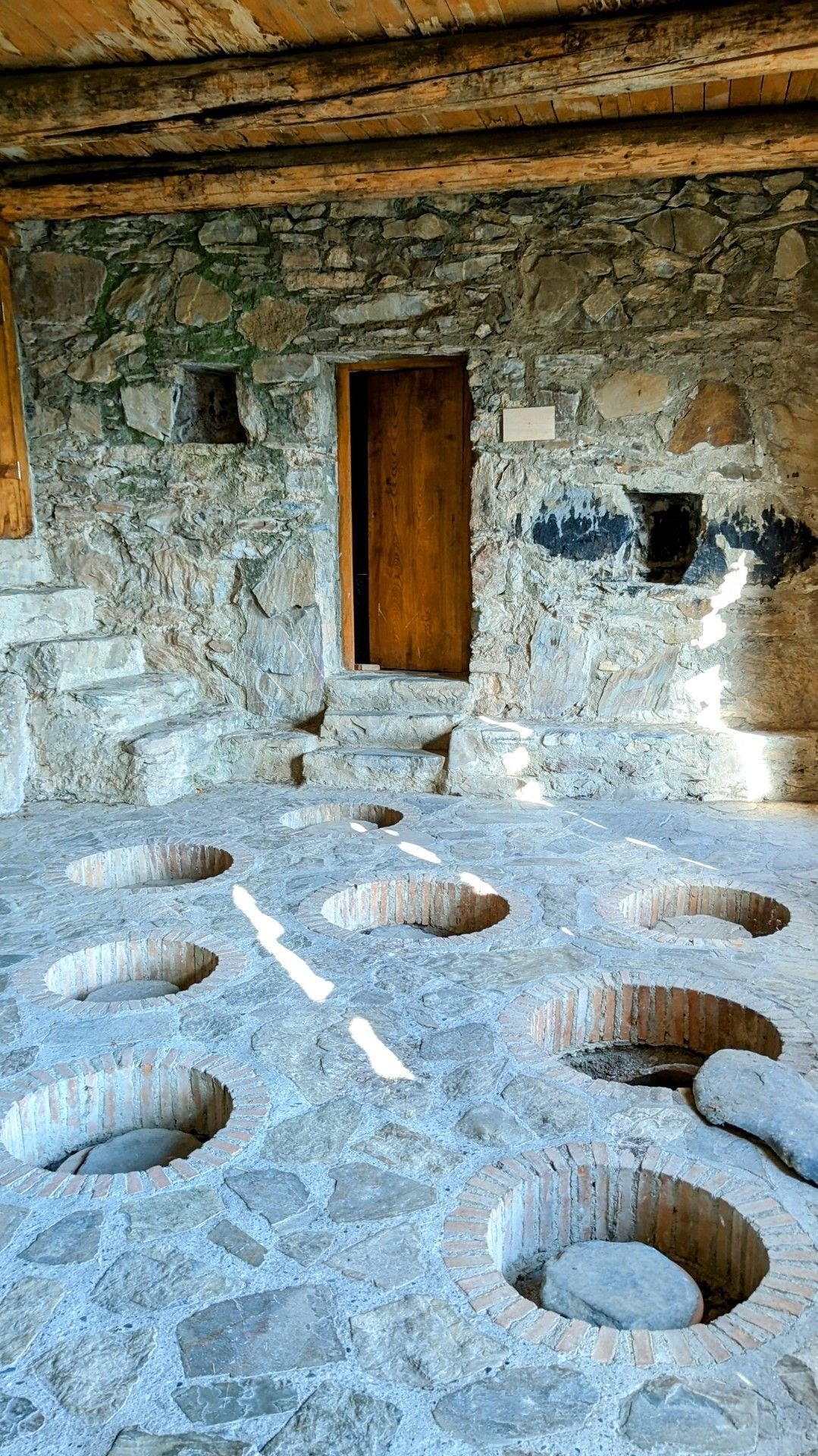 The kvevri: an age-old tradition.
24. Chacha, the National Spirit
In addition to wine, Georgia produces chacha, a powerful grape pomace brandy, perfect as an aperitif or digestif.
What Is Georgian Gastronomy Like?
25. A Cuisine with Character
Georgian cuisine combines Persian, Turkish, Arab, Mediterranean, and Slavic influences into a unique and delicious result.
26. Signature Dishes
- Khachapuri: cheese-filled bread in various regional versions.
- Khinkali: dumplings filled with meat or mushrooms, with a rich broth base.
- Mtsvadi: grilled skewers over grapevine embers.
- Pkhali: vegetable paté with walnuts, spices, and pomegranate.
27. The Georgian Supra
The supra is far more than a meal: it is a ritual feast presided over by a host (tamada) who leads heartfelt toasts. Experiencing it at least once is a must.
What Is Tourism in Georgia Like?
28. A Safe Country
Georgia is considered one of the safest countries in the Caucasus and Eastern Europe, with low crime rates and a growing tourist infrastructure.
29. The Lari, the Local Currency
The official currency is the Georgian lari (GEL, ₾), divided into 100 tetri. Cards are accepted almost everywhere in cities, but it's worth carrying cash in rural areas.
30. The Caucasus Mountains
The mountains are one of the country's great tourist attractions. Discover more in our article on the mountains of the Caucasus.
31. Adventure Tourism
Trekking, climbing, skiing, rafting, paragliding, and much more. Resorts such as Gudauri and Bakuriani attract skiers from across Europe.
32. Mount Kazbegi
Rising to 5,047 meters, Kazbegi dominates one of the country's most iconic landscapes. At its foot stands the Gergeti Trinity Church, one of the most photographed temples in the Caucasus.
33. The Georgian Military Highway
This historic route connects Tbilisi with the Russian border through epic landscapes, the Ananuri fortress, and the village of Stepantsminda.
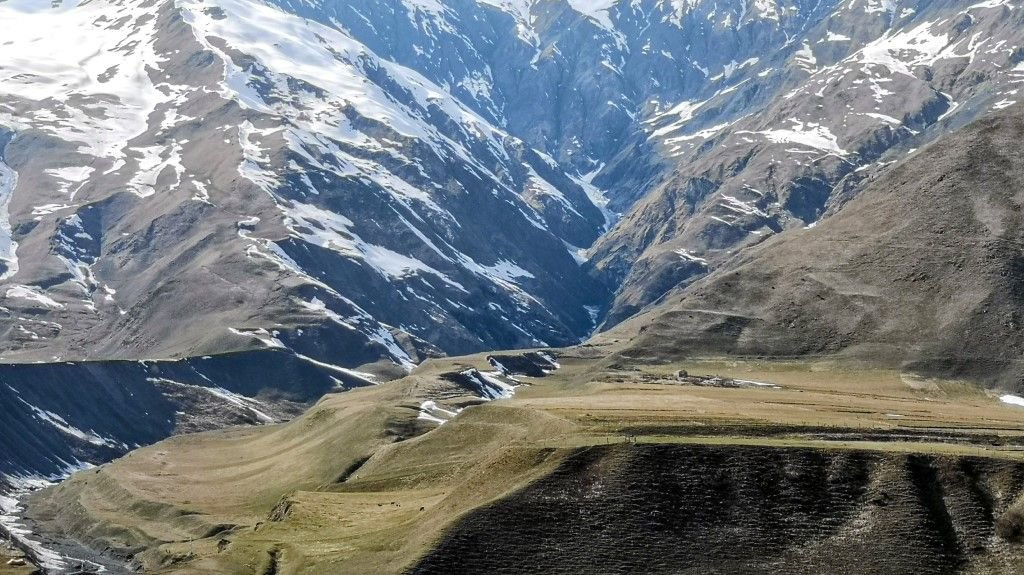 Views from the Georgian Military Highway.
34. Mountain Villages
Khevsureti, Tusheti, Svaneti, and Racha hide some of the most authentic mountain villages in Europe, with traditional architecture and unforgettable hospitality.
35. International Festivals
Georgia comes alive with cultural events such as the Tbilisi International Film Festival, the Black Sea Jazz Festival in Batumi, and GEM Fest, attracting artists and audiences from around the world.
36. Batumi, the Pearl of the Black Sea
Batumi combines beaches, modern architecture, botanical gardens, and a vibrant nightlife. Discover more in our Batumi guide.
37. The Sulfurous Baths of Tbilisi
In the Abanotubani district, the sulfurous baths are a centuries-old experience, with mineral-rich thermal waters that were already enchanting travelers in the 13th century. More details in this article.
What Is Religion in Georgia Like?
38. One of the First Christian Nations
Georgia adopted Christianity as its official religion in 337 AD, making it one of the first countries to do so. The Georgian Orthodox Church is today a central institution in national identity.
39. Gelati Monastery
Founded by King David IV the Builder in the 12th century, Gelati Monastery (near Kutaisi) is a UNESCO World Heritage Site. Its mosaics and frescoes are a masterpiece of medieval Georgian art. Read more in our Gelati guide.
40. Svetitskhoveli Cathedral
In Mtskheta, the ancient religious capital and UNESCO Heritage Site, stands Svetitskhoveli Cathedral. According to tradition, a relic of Christ's robe rests there, making it one of the holiest sites in Georgia.
Ready to Discover What Georgia Is Like in Person?
These 40 facts are just a taste. Georgia is best discovered by walking its valleys, dining with a rural family, or raising a glass of saperavi. If you want to live that experience with a specialist Spanish-speaking tour operator, Iberogeorgia is your ideal travel companion. Plan your trip to Georgia with us and get ready to fall in love with the Caucasus.