

In Georgia's capital, cultures, languages and centuries of history intersect, and that intersection is felt even in the city's name. Tibilisi, Tiflis or Tbilisi are the three forms used by travellers from around the world to refer to the same enchanting, warm and lively city. In this guide we tell you where each name comes from, why they coexist and what lies behind one of the most surprising capitals in the Caucasus.
Tibilisi and Its Historic Names: from Thermal Waters to the Present Day
Although the official form today is Tbilisi, many people in the Spanish-speaking world still search for the city as Tibilisi or remember it by its old Russian name, Tiflis. All three variants are valid, and all point to the same place: a settlement bathed by the Kura River, watched over by mountains and famous since Antiquity for its sulphurous baths.
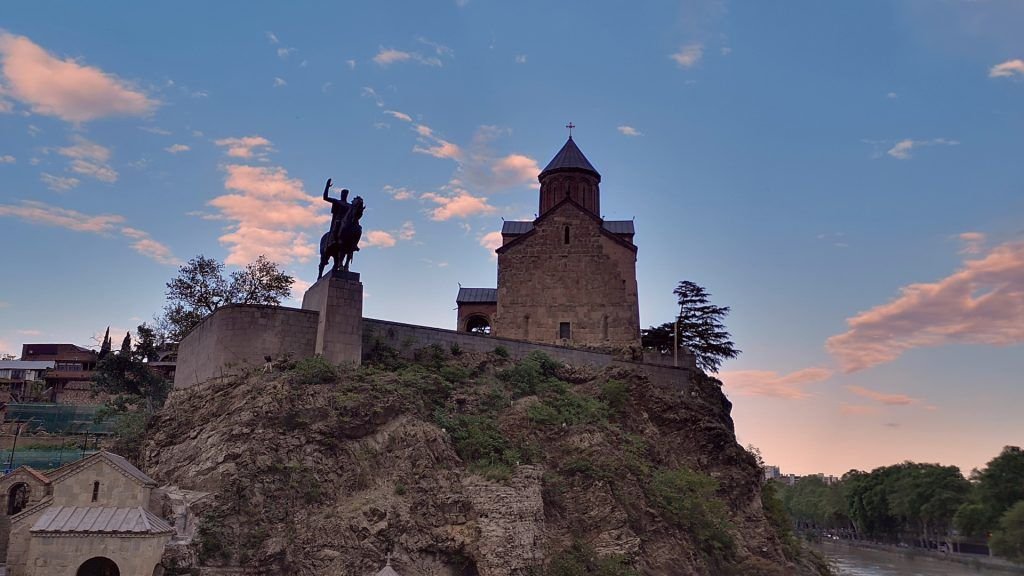
The original name derives from the Old Georgian word tbili, meaning "warm", a direct reference to the thermal waters that rise from the subsoil. That geothermal connection has shaped the city's identity since its foundation, in the 5th century, when King Vakhtang Gorgasali decided to move the capital of the Kingdom of Iberia here after discovering the steaming springs.
The Origin of the Name: a "Warm" City
Legend has it that Gorgasali was hunting in these forests when his falcon fell upon a warm spring. Impressed by the discovery, the monarch ordered a city to be built by those waters, naming it "warm place". This is where Tbilisi (and its variants Tibilisi and Tiflis) comes from — a name that encapsulates hospitality, nature and life.
In subsequent centuries, the Russian form Tiflis spread across Europe as a result of 19th-century Russian imperial rule. It was not until 1936 that the modern transliteration Tbilisi was officially adopted, more faithfully reflecting Georgian phonetics.
Avlabari, Tpilisi and Other Medieval Names
Before becoming established as the capital, the city was known by various place names in medieval documents. Avlabari, today a historic neighbourhood to the east of the river, was for a long time synonymous with the original core. In ancient chronicles it also appears as Tpilisi, a spelling close to the archaic pronunciation.

Each of these names is a time capsule: it speaks of kings, invasions, merchants and pilgrims who passed through Georgia's capital along the ancient Silk Road. Walking through Avlabari today, with its Orthodox churches and wooden houses, is travelling to the heart of the medieval city.
Cultural and Linguistic Influences on Tbilisi
Tbilisi has been a crossroads for Persians, Byzantines, Arabs, Mongols, Ottomans and Russians. That blend is reflected in its architecture, its cuisine and, of course, in the multiple names by which it has been known. In Russian the form Тифлис (Tiflis) persists, in English Tbilisi became the standard, and in Spanish Tbilisi, Tiflis and Tibilisi all coexist naturally.
The Names of Tbilisi in Different Languages
- Georgian: თბილისი (Tbilisi).
- Spanish: Tbilisi, Tiflis or Tibilisi.
- English and French: Tbilisi.
- Russian: Тифлис / Тбилиси.
- German and Italian: Tiflis / Tbilissi.
This linguistic plurality is no coincidence: it is the trace left by the city's role as a bridge between Europe and Asia, between the Orthodox Christian world and the Muslim world, between millennia-old tradition and the boldest modernity.
Discovering Tbilisi Beyond Its Name
Beyond etymological curiosity, what makes Tbilisi an unmissable destination is its atmosphere. Strolling through the old town means getting lost among balconies of carved wood, 6th-century churches, contemporary art galleries and terraces overlooking the Kura River. Every corner has a story; every courtyard, a surprise.
Georgia's capital is also a feast for the palate: this is where khinkali, khachapuri and some of the world's oldest wines are born, made in qvevri amphorae for over 8,000 years. Its nightlife, led by legendary clubs like Bassiani, already draws travellers from across Europe.
Architecture Between East and West
The architecture of Tbilisi is an open-air museum: Ottoman houses with carved balconies, Byzantine churches, Tsarist neoclassical buildings, art nouveau constructions and bold contemporary works like the Bridge of Peace or the Rhike Concert Hall. Everything coexists within just a few square kilometres, creating an urban landscape unique in the world.
Panoramic Views: the Beauty of Tbilisi from Above
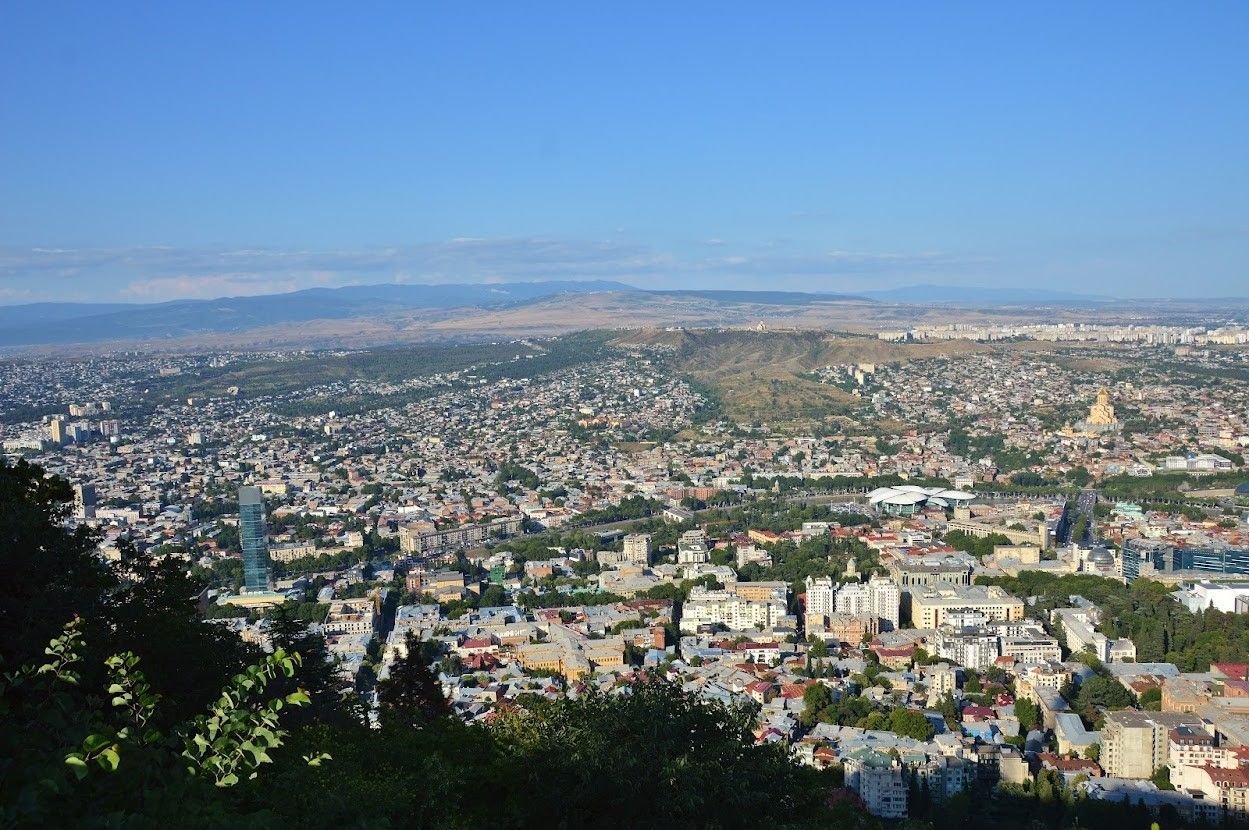
To truly understand the city, you need to go up. Narikala Fortress, the cable car that crosses the river to the Kartlis Deda statue, or Mtatsminda Park offer some of the best panoramic views of the urban Caucasus. From there you can take in the embrace of the mountains, the red rooftops of the old Abanotubani neighbourhood and the golden gleam of the Orthodox domes at sunset.
Want to Travel to Tbilisi? Iberogeorgia is Your Best Ally
If you're looking for an authentic, safe and characterful destination, travelling to Tbilisi with Iberogeorgia is a sure bet. We design tailor-made routes to explore Georgia's capital and its surroundings: old town tours, wine tastings in Kakheti, mountain escapes in the Caucasus and gastronomic experiences with local families.
Whether you call it Tbilisi, Tiflis or Tibilisi, one thing is certain: this warm city — by name and by soul — is going to win you over. Are you planning your next adventure in the Caucasus? Contact us and start dreaming about your trip to Georgia.