

Introduction: Joseph Stalin, a key figure of the 20th century
Joseph Stalin was one of the most important and influential political figures of the 20th century. During his time at the helm of the Soviet Union, he transformed the country into an industrial and military superpower, but at an immense human cost. His legacy remains a subject of debate and controversy to this day.
In this article we explore Stalin's life, his rise to power, the policies he implemented, the purges and repression that characterised his rule, and his role in World War II. We also reflect on his impact on international politics and his legacy in the post-Stalin era. In addition, we look at how this figure, born in Gori, Georgia, remains present in the country's tourist heritage.
Historical context
To understand Stalin and his impact on world history, it is essential to place him in context. Stalin came to power in the Soviet Union in the 1920s, at a time of political and social instability. The Russian Revolution of 1917 had overthrown the tsarist government and established the world's first socialist state, but the country was still in economic crisis and facing a civil war. In this context, the Communist Party emerged as the dominant political force and Stalin became one of its most influential leaders.
During the 1930s, the Soviet Union was transformed into an industrial and military power, but also went through a period of repression and terror known as the 'Stalinist purges'. In the 1940s, World War II broke out and the USSR became one of the principal Allied powers in the fight against the Axis. Stalin led the country to victory, but also marked the beginning of the Cold War and the division of the world into two blocs.
Early years and Georgian origins
Stalin's early years were marked by poverty, violence and instability. He was born as Ioseb Jughashvili on 18 December 1878 in Gori, Georgia, then part of the Russian Empire. His father, Vissarion Jughashvili, was a shoemaker and an alcoholic who frequently mistreated his family. His mother, Ekaterine Geladze, was a homemaker who struggled to provide for them.
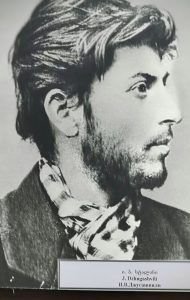 Young Stalin, aged 23
During his childhood, Stalin suffered the hardships of poverty and domestic violence. An illness at the age of ten left him with a permanent injury to his left arm, earning him the nickname 'the cripple' among his peers.
Despite these obstacles, Stalin proved to be a brilliant student. At 16 he received a scholarship to study at the Tbilisi Theological Seminary, where he began training for the Orthodox priesthood. It was there that he first encountered Marxism, which questioned the social structures of the Russian Empire and promoted the proletarian revolution.
Entry into revolutionary politics
In 1899, Stalin joined the Georgian Social Democratic Party, a Marxist organisation that sought the country's independence and the creation of a socialist society. From that point on, he became a political activist and revolutionary. He was arrested several times by the Russian authorities and spent years in prison or in Siberian exile, but nothing deterred him.
In 1912, the Georgian Social Democratic Party merged with the Russian Social Democratic Labour Party (Bolshevik), the forerunner of the Communist Party of the Soviet Union. Stalin became one of its key leaders.
Participation in the Russian Revolution
During World War I, Stalin opposed Russia's participation in the conflict and championed the proletarian revolution as the only way to end the war. In 1917 he played a crucial role in the October Revolution, which overthrew the provisional government and brought the Communist Party to power.
Between 1902 and 1913, Stalin was arrested seven times, testing his commitment to the Bolshevik cause. During the 1917 revolution he was a key member of the Central Committee and the Petrograd Soviet, and played a decisive role in the planning and execution of the seizure of power.
Stalin in power
Rise to power
Stalin's rise to power was a long and complex process. In 1922 he was appointed General Secretary of the Communist Party, a position that gave him unprecedented control over the politics and administration of the country. Following Lenin's death in 1924, Stalin had to contest the leadership with other Party leaders such as Leon Trotsky and Nikolai Bukharin. His rivalry with Trotsky was especially intense and culminated in Trotsky's expulsion from the Communist Party in 1927.
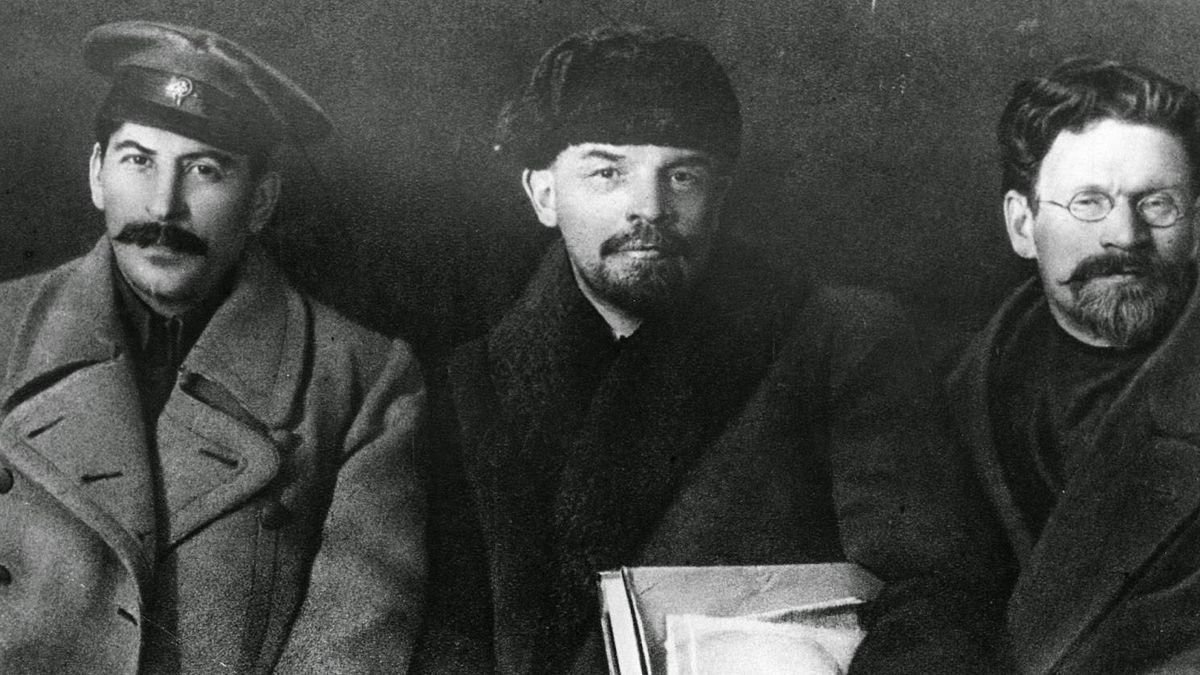 Lenin, Trotsky and Stalin
After Trotsky's elimination, Stalin consolidated his power within the Communist Party through purges and executions, removing any real or potential opposition.
Economic policies
Stalin implemented a series of radical economic policies aimed at modernising and transforming the Soviet economy into an industrial power: agricultural collectivisation, rapid industrialisation and centralised planning.
The forced collectivisation of agriculture sought to transform small private holdings into large state cooperatives. Although it increased production, it also provoked peasant resistance and mass famines in some regions, especially in Ukraine (the Holodomor).
The rapid industrialisation transformed the USSR from an agrarian economy into an industrial power. Stalin drove the construction of factories and investment in infrastructure, achieving accelerated industrial growth but at a high human and environmental cost.
Centralised planning and state control
Stalin established a planning system based on five-year objectives. The State controlled all economic sectors and supervised the production and distribution of goods. Total control also extended to politics, culture and the personal lives of citizens, through an ideological system that sought to shape mindsets and actions.
While these policies enabled rapid modernisation, they also led to inefficiencies, corruption and a severe curtailment of individual freedoms.
Repression and the Stalinist purges
One of the darkest aspects of Stalin's rule was political repression. Stalin used terror as a tool to consolidate his power and eliminate any real or imagined threat.
The Great Purges of the 1930s consisted of the systematic elimination of anyone considered an enemy of the State: former revolutionary comrades, intellectuals, military figures and ordinary citizens. The accused were arrested without clear evidence, forced to confess under torture and summarily executed or sent to the Gulag camps, where many died from the terrible conditions.
The Stalinist terror
The terror was implemented at several levels: political purges, population control through the secret police (NKVD) and the forced labour camps of the Gulag. Surveillance institutions were created that reported any activity deemed dangerous to the regime.
The impact on Soviet society was profound: a climate of constant fear, self-censorship and lack of freedom of expression that persisted for decades after Stalin's death.
Number of victims
The exact number of victims of Stalin's regime is difficult to determine. The most widely accepted academic estimates place the figure between 6 and 20 million people [VERIFY], including deaths from induced famines, political executions and deaths in the Gulags.
Stalin in World War II
Stalin's role in World War II was crucial to the Allied victory over Nazi Germany. Despite the USSR being initially caught off guard by the German invasion in 1941, Stalin firmly led the country's defence and oversaw the mobilisation of resources.
The Molotov–Ribbentrop Pact
In August 1939, Nazi Germany and the USSR signed the Molotov–Ribbentrop Pact, a non-aggression agreement containing a secret protocol dividing Eastern Europe into spheres of influence. The pact surprised the world, as Nazi and communist ideologies were considered irreconcilable. Hitler used it to attack Poland without fear of Soviet intervention, while Stalin used it to expand Soviet influence.
The German invasion of the Soviet Union
On 22 June 1941, Germany launched Operation Barbarossa, one of the greatest military operations in history. The attack caught the USSR off guard and caused colossal losses. However, Soviet resistance was fierce and changed the course of the war in Europe. It is estimated that more than 27 million Soviet citizens died during the conflict.
The Battle of Stalingrad
The Battle of Stalingrad (August 1942 – February 1943) was one of the bloodiest of the war and marked a turning point. German forces, led by Friedrich Paulus, were finally defeated following the Red Army's Operation Uranus. This victory demonstrated the determination of the Soviet people and decisively weakened the Third Reich.
The Tehran, Yalta and Potsdam Conferences
Tehran Conference (November–December 1943)
Held in Tehran, it brought together Churchill, Roosevelt and Stalin. War strategy and the future of Europe after the conflict were discussed.
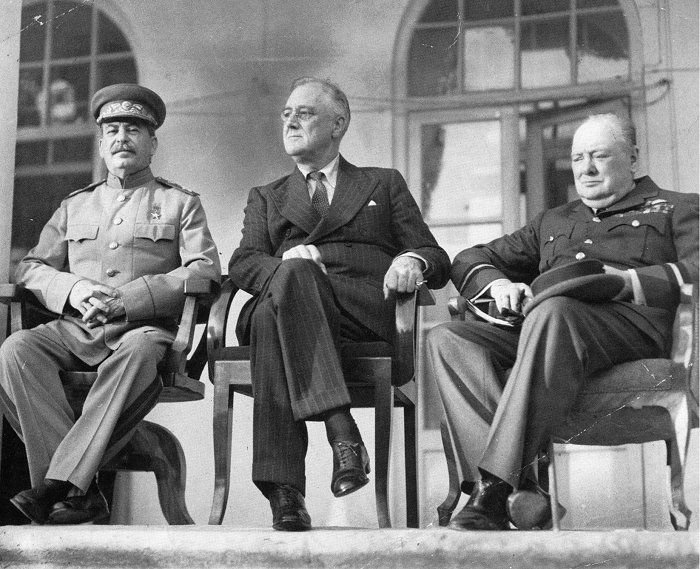 Tehran Conference
Yalta Conference (February 1945)
Held in Crimea, the Big Three agreed on the establishment of the United Nations, Soviet participation in the war against Japan and the shape of post-war Europe.
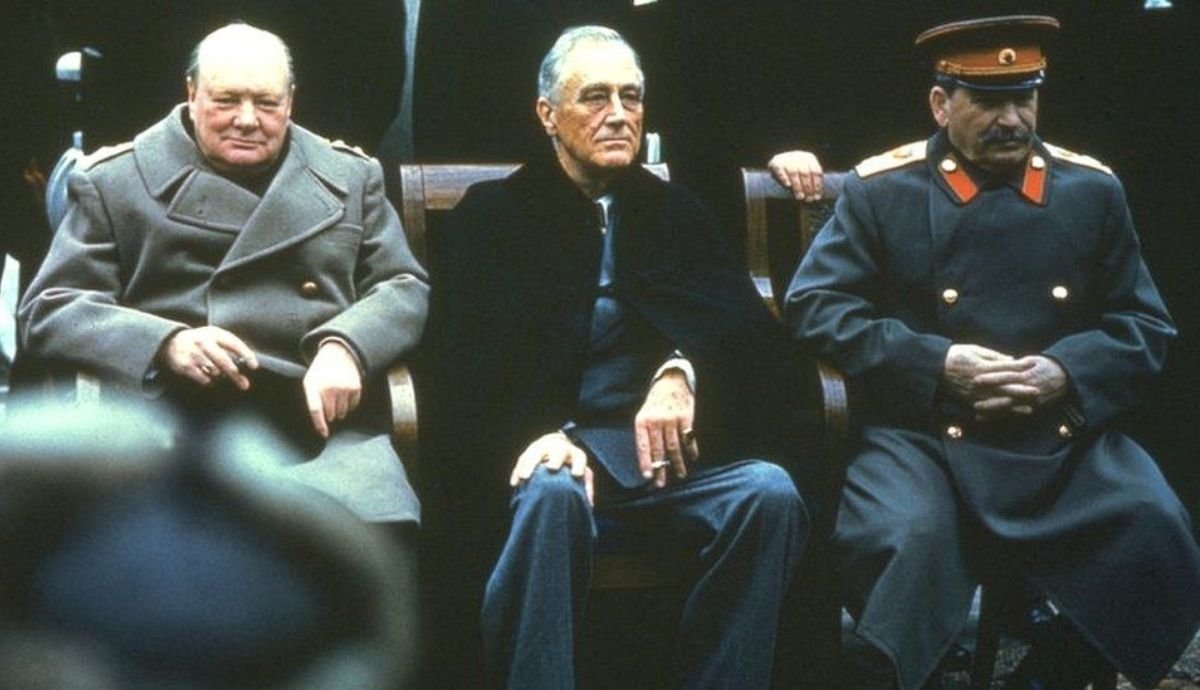 Yalta Conference
Potsdam Conference (July–August 1945)
Held in Germany after the Nazi surrender, it brought together Attlee, Truman and Stalin. The occupation of Germany, war reparations and future Soviet influence in Eastern Europe were discussed.
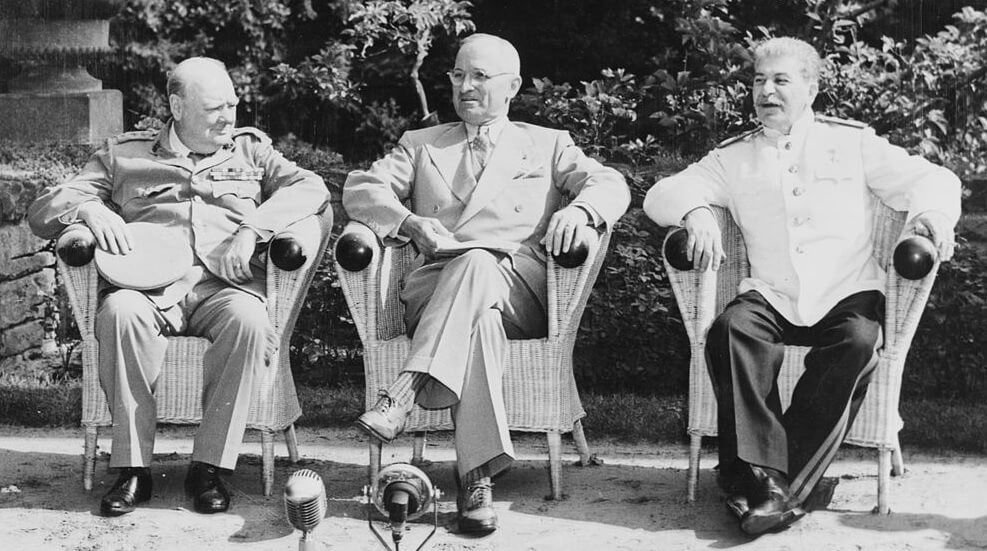 Potsdam Conference
Stalin's legacy
The evaluation of Joseph Stalin's legacy remains a matter of debate. For some, he was a visionary who transformed the USSR into a world superpower and led the victory in World War II. For others, he was a brutal dictator responsible for human rights violations, political purges and mass deaths.
His policy of accelerated industrialisation and centralised planning modernised the USSR in record time. At the same time, the political repression and human rights violations left a deep scar on Soviet society.
Impact on international politics
During Stalin's rule, the USSR became a world superpower and played a fundamental role in World War II and in shaping the bipolar world of the Cold War.
Stalinism after his death
Following Stalin's death in 1953, reforms were initiated under Nikita Khrushchev aimed at distancing the country from Stalinism. However, the Soviet regime remained authoritarian for decades. Alexander Solzhenitsyn led criticism of Stalinism in the 1960s with works such as 'The Gulag Archipelago', which contributed to the subsequent opening up.
The Stalin Museum in Gori, Georgia
The Stalin Museum in Gori is dedicated to the life and work of the Soviet leader, and is located in Joseph Stalin's hometown in Georgia. It was inaugurated in 1957, just four years after his death.
The museum has been controversial for portraying Stalin as an unchallenged hero of the USSR. Its halls display personal objects, documents and his death mask, highlighting his 'achievements' and his role in World War II. In recent years there have been attempts to reformulate its approach to include references to the human impact of Stalinism.
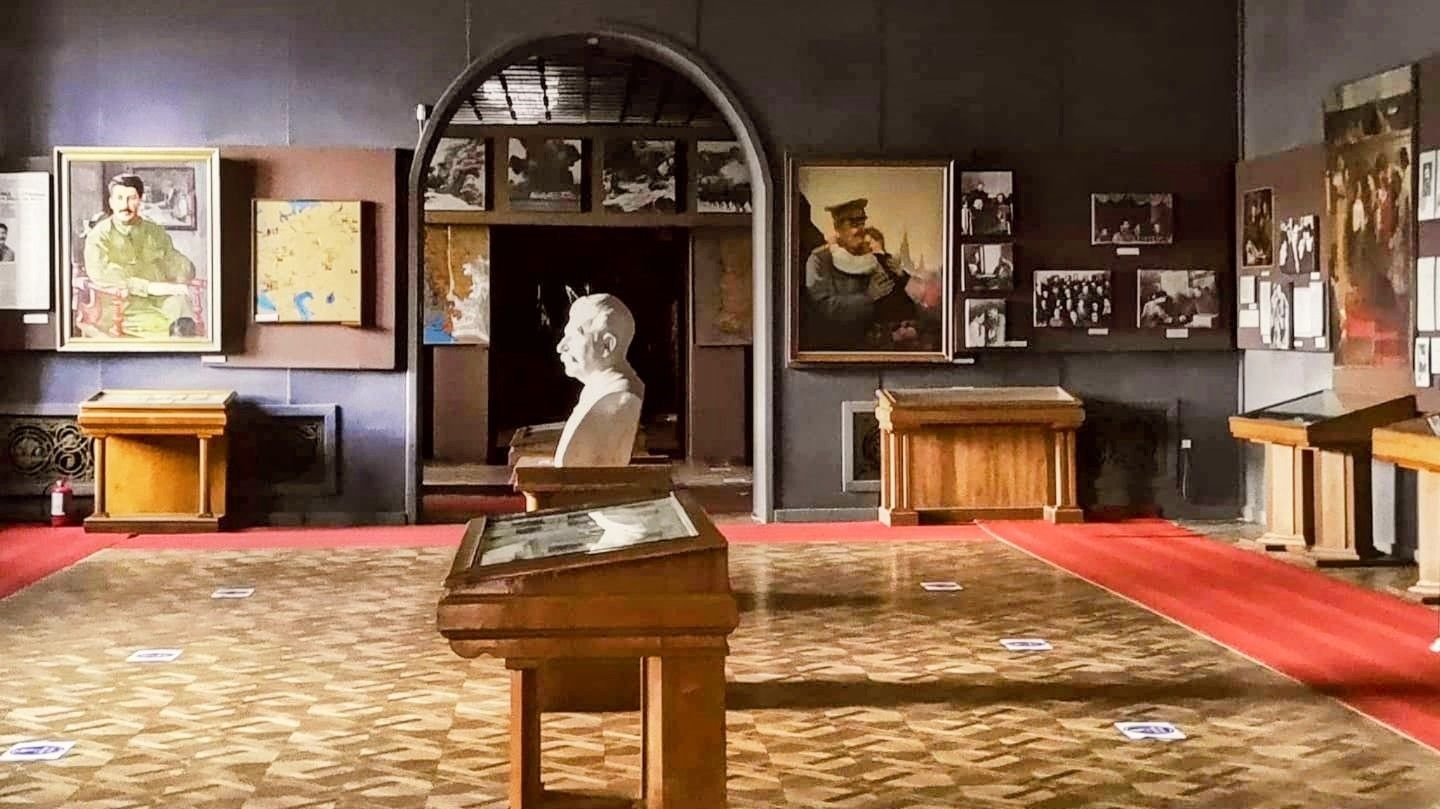
Despite the controversies, the museum remains one of the most visited sites in Gori and a near-essential stop for travellers interested in 20th-century history.
Want to visit the Stalin Museum?
If you are interested in visiting the Stalin Museum and discovering Gori in depth, at Iberogeorgia we offer tour packages that include this destination with an English-speaking guide, as part of tours through Georgia's history and culture.
Would you visit the Stalin Museum?