

Is Georgia a dangerous country for travellers?
The question 'is Georgia a dangerous country?' arises in nearly every first-time trip to the Caucasus. The answer, backed by the experience of thousands of English-speaking travellers who have explored the country with Iberogeorgia, is clear: Georgia is a safe destination, with one of the lowest crime rates in Europe. However, like any country, it has certain particularities worth knowing before you travel.
Why Georgia is sometimes associated with insecurity
- Petty theft in tourist areas: although crime is low, in busy markets and crowded spots in Tbilisi there can be occasional pickpockets.
- Unresolved territorial conflicts: Georgia has open disputes with Russia over the regions of Abkhazia and South Ossetia, which have been militarily occupied since 2008. These areas are not accessible to tourists and must be avoided.
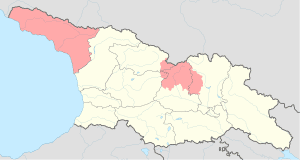 Map of Georgia with the territories occupied by Russia
 - Terrorist threat: very low in Georgia. Incidents have been extremely rare and the country is not among those with elevated risk.
Despite these factors, Georgia is not a dangerous country and the vast majority of visitors enjoy their trip without the slightest incident. Being informed and adopting basic precautions is all that is needed.
The crime rate in Georgia compared to Spain
The objective data are compelling. According to World Bank statistics [VERIFY], the intentional homicide rate in Georgia in 2019 was 3.7 per 100,000 inhabitants, compared to 0.6 per 100,000 in Spain. In recent years there have been barely any isolated cases of tourist homicides.
As for violent robbery, Eurostat data [VERIFY] show that in 2020 the rate in Georgia was 17.7 per 100,000 inhabitants, while in Spain it was 95.4 per 100,000. That is, five times lower than in Spain.
In practical terms, a traveller in Georgia faces a far lower risk of crime than in any European capital.
Tips for travelling to Georgia with peace of mind
- Do your research before travelling: get to know the tourist areas, transport options and recommended zones.
- Keep a low profile: avoid flaunting expensive items such as professional cameras, jewellery or large amounts of cash.
- Avoid going out alone at night in unfamiliar areas: go with company whenever possible.
- Keep your belongings safe: always keep your bag and backpack in sight, especially in markets and on public transport.
- Use authorised taxis or apps such as Bolt or Yandex Go: these are safe, affordable and widely available in the main cities.
- Respect local laws and customs: in Orthodox churches and monasteries, dress with shoulders and knees covered.
- Stay calm: in the face of any unexpected situation, act calmly and with common sense.
- Take out travel insurance: essential for any medical emergency or lost luggage.
Consulting up-to-date official information
Before travelling, always check the official travel advice from your country's Foreign Ministry, as well as statements from the relevant embassy in Tbilisi. Reports from the WHO and UNWTO and updated travel guides are also useful.
Safety measures in Georgia
- Protect your belongings with zipped bags and don't leave them unattended.
- Avoid walking alone at night in unfamiliar neighbourhoods; take a taxi or public transport.
- Exercise caution on roads and in marshrutkas: driving in Georgia can be reckless; always wear a seatbelt.
- Protect your identity: never hand over your passport to anyone who is not an official authority.
- Stay informed about conflict zones: Abkhazia and South Ossetia are not accessible.
- Respect local culture: especially at religious sites.
Useful phone numbers in Georgia
- Emergency services (police, ambulance, fire): 112
- Tourist information: 2-99-93-93 or 2-93-14-55 [VERIFY]
- Consular emergency for Spanish citizens: +995 32 220 00 63 [VERIFY]
Trust reputable agencies and guides
The safest way to discover Georgia is to rely on a trusted local operator:
- Iberogeorgia (https://iberogeorgia.com/) — Spanish-language tour operator
- Caucasus Travel (http://www.caucasustravel.com/)
- Visit Georgia (https://visitgeorgia.ge/)
- Envoy Tours (https://www.envoytours.com/)
- Caucasus Tour (https://www.caucasus-tour.com/)
- Georgian Holidays (https://www.georgianholidays.com/)
- Caucasus Explorer (https://caucasus-explorer.com/)
- Georgian Travel Guide (https://georgiantravelguide.com/)
- Tour Guide Georgia (https://www.tourguide.ge/)
Tip: always read verifiable reviews and check the agency's reputation and licences before booking.
Conclusions: Georgia, a safer destination than you think
Assessing the real risks
To objectively assess the risks of travelling to Georgia, check your government's official travel advice. In general, Georgia is considered a safe tourist destination. The only areas to avoid are the borders with Abkhazia and South Ossetia.

As with any trip, take basic safety measures: avoid displaying valuables, stay alert in crowded places and book tourist services with reliable agencies.
Decide with caution and information
- Stay informed about the current situation: check news and official sources.
- Learn about local culture and customs: knowing a few basic words ('gamarjoba' for 'hello' and 'madloba' for 'thank you') will open many doors.
- Use common sense: as you would at any destination in the world.
- Book trusted services: choose agencies with experience and verifiable reviews.
At Iberogeorgia we are here to accompany you. If you had any doubts, now you know: Georgia is not a dangerous country — it is one of the most welcoming and safe destinations in Europe. All that remains is to take the plunge and discover it.