

If you're curious about Georgia, the small but mighty country of the Caucasus, and want to understand what makes it unique without overcomplicating things, you've come to the right place. In this guide we explain, in simple terms, everything essential about Georgia: its geography, history, culture, gastronomy, political system and must-see tourist spots. Welcome to a clear and engaging journey through one of the world's most fascinating destinations.
Georgia is a land of contrasts: snow-capped Caucasus peaks, subtropical Black Sea beaches, ancient vineyards, Orthodox monasteries and a warmth of hospitality that wins over every traveller. Read on and discover why more and more visitors are choosing to travel to Georgia.
Where Is Georgia? A Look at Its Geography
Georgia occupies a unique place on the map: in the South Caucasus region, right at the crossroads between Eastern Europe and Western Asia. It borders the Black Sea to the west, Russia to the north, Turkey and Armenia to the south, and Azerbaijan to the southeast.
Although it is a relatively small country (around 69,700 km²), its geography is remarkably diverse: high peaks of the Greater Caucasus, lush green valleys, semi-deserts in the east and subtropical beaches in the west. The climate also varies dramatically: from the humid subtropical conditions of Batumi to the alpine climate of Svaneti, and the continental climate of Kakheti in between.
If you want to dive deeper, visit our article on where Georgia is located.
A Brief History of Georgia
Georgia's history stretches back several millennia. This country was one of the first in the world to adopt Christianity as its official religion (in 337 AD). During the Middle Ages it experienced its golden age under figures such as David the Builder and Queen Tamar, forging a cultured and powerful Christian kingdom.
Over the centuries, Georgia resisted Mongol, Persian, Ottoman and Russian invasions. In the 20th century it was part of the USSR and regained its independence in 1991. Since then, the country has undertaken sweeping democratic and economic reforms, and holds official candidate status for accession to the European Union, granted in 2023 [VERIFY current status of the accession process].
Georgia's Political System Made Simple
Georgia is a parliamentary republic: the head of government is the Prime Minister while the President plays a more ceremonial role. Legislative power rests with the Parliament of Georgia, a unicameral body of 150 members elected every four years.

The judicial system, independent of both the executive and legislative branches, is organised into three levels: courts of first instance, courts of appeal and the Supreme Court.
Georgia's Economy in a Nutshell
Georgia's economy has transformed over two decades from a predominantly agricultural base into a regional hub for services, tourism, logistics and technology. It is known for its production of wine, nuts, mineral waters (Borjomi) and tea.
Tourism is one of its main economic drivers: Georgia welcomes millions of visitors every year thanks to its nature, cultural heritage and outstanding value for money. Its open-door policies and strategic position between Europe and Asia make it an emerging investment hub.
Population, Languages and Religion
Georgia has around 3.7 million inhabitants, the majority ethnic Georgians, with Azerbaijani, Armenian, Russian and Ossetian minorities. The official language is Georgian, one of the oldest languages in the world, with its own unique alphabet recognised by UNESCO as an Intangible Cultural Heritage.

The majority of the population belongs to the Georgian Orthodox Church, one of the oldest Christian institutions in the world, but there are also Muslim, Armenian Apostolic and Jewish communities. Georgia is a secular and tolerant state.

Georgian Culture: Traditions, Music and Dance
Georgian culture is a treasure trove of traditions, music and dance. Georgian polyphonic singing, recognised by UNESCO, resonates through churches and feasts alike. Traditional instruments such as the panduri and the salamuri accompany popular celebrations. Folk dances — kartuli, khorumi, acharuli — are breathtaking displays of agility and passion.
Georgian Cuisine: A Journey for the Palate
Georgian cuisine is one of Europe's best-kept culinary secrets, but anyone who tries it is instantly won over. Its star dishes include:
- Khachapuri: cheese-filled bread, unmissable in its Adjarian version (boat-shaped with an egg yolk).
- Khinkali: juicy meat dumplings eaten by hand.
- Mtsvadi: Georgian barbecue grilled over vine wood.
- Churchkhela: the Georgian "Snickers" made from nuts and grape must.
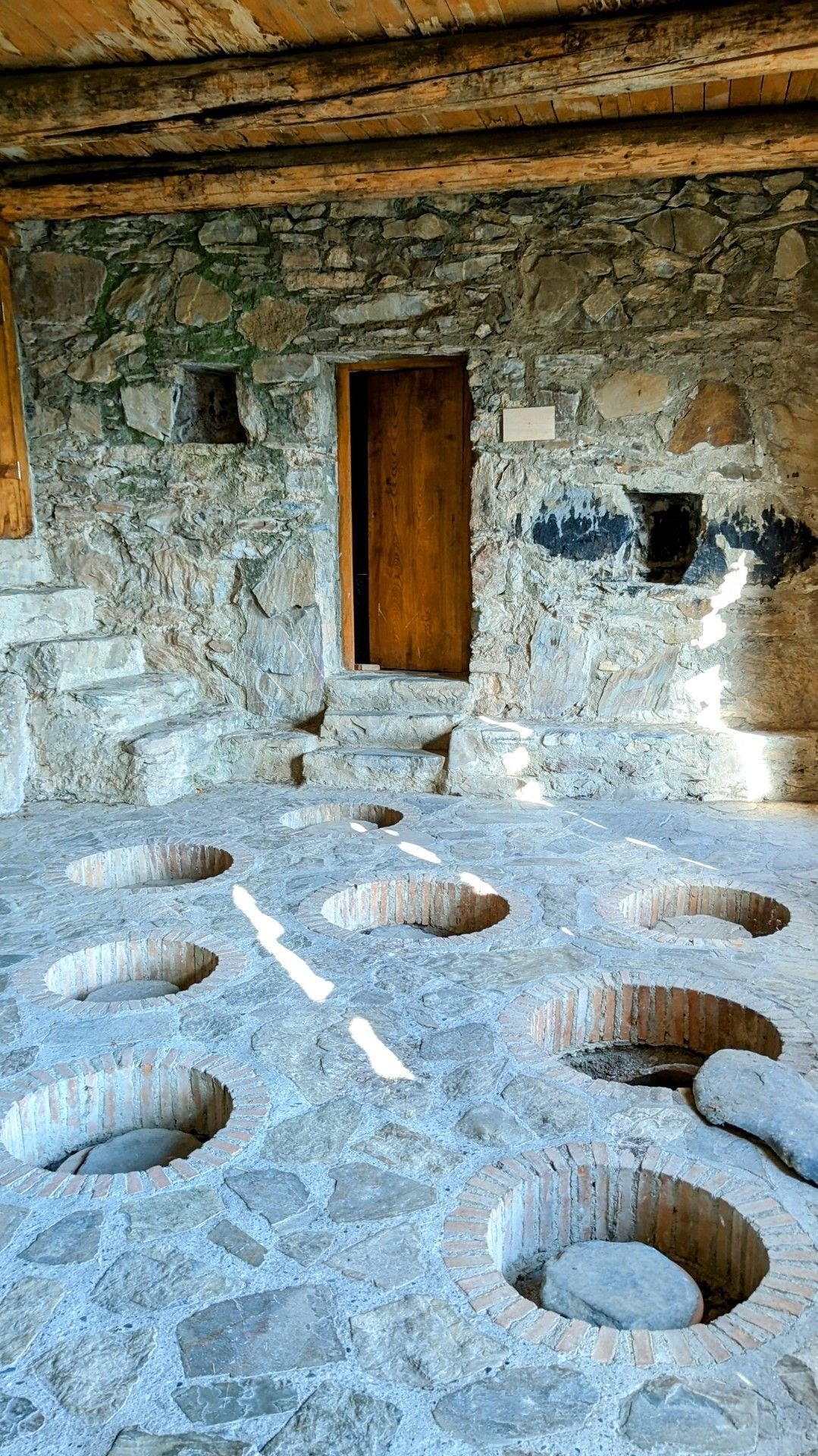
- Qvevri wines: Georgia is the cradle of wine, with over 8,000 years of winemaking tradition, recognised by UNESCO.
Want to learn more? Explore our Georgian gastronomy guide.
Education and Daily Life
Education is compulsory from ages 6 to 14 and is structured into primary, secondary and higher levels. The main universities are concentrated in Tbilisi. Everyday life in Georgia blends age-old traditions with modern comforts: fast Wi-Fi, specialty coffee shops, the culture of the supra (traditional feast) and an easy-going pace of life.
Climate in Georgia: One Country, Many Climates
Georgia packs almost every climate type into a small territory:
- Black Sea coast (Batumi, Kobuleti): subtropical, with warm summers and frequent rainfall.
- Tbilisi and central areas: continental, with hot summers (30 °C) and mild winters.
- Greater Caucasus (Svaneti, Kazbegi): alpine, with snow from November through April.
- Wine-growing east (Kakheti): dry and sunny, perfect for the autumn harvest.
Tourism in Georgia: Essential Destinations
Tourism in Georgia keeps growing, and it's no coincidence. Here are the stops you simply cannot miss:
- Tbilisi, the capital, with its charming old town and sulphur baths.
- Mtskheta, the ancient sacred capital, a UNESCO World Heritage Site.
- Kazbegi and the Gergeti Trinity Church beneath Mount Kazbek.
- Svaneti, with its medieval towers and spectacular trekking routes.
- Kakheti, the winemaking heartland of the country.
- Batumi, the jewel of the Black Sea coast.
Challenges and Opportunities for Georgia
The country faces challenges such as rural development, tensions over Abkhazia and South Ossetia, and its geopolitical balancing act between Europe and Russia. At the same time, its European aspirations, growing tourism sector and reputation as a safe and affordable destination open up enormous opportunities.
Georgia and Sport
Rugby is almost a secular religion in Georgia: the national team, the Lelos, is one of the most competitive outside the world's top nations. Football, basketball and the traditional wrestling discipline chidaoba — recognised by UNESCO as an Intangible Cultural Heritage — are also hugely popular.
Daily Life in Georgia
In Georgia, life is lived at a leisurely pace. Meals stretch on for hours, family is everything and hospitality is sacred. It is perfectly common to see strangers raising a glass together in a marani (wine cellar) or sharing khinkali at a family restaurant.
Travel to Georgia with Iberogeorgia
Have we convinced you? Don't wait any longer: book your trip to Georgia with Iberogeorgia and live an unforgettable adventure through the Caucasus. We design tailor-made itineraries so you can discover Georgia with all the care and attention it deserves. We'll be waiting for you in Tbilisi!