
Zvartnots
Զվարթնոց
Circular ruins of a 7th-century Armenian cathedral, UNESCO World Heritage, with Mount Ararat in the background a few kilometres from Yerevan airport.
Location in the Caucasus
Description
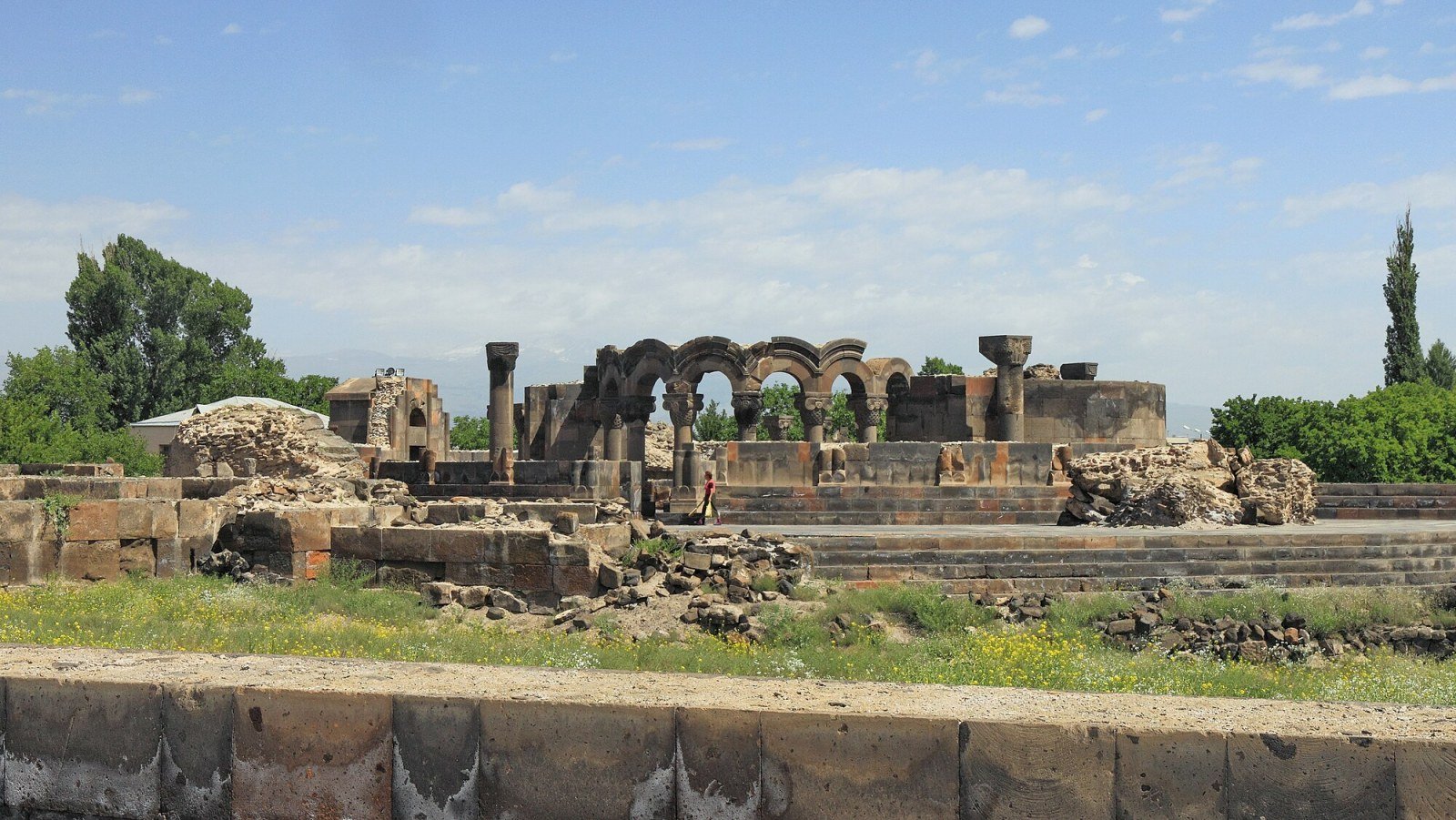
Zvartnots stands in open countryside between Yerevan's international airport and Vagharshapat. The access road crosses a semi-industrial zone with little appeal, but when you turn towards the archaeological site the panorama changes: a lawn of cut grass, circular ruins of dark basalt, and on clear days the outline of Ararat a few kilometres to the south. It is one of those combinations of place and landscape that are hard to forget even though the site has been in ruins for over a thousand years.
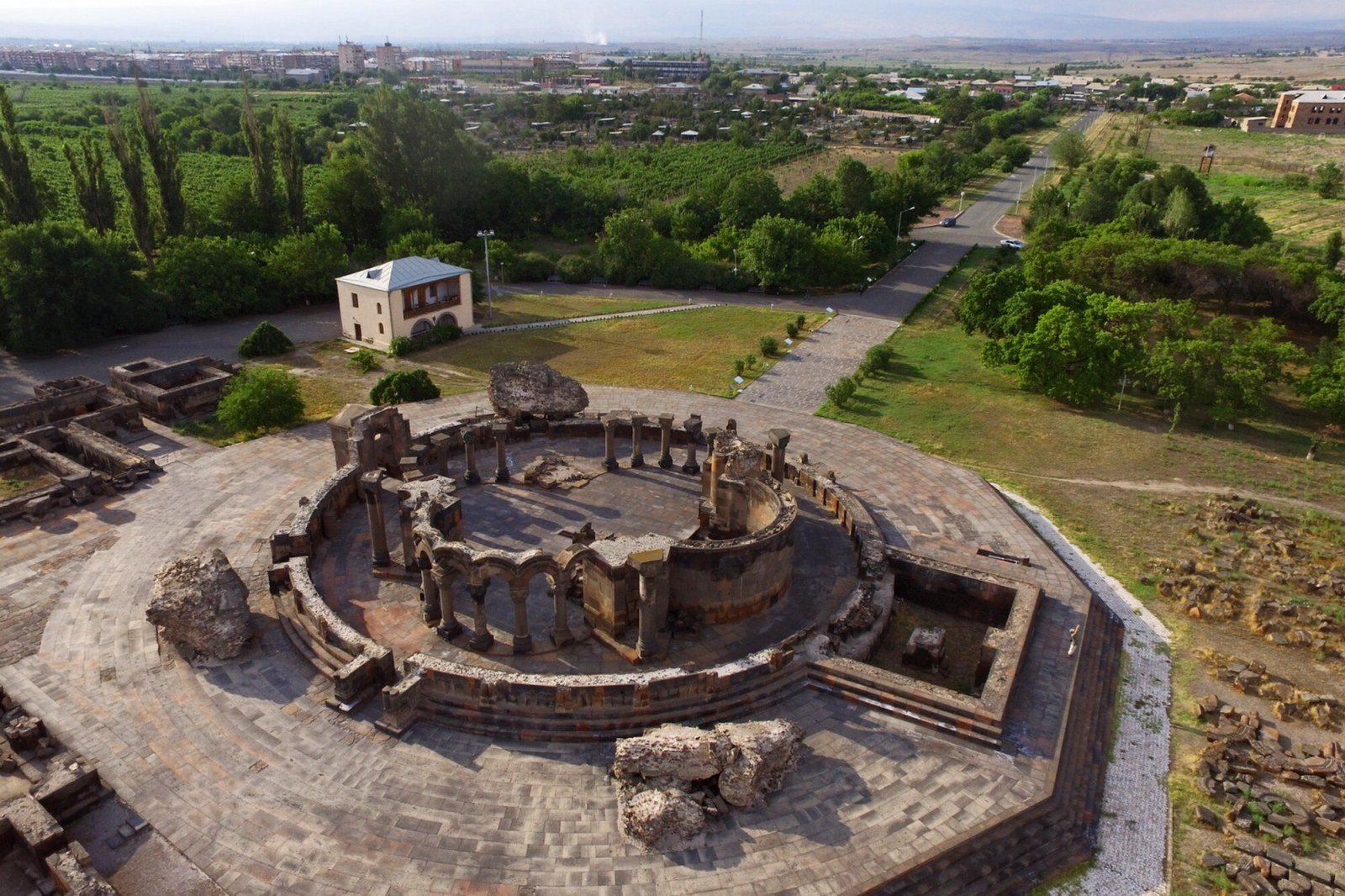
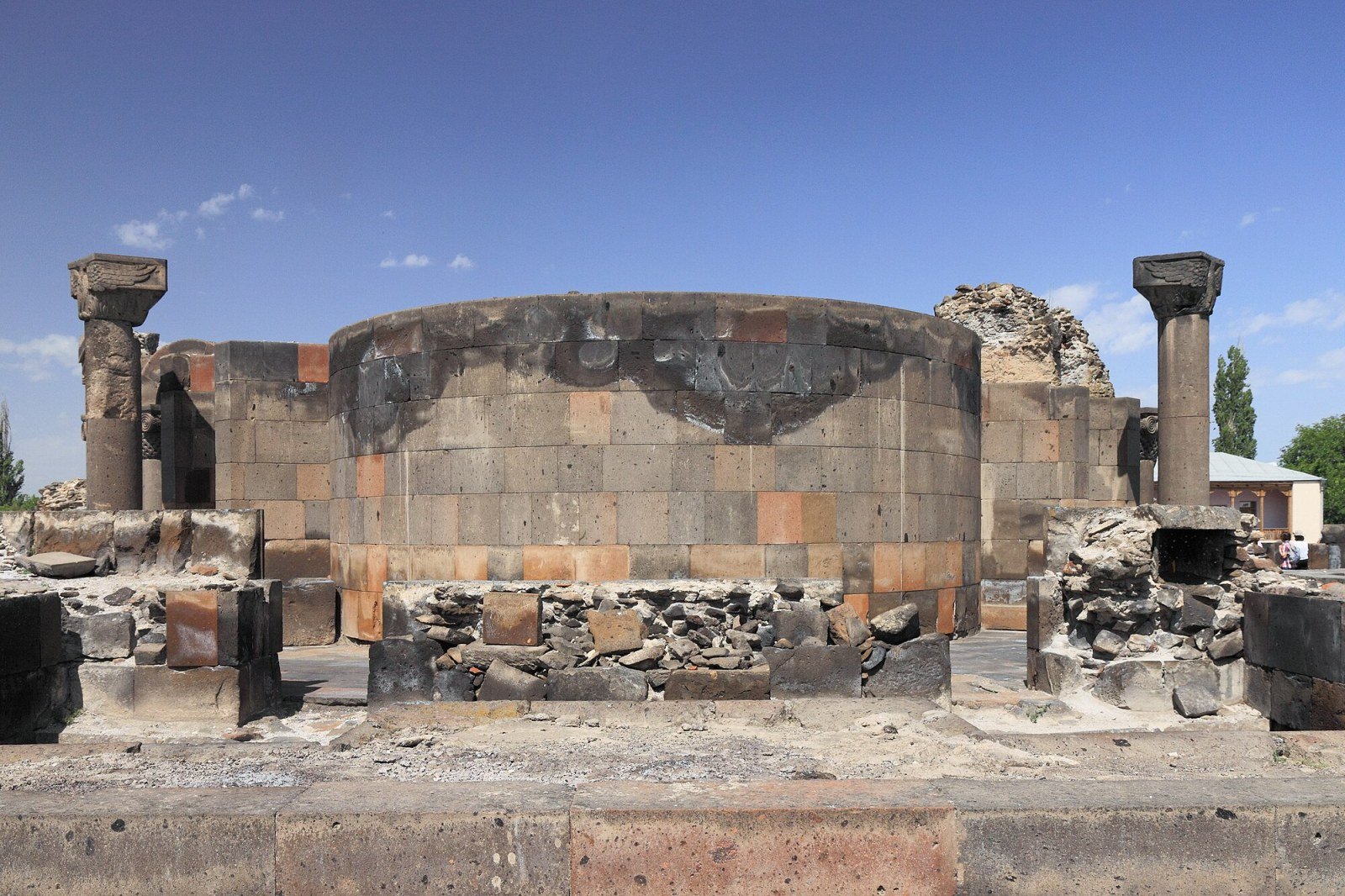
What remains are the circular foundations, some partially reconstructed columns and capitals decorated with eagle figures —the so-called Zvartnots eagles— now kept in the site museum. The original structure was a three-storey rotunda reaching about forty-five metres in height, something unusual in Armenian architecture of the period.
The visit takes no more than an hour and a half including the museum, which is small but well organised. The combined entrance costs about 1,500 drams. There is no shade at the site, so a midday visit in July and August is tough.
History
Zvartnots was built between 641 and 661 on the orders of the Armenian Catholicos Nerses III, known as «the Builder». The building was conceived as a symbol of the power of the Armenian Church and as a reception hall for the Byzantine emperor Constans II, who visited Armenia in those years. The cathedral functioned for two or three centuries before being destroyed, probably by an earthquake in the 10th century. Its remains lay buried until the excavations of 1901–1907 led by archaeologist Khachik Dadyan. In 2000 it was inscribed on the UNESCO World Heritage List together with the Echmiadzin complex.
What to see & do
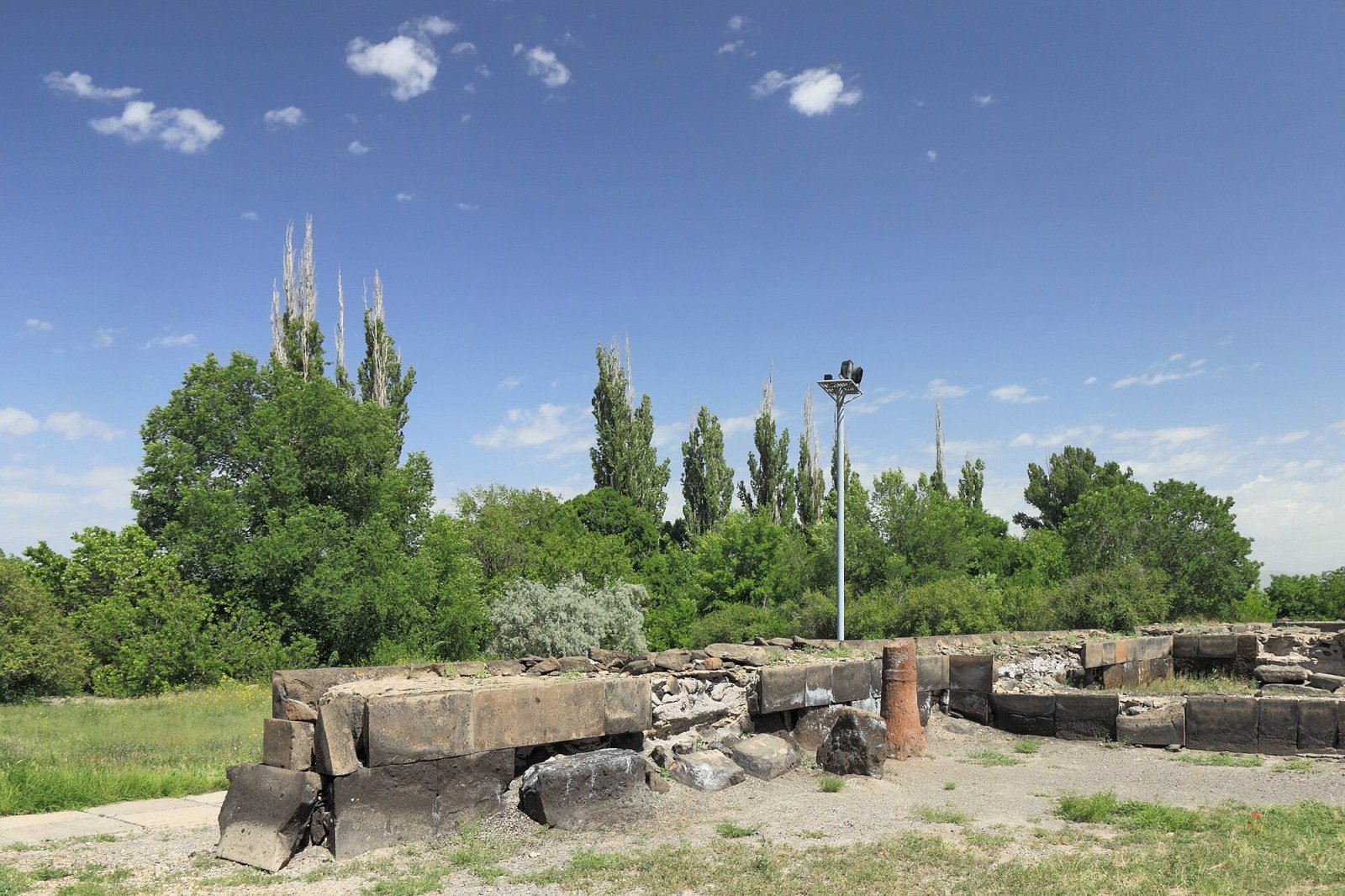
- Circular foundations The perimeter of the original plan is almost completely preserved and allows you to understand the scale of the building. Walking around it gives a clear measure of what once stood here.
- Eagle capitals The capitals decorated with double-headed eagle figures are the site's most recognisable feature and appear throughout its iconography.
- Reconstructed columns Some column shafts have been raised back into their original positions, helping to visualise the building's vertical structure.
- Site museum A room with original pieces: capitals, friezes, inscriptions in ancient Armenian and a scale model of the cathedral as it is believed to have appeared. Small but useful for contextualising the visit.
- Views of the Ararat From the southern end of the site the view of the Ararat is direct on clear days, most often in autumn and spring.
How to get there
Zvartnots is about 12 km west of Yerevan, beside the international airport road. From the capital the most convenient way is by taxi (about 1,500–2,000 drams) or bus number 45 from Republic Square to the Vagharshapat stop, and from there a local taxi. It is usually visited together with Echmiadzin Cathedral, 5 km to the west, in the same outing from Yerevan.
Best time to visit
The visit is possible year-round. April and May combine pleasant temperatures with the Ararat still clearly visible before the summer haze. September and October are the best months to photograph the ruins with the Ararat in the background: the sky is clearer and the afternoon light hits at a good angle. In July and August the exposure to sun without shade is very intense; it is best to go early in the morning.
Photo: Vahe Martirosyan · CC BY-SA 2.0