
Vernissage Market
Վերնիսաժ
Weekend market in central Yerevan with Soviet antiques, Armenian garnet jewellery, khachkars and Caucasian carpets.
Location in the Caucasus
Description
The Vernissage occupies several blocks next to Republic Park, right in the heart of Yerevan, and every Saturday and Sunday fills with folding tables, blankets on the ground and stalls where Soviet coins, 1970s football cards, icons painted on dark wood, rolled-up carpets leaning against walls and red garnet necklaces — Armenia's most characteristic semi-precious stone — all coexist. The atmosphere is calmer than at other markets in the region: there are no persistent vendors or aggressive bargaining. Most stalls have handwritten prices, though there is always room to negotiate when buying more than one piece.
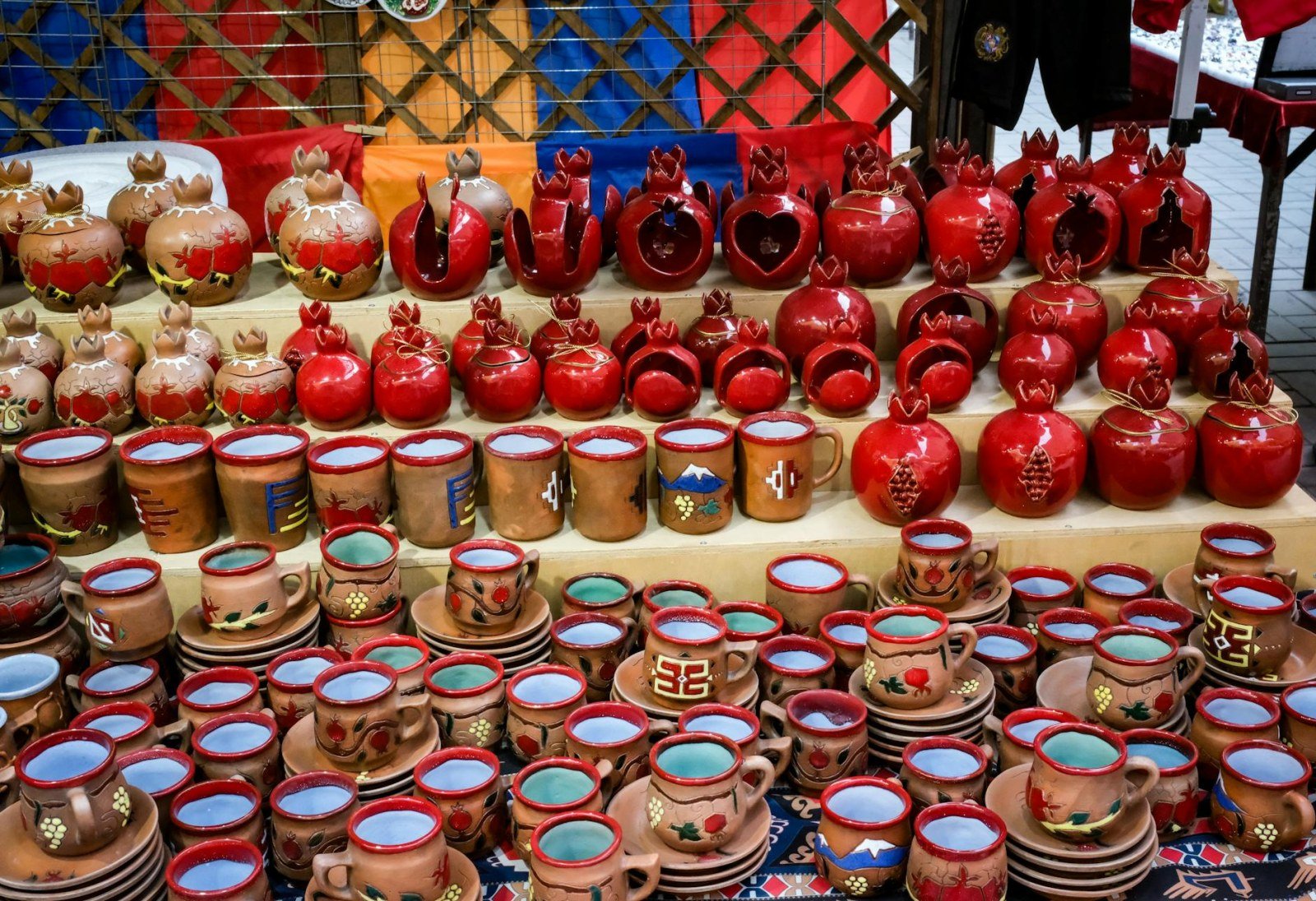
The contemporary craft area — stone carvers, potters, embroiderers — clusters near the Opera, while antiques and Soviet objects appear further south, near Abovian Street. The smell of frying food drifting from the food stalls at the back signals that you are approaching the liveliest end of the market. Vendors are mostly local retirees and craftspeople, though there are also dealers with goods of less certain provenance.
History
The Vernissage emerged spontaneously during perestroika and the Soviet collapse, when artists and private individuals began selling works and objects in the parks of central Yerevan to cope with the economic crisis. Over time the market became more formalised: it obtained municipal permits and a more stable structure. The name comes from the French vernissage — exhibition opening — a term adopted in Armenian to describe this space for art and crafts. Today, heirs to that survival tradition share space with artisans who choose the market as their regular showcase.
What to see & do
- Antiques section Soviet medals, pocket watches, porcelain tableware, books in Armenian and Russian, and old photographs of unknown families. The most entertaining part to browse without needing to buy anything.
- Garnet jewellery Armenia has historically been a garnet producer; silver earrings, rings and necklaces set with red garnets are among the most popular souvenirs. It is worth comparing stone quality before deciding.
- Carved khachkars Miniature stone crosses, replicas of medieval originals. Hand-carved pieces are noticeably superior to mass-produced ones and the price reflects that.
- Carpets and textiles Armenian and Caucasian carpets, often second-hand. Some basic knowledge of weaving helps distinguish quality pieces from purely decorative ones.
- Painting and printmaking In the northern area several artists sell original work: watercolours of Armenian landscapes, prints and small oil paintings at reasonable prices for what is on offer.
How to get there
The market is in central Yerevan, next to Republic Park. It can be reached on foot from almost anywhere in the centre in under 15 minutes. The nearest metro station is Republic (Line 1). Open Saturdays and Sundays from approximately 9:00 to 18:00–19:00; some stalls remain during the week, but the real concentration is at weekends.
Best time to visit
The Vernissage operates all year round, but the visit is most comfortable from May to October, with pleasant weather for strolling among the open-air stalls. In winter many vendors reduce their presence and the cold shortens the stay. July and August are hot but the market remains fully active. Sundays draw more vendors and more activity than Saturdays.
More information
Photo: João Bomfim Junior · Pexels License