
Vayots Dzor Province
Վայոց Ձորի մարզ
Red rock canyons in southern Armenia: Noravank monastery, the world's oldest winery, and Areni red wine.
Location in the Caucasus
Description
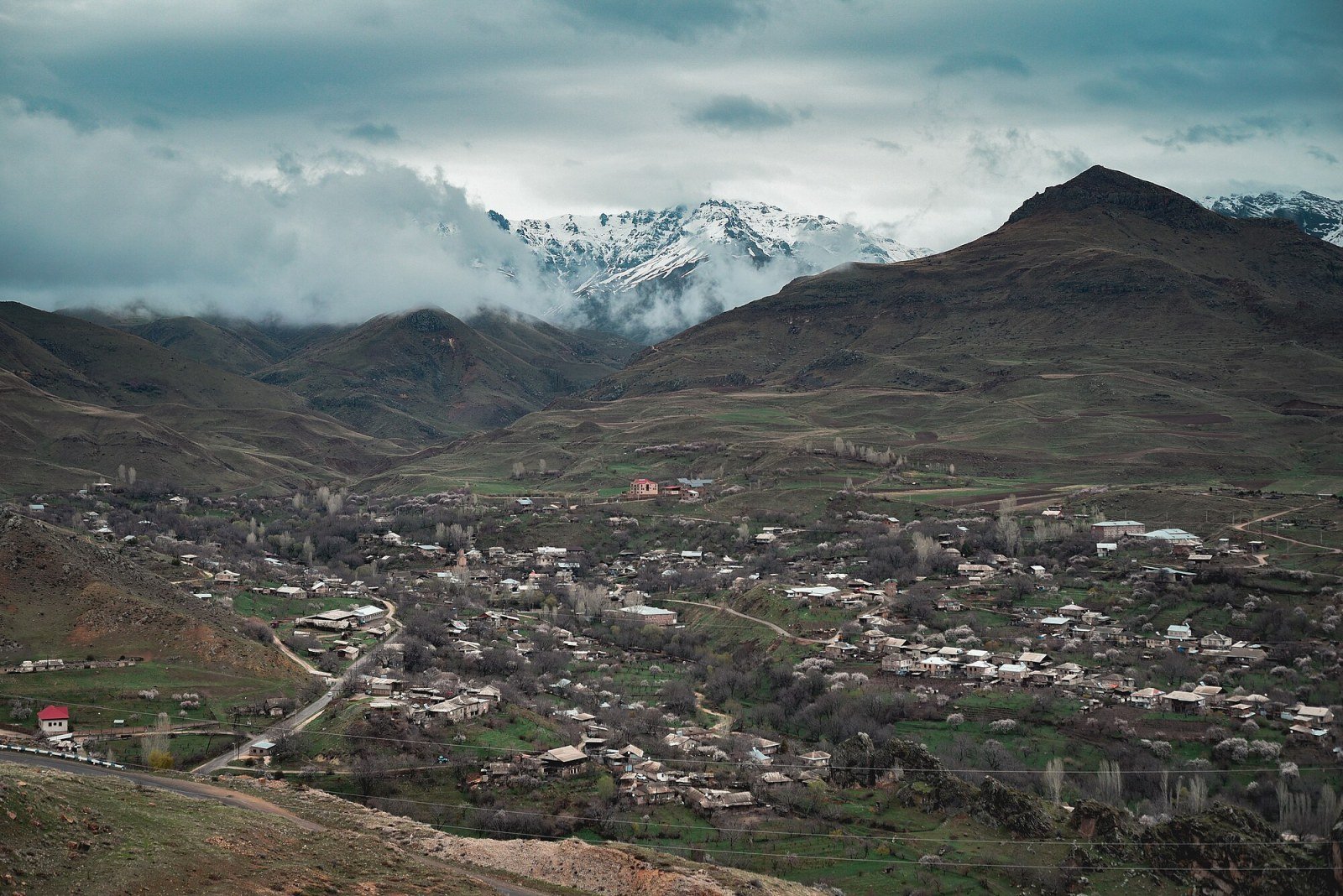
Vayots Dzor —whose name in Armenian roughly means the valley of woes— is one of the most rugged provinces in southern Armenia. The main road winds between red and brown rock gorges with the Arpa river below; small villages cling to the slopes and traffic is sparse outside of weekends. The provincial capital, Yeghegnadzor, has about 8,000 inhabitants and functions more as a supply point —gas station, supermarket, pharmacy— than as a tourist destination.
What justifies the trip are very specific places. Noravank Monastery, wedged into a canyon of almost vertical red tuff walls, is the most visited medieval complex in Armenia after Geghard. A few kilometers away, Areni-1 Cave holds the remains of the oldest known wine-producing facility in the world, dated to around 6,000 years ago, and can be visited with an entry ticket and guide. The village of Areni, at the confluence of the Arpa and the river of the same name, produces red wine from the native Areni Noir variety: family wineries sell bottles directly to visitors without flashy labels or city prices.
The roads are paved but full of continuous bends; those prone to motion sickness will feel it on the marshrutka. Bringing water and some food is a good idea, as services along the route are minimal.
History
Vayots Dzor was during the Middle Ages part of the Armenian kingdom of Syunik and later of the principality of the Orbelians, nobles who sponsored the construction of Noravank Monastery in the 13th and 14th centuries. The region was a disputed border between Armenia, Persia, and the Mongol Ilkhanate, and its monasteries served as refuges and centers for copying Armenian manuscripts. In Soviet times, the area had some agricultural development —especially viticulture around the village of Areni— but heavy industry never arrived, which largely preserved the rural fabric and traditional stone architecture.
What to see & do
- Noravank Monastery A 13th-century complex wedged into a red tuff canyon. The Surb Astvatsatsin church has an exterior stone staircase without a handrail that leads up to the upper floor; it's best to wear shoes with good grip. Entry to the complex is free and the canyon offers its best light at sunset.
- Areni-1 Cave Archaeological site where the oldest evidence of wine production in the world was found (around 4000 BC). Visited with an entry fee (approximately 1,500 AMD) and the tour is brief but well explained; bring warm clothing as the interior is cool.
- Areni village Small wine-growing village at the confluence of the Arpa river and the Areni river. Family wineries sell Areni Noir red wine directly to visitors. In September-October it coincides with the local harvest festival, lively and unpretentious.
- Arpa canyon The gorge that the Arpa river carves between red rock walls is visible from the M2 road. There are improvised pull-offs with views of the canyon; worth stopping even for just five minutes.
- Spitakavor Monastery A 15th-century complex in the highlands above Yeghegnadzor, much less visited than Noravank. Access requires a detour on a well-maintained dirt track; a regular car can make it in dry season without needing a 4x4.
Photo gallery
How to get there
The M2 road connects Yerevan to Yeghegnadzor in about 120 km (between 1.5 and 2 hours by car). There are marshrutkas from the Kilikia station in Yerevan. Noravank Monastery is about 122 km from the capital, with the last stretch on a secondary road that enters the canyon. Most visitors organize the area as a day trip from Yerevan.
Best time to visit
Spring —April and May— and autumn —September and October— offer pleasant temperatures and good light on the red rock of the Arpa canyon. In summer temperatures reach 35 °C in the valleys, though the canyons retain some coolness. The harvest in Areni is in September-October and coincides with a local wine festival. In winter there may be snow and some secondary tracks become impassable.
More information
Photo: Baykar Sepoyan · CC BY-SA 4.0