
Vardzia
ვარძია
12th-century cave monastery carved into the cliffs above the Mtkvari river, with over 500 chambers hewn from the rock and medieval frescoes.
Location in the Caucasus
Description
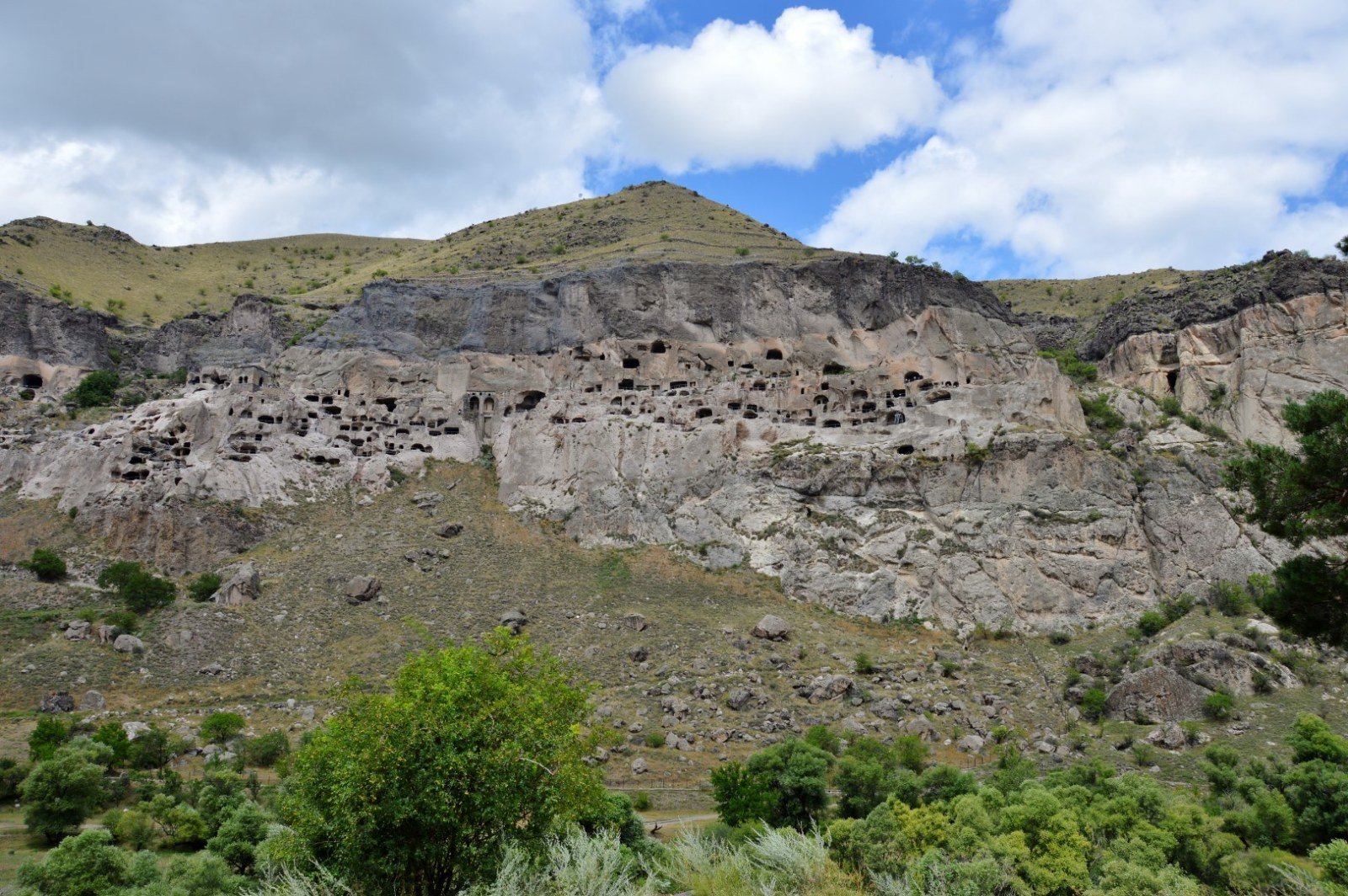
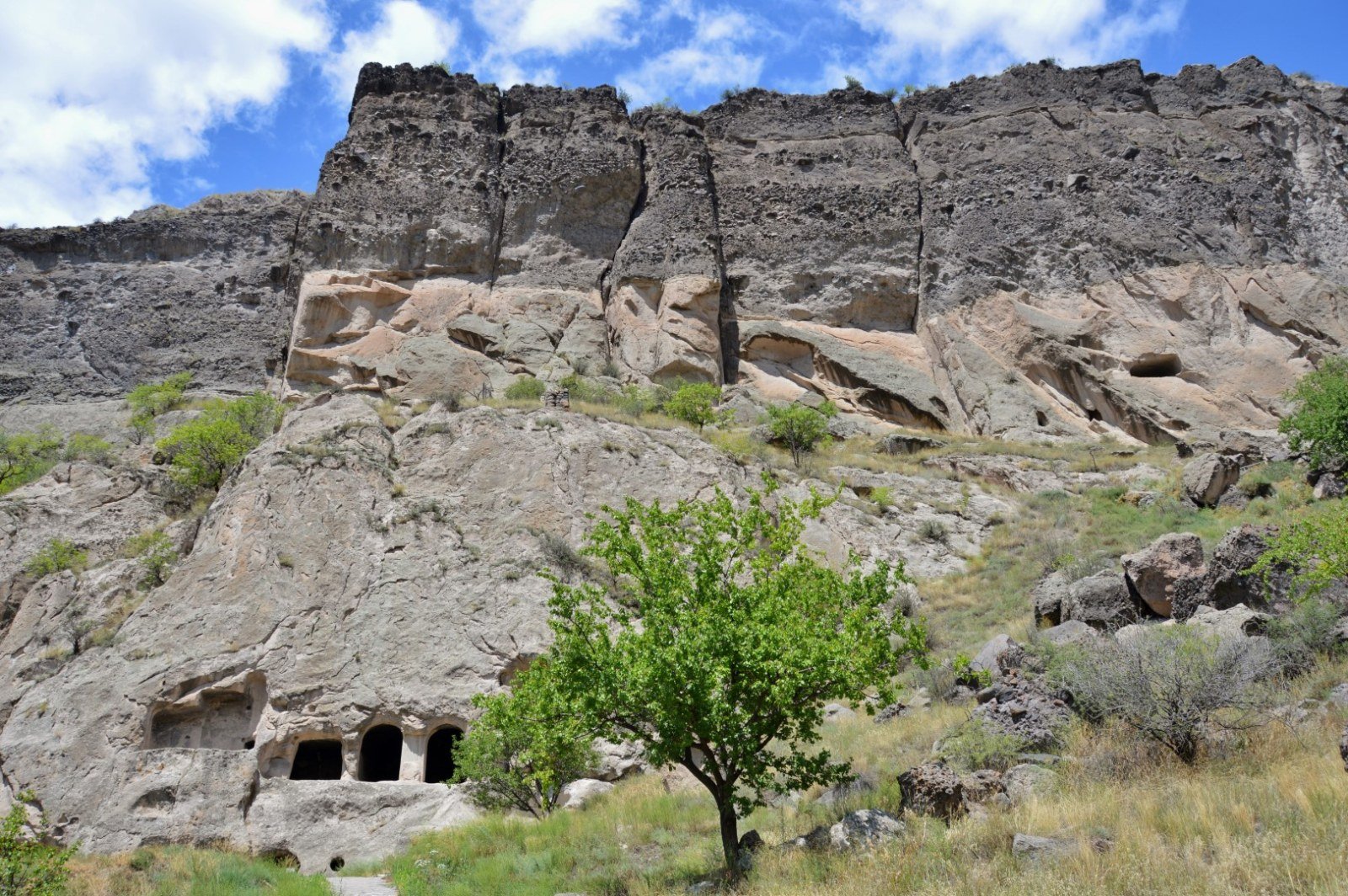
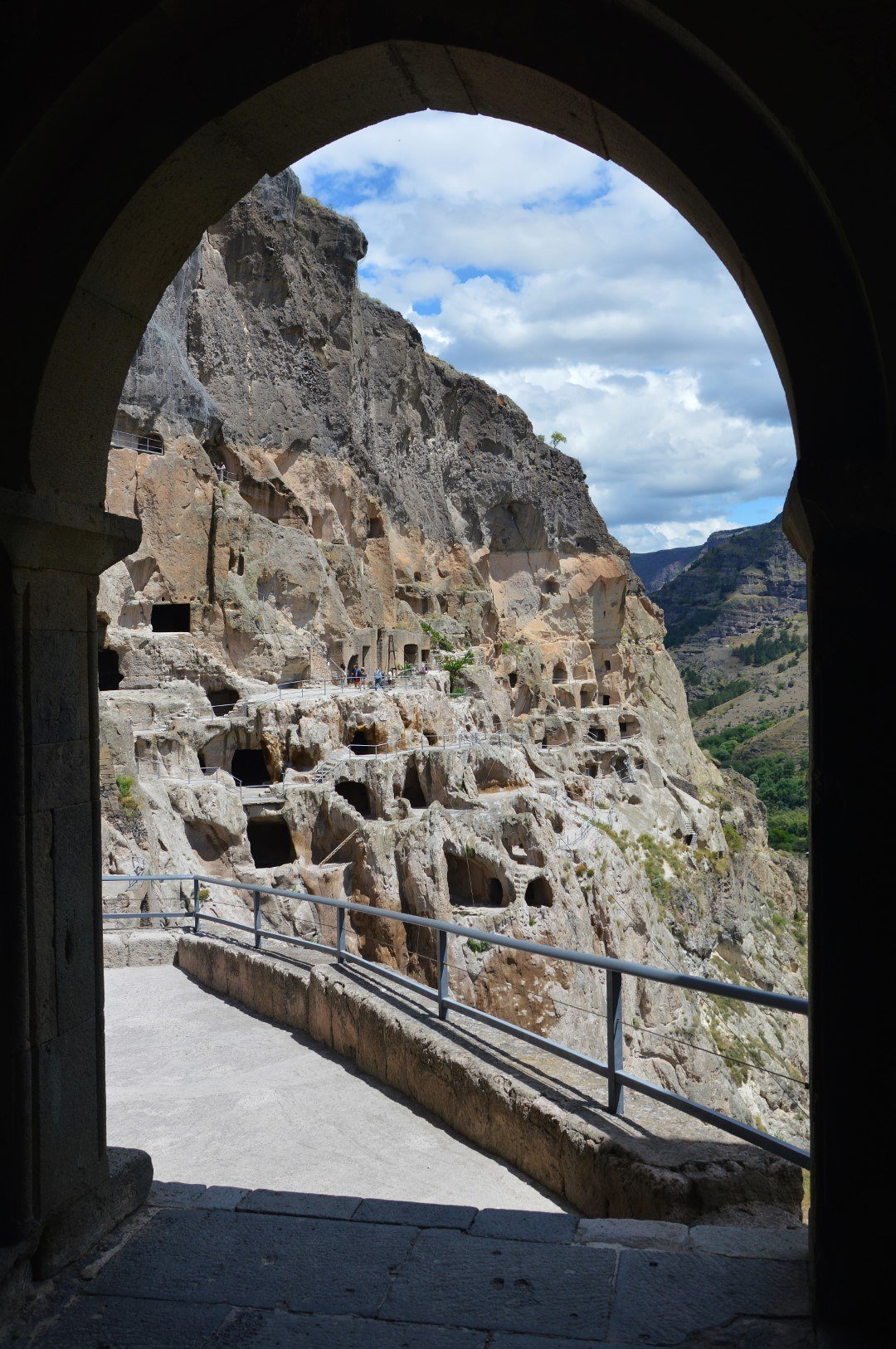
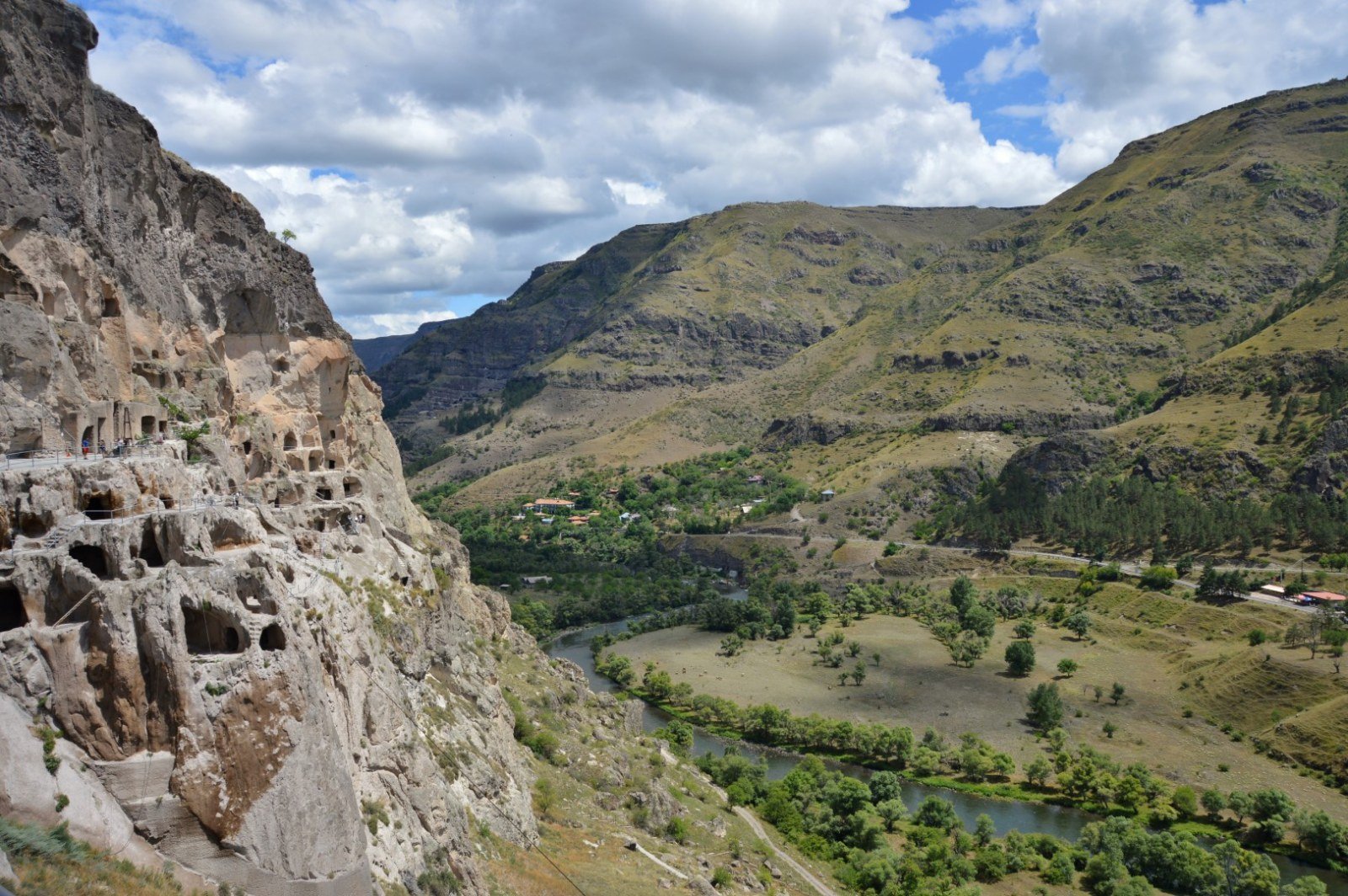
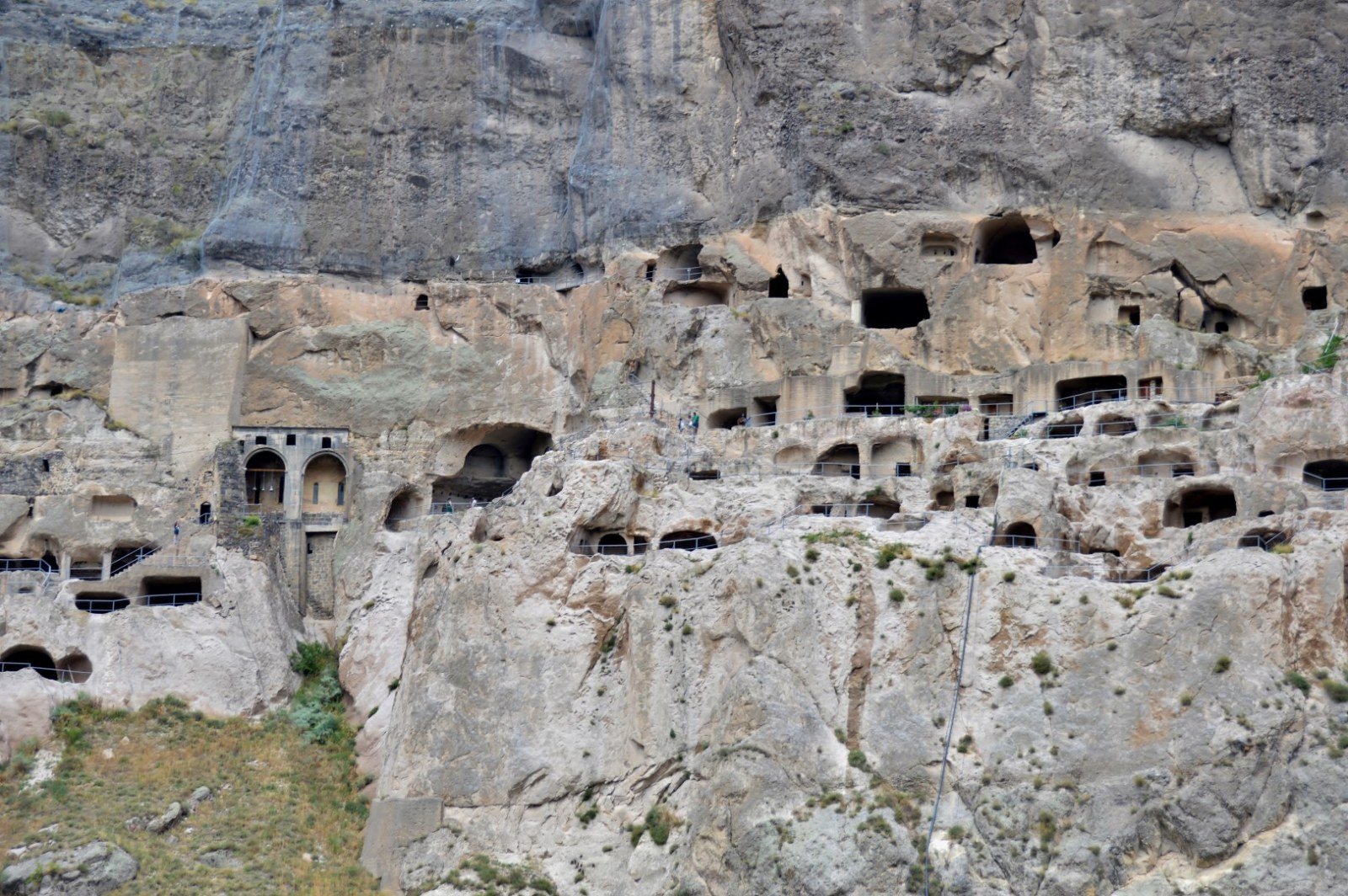
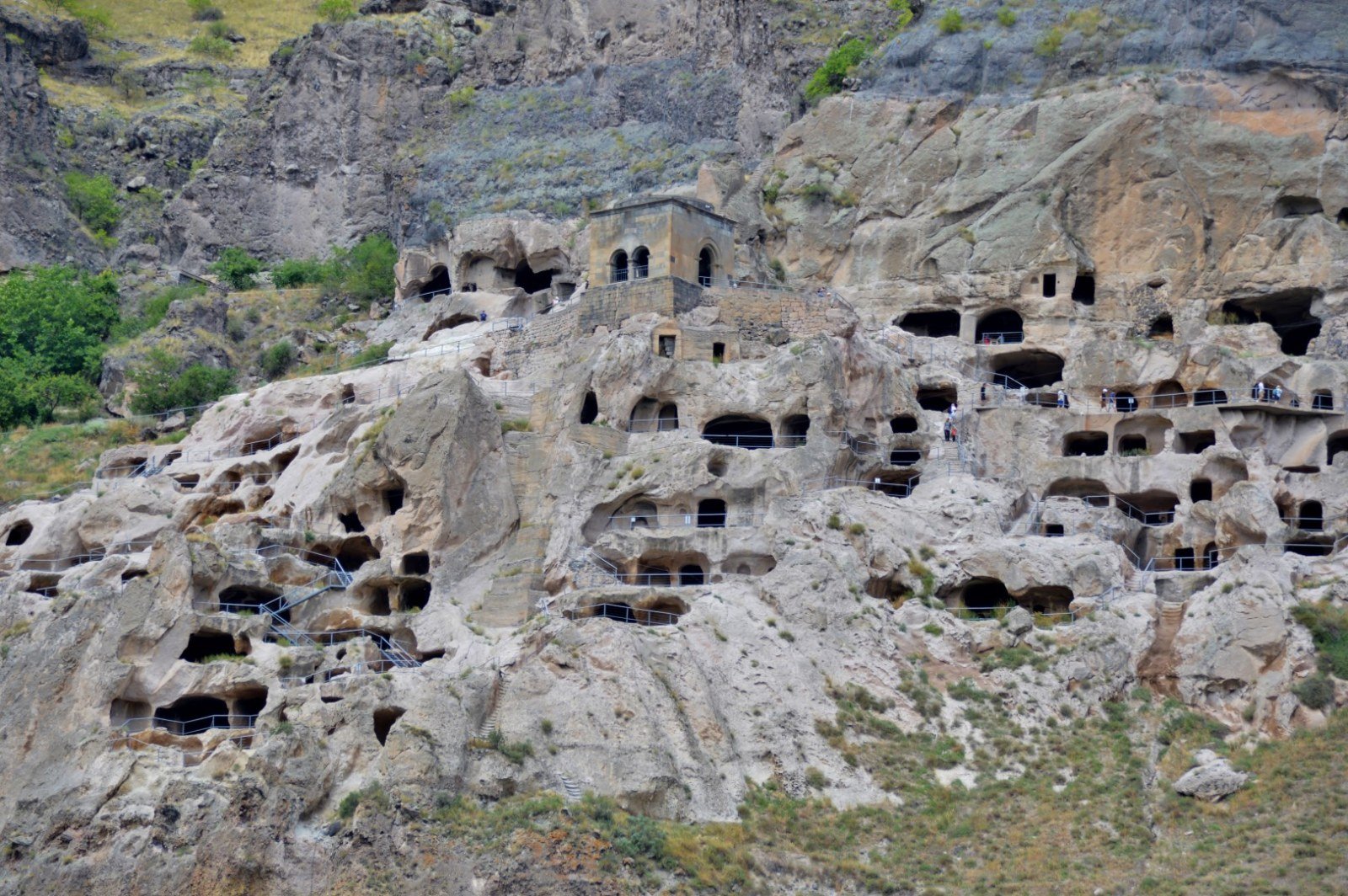
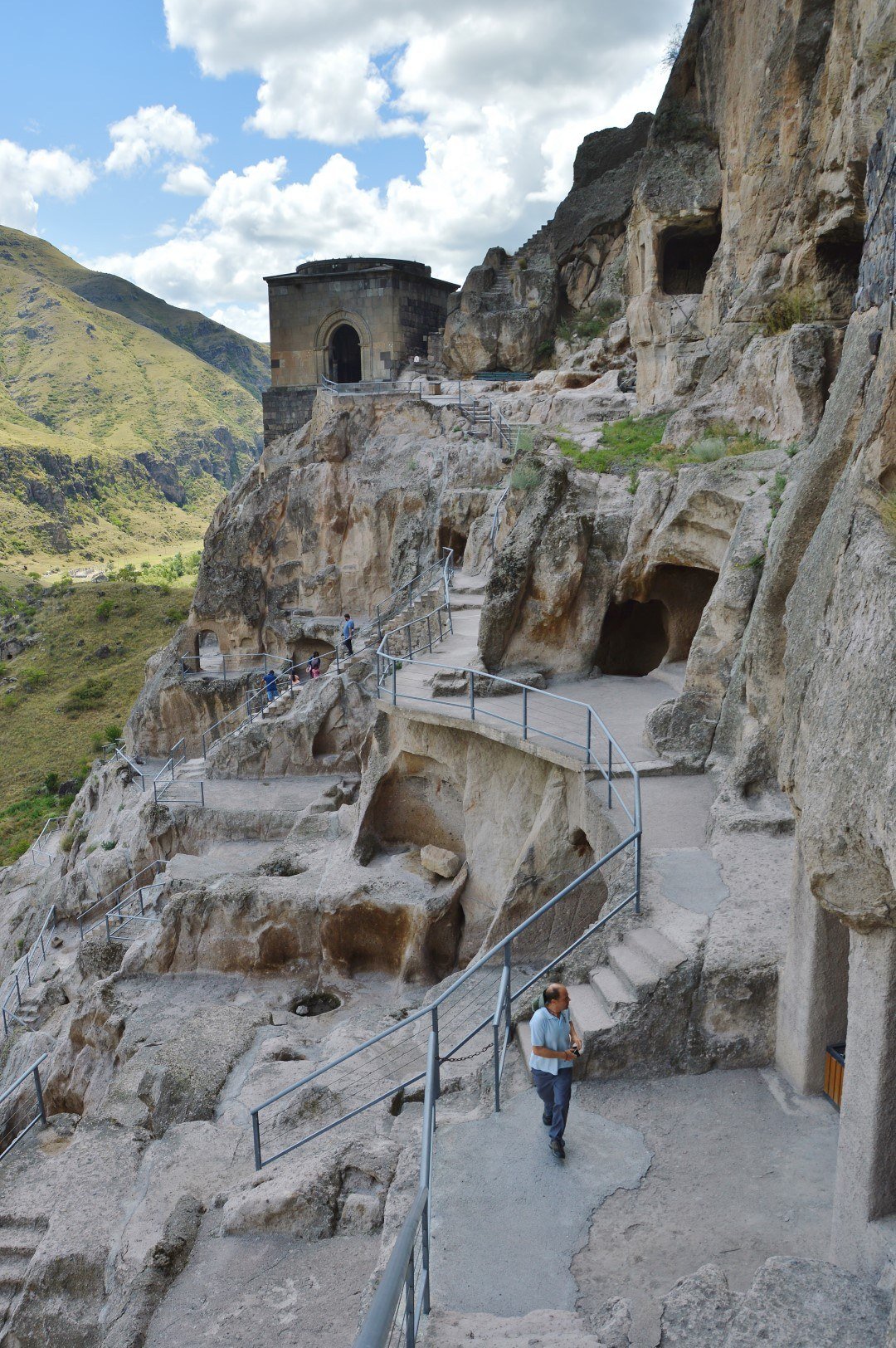
Vardzia is visible from the road before you arrive: a basalt wall some 500 metres long pierced by windows, arches and galleries. What looks from a distance like a vertical ghost city turns out up close to be a labyrinth of corridors connecting monks' cells, fresco-decorated churches, water cisterns and a terracotta pipe system that has been functioning for eight centuries.
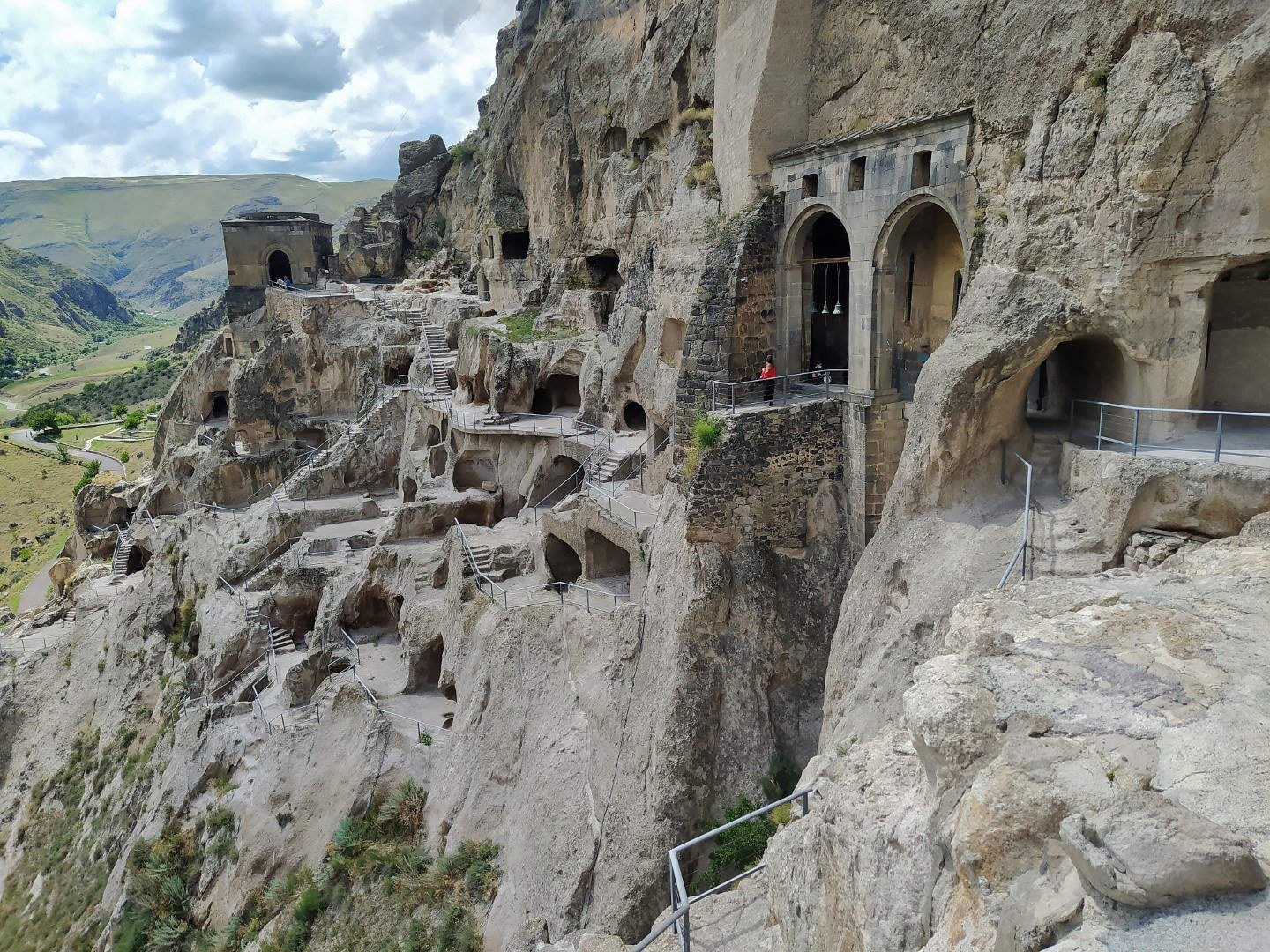
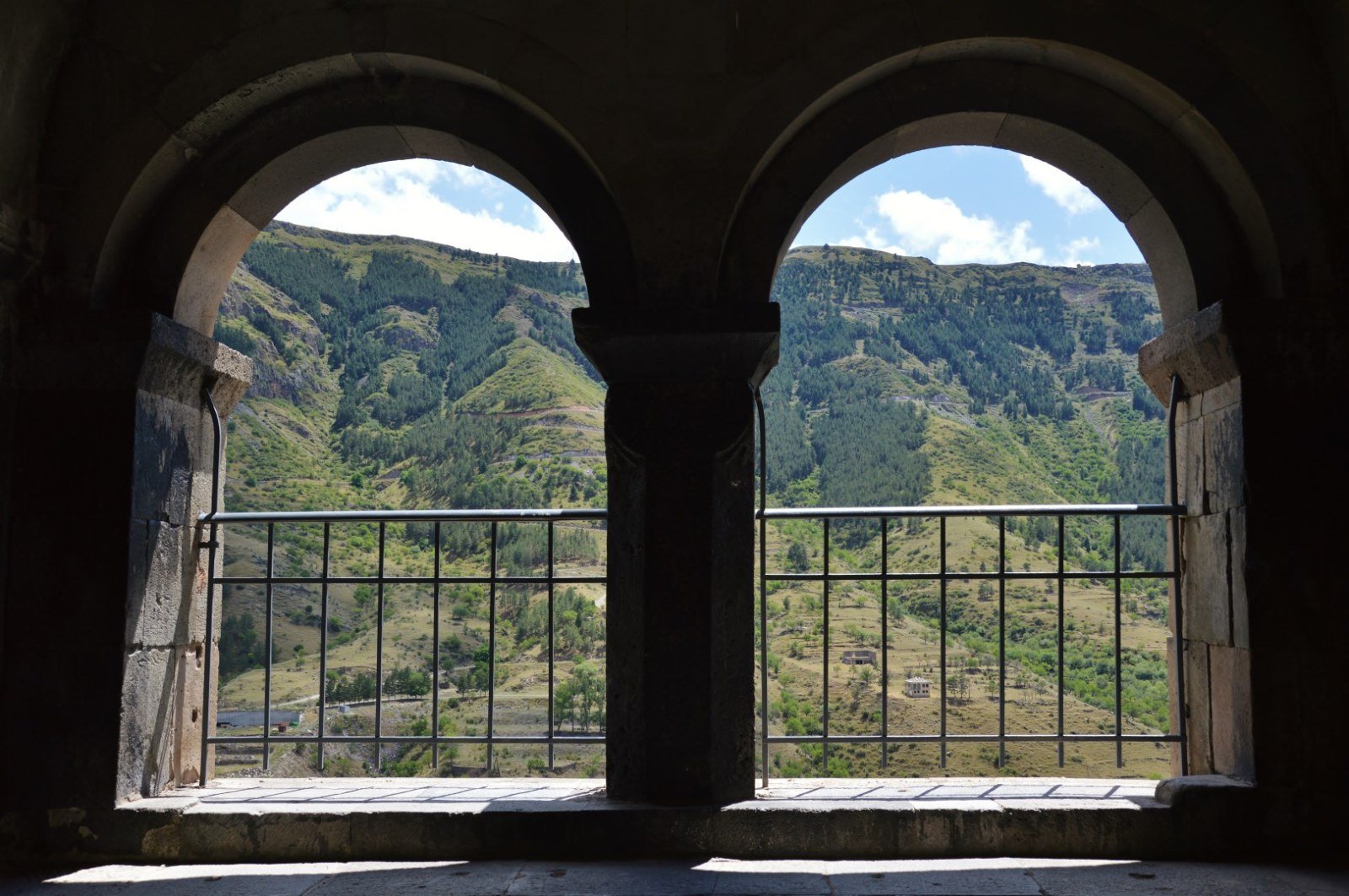
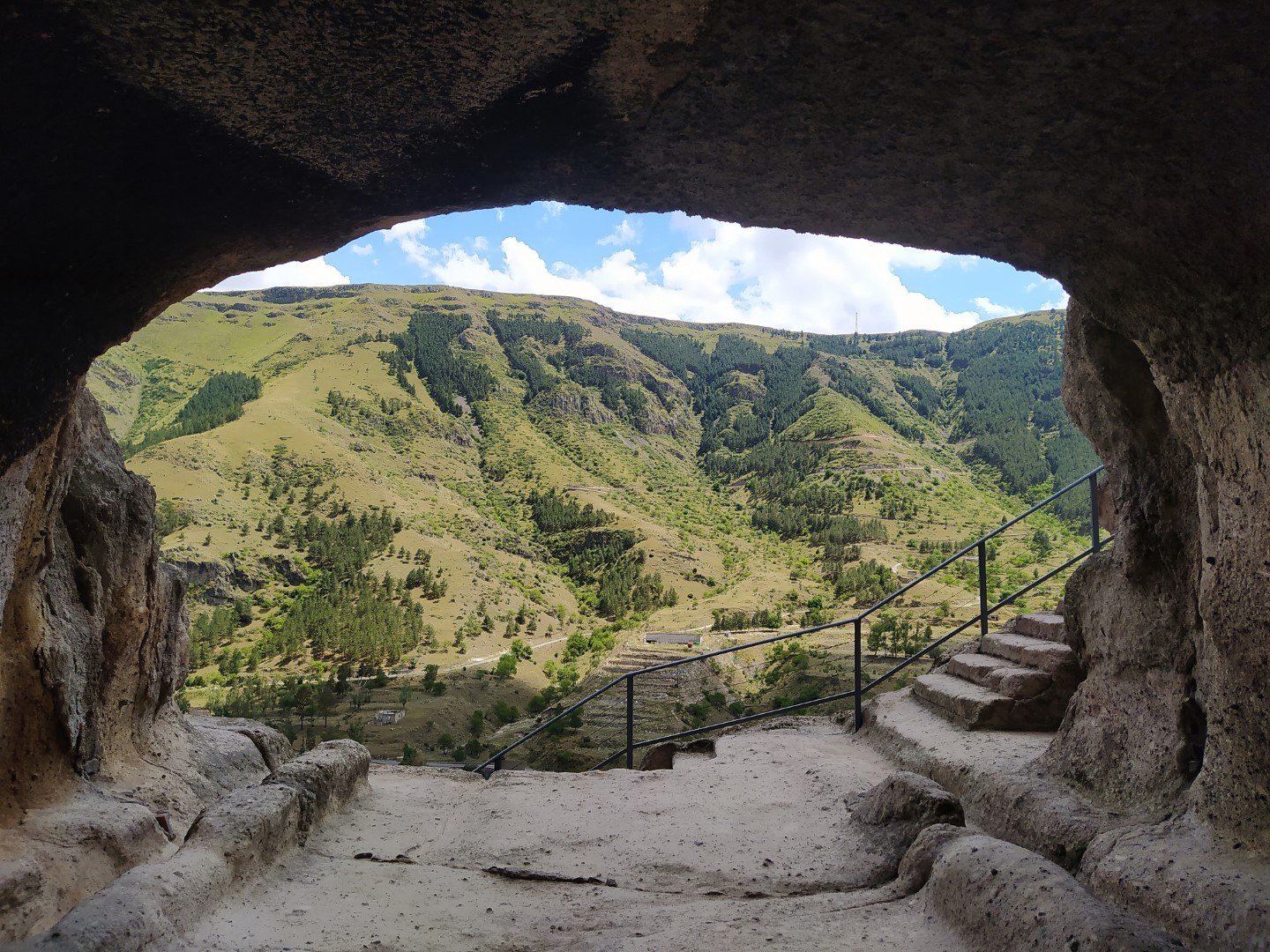
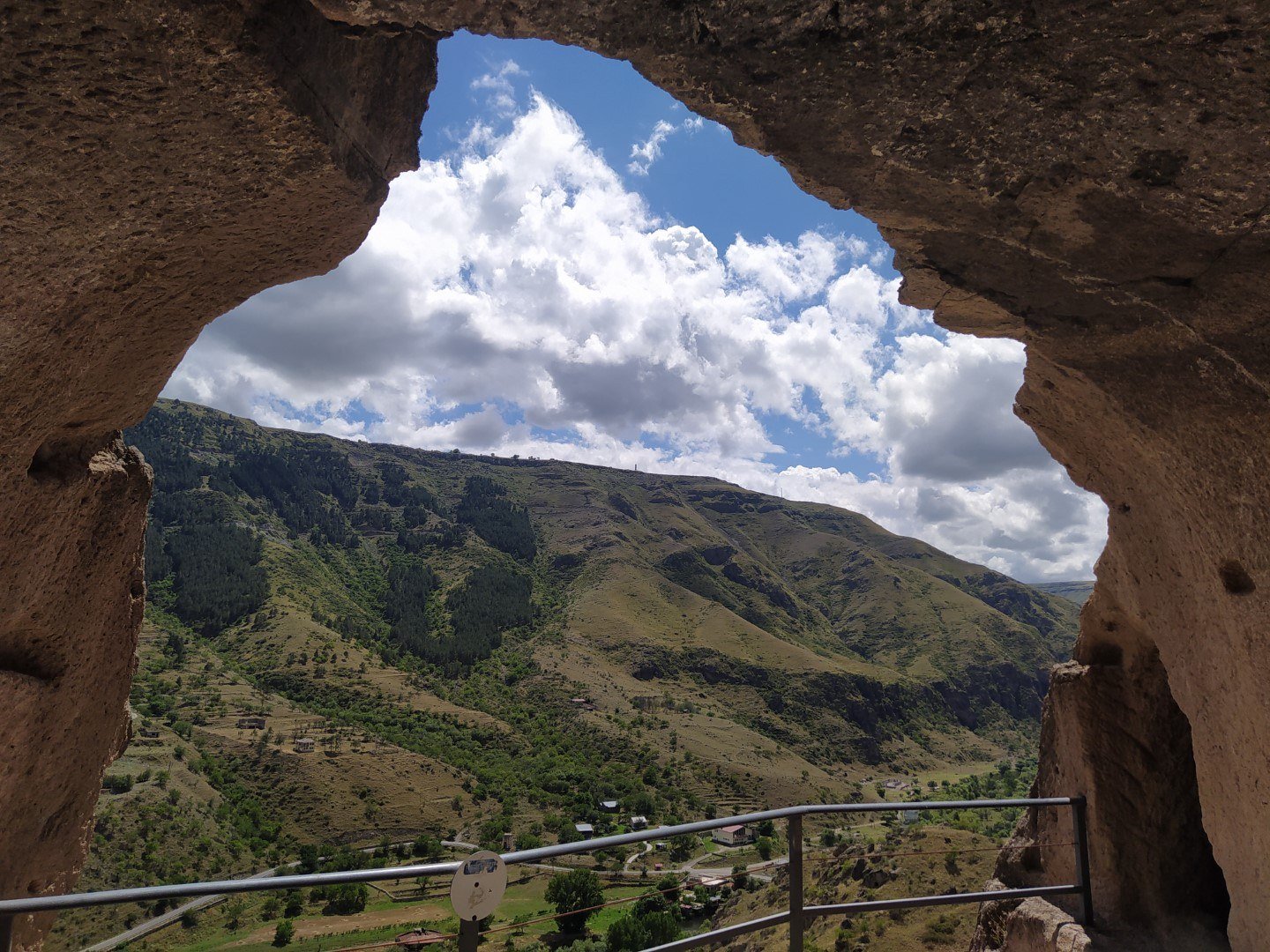
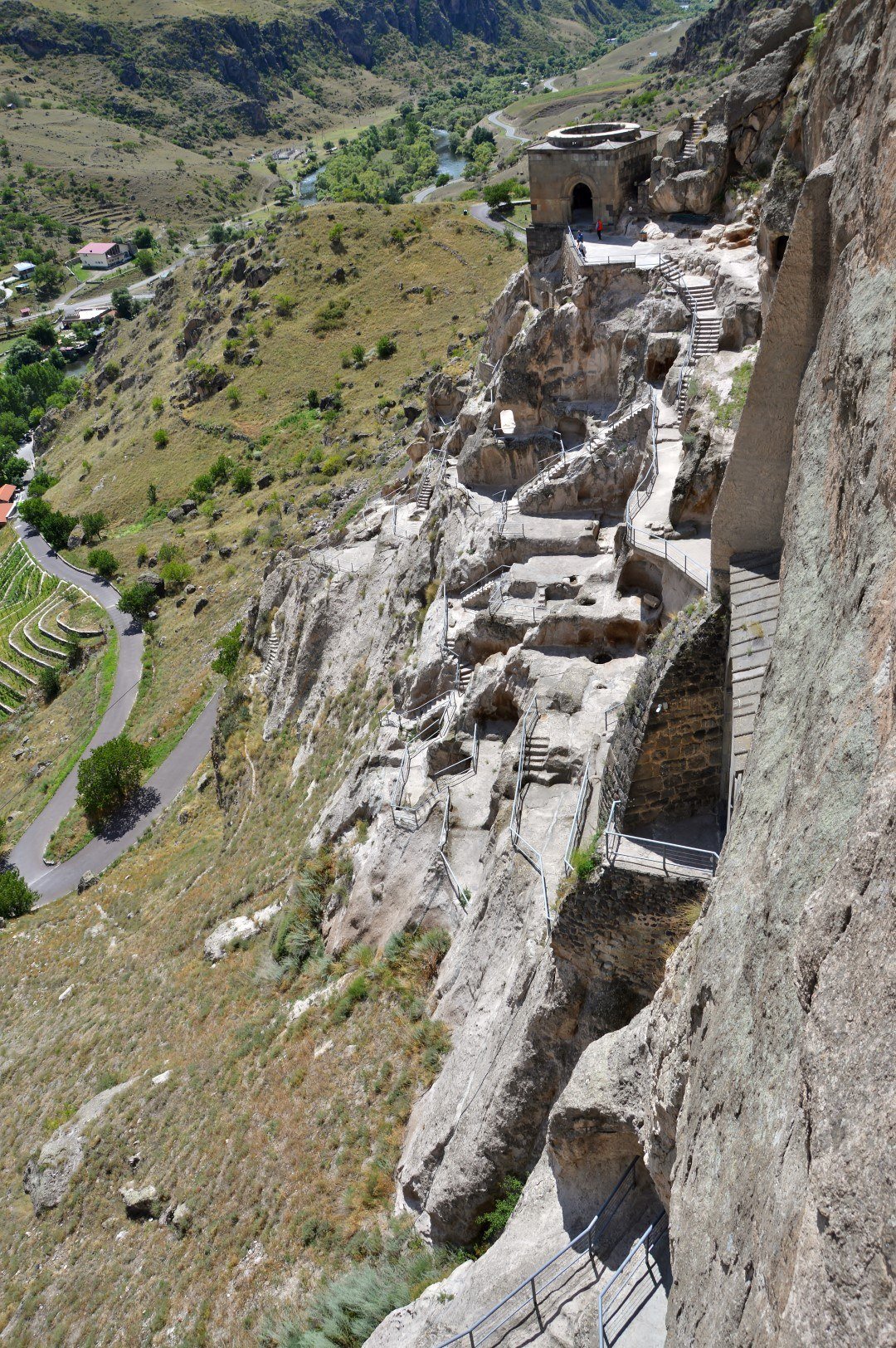
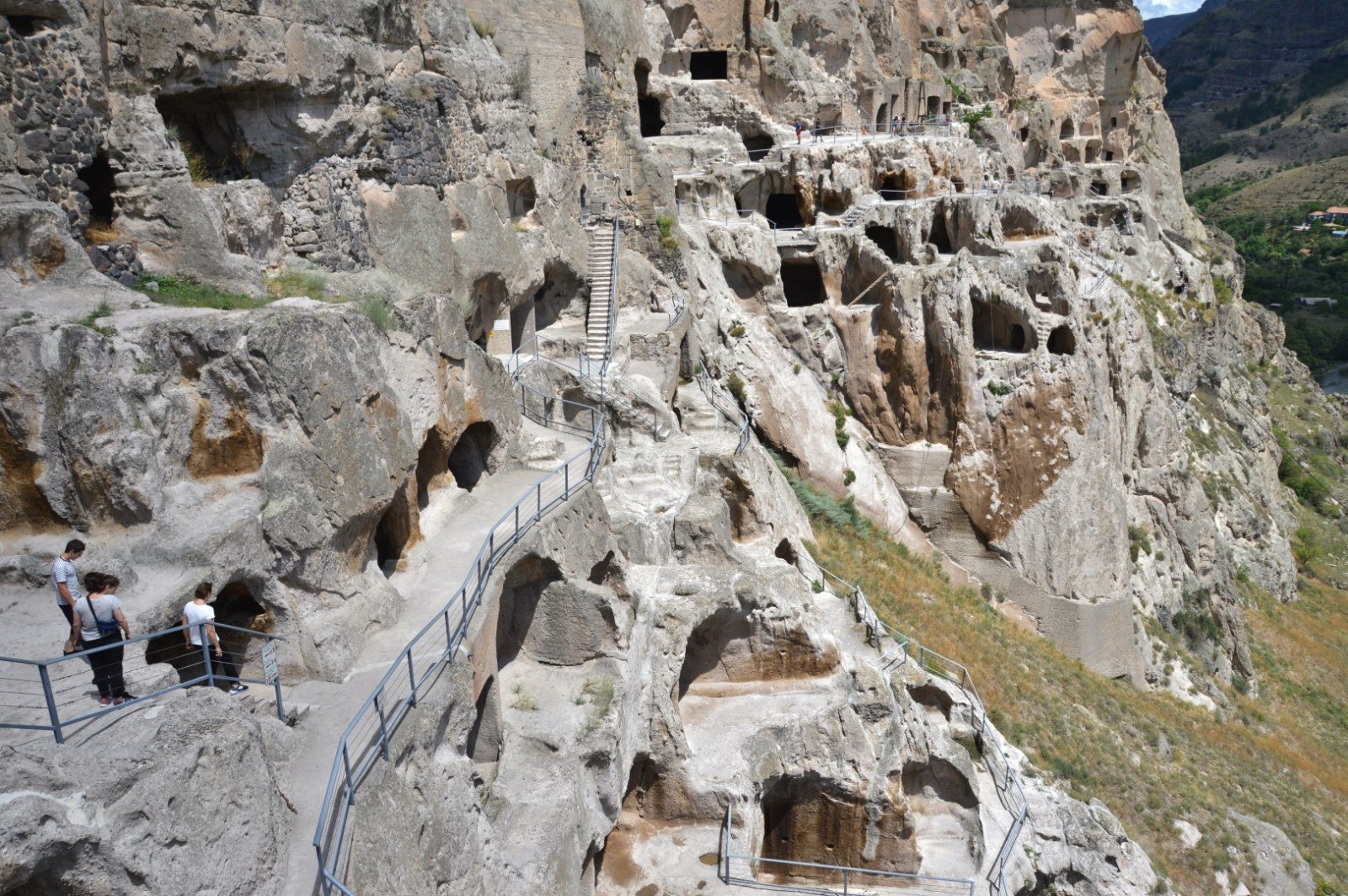
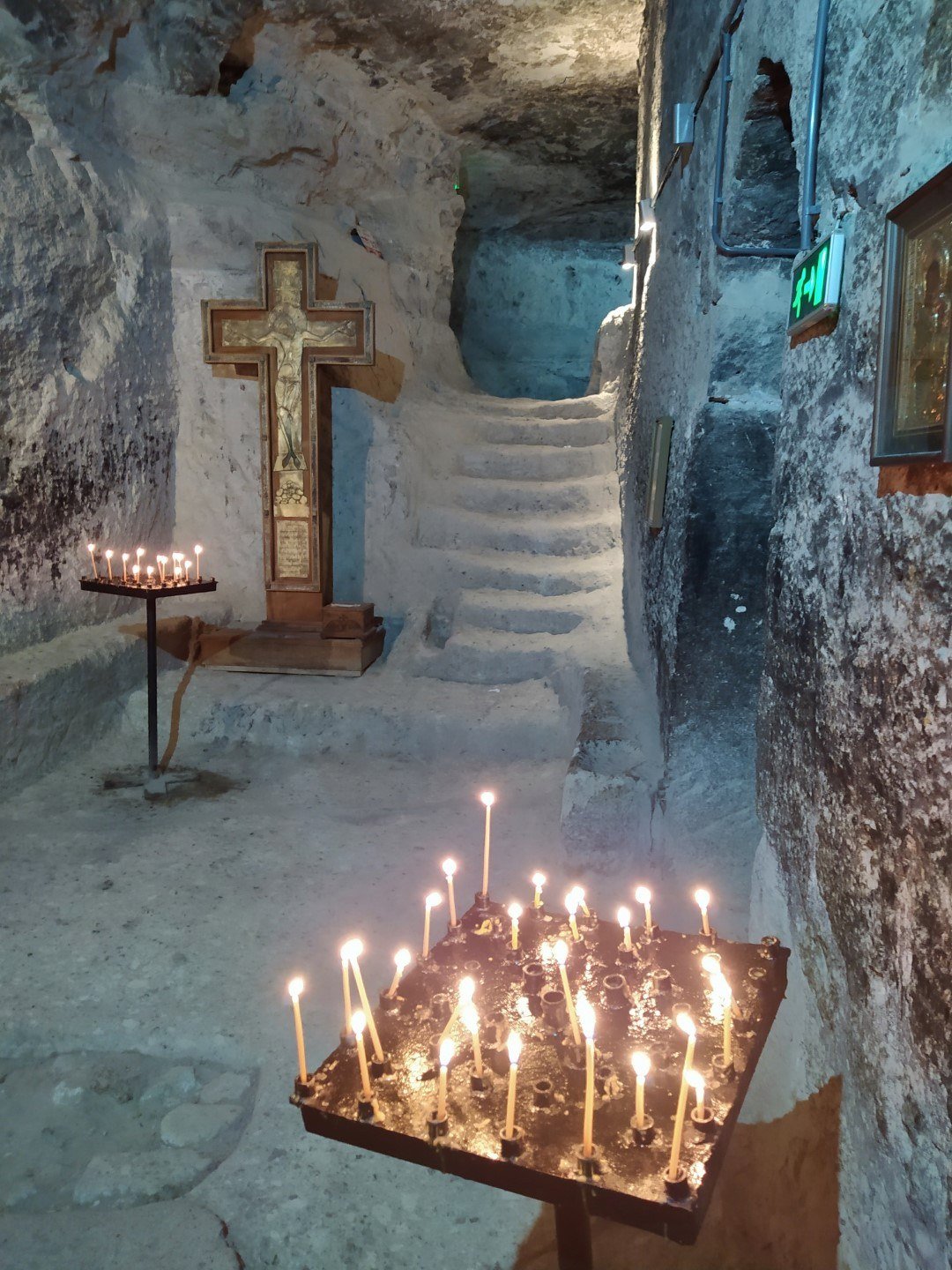
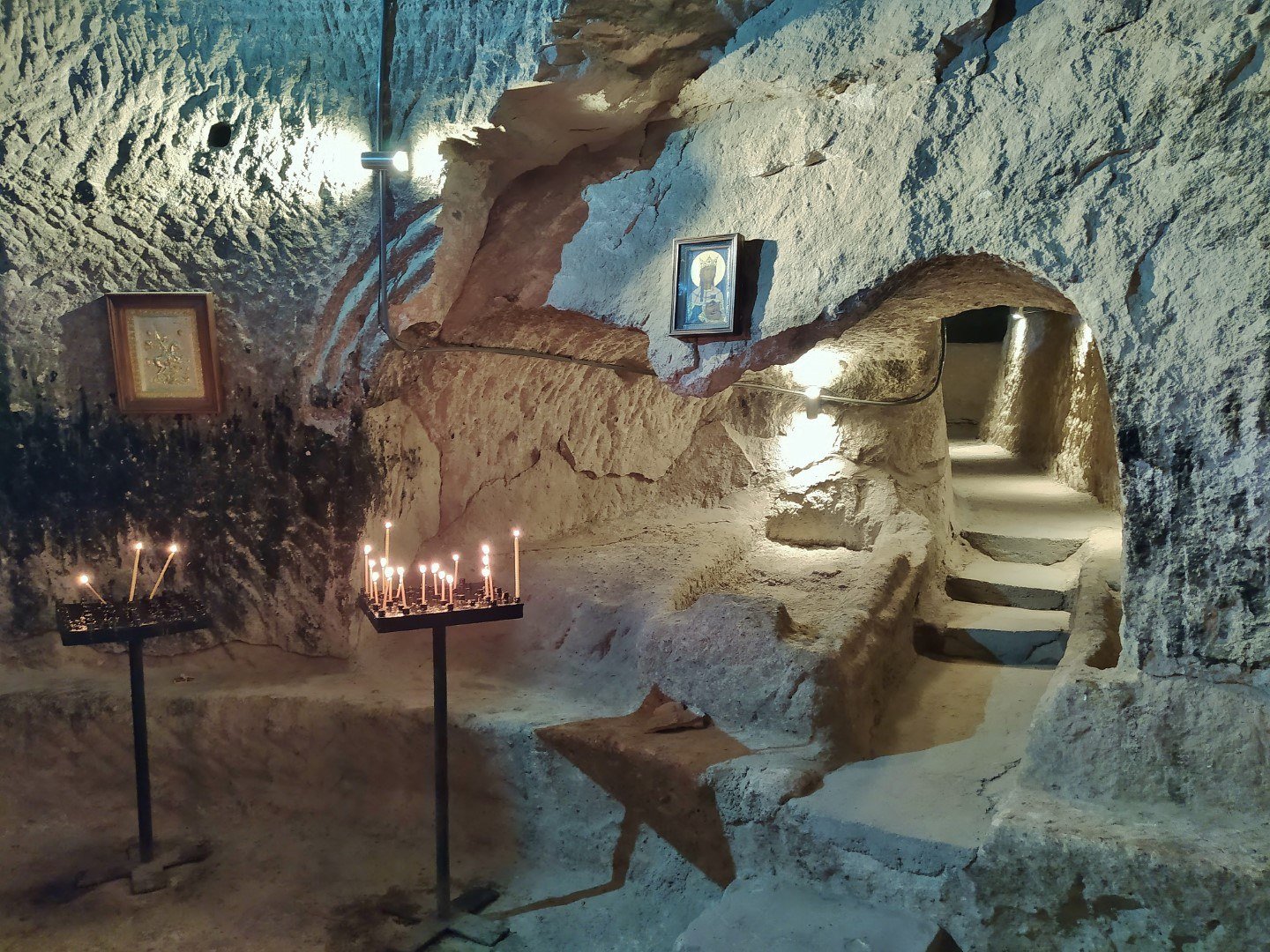
The level of preservation is uneven. Some sections are well restored with electric lighting; others are visited in the dark, with a phone torch. The exterior galleries on the third and fourth floors are the most photogenic, with the openings framed against the green of the Mtkvari valley and the volcanic mountains to the south. In summer the heat is intense on the exterior walkways, but the inner chambers maintain a cave temperature of around 12–14 degrees regardless of the time of day. The path from the entrance involves climbing several flights of steps cut into the rock — not suitable for visitors with mobility difficulties.
The monastery is still active. A small community of monks lives in the most accessible chambers and the Church of the Dormition holds services regularly. If your visit coincides with the morning prayers, the Georgian liturgical chant echoing between the basalt walls is something that stays with you for the rest of the day. Admission costs around 7 GEL (about 2.50 EUR); standard opening hours are 10:00 to 18:00, though it is worth confirming in the low season.
History
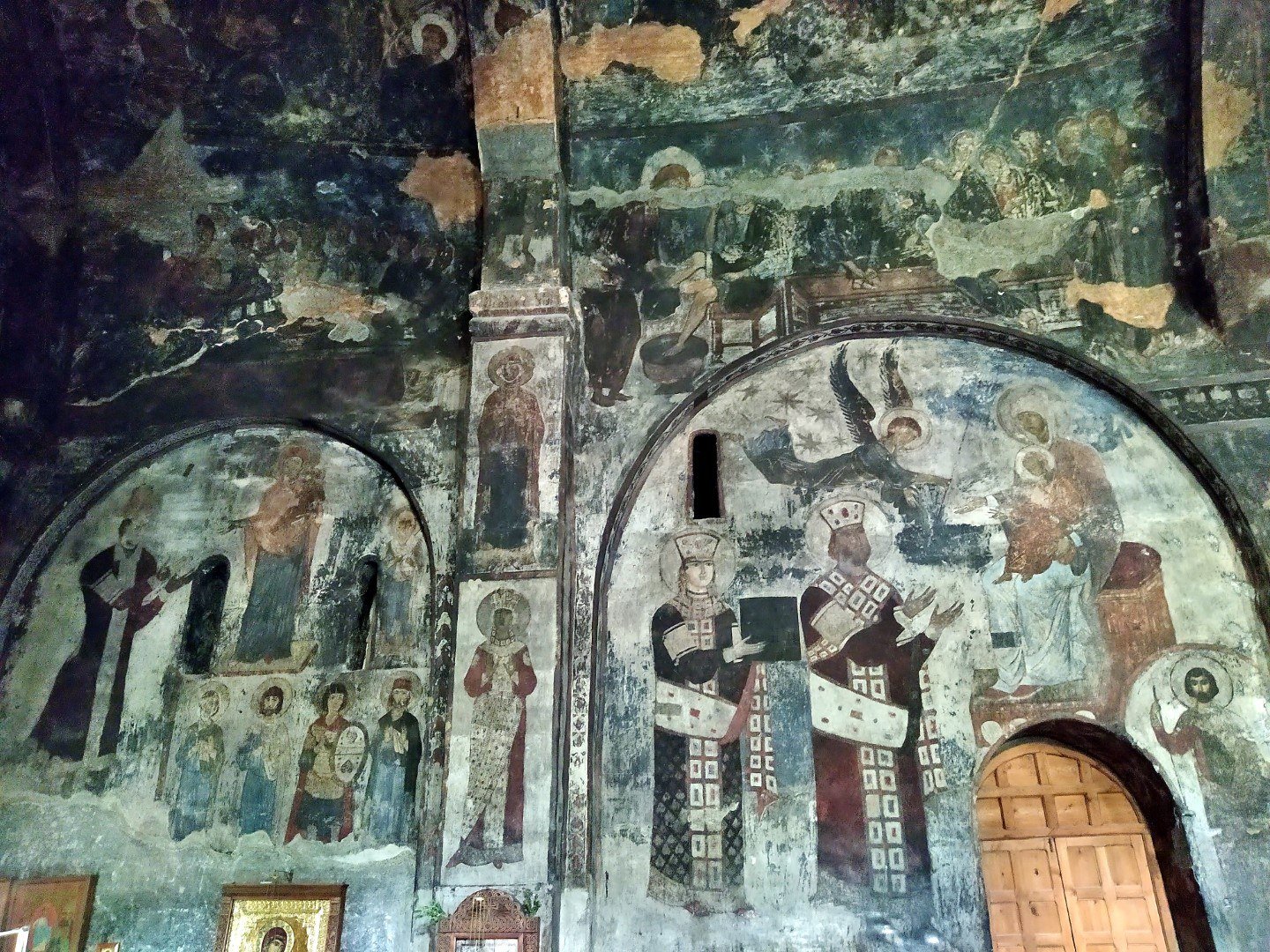
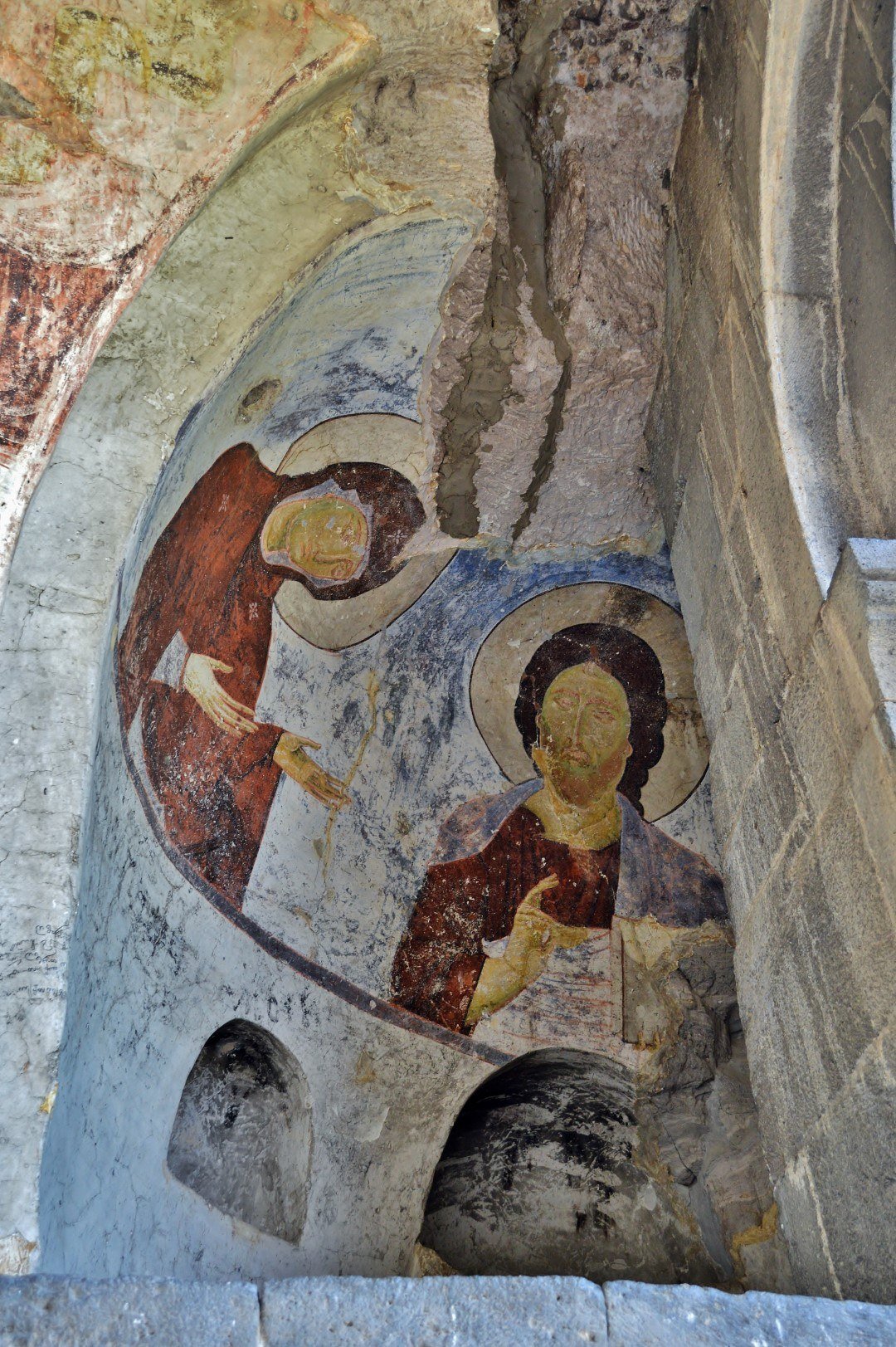
Vardzia was commissioned by King George III of Georgia in the mid-12th century and ambitiously expanded by his daughter, Queen Tamar, considered the most powerful ruler in medieval Georgian history. At its peak in the late 12th century the complex had more than 3,000 chambers and could house several thousand monks and soldiers. An earthquake in 1283 brought down the outer façade, exposing the interior floors and giving the complex its current appearance of a vertical honeycomb. Persian invasions in the 15th and 16th centuries destroyed part of the structures and dispersed the monastic community. The Church of the Dormition preserves frescoes dated to around 1184–1186, including a portrait of Queen Tamar — one of the few contemporary portraits of a medieval Georgian ruler to have survived to the present day.
What to see & do
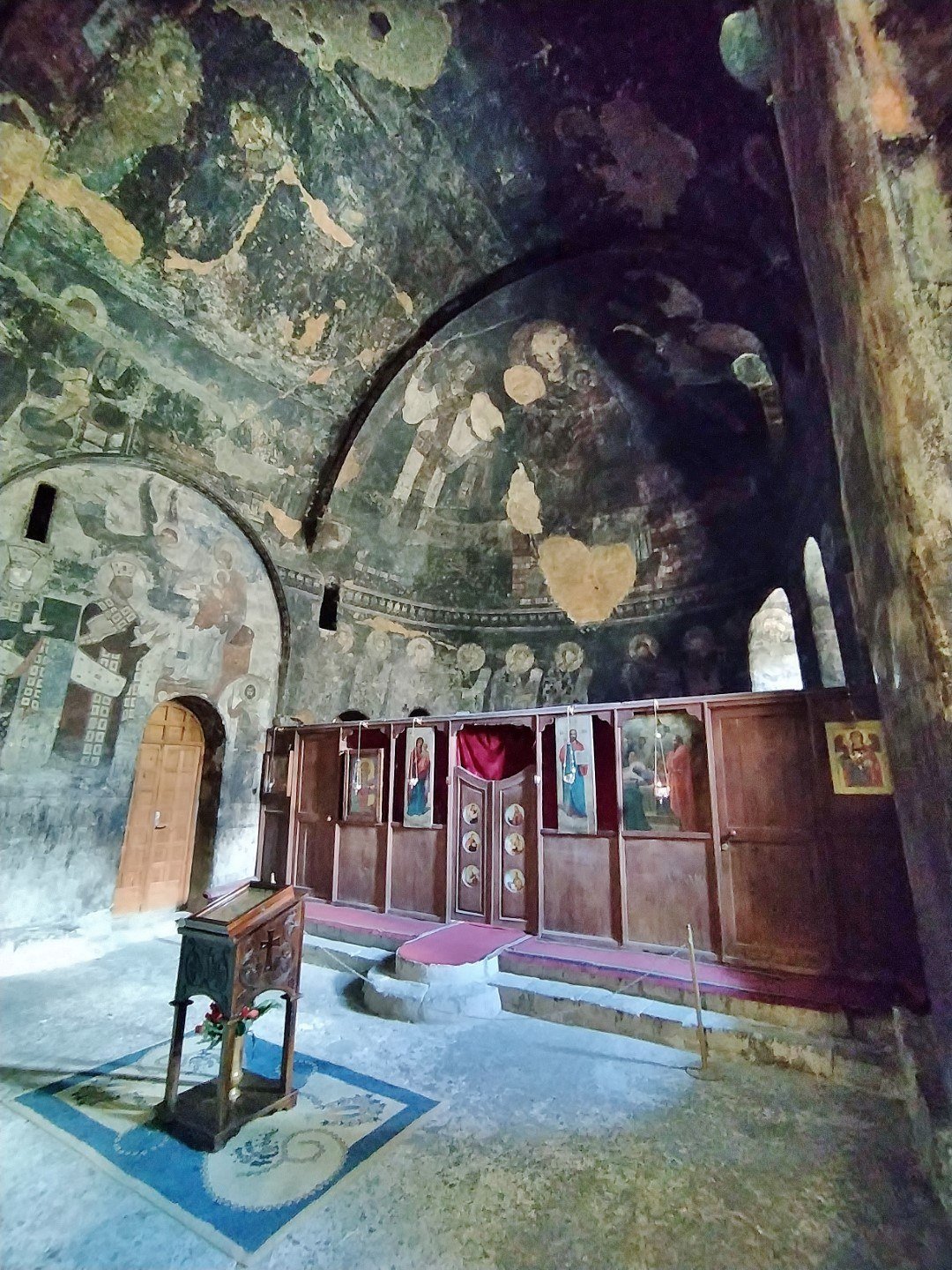
- Church of the Dormition The heart of the monastery. The 12th-century frescoes decorating its walls include a portrait of Queen Tamar and scenes from the Georgian liturgical cycle; the narthex vault retains pigments that are remarkably vivid for their age.
- Upper galleries The exterior corridors on the third and fourth floors, with direct views of the Mtkvari valley and access to monks' cells with niches cut into the rock for books and lamps.
- Water cisterns The storage system built to make the monastery self-sufficient during a siege. Some cisterns are still visible; others form part of the terracotta pipe network running through the walls.
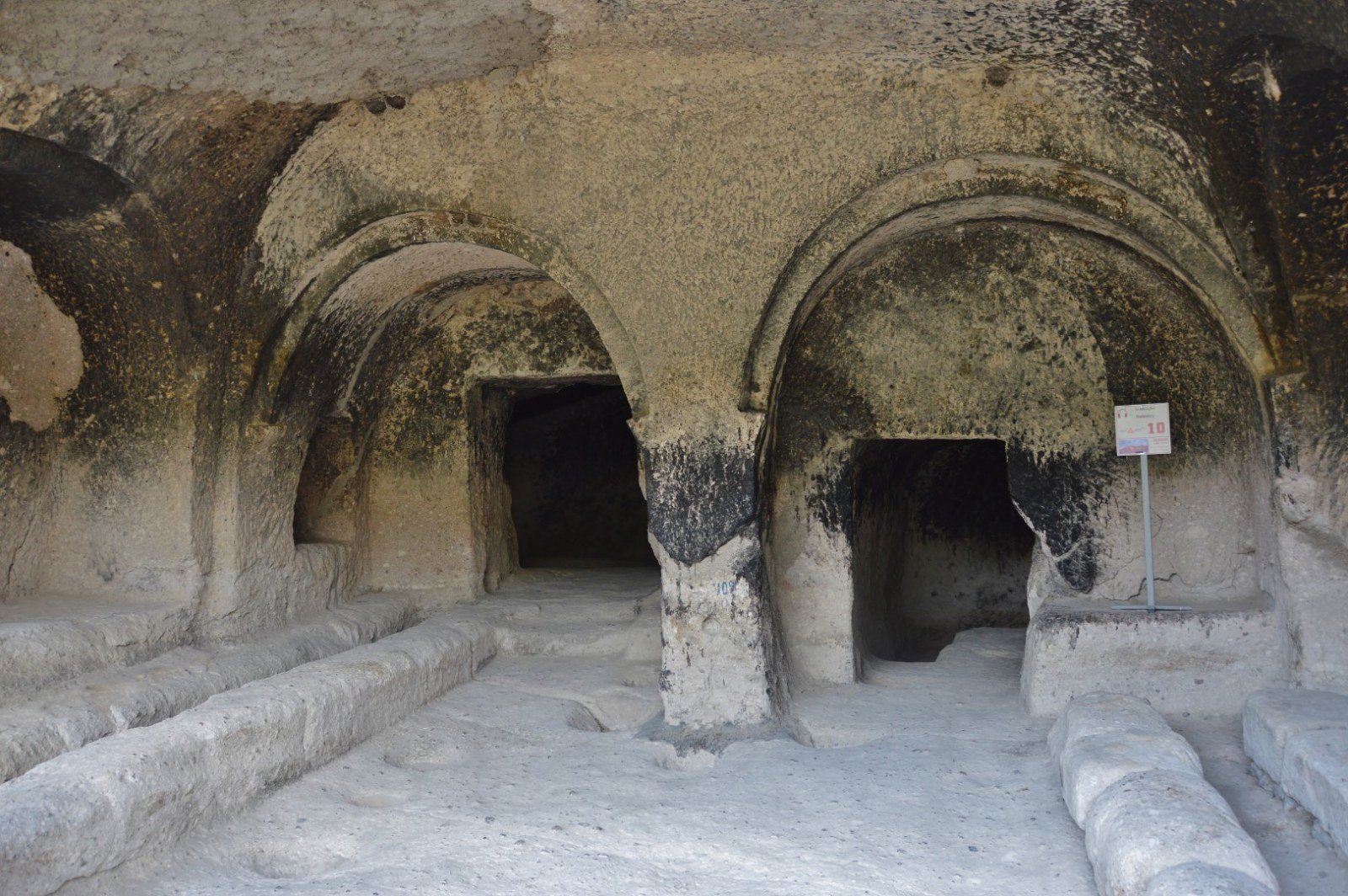
- Refectory The communal dining hall where the monastic community ate, with continuous benches carved directly from the rock and proportions that give a sense of the size Vardzia reached at its most active.
- Tamar's Tears Spring A small spring in the upper part of the complex, accessible through a narrow tunnel. Tradition holds that Queen Tamar wept here for her fallen soldiers; the water still flows.
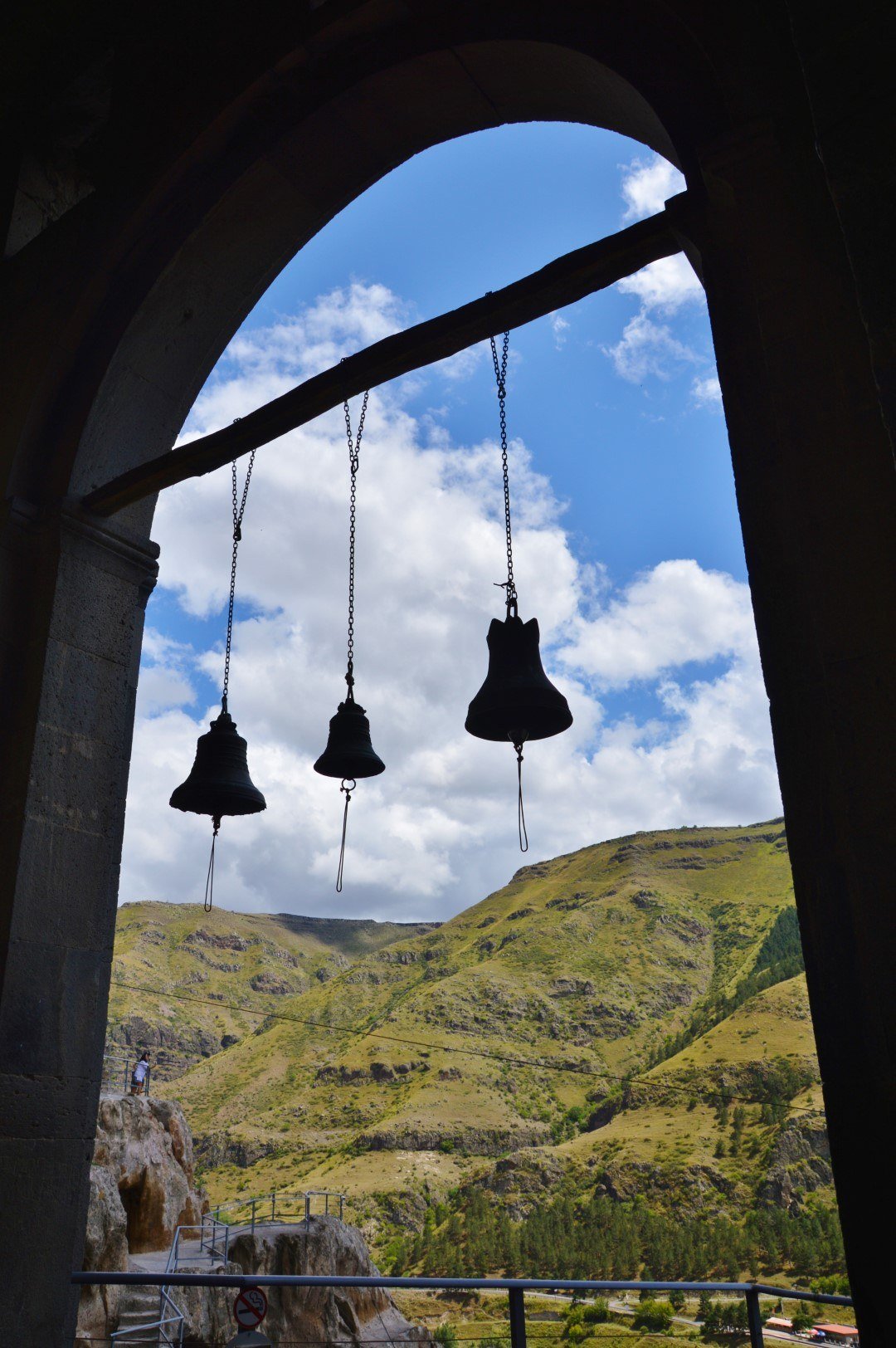
- Bell tower Its platform offers one of the most complete views of the complex and of Javakheti National Park to the south, with volcanic slopes covered in grassland.
Photo gallery
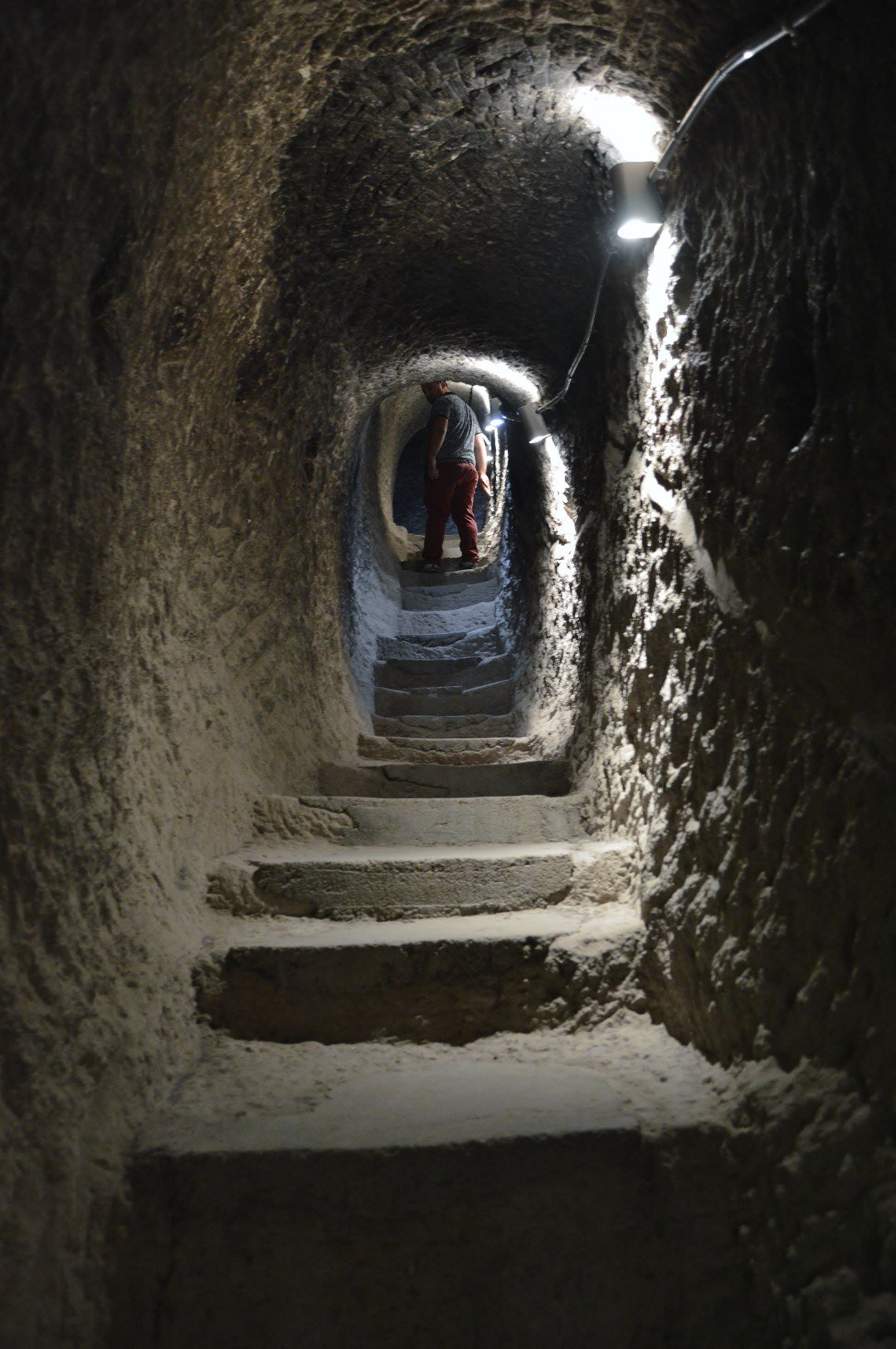
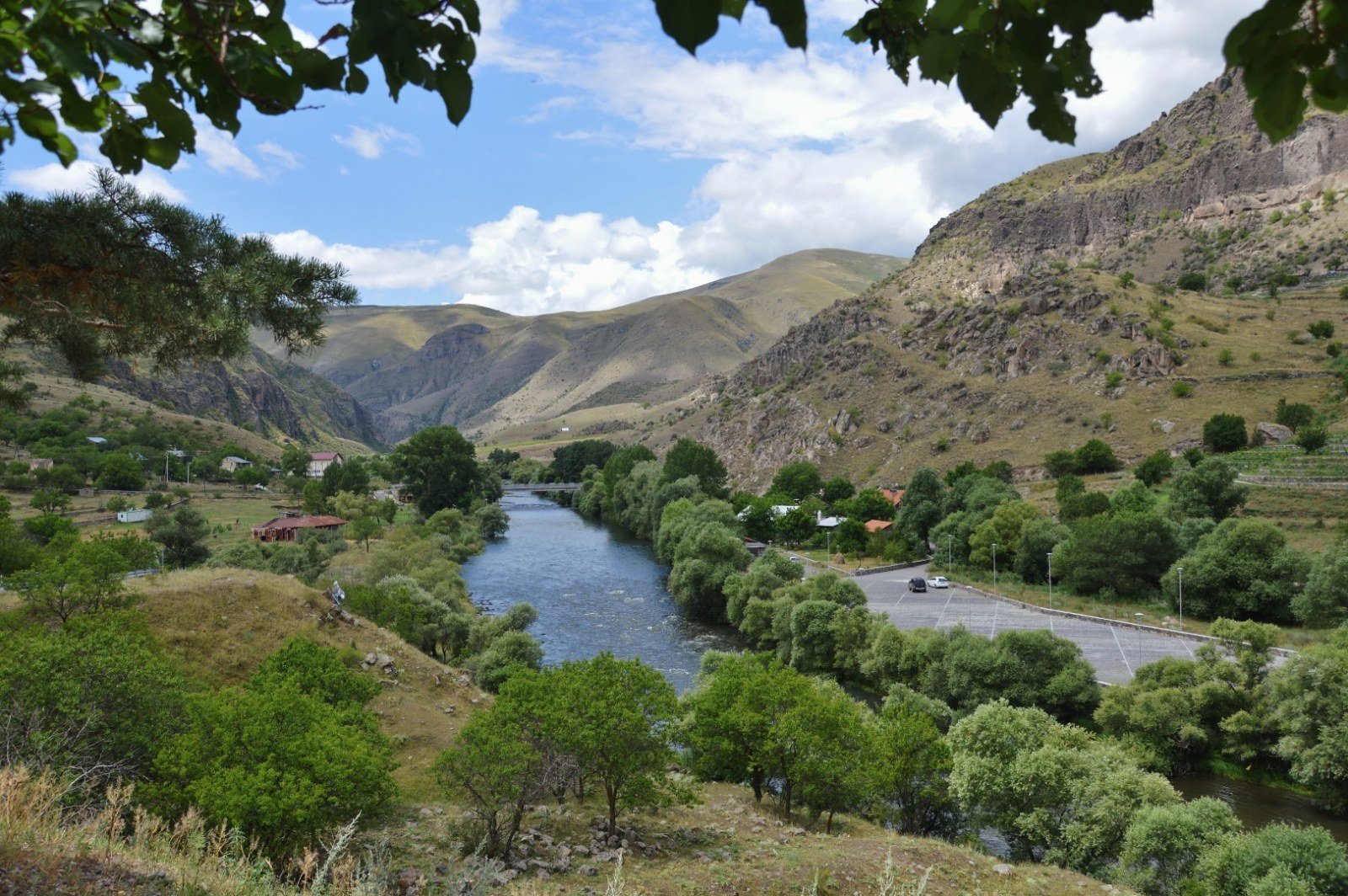
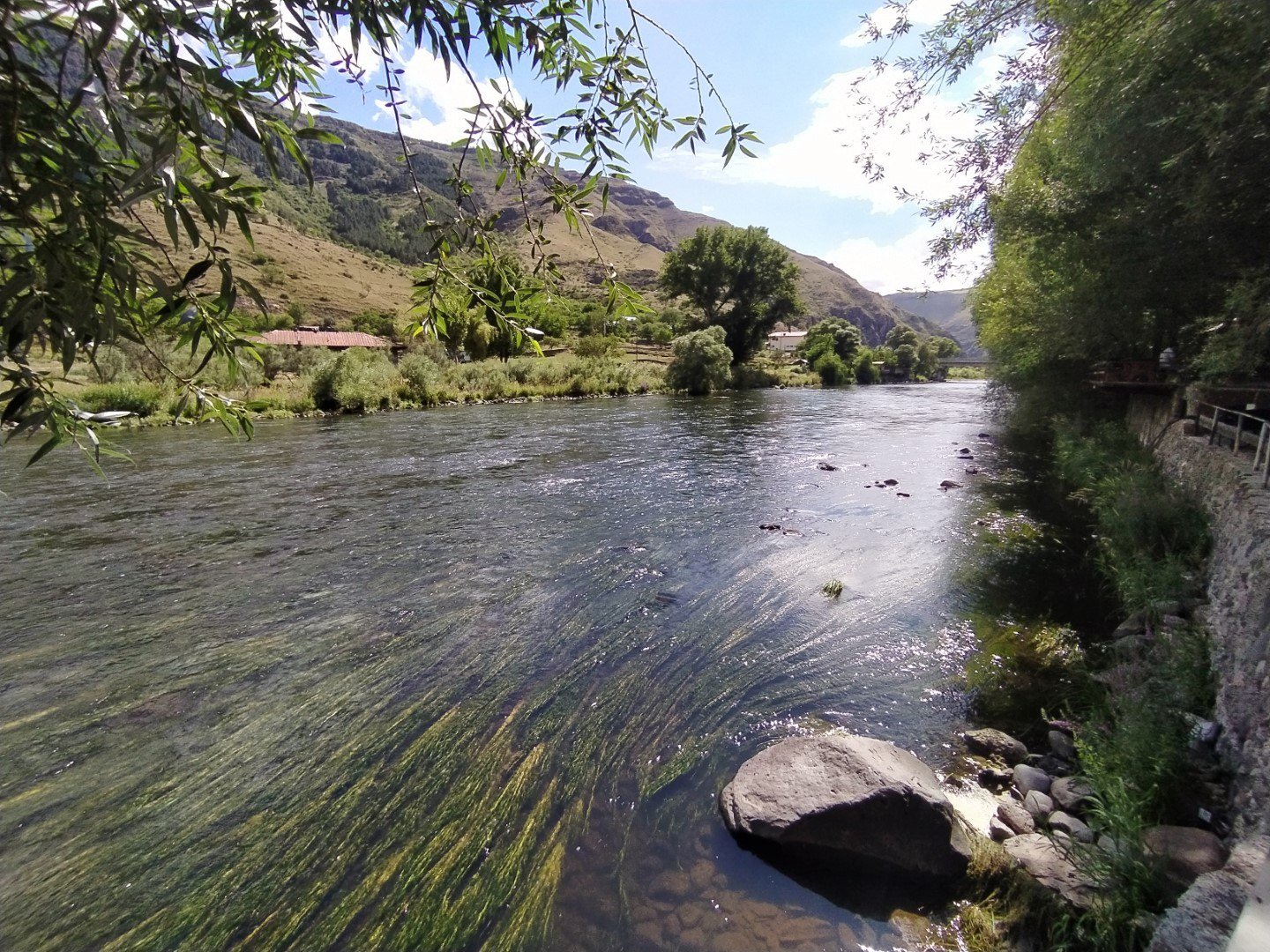
How to get there
Vardzia is about 360 km from Tbilisi, at the southern tip of the Samtskhe-Javakheti region. The usual route is by car or organised tour via Borjomi and Akhaltsikhe; the journey takes four to five hours. Marshrutkas run from Akhaltsikhe (65 km) in the high season. There is no train to Vardzia. The road for the last few kilometres is narrow but paved. Free parking is available beside the river.
Best time to visit
The best time to visit is May to October. In spring the Mtkvari valley is green and the exterior sections are cool. Summer brings heat (30–35 °C in July in the valley), but the inner chambers stay at cave temperature. September and October are the best months: fewer visitors and softer afternoon light. In winter the road can be icy and some internal access points close due to the risk of rockfall.