
Trchkan Waterfall
Թռչկանի ջրվեժ
Armenia's highest waterfall: a 23-metre free drop over the Chichkhan River, in the gorge between the provinces of Shirak and Lori.
Location in the Caucasus
Description
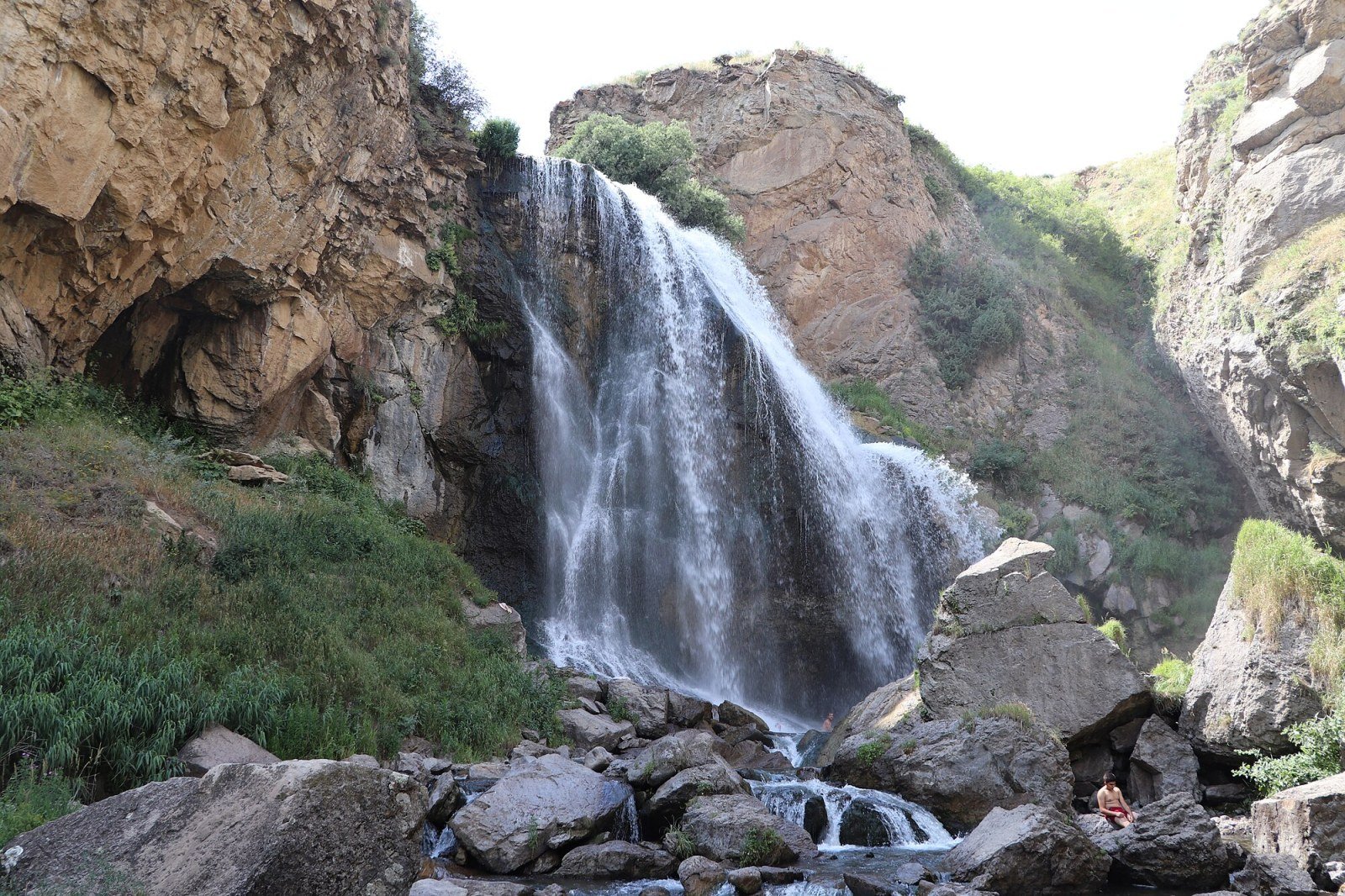
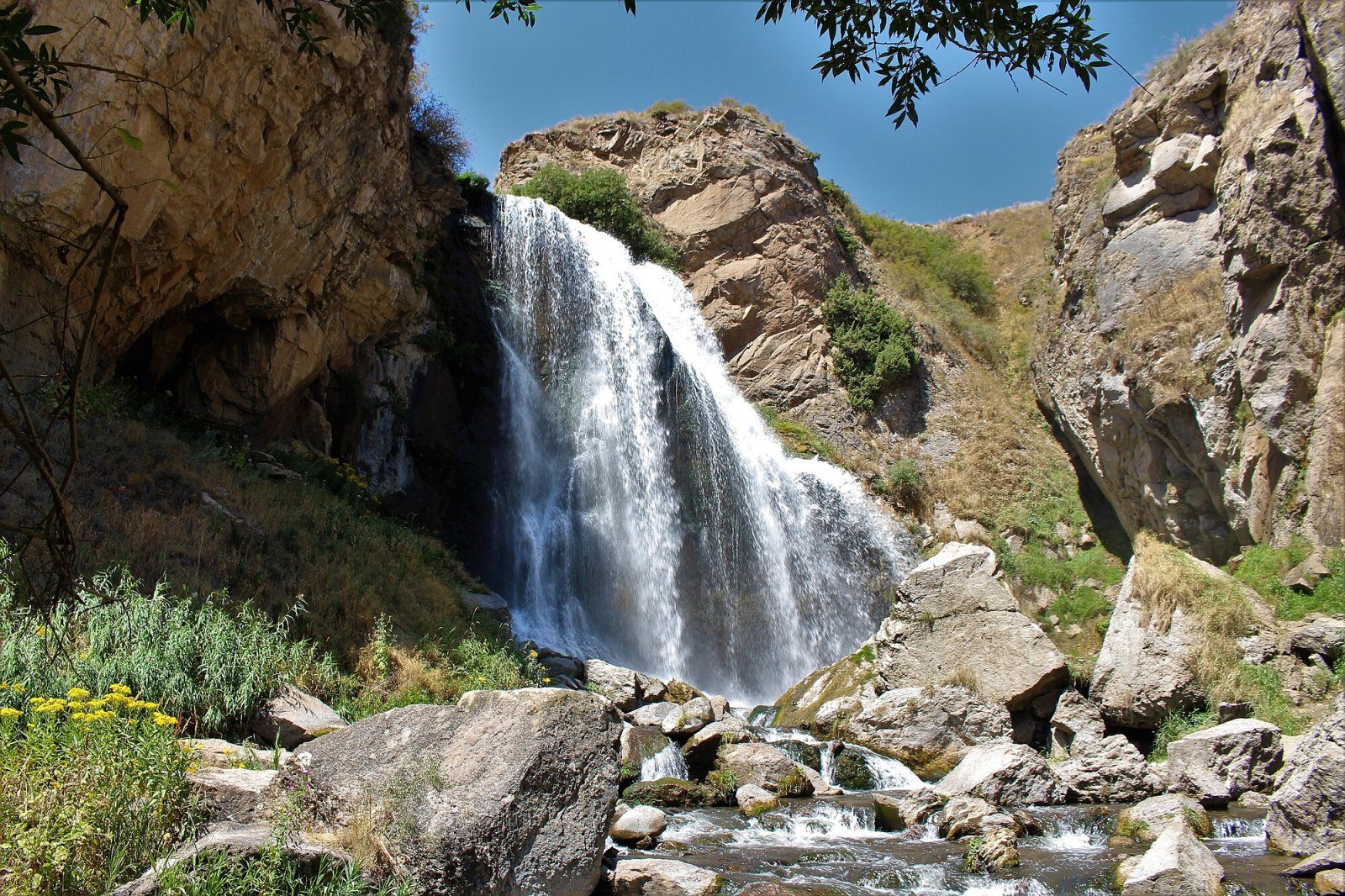
You hear it before you see it. After walking through the gorge of the Chichkhan River between open meadows and ridges of dark rock, the sound of water starts bouncing off the canyon walls and the air turns damp and cold all at once. When Trchkan Waterfall comes into view, the 23-metre free drop hammers the rock with a force that sends spray several metres in every direction. This is not a decorative waterfall: it carries serious flow, especially between March and June, when snowmelt from the Javakhk massif feeds the Chichkhan with sustained power.
The area is barely set up for tourism. There is no ticket booth, no railing, no café. What there is: picnic areas with stone barbecue grills where Armenian families set up weekend spreads, and a couple of short trails that let you see the waterfall from above and below. On weekdays, outside July and August, you are likely to have it to yourself with nothing but the sound of the water and the occasional cry of a raptor. Summer weekends are a different story: groups with speakers and full tableware occupy every flat metre available.
Behind the curtain of water there is a semi-cave from which you can watch the Chichkhan valley through the sheet of falling water. The ground is always wet and slippery, cold seeps in quickly and clothes get soaked, but the view from inside is well worth the drenching.
History
The name Trchkan comes from Armenian and means something close to 'to leap' or 'to jump'. Local legend says that the trout of the Chichkhan River used to swim upstream during spawning season and leap over the waterfall. A few kilometres away stands the Chichkhanavank monastery, which according to masonry marks on its walls dates back to the 7th century. The 1988 earthquake destroyed it almost completely; it was rebuilt between 2013 and 2015. In 2011 Trchkan Waterfall nearly disappeared: a company began building a small hydroelectric plant in the upper riverbed, but Armenian environmental activists managed to halt construction and the government declared the area a protected zone.
What to see & do
- The main waterfall 23.5 metres of vertical drop with an average flow of 1.5 tonnes per second. The jet throws up a constant mist that forms rainbows on sunny mornings. In winter it freezes completely.
- The semi-cave A hollow behind the curtain of water lets you watch the Chichkhan valley through the falling sheet. The ground is slippery: footwear with grip is essential. Clothes will get wet.
- Chichkhanavank Monastery A few kilometres from the waterfall, this 7th-century monastery was rebuilt after the 1988 earthquake. Small, austere and almost visitor-free; the masonry marks on the original walls are the oldest in the complex.
- Chichkhan River gorge The access walk from Sarapat or Dzoraghbyur runs through a valley of alpine meadows and rocky ridges. The river must be crossed several times: waterproof boots or trekking sandals with spare socks.
- Trchkan in winter The waterfall freezes solid and locals call it Serov Taguhin (the Ice Queen). With proper gear ice climbing is possible; access requires 4×4 with chains or a long hike through snow.
Photo Gallery
How to get there
Gyumri, about 33 km away, is the nearest large city; by car, roughly an hour. From Vanadzor or Spitak the distance is similar. The last stretch to the waterfall is a dirt track and a high-clearance vehicle is recommended, especially in spring. From the villages of Sarapat or Dzoraghbyur you can walk to Trchkan Waterfall along a low-to-medium difficulty trail (about 2 hours one way). There is no direct public transport; the most practical option is an off-road taxi from Gyumri or including it in an organised excursion.
Best time to visit
From May to June Trchkan Waterfall is at peak flow thanks to snowmelt and the Chichkhan valley is deep green, though the path may be muddy and river crossings more challenging. July and August are the most comfortable months for walking, though flow drops and weekends get crowded. September and October offer autumn colours and solitude. In winter the waterfall freezes solid, which has its own appeal, but access requires 4×4 with chains or a long walk through snow.
More information
Photo: Dav Sargsyan · CC BY-SA 4.0