
Garni Temple
Գառնիի տաճար
First-century Hellenistic temple on a basalt promontory above the Azat River gorge — the only Greco-Roman structure in Armenia.
Location in the Caucasus
Description
The temple appears suddenly at the end of the road, planted on the tip of a triangular promontory that drops sheer on three sides into the Azat River gorge. The dark basalt stone of the podium absorbs the Armenian plateau sun and the Ionic columns stand out against a sky that is almost always clear. Below, the river runs between rock walls carved into hexagonal columns — natural formations that look like the work of an obsessive stonemason.
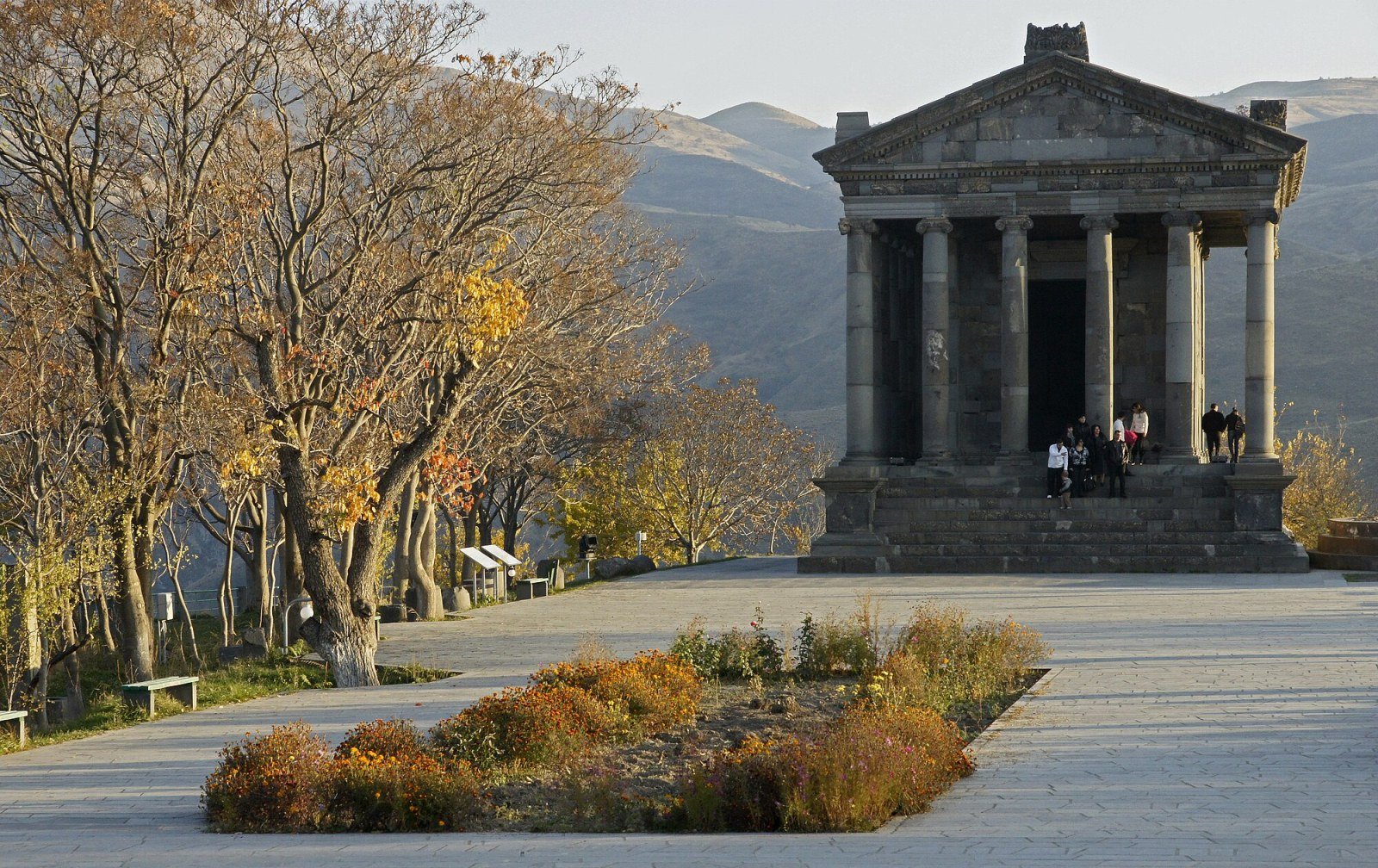
The site can be walked in just over an hour: the temple itself, the remains of a Roman bath with mosaics of marine figures, and the walls of a fortress that has stood here since before the Christian era. What justifies the visit, beyond the architecture, is the vertical landscape surrounding the whole complex. On summer weekends it fills with Armenian families spreading picnic cloths to the edge of the gorge; on weekdays or off-season the silence is almost complete and only the wind between the columns can be heard.
In the village of Garni, just before the site entrance, several restaurants prepare lavash in the tonir — the traditional earth oven — in full view of the customer. The smell of dough baked on hot clay drifts through the car windows before parking. A freshly made piece costs around 200–300 drams.
History
The Armenian king Tiridates I commissioned the temple in the first century AD, probably dedicated to the sun god Mihr. When Armenia converted to Christianity in the fourth century, most pagan shrines were demolished, but this one survived because the royal family used it as a summer residence. An earthquake in the 17th century brought it down almost completely. The stones, which had been numbered since the original construction, allowed an archaeological reconstruction between 1969 and 1975 during the Soviet era. What is seen today is a faithful reassembly, not the intact original building.
What to see & do
- Temple of Mihr A peristyle of 24 Ionic columns on a dark grey basalt podium. The classical proportions are best appreciated from below; the capitals retain precisely carved vegetal details.
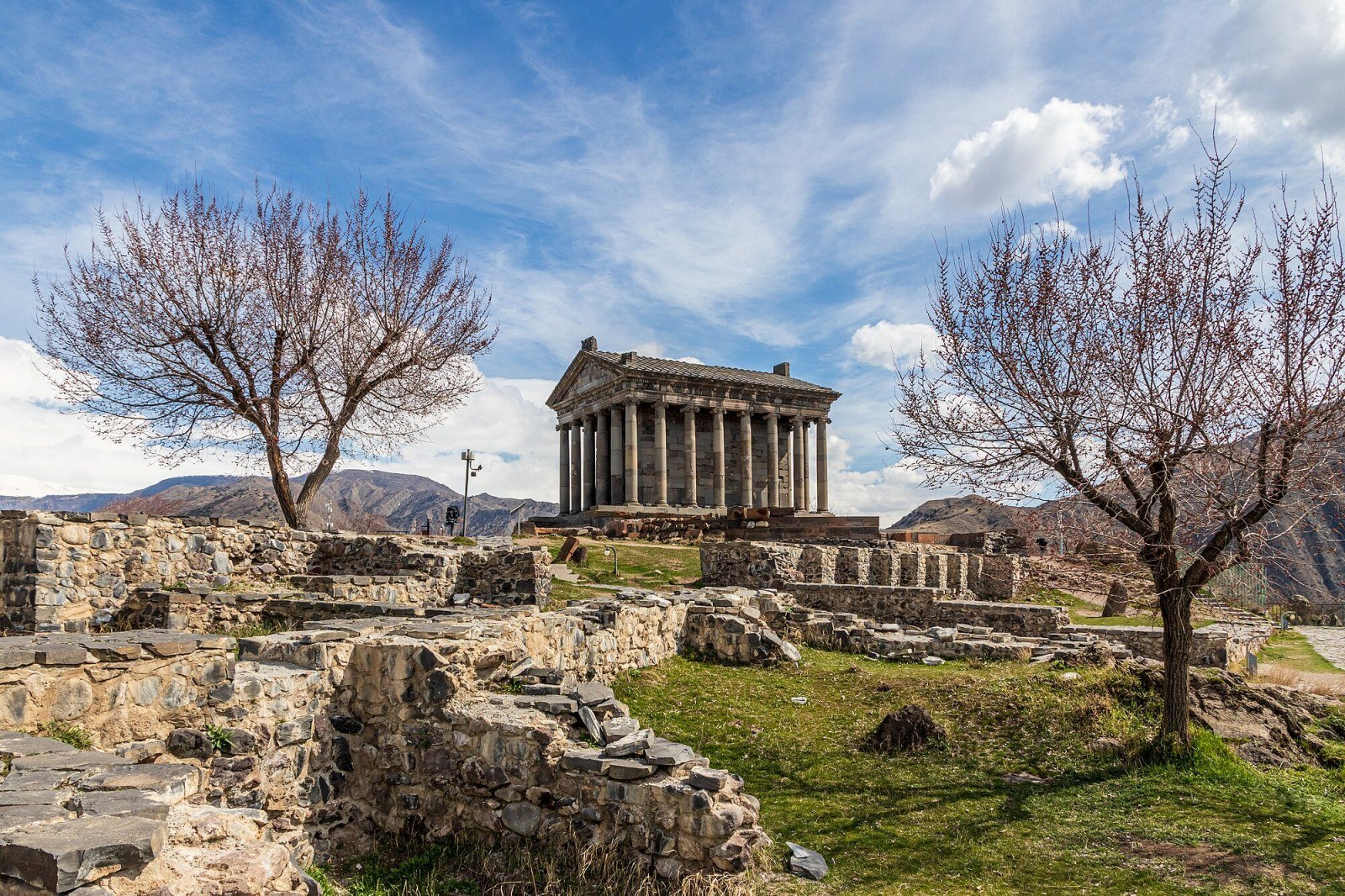
- Roman Bath Remains of a thermal complex beside the temple, with a floor mosaic depicting marine figures and water deities. Most visitors walk straight past.
- Azat Gorge and Symphony of Stones Hexagonal basalt columns on the gorge walls, a geological phenomenon visible from the promontory or by descending the trail that starts near the car park. The one-way walk takes about 20 minutes.
- Cyclopean Walls Remains of a fortification encircling the promontory since the Iron Age. From the walls there are open views of the valley and the village orchards.
- Village of Garni A small settlement with lavash workshops where baking demonstrations are given in the tonir. A good place to eat before or after the visit.
How to get there
Garni is 28 km east of Yerevan, about 40 minutes by road. There is no direct public transport from the centre; the most practical options are a taxi (5,000–6,000 drams per journey) or a shared tour from Republic Square. Most travellers combine Garni with Geghard Monastery, just 7 km further east along the same road.
Best time to visit
Spring (April–May) offers mild temperatures and green hills around the gorge. In summer the exposed promontory reaches 33 °C and queues form at the entrance on weekends. Autumn brings golden light and fewer visitors. In winter it can snow, creating an interesting contrast with the dark basalt; the road stays open.
More information
Photo: Marcin Konsek · CC BY-SA 4.0