
Svaneti
სვანეთი
Region in northwestern Georgia above 2,000 m, with Svan medieval towers, Great Caucasus glaciers and villages inhabited since the Middle Ages.
Location in the Caucasus
Description
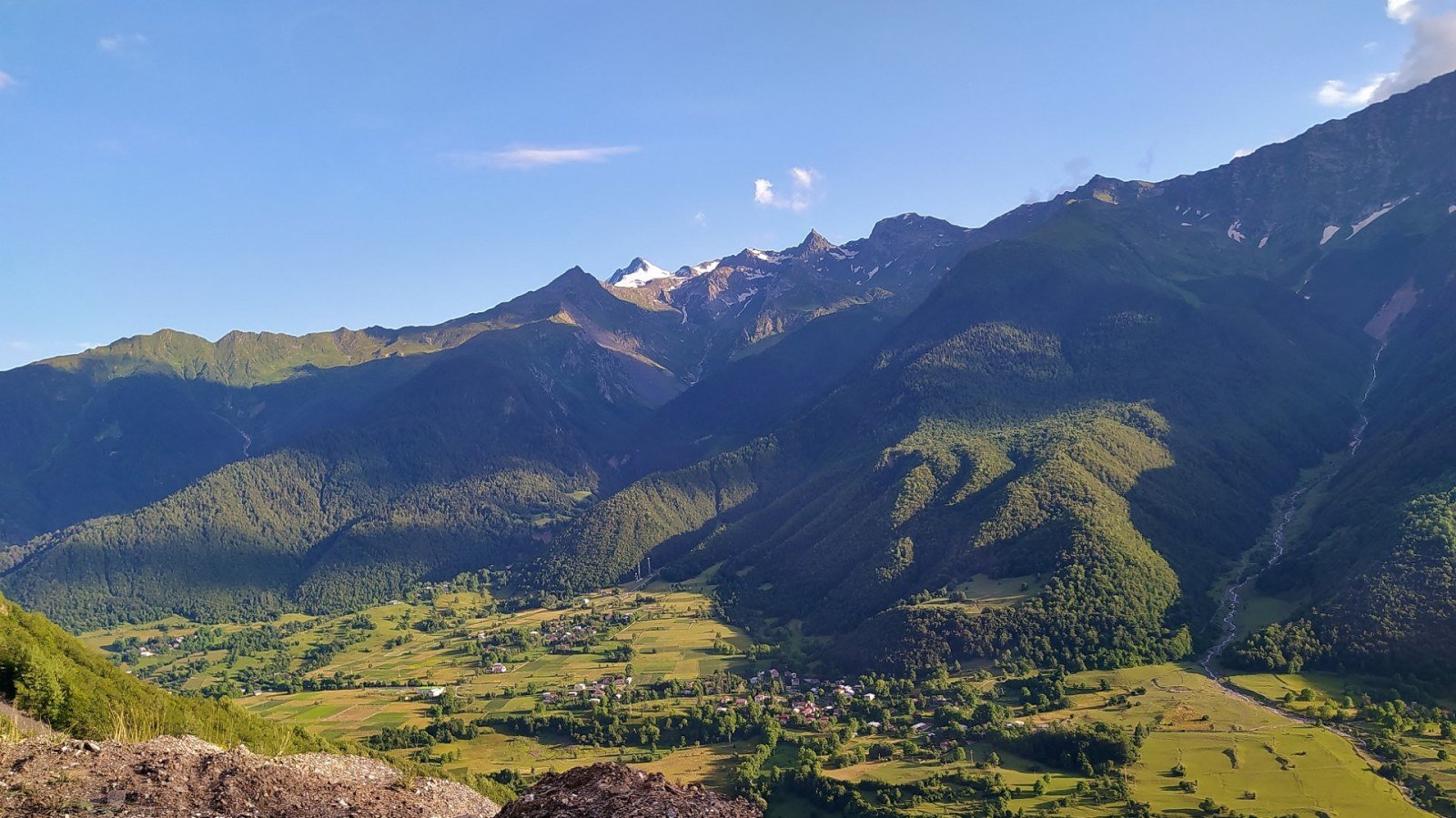
Svaneti occupies the highest inhabited valley in Europe, and getting there is already part of the journey. The road from Zugdidi climbs through forested gorges that narrow until the Mestia valley suddenly opens between peaks over four thousand metres high. The first thing that catches the eye when entering any village are the medieval defence towers: ten or twelve storeys of grey stone with no windows on the lower floors, with arrow slits at the top, built between the 9th and 13th centuries and so integrated into the landscape that they are hard to distinguish from the rock. The smell of damp firewood and the sound of the water of the Enguri River accompany almost the entire route.
The centre of Mestia has changed in recent years: there are cafés with good espresso, heated guesthouses and guides who speak English. But twenty minutes on foot from the centre you already enter villages where the elderly speak mainly Svan —a Kartvelian language distinct from Georgian, with no written form of its own— and where the kviria, local festivals with polyphonic singing, are held with barely any tourist presence.
The trails between villages are the most direct way to understand the scale of the place. The multi-day route between Mestia and Ushguli —four stages of three to five hours each— passes through pastures with low-bellied cows, log bridges over white-water torrents and ruins of churches with medieval frescoes still standing. The altitude is felt by the third day: walking at 2,600 metres with a loaded pack is real effort, not decorative.
History
Svaneti was for centuries a practically inaccessible refuge that preserved icons, Georgian manuscripts and liturgical objects from invasions that ravaged the rest of the country. The medieval towers of Upper Svaneti, built between the 9th and 13th centuries, served a dual purpose: protection against conflicts between local clans and defence against external incursions. The region was never completely conquered by Persians, Mongols or Ottomans; its altitude and gorges were its best wall. The Mestia History and Ethnography Museum preserves part of that legacy. In the 20th century, the opening of the road from Zugdidi gradually broke that historical isolation, although winter snowfalls still cut off access for weeks each year.
What to see & do
- Mestia Medieval Towers The 9th–13th century defence towers that dominate the skyline of every valley village; some can be visited with permission from their owners. The Mestia ensemble is included on the UNESCO World Heritage list.
- Svaneti History and Ethnography Museum In Mestia, it holds gold medieval icons, illuminated manuscripts and Svan liturgical objects saved from successive invasions. Approximate hours: Tuesday to Sunday, 10:00–17:00; entrance around 7 GEL (≈2.5 EUR).
- Mestia–Ushguli Trail The four-stage trekking route between the two main settlements of Upper Svaneti, with glacier views and passage through tower villages. Demanding terrain from 2,000 m; bring your own sleeping bag.
- Ushguli The highest inhabited cluster of villages in Europe, at around 2,200 m, with medieval towers and the church of Lamaria, which preserves 12th-century frescoes. UNESCO Heritage; 4×4 access from Mestia costs around 150–200 GEL per vehicle.
- Chalaadi Glacier Reachable in an hour and a half of easy walking from Mestia; the glacier tongue reaches down to an easily accessible moraine. The visible retreat of recent decades is also part of the landscape.
Photo Gallery
How to get there
From Tbilisi there are Vanilla Sky flights to Mestia (about 50 minutes; prices vary, book in advance). By road, the most common option is to take a marshrutka from Didube station in Tbilisi with a change at Zugdidi; the total journey is around 9–11 hours. From Zugdidi, marshrutkas run to Mestia several times a day (4–5 hours along mountain road). In summer there are faster shared taxis. The road may close due to snow between November and April.
Best time to visit
From June to September the trails are open and the weather is relatively stable; July and August are the busiest months. May and October offer different scenery but with a real risk of snow and poor road conditions. Winter in Mestia is cold with frequent snowfall; the Hatsvali resort offers cross-country skiing, but most accommodation and trekking services close for the season.