
Sevanavank Monastery
Սևանավանք
9th-century monastery perched on a rocky peninsula of Lake Sevan with water views, cutting winds, and a stone staircase from the village.
Location in the Caucasus
Description
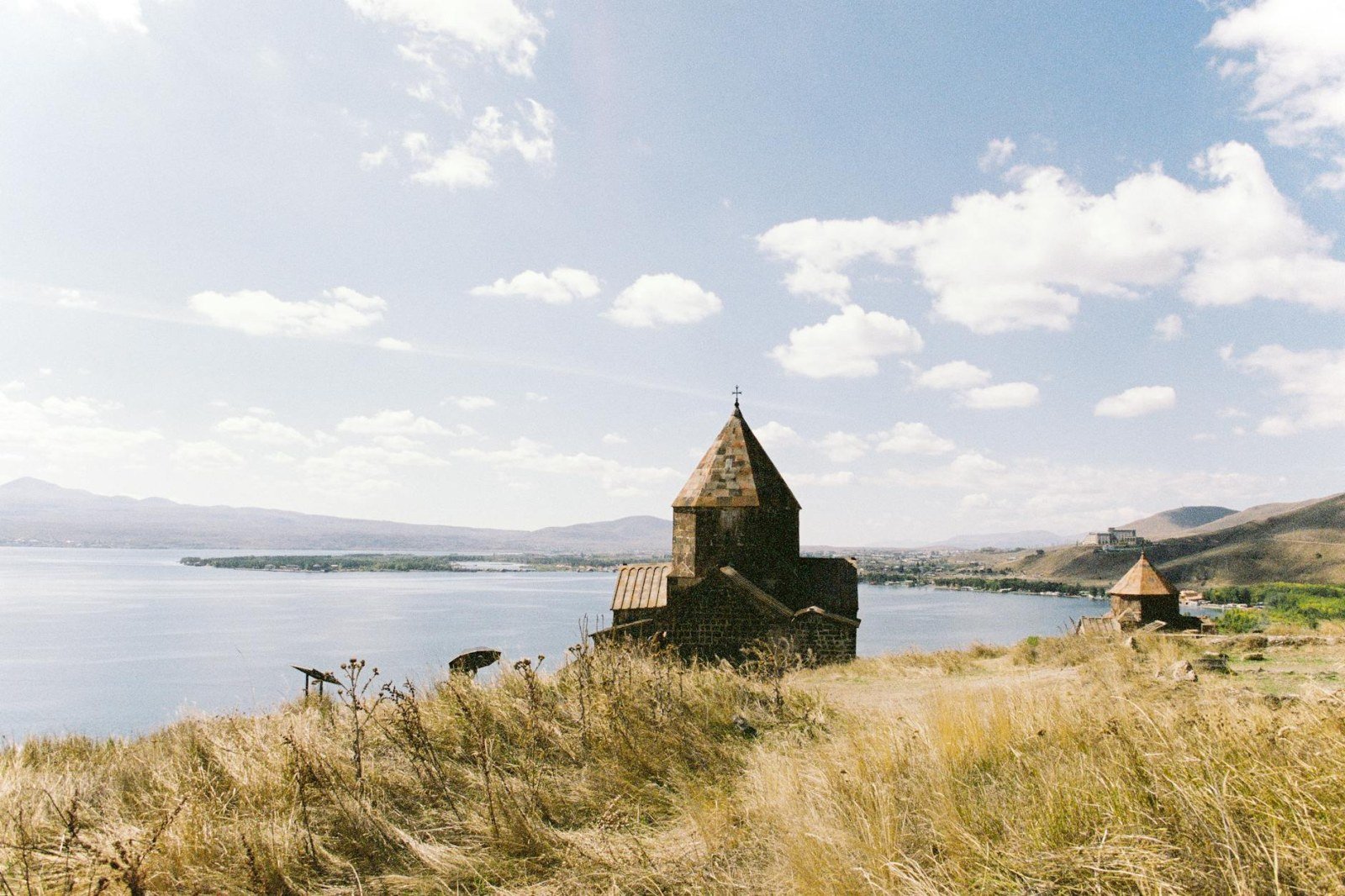
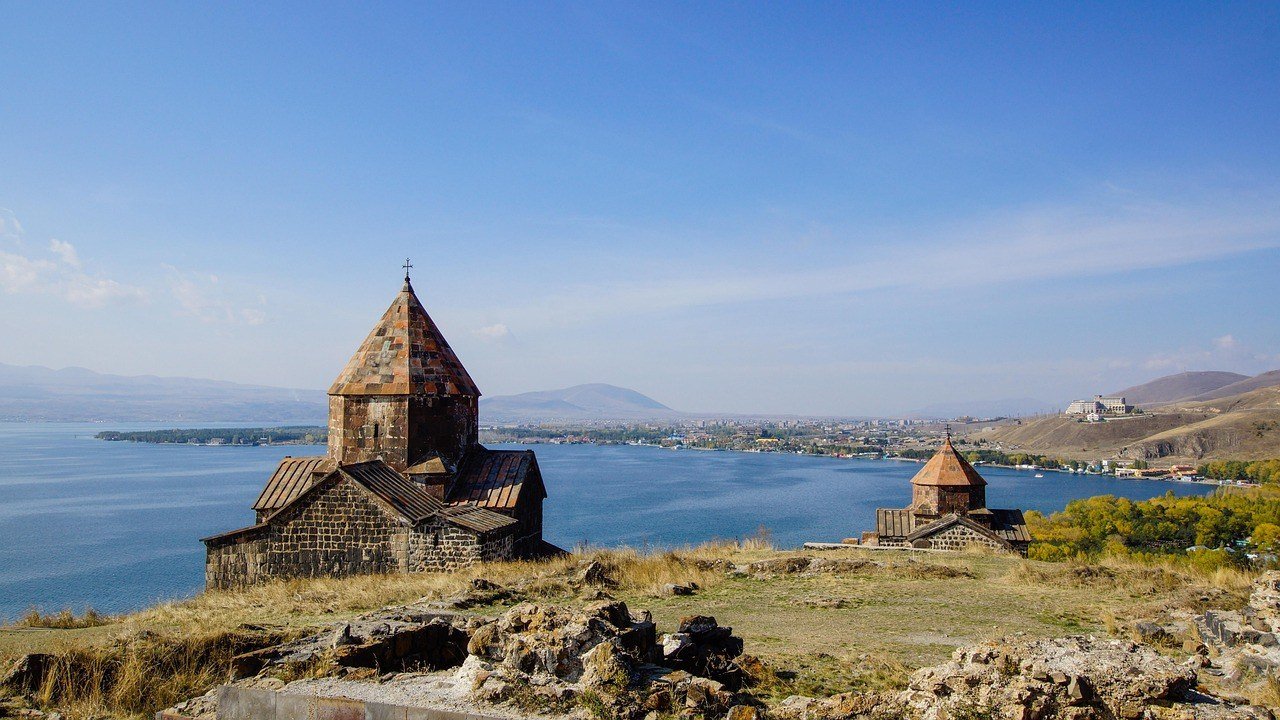
The path to Sevanavank climbs a stone staircase from the parking area of the village of Sevan, past vendors selling dried fish —khorovats of signal, the lake's native trout cured in the open air— and souvenir shops smelling of leather and cedar. It's about 200 steps at a steep incline. At the top the wind cuts, even in July, and the view of Lake Sevan opens suddenly: water of a murky blue, snow-capped mountains in the distance, silence broken only by the calls of seagulls nesting in the rocks of the peninsula.
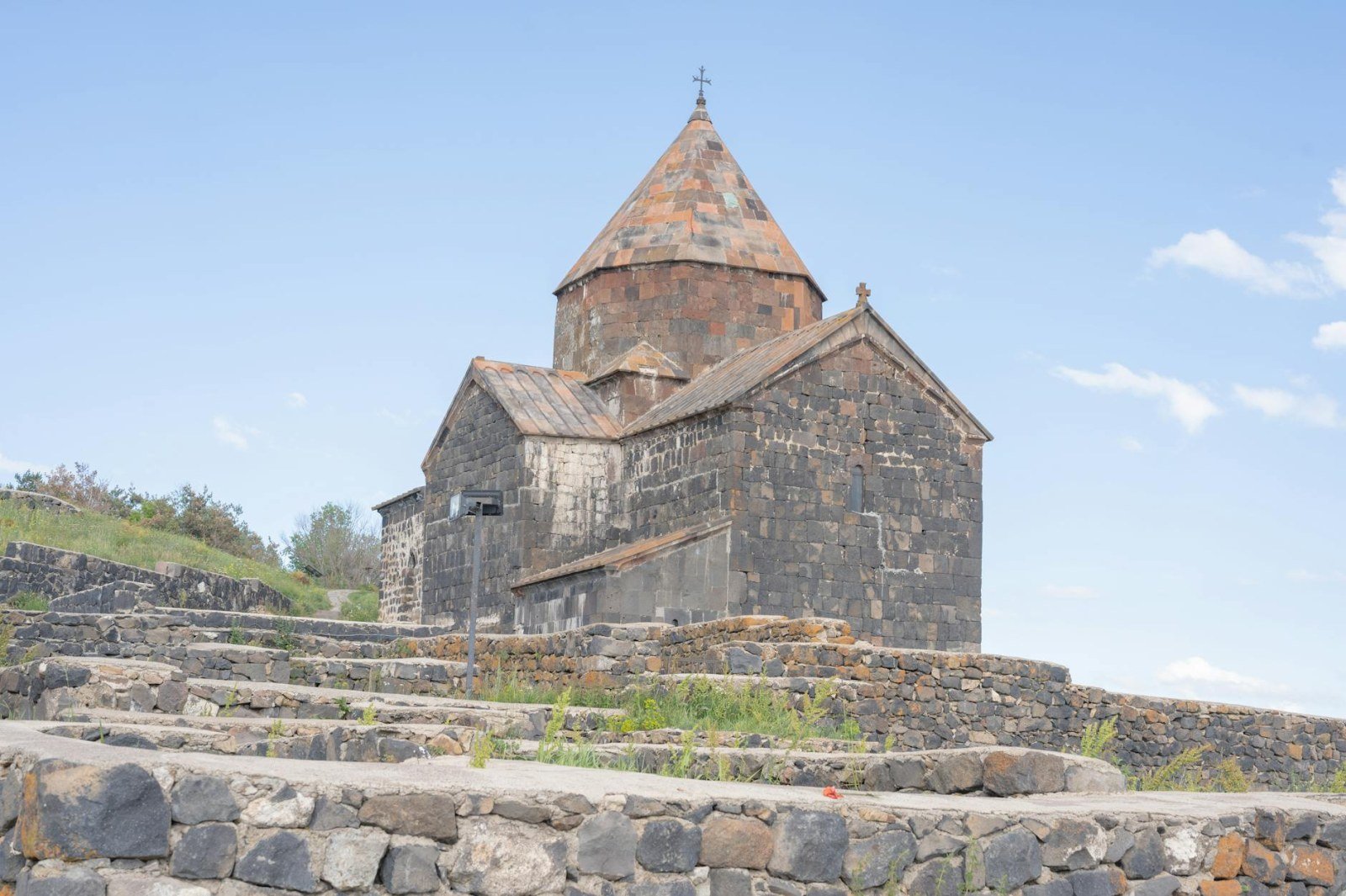
The complex consists of two churches of reddish volcanic tuff: Surb Arakelots and Surb Astvatsatsin, small and thick-walled. The interior decoration is austere —khachkares on exterior walls, some inscriptions worn away by humidity— but the scale of the landscape surrounding the complex is what is truly remarkable. The peninsula was an island for centuries; the lake level dropped during the Soviet era due to irrigation works and the land emerged, something archaeologists mourned and tourists ignore. The village of Sevan sits just below with restaurants serving ishkhan, the native trout, grilled with lemon and wild herbs. Weekend tourism from Yerevan is intense in summer: expect triple-parked cars and noisy groups on Saturdays.
History
Sevanavank Monastery was founded in the 9th century by Princess Mariam, daughter of Armenian king Ashot I, on what was then an island in Lake Sevan. It served as a spiritual center and refuge during Arab and later Mongol invasions. In the 19th century, the writer Khachatur Abovian spent a period here and left detailed descriptions of the lake landscape. The monastic community was dissolved during the Soviet era and the buildings fell into disrepair until a partial restoration in the 1990s.
What to see & do
- Church of Surb Astvatsatsin The older of the two, built with blocks of pink tuff. The cross carved above the main door has been worn down by centuries of rain and snow, a tactile inscription of the passage of time.
- Church of Surb Arakelots Attached to the first, with a small narthex. From its northern side you get the clearest view of Lake Sevan and the distant mountains.
- Courtyard khachkares Several medieval stone crosses distributed around the courtyard, some leaning against walls, with carved geometric interlace motifs typical of the Armenian tradition.
- Viewpoint over Lake Sevan The highest point of the peninsula, without a railing, with the water stretching to the horizon on clear days. At sunset the water reflects golden tones.
- Fish market at the foot of the staircase Not monumental, but the stalls with hanging trout and signal are part of the approach and give a concrete picture of how people around Lake Sevan live. Living ethnographic photography.
Photo gallery
How to get there
From Yerevan, the most direct route is the M4 motorway northeast to the town of Sevan, about 65 km in approximately one hour by car. Marshrutkas (minibuses) from the Kilikia bus station depart regularly and cost ~700 drams (€1.50); the journey takes 75–90 minutes. From the center of Sevan, the monastery is about 15 minutes on foot or 3 minutes by local taxi. It is a standard stop on day tours combining Sevanavank with Bjni castle or Haghartsin Monastery.
Best time to visit
May and June are the quietest months: Lake Sevan is full, the lakeside vegetation is green and temperatures on the peninsula are around 15–20 °C. July and August bring strong sun, mass tourism from Yerevan, and higher restaurant prices. September reduces the crowds and the late afternoon light on the water is sharp. In winter access is possible but the wind on the peninsula is very unpleasant and many stalls close. Bring a jacket even on clear days; the altitude and exposure accelerate heat loss.
More information
Photo: Vera · Pexels License