
Sevan
Սևան
Armenian town on the shores of Lake Sevan at 1,900 m, with Sevanavank monastery, pebble beaches and trout restaurants.
Location in the Caucasus
Description
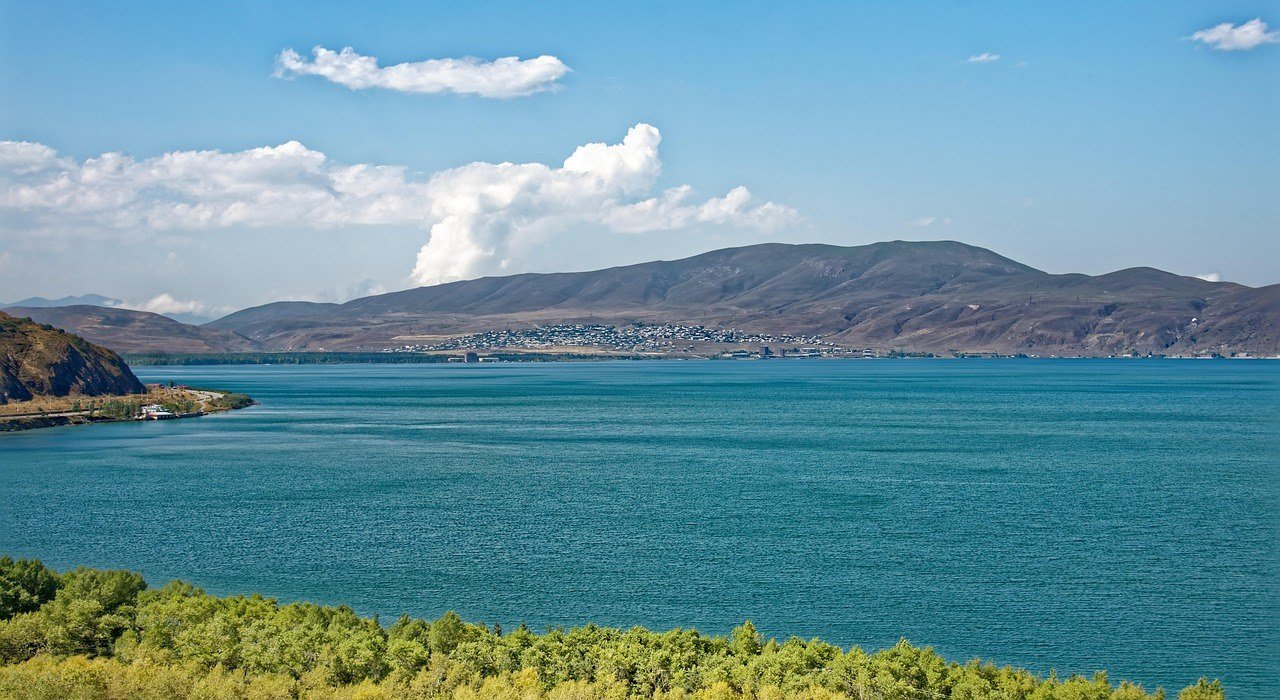
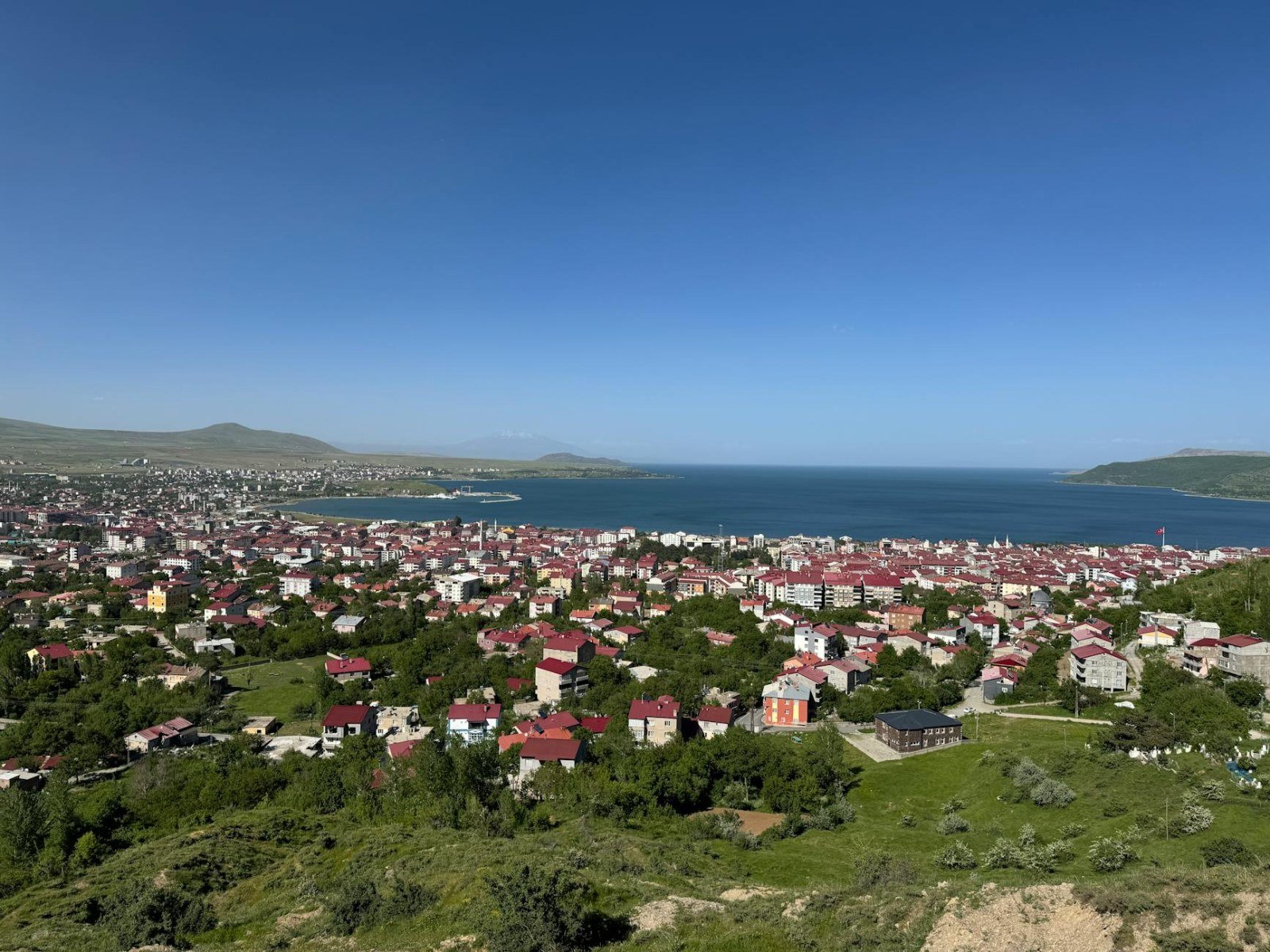
Sevan is the largest town on the shore of Lake Sevan, Armenia's biggest lake and one of the largest high-altitude lakes in Asia Minor. It serves mainly as a stopover base: people coming from Yerevan stop here to eat, stock up or spend the night before continuing to Dilijan or driving along the lakeshore. The centre is not especially attractive — Soviet-era apartment blocks, a main street with souvenir shops and a row of restaurants competing for the same customer — but the fresh air coming off the water at nearly 1,900 metres is in itself a reason to leave Yerevan in summer.
The main reason to stop is the Sevanavank peninsula, about 3 km from the centre. The walk from town along the shore is pleasant in good weather: a forty-minute flat path with the lake on the left and the mountains of the Gegham range in the background. In spring the wind coming off the water can be biting even when the sun is out.
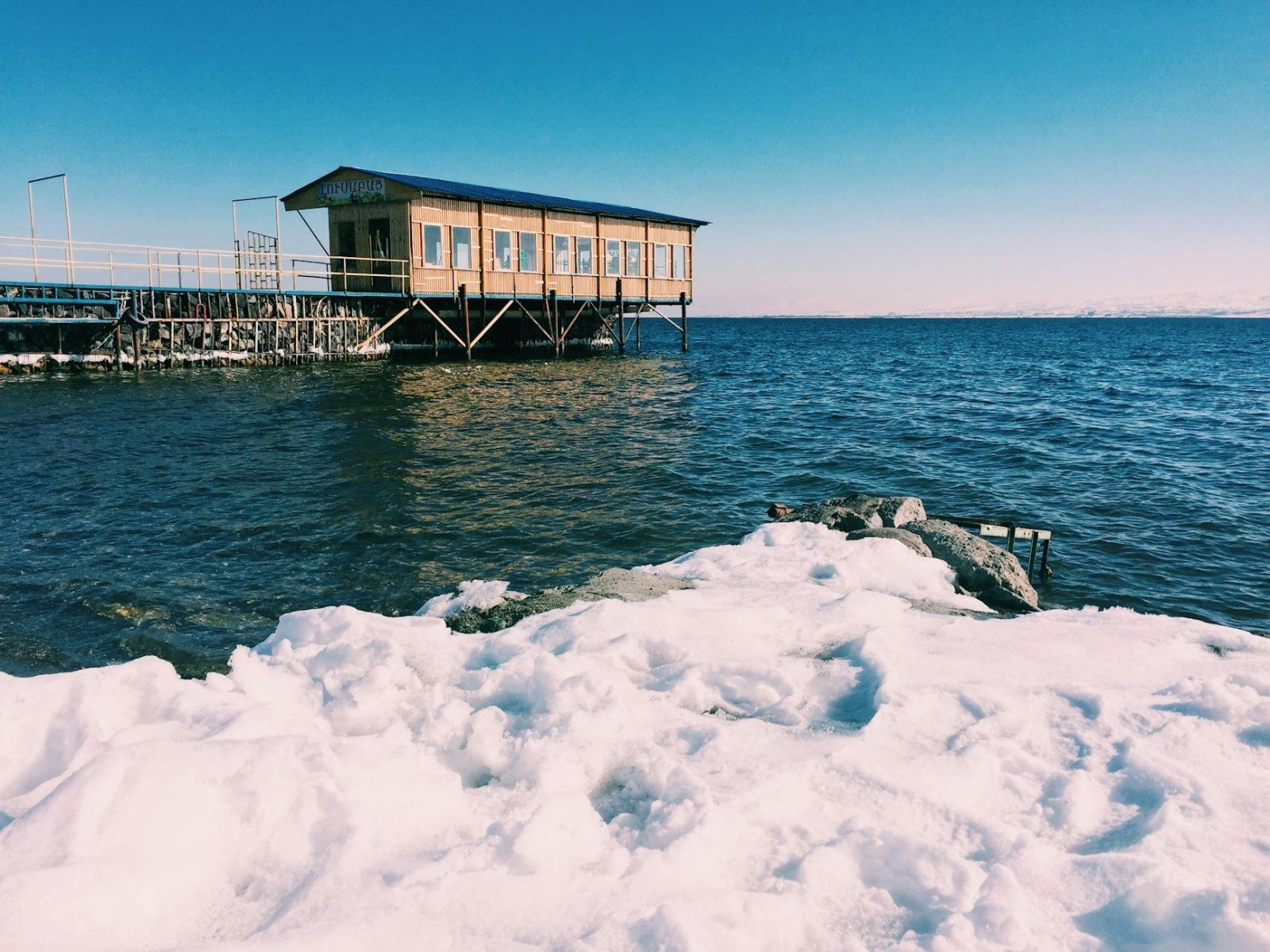
In July and August Sevan transforms: loud music on the pebble beaches, Armenian families with parasols, food stalls and traffic that makes parking a challenge. If you want peace, May, June and September are far more manageable. In winter many businesses close, but the lake can partially freeze near the shores and the landscape changes noticeably.
The lakeside restaurants serve trout — actually an introduced species, as the native sig is protected — and freshwater crayfish. Prices are noticeably lower than in Yerevan, and quality is reasonably good if you choose a place busy with local customers.
History
The Lake Sevan basin has documented human presence since the Bronze Age. In the 9th century BC, the kingdom of Urartu built defensive structures here, taking advantage of the lake's strategic position. During the Middle Ages, what is now the Sevanavank peninsula was actually an island; the two churches that still stand were built on it in the 9th century. The lake level dropped drastically during the 20th century: the Soviet Union diverted large volumes of water for agricultural irrigation and hydroelectric production, reducing the level by several metres and connecting the island to the shore, forming the current peninsula. The ecosystem suffered serious damage: the sig, the endemic trout of Lake Sevan, was brought to the brink of extinction. Since the 1990s work has been ongoing to restore the water level, with partial and slow progress.
What to see & do
- Sevanavank Monastery 9th-century complex on the Sevanavank peninsula, about 3 km from the centre of Sevan. The two original churches — Surb Arakelots and Surb Astvatsatsin — preserve medieval khachkars on their outer walls and offer views of the lake on three sides. The climb from the car park is about 80 steps. Free entry; usual hours 9:00–18:00 (may vary).
- Lake Sevan shoreline The walk from the centre of Sevan to the peninsula passes pebble beaches with open views of the water and the Gegham mountains. In low season the route is quiet; in summer the beaches fill with Armenian holidaymakers.
- Lakeside restaurants The street parallel to the lake has several places serving lake trout (introduced species) and freshwater crayfish. Approximate prices: a whole trout portion between 3,000 and 5,000 Armenian drams (about €7–12). Best to choose those busiest with local customers.
- Sevan local market A small market by the main road selling seasonal fruit, nuts, honey and home-made preserves. Worth stopping to buy supplies before continuing to Dilijan or Martuni.
- Viewpoint over the lake From the esplanade in front of Sevanavank monastery you get the widest view of Lake Sevan: dark blue water surrounded by bare mountains. The afternoon light, when the sun drops westward, creates a different contrast from midday.
Photo gallery
How to get there
Sevan is about 65 km north-east of Yerevan via the M4 road. From Kilikia station in Yerevan, marshrutkas run frequently throughout the day; the journey takes 60–75 minutes and costs around 500–600 drams (just over €1). By car the drive takes about 50–60 minutes; the road follows the lake in several stretches with water views. From Sevan you can continue to Dilijan to the north (about 45 minutes) or to Martuni to the east along the shore.
Best time to visit
May, June and September are the most comfortable months: good light, the lake is accessible and visitor numbers are moderate. July and August are the busiest months — Armenian holidaymakers, noisy beaches, slightly higher prices. The surface water of Lake Sevan reaches about 20 °C in August. Winter is cold (nights down to -15 °C), many businesses close between November and March, and the lake can partially freeze near the shores.
More information
Photo: Makalu · Pixabay License