
Sardarapat Memorial
Սարդարապատի հուշահամալիր
Monumental complex on the Ararat plain commemorating the 1918 battle in which Armenia survived as a nation.
Location in the Caucasus
Description
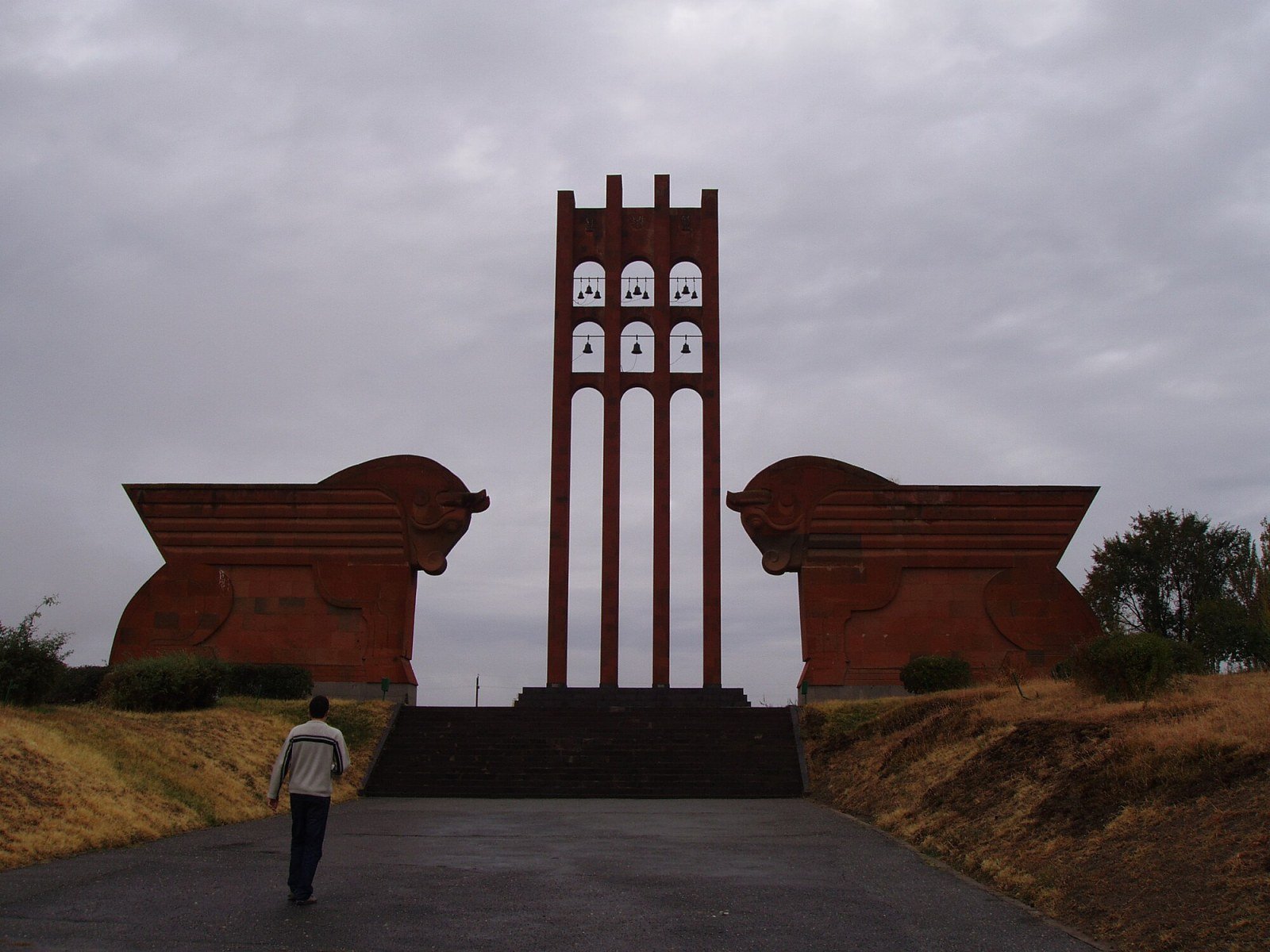
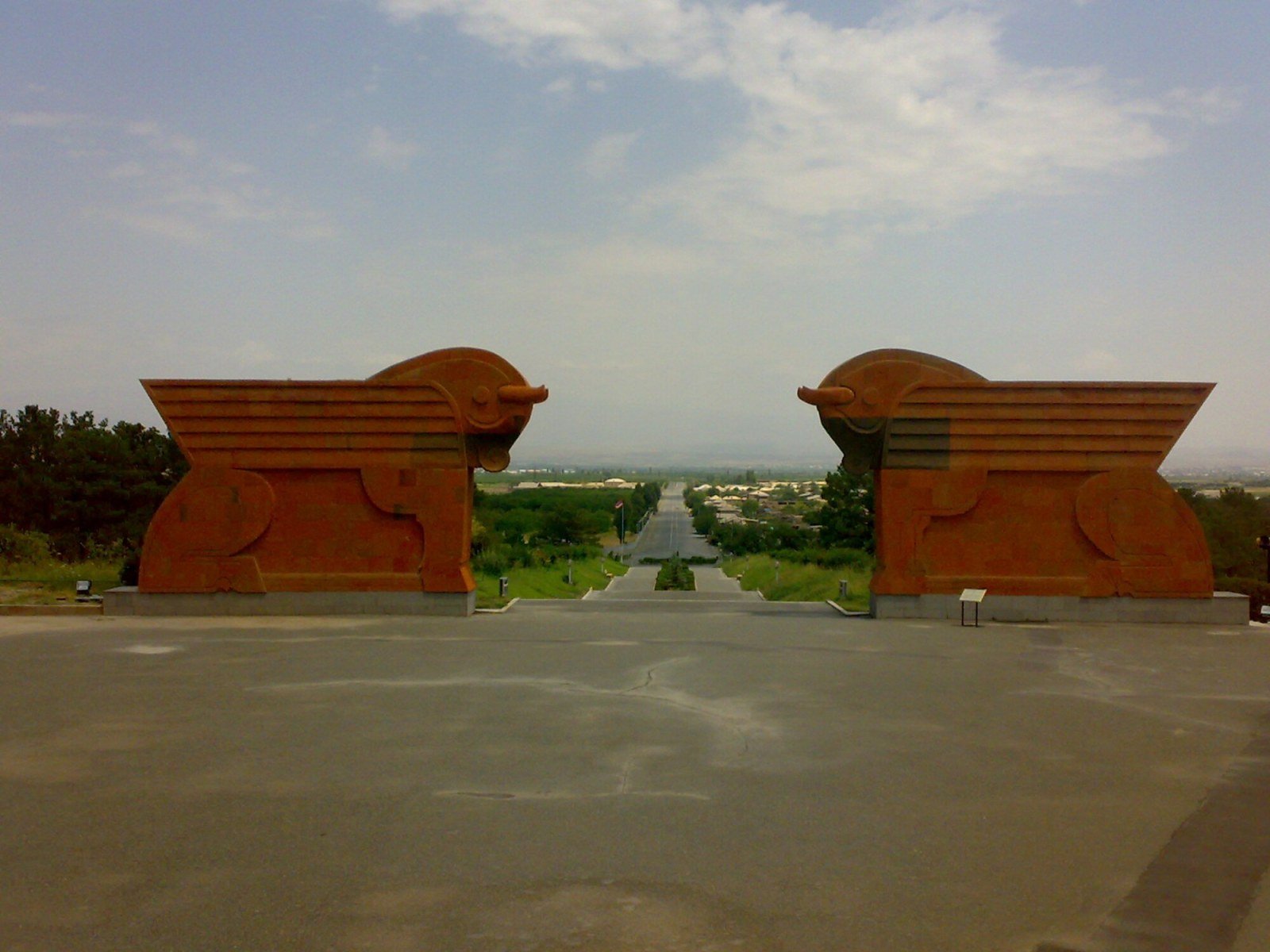
The Sardarapat Memorial stands on an open plain in the Armavir region, about 50 km west of Yerevan. This is not ancient history: it commemorates something that happened in 1918 and whose consequences remain a living part of Armenian identity. Two winged basalt bulls flank the main entrance —their scale is larger than photos suggest—, and the central axis advances in silence toward the bell tower, from which, on clear days, the double cone of Mount Ararat appears to the southwest, in Turkish territory. The contrast between the monument and that volcano which Armenia carries on its flag but cannot set foot on is hard to ignore.
The design dates from the 1960s-1970s, a late Soviet style with deliberate references to classical Armenian art: the bulls evoke Urartian sculpture, the bas-reliefs incorporate motifs from medieval khachkars. The result is direct and solemn, not subtle. The space between the monuments is vast; except on May 28 —First Republic Day— and national holidays, visitors are few and you can walk around at your own pace.
Inside the complex is the Ethnographic Museum of Armenia, with objects from the 19th and early 20th centuries: traditional costumes, tools, weapons, and documents. The display is mostly in Armenian, with some Russian and limited English signage. It is a modest museum, but honest in what it shows and in what it doesn't claim to be. Entry to the complex is free; the museum has a nominal fee.
History
In May 1918, with the Ottoman Empire advancing eastward and Armenian forces retreating after years of genocide, the Battle of Sardarapat was the turning point. Irregular Armenian troops and the remnants of the regular army halted the Ottoman advance on this plain, preventing what could have been the total destruction of the Armenian people, just three years after the Medz Yeghern of 1915. Days later, on May 28, the First Republic of Armenia was proclaimed. The Sardarapat Memorial was built during the Soviet era to preserve that founding moment and remains one of the most symbolically charged monuments of Armenian national identity.
What to see & do
- Winged basalt bulls The two monumental sculptures flanking the entrance, inspired by Urartian art. Up close, the black stone has a rough texture and the wind between them produces a constant sound that is more noticeable than expected.
- Central bell tower A tower of about 25 meters accessible by an interior staircase. From the top you overlook the Ararat plain, and on clear days the volcano appears sharply to the southwest.
- Ethnographic Museum of Armenia Collection of costumes, tools, weapons, and everyday objects from the 19th and early 20th centuries from different regions of historical Armenia. Modest but with genuine pieces.
- Bas-reliefs and stelae Along the central axis of the complex, basalt panels with scenes from the Battle of Sardarapat and motifs from Armenian medieval khachkars.
- View of Mount Ararat The open unobstructed plain is one of the best viewpoints reachable by car from Yerevan to see the double cone of Ararat on clear days.
Photo gallery
How to get there
The Sardarapat Memorial is about 50 km west of Yerevan, near the town of Armavir. By private car it takes about 45-50 minutes on the H1 road toward Gyumri and then turning south. There is no direct public transport; from Armavir you can take a local taxi. The most common approach is to visit it on a day trip from Yerevan combined with Zvartnots Cathedral, a few kilometers away.
Best time to visit
The Ararat plain can be visited year-round. Spring (April-June) and autumn (September-October) offer temperatures of 18-25 °C and a clearer view of Ararat more often. Summer can exceed 35-38 °C and the complex has no shade; bring water and sunscreen. Winter is cold but clear days show Ararat snow-covered. On May 28 there are ceremonies and higher than usual attendance.
More information
Photo: Tamara Areshian · CC BY-SA 3.0