
Sanahin Monastery
Սանահինի վանք
10th-century Armenian monastic complex, UNESCO World Heritage Site, in Alaverdi, with churches, a medieval library, and khachkares.
Location in the Caucasus
Description
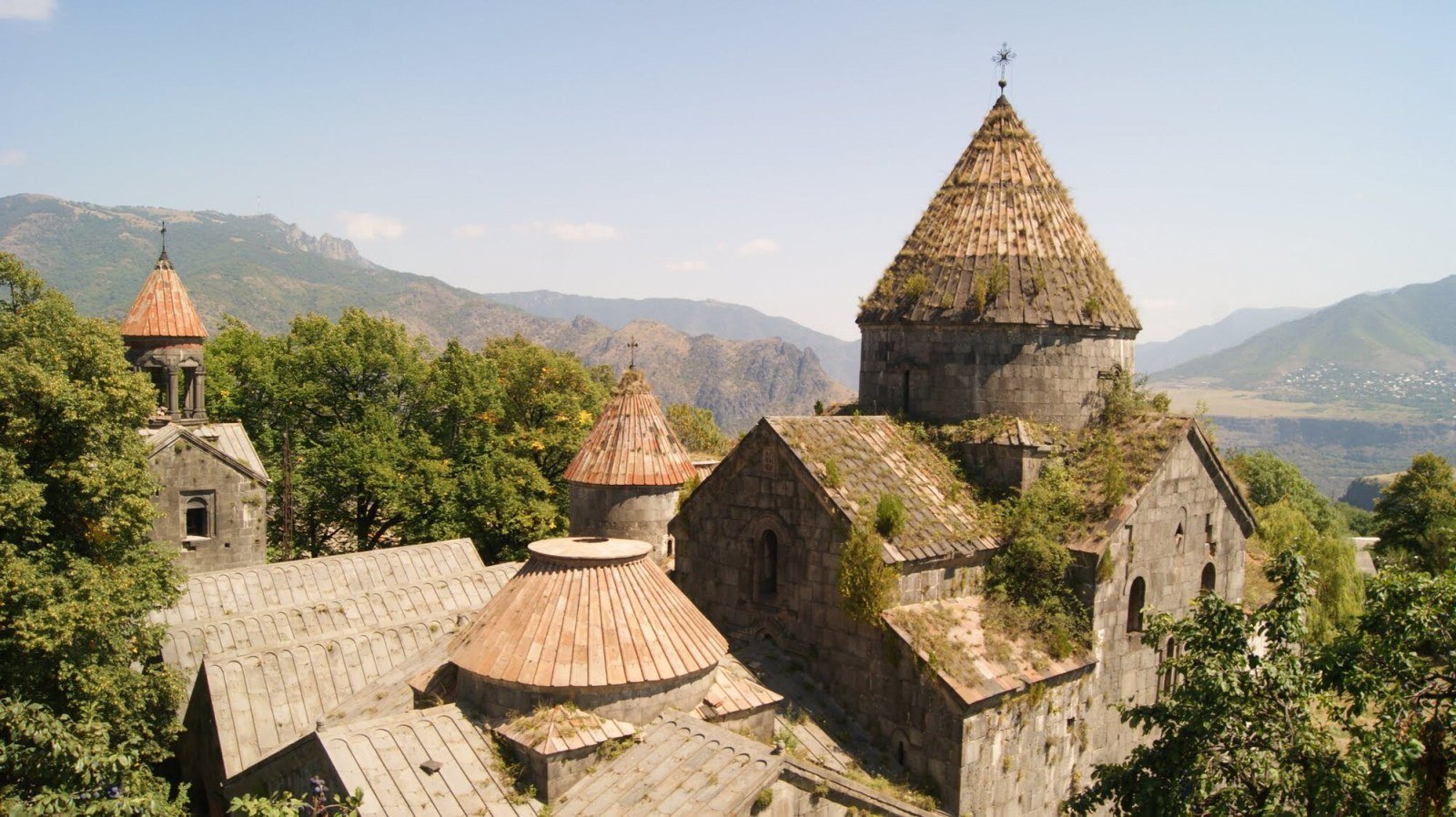
Sanahin Monastery (Սանահինի վանք) stands on a forested plateau above the gorge of the Debet river, at the northern edge of the city of Alaverdi, in the Lori region. Getting here is already part of the experience: Alaverdi sits at the bottom of a deep gorge, with a copper smelter that has been operating since 1770 and that on windless days gives the air a metallic smell. The Alaverdi funicular —one of the few remaining in Armenia— climbs from the valley floor to the Sanahin neighborhood in a few minutes, though its operation is irregular.
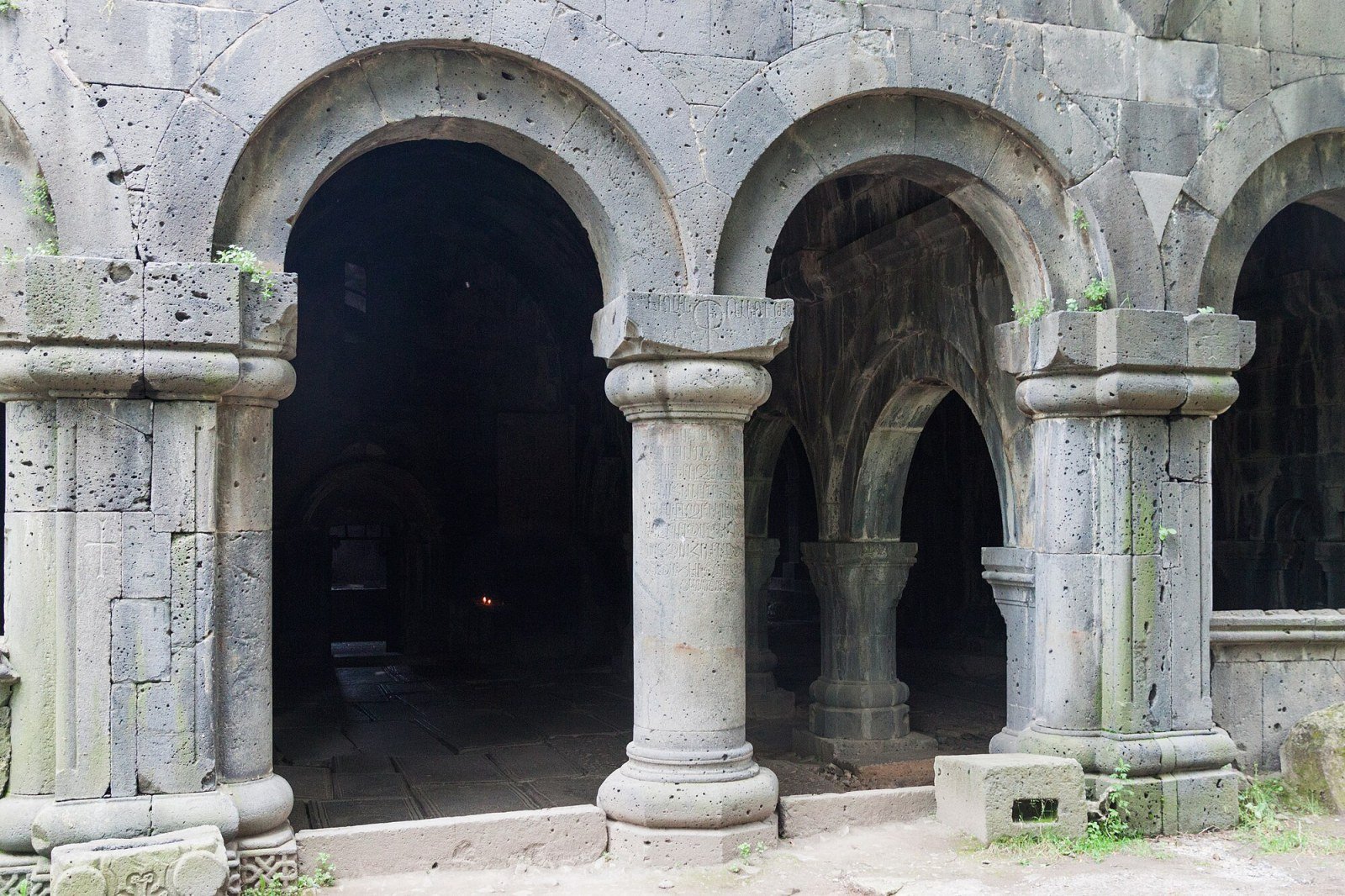
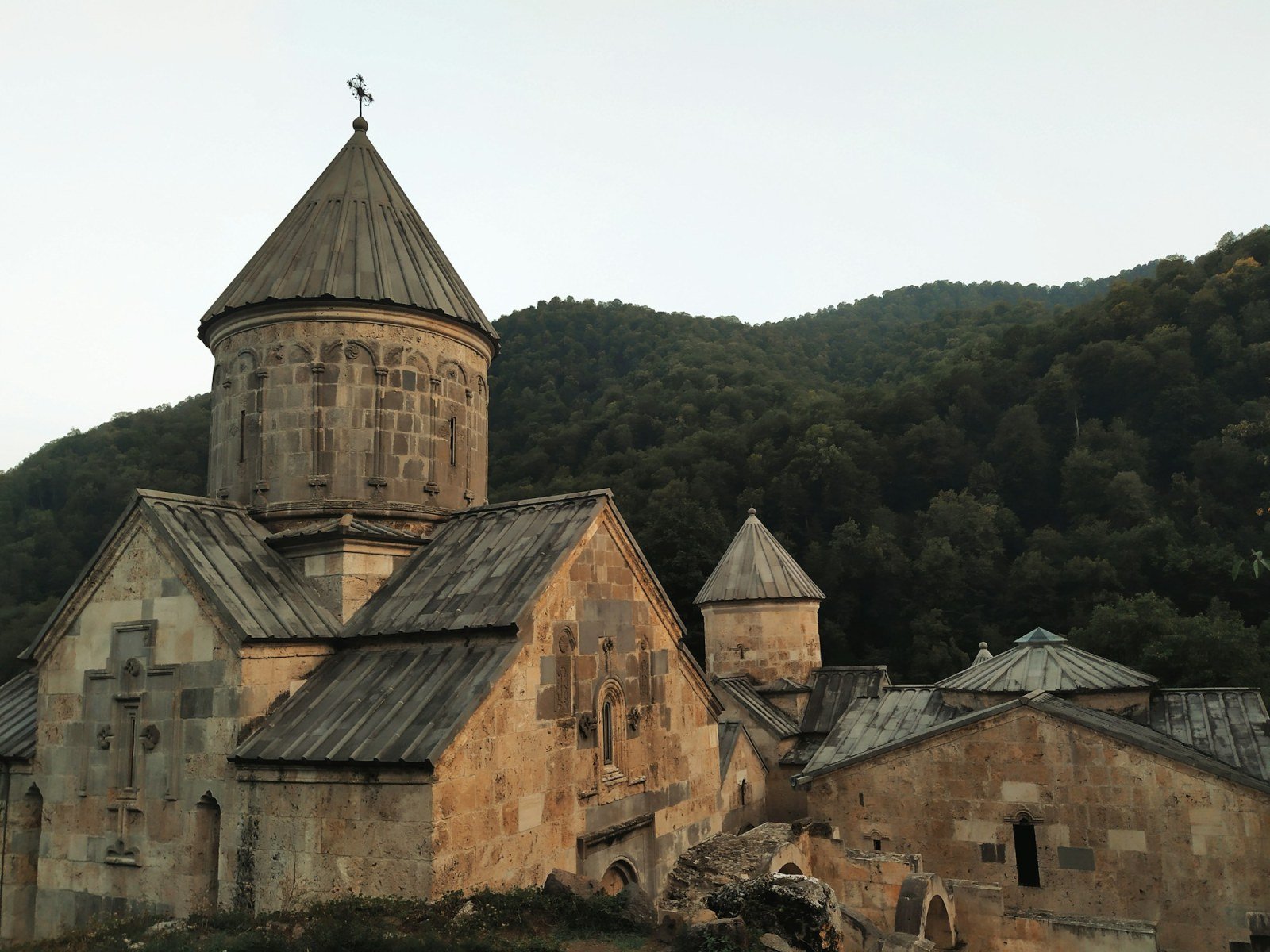
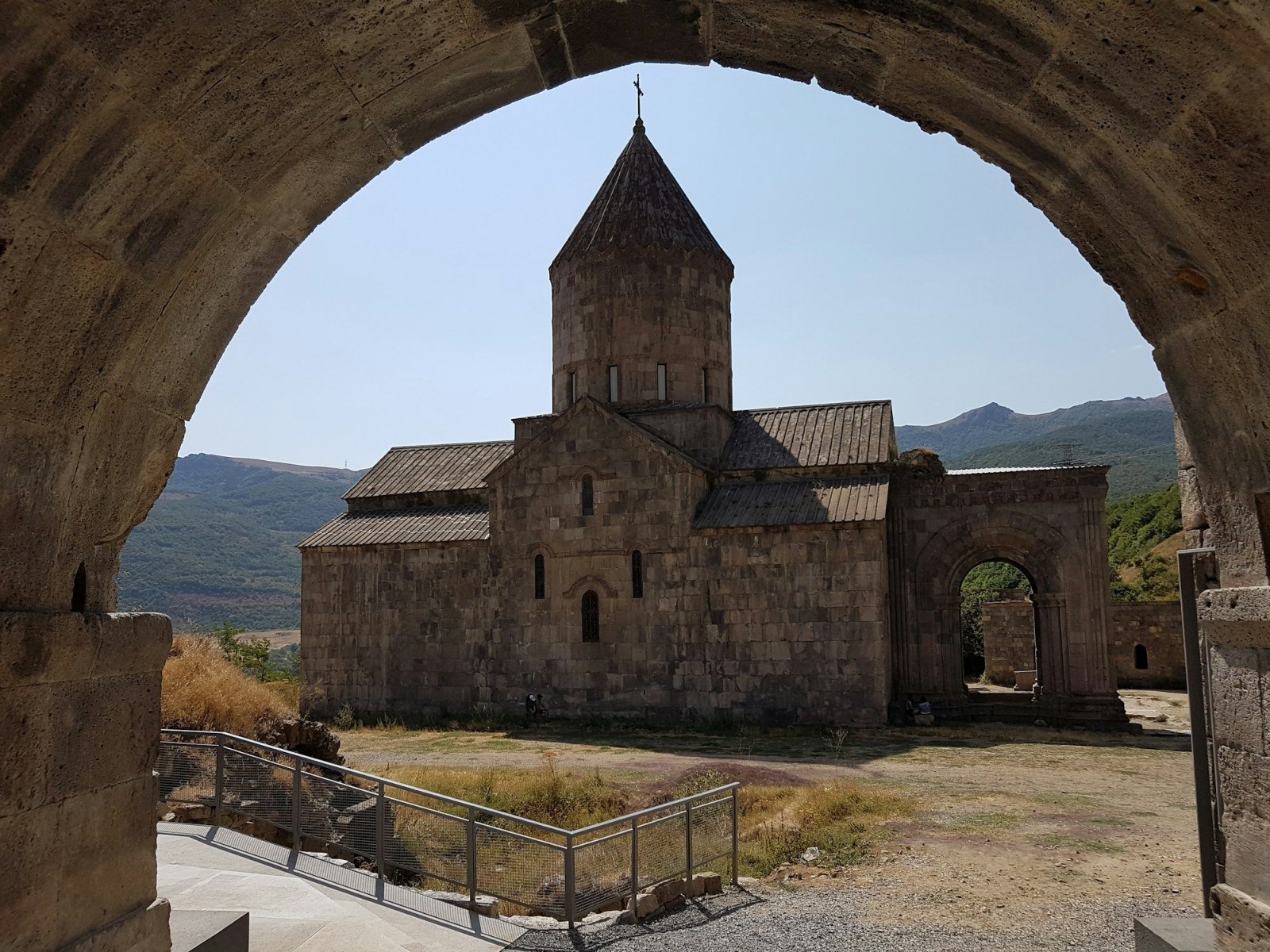
Up top, the monastery occupies a tidy space among old trees. The buildings are dark basalt and have a human scale that contrasts with the monumentality of other, more visited Armenian complexes. The 10th-century churches show a sober exterior ornamentation —finely crafted khachkares, blind arches, inscriptions in classical Armenian— and the interior, dark and cool, smells of candle wax and damp stone. Framed old photographs hang on the walls, and sometimes you can hear the monodic chant of a monk in the gavit.
The complex includes a medieval library (gavazanatun) with pillars supporting a ribbed vault, and the ancient scriptorium. The khachkares scattered around the courtyard span different periods and styles. The site has been a UNESCO World Heritage Site since 1996, together with the neighboring Haghpat Monastery, which is just a few kilometers away.
History
Sanahin Monastery was founded in the 10th century by the Bagratuni kings, with the earliest constructions attributed to Queen Khosrovanuysh around the year 966. Together with Haghpat, it formed from the 10th to the 13th centuries one of the most important centers of medieval Armenian culture, with an active scriptorium producing illuminated manuscripts and an academy led by Grigor Magistros. The Seljuk and later the Mongol invasions struck the region, but the monastery survived. The Zakarian family, which controlled Lori in the 13th century under Georgian mandate, financed major expansions. UNESCO declared it a World Heritage Site in 1996 together with Haghpat. Today it remains an active monastery with a small religious community.
What to see & do
- Church of the Redeemer (Amenaprkich) The oldest in the complex, completed around 966; basalt façade with inscriptions in classical Armenian and well-balanced proportions. The tympanum preserves a relief of the sons of King Ashot III.
- Medieval Library (Gavazanatun) An 11th-century hall with a vault on interlaced arches and niches in the walls for storing manuscripts. One of the few structures of this kind preserved in Armenia.
- Academy (scriptorium) A roofed hall where Grigor Magistros and other 11th-century scholars taught; it preserves stone benches along the walls.
- Courtyard khachkares Stone crosses from different periods with geometric and interlaced motifs; some from the 13th century are in very good condition.
- Chapel of Saint Gregory A small chapel attached to the main complex with partially preserved fresco remains and remarkable acoustics.
- Alaverdi Funicular If operating, the ride from the valley floor up to Sanahin offers a view of the Debet gorge and the old copper smelter.
Photo gallery

How to get there
Alaverdi is about 170 km north of Yerevan on the M6 road. By marshrutka from Yerevan (Kilikia station) the journey takes about 3 hours and costs around 2,500 AMD (5-6 EUR). There is also a slow but scenic daily train. From the center of Alaverdi to Sanahin Monastery you can take the funicular (when operational), a taxi (about 1,500 AMD), or walk up a steep path of 20-25 minutes. Sanahin and Haghpat can be visited on the same day; there are also excursions from Tbilisi, about 3 hours away via the Sadakhlo border crossing.
Best time to visit
May, June, September, and October are the best months to visit Sanahin Monastery: temperatures of 15-22 °C, green forest or autumn colors, and a quiet atmosphere. Summer (July-August) is hot at the bottom of the Alaverdi valley (28-32 °C) and humidity near the Debet can be high, though up on the plateau it is cooler. Winter is cold, with frequent snow from December to February; the monastery opens, but the path up becomes slippery. Usual opening hours: 9:00-18:00, free entry. The Alaverdi funicular has irregular hours; check below before counting on it.
Photo: Marcin Konsek · CC BY-SA 4.0