
Republic Square
Հանրապետության հրապարակ
The civic heart of Yerevan: Soviet-Armenian pink tuff, nocturnal dancing fountains and the best starting point for exploring the centre.
Location in the Caucasus
Description
Republic Square does not intimidate despite its size. The buildings enclosing it — the Ministry of Foreign Affairs, the History Museum, the Armenia Hotel, the Government building — are clad in orange-pink volcanic tuff that, in the late afternoon, warms to a shade that is difficult to capture in photographs. The architecture is Soviet in scale but Armenian in detail: rounded arches, stone columns and bas-reliefs with medieval motifs that Tamanyan scattered across all the facades so that the ensemble would not look like Moscow simply transplanted to the Caucasus.
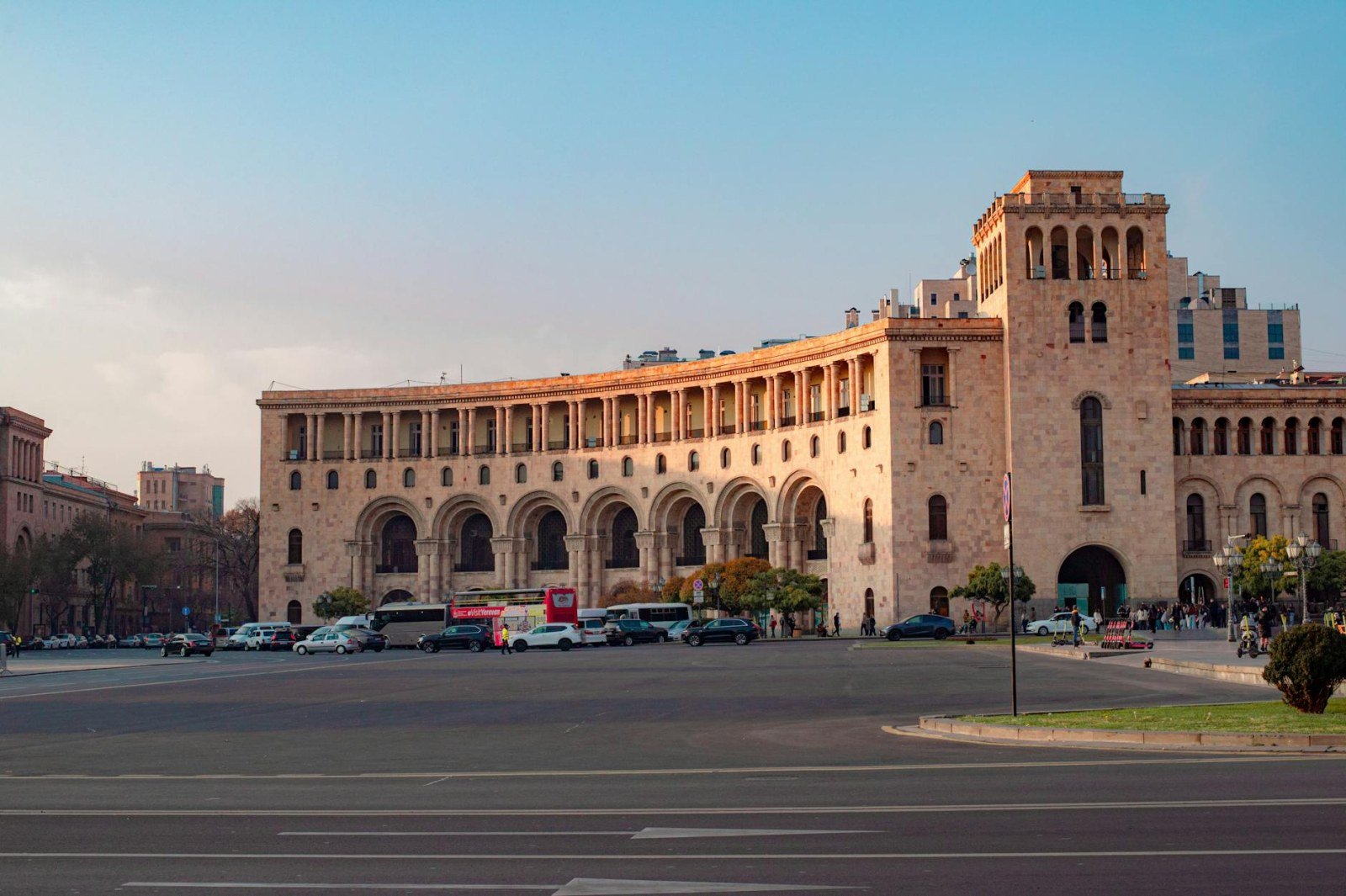
In the mid-afternoon the square fills up: families with children, young people sitting on the edge of the fountains, people crossing without hurry. In summer, after 21:00, the central fountains light up and dance to music — Armenian classical, local pop, the occasional international track — for about twenty minutes. It is deliberately theatrical, but the audience that gathers takes it calmly and with good humour. The square connects with Mashtots Avenue and with the pedestrian zone that climbs towards the Cascade, and has a metro station directly beneath it, making it the natural anchor for moving around central Yerevan.
History
Alexander Tamanyan designed the square in the 1920s as the centrepiece of the new urban plan intended to turn Yerevan into the capital of the Armenian Soviet Socialist Republic. Tamanyan studied medieval Armenian architecture — the tuff churches of the 10th to 13th centuries, the rock-hewn monasteries — and reinterpreted its proportions and ornaments on the scale of a 20th-century civic centre. Construction continued into the 1950s. During the Soviet era the square bore the name Lenin Square and a statue of the leader stood at its centre; it was removed after independence in 1991.

What to see & do
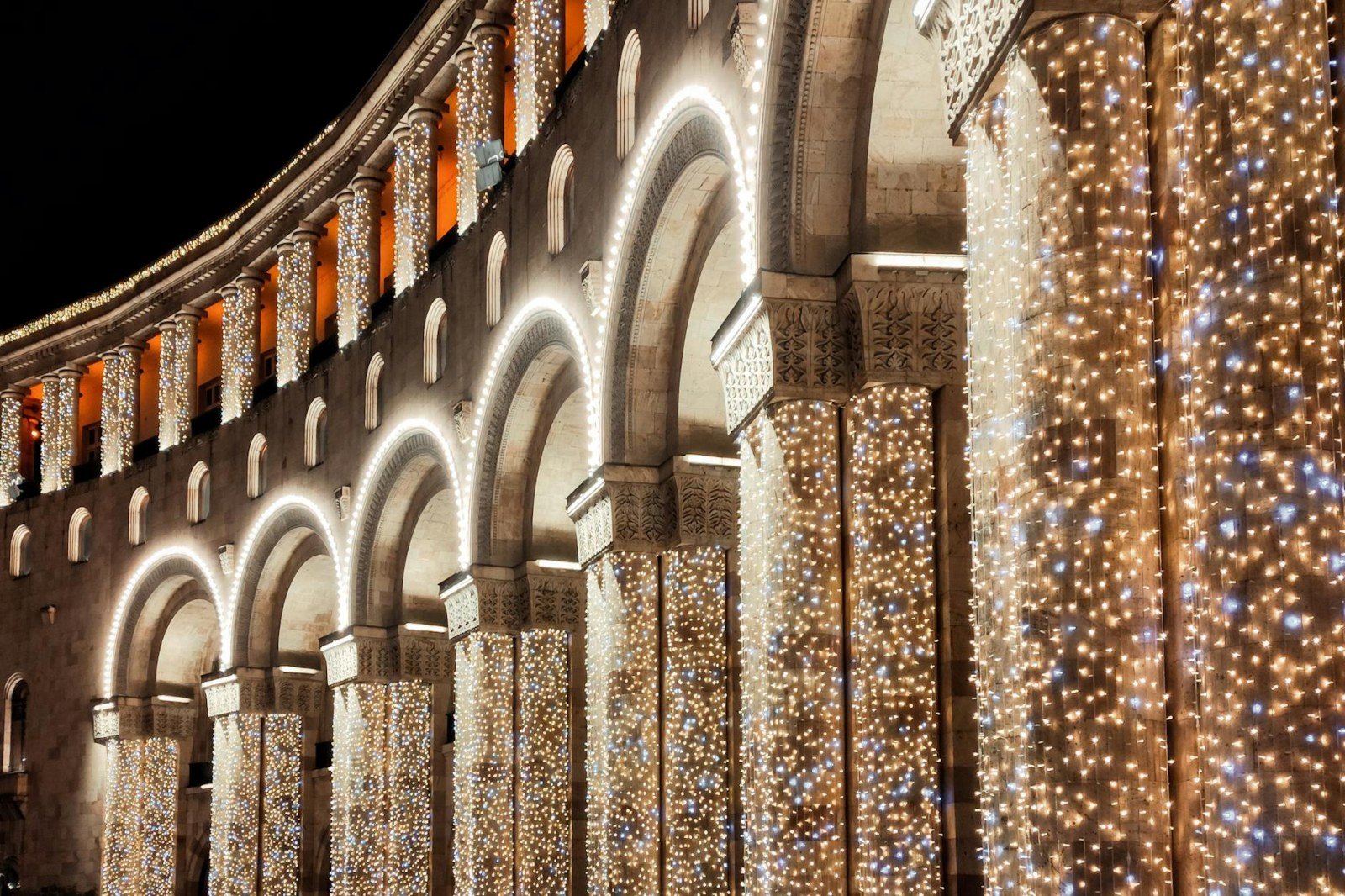
- Dancing fountains They operate from May to October, from 21:00. The show lasts about 20 minutes, is free and mixes Armenian music with international pop. It is worth finding a seat at one of the surrounding terrace cafés to watch without being in the middle of the crowd.
- History Museum of Armenia It occupies the southern building of the square. It holds a good collection of Caucasus archaeology, with Bronze Age pieces and finds from the Karahunj site. Entry: around 1,500 drams.
- National Art Gallery Shares the building with the History Museum. Armenian 19th- and 20th-century painting plus a section of European art. Less visited than the museum, allowing a peaceful viewing.
- Pink tuff facades The architectural ensemble deserves a slow circuit to take in the arcade details, balconies and bas-reliefs. Sunset light is the best time.
- Access to the Cascade From the square you climb Mashtots Avenue to the great stepped monument of the Cascade. On clear days, Mount Ararat is visible from the top.
How to get there
Hanrapetutyan Hraparak metro station (Line 1) is directly beneath the square. From Zvartnots Airport — about 12 km to the west — the quickest option is a taxi: 20–25 minutes and around 3,000–4,000 drams. Bus 108 also covers the route, more slowly. Most hotels in the centre are 10–15 minutes' walk away.
Best time to visit
May to October is the period with the best atmosphere: fountains running, terraces open and manageable temperatures. September and October are probably the best months — 20–25 °C, clear skies and good views of Ararat —. July and August are hot (35–38 °C) and the tuff radiates heat well into the night. In winter the square remains active, but the fountains are off and temperatures hover around 0 °C.
More information
Photo: Oleksiy Konstantinidi / Pexels · Pexels License