
Noravank Monastery
Նորավանք
13th-century monastic complex set in a red-rock canyon in Vayots Dzor, with the church of Surb Astvatsatsin as its centrepiece.
Location in the Caucasus
Description
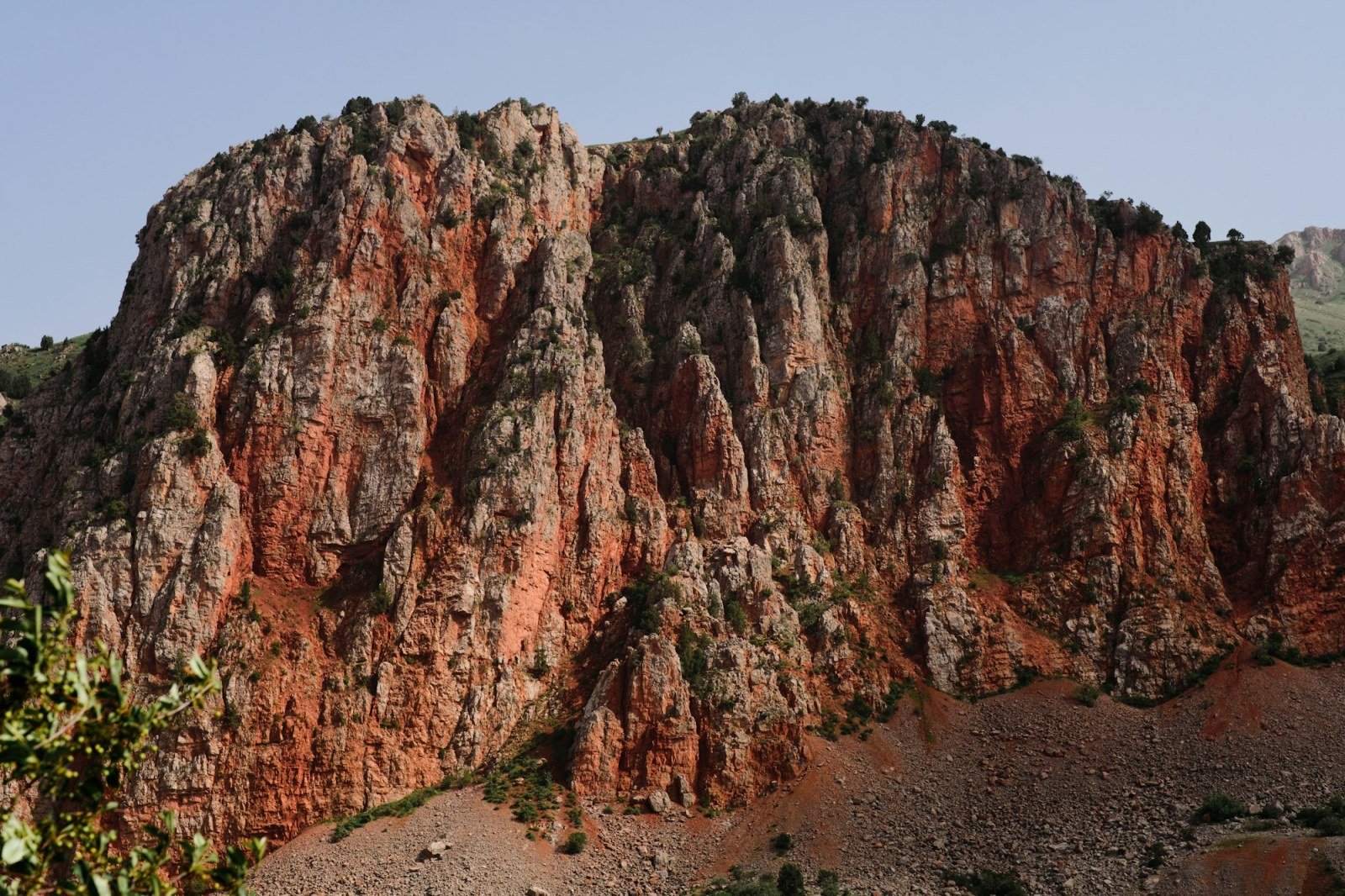
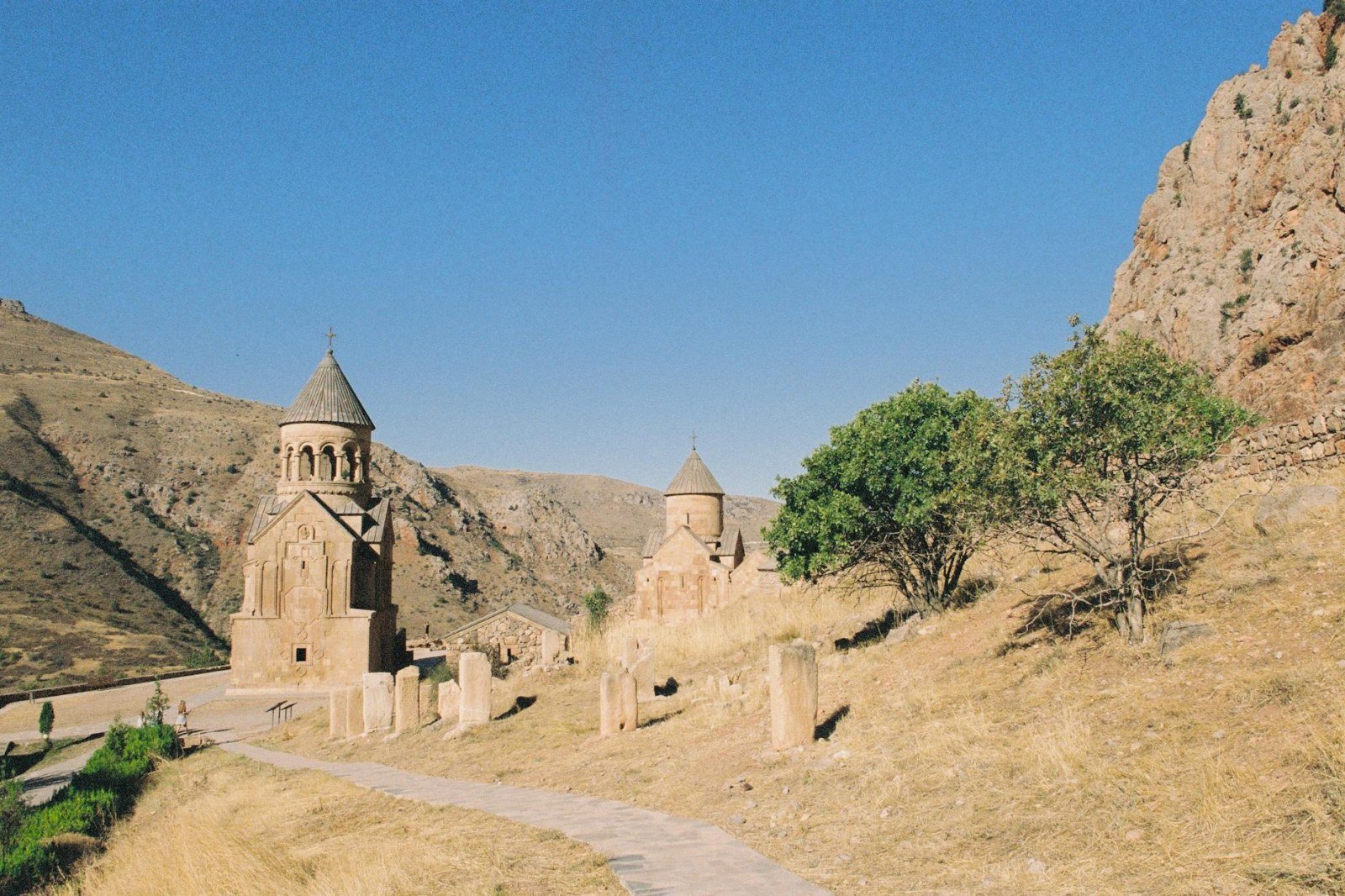
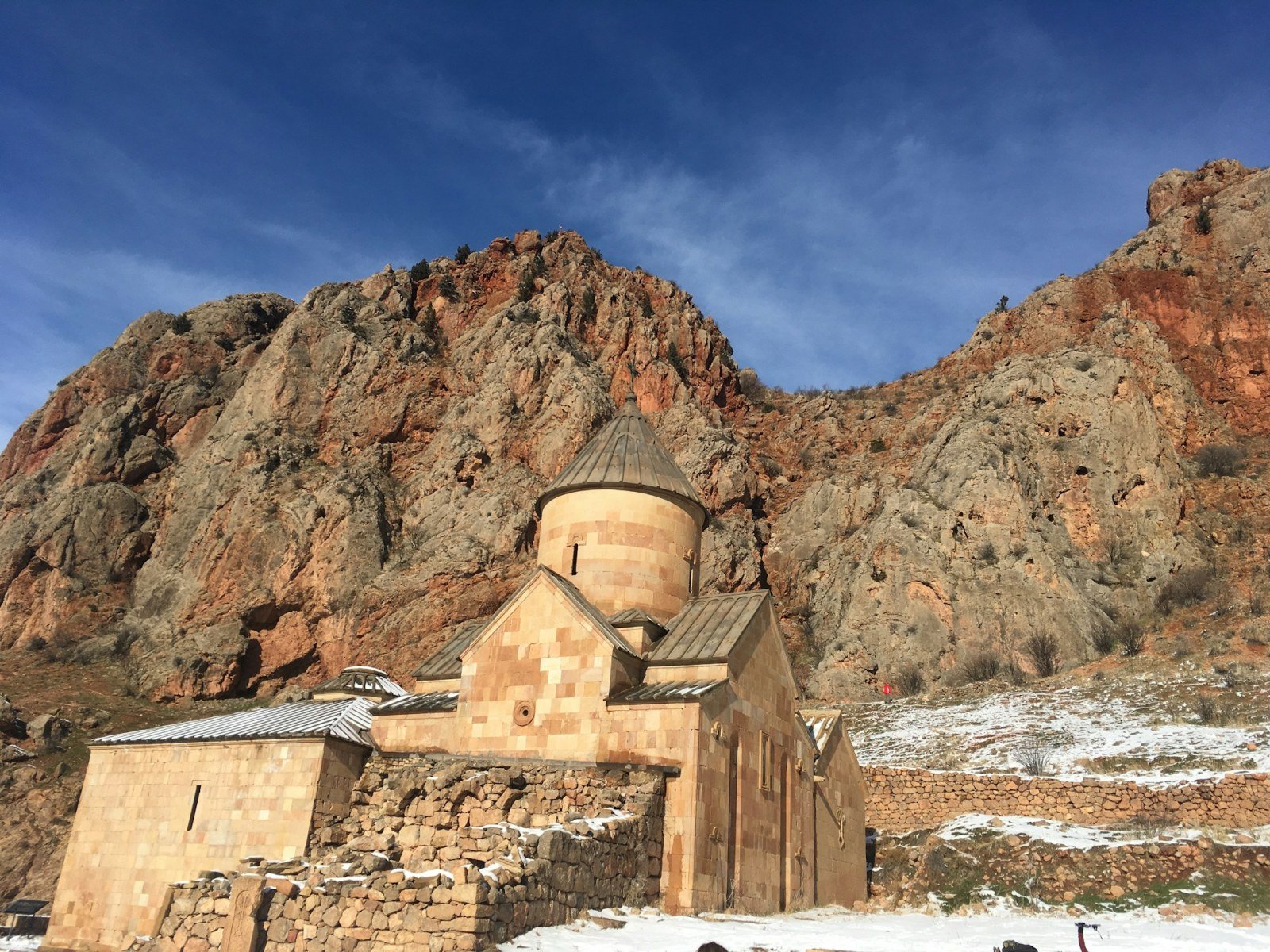
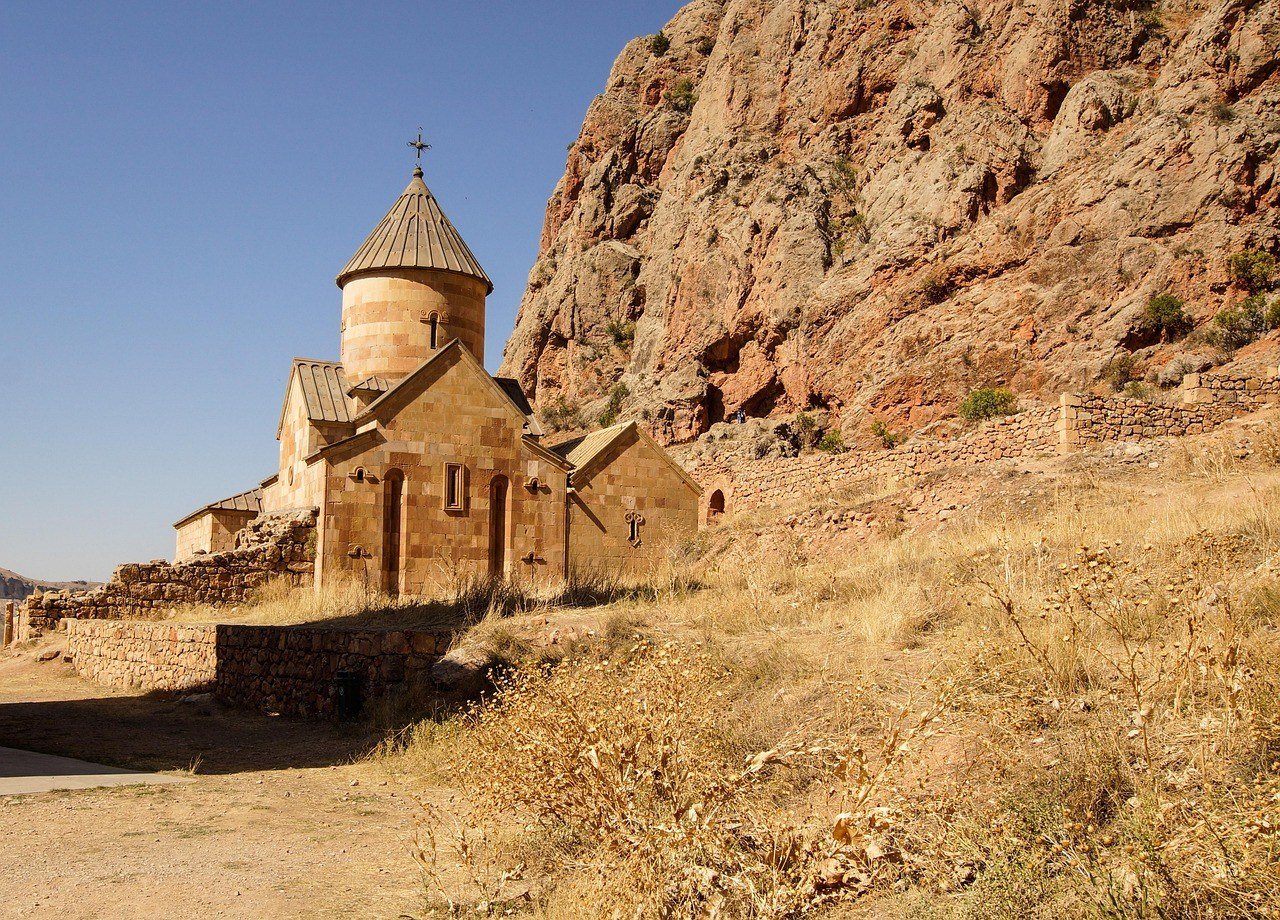
The road to Noravank Monastery already hints at what you are going to see: a narrow canyon with terracotta-coloured rock walls rising on both sides of the road, and at the end, almost pressed against the stone face, the cluster of ochre-coloured churches that at first glance blends in with the cliff itself. The turning from the M-2 road (the one linking Yerevan to Goris and Nagorno-Karabakh) is near the village of Areni, and from there it is about eight kilometres of narrow track following the dry bed of the Amaghu river. The afternoon light, when the sun comes from the side, makes the contrast between carved stone and living rock almost theatrical.
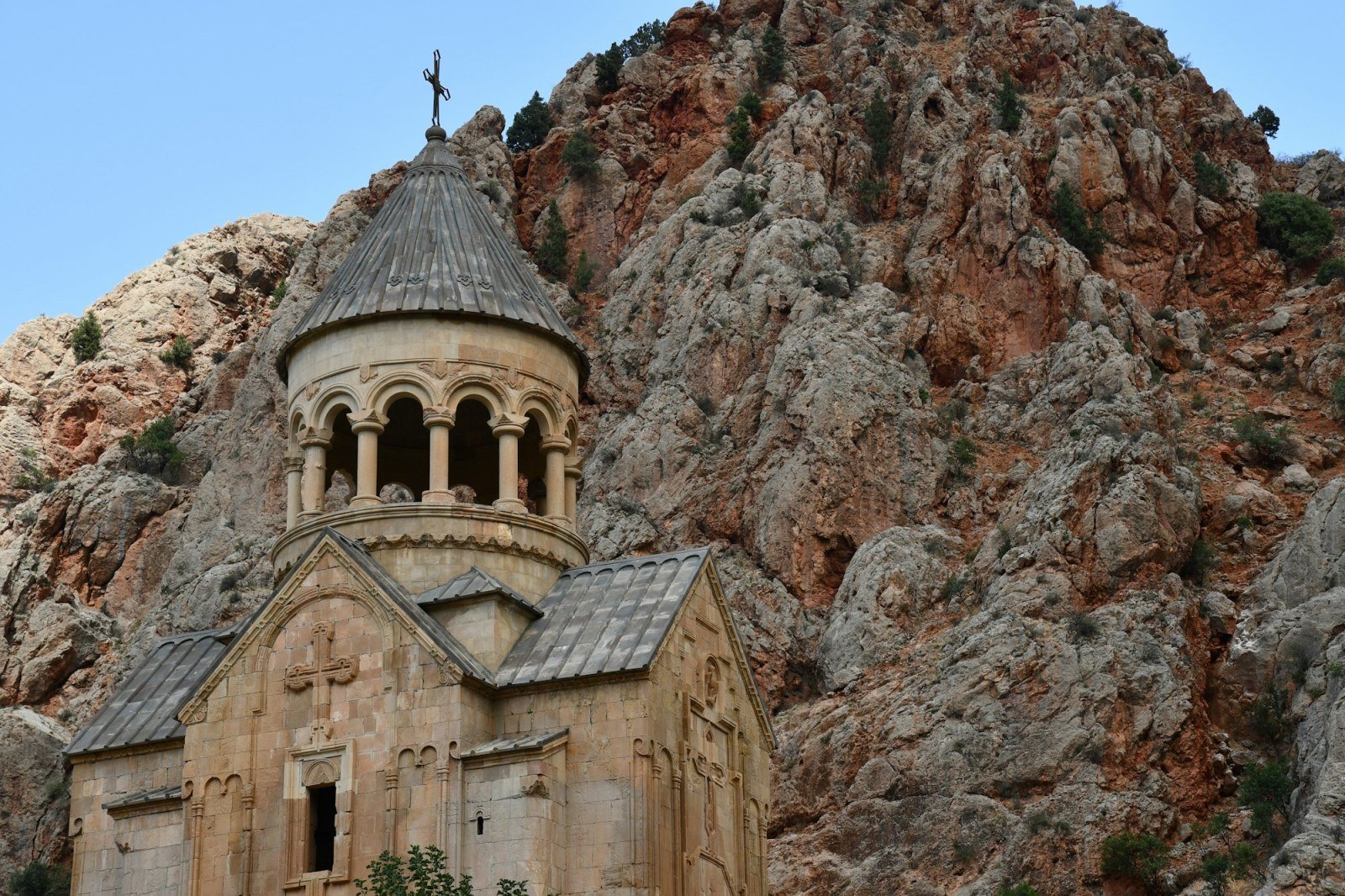
The monastery's core is small: two churches, a lateral chapel and some remains of secondary buildings in a compact space. There are no museums or shops inside the enclosure, only the churches open for visits and some medieval tombstones (khachkars) on the ground. What draws people is the church of Surb Astvatsatsin, also known as Burtelashen, with its bas-relief-carved facade and the external stone staircase — without a handrail — that climbs at a steep angle to the upper floor.
There is a free car park and a souvenir stall at the canyon entrance, next to a small restaurant with views over the complex. In high season several tour buses arrive each day and the enclosure fills with groups between ten in the morning and two in the afternoon. Outside those hours you have the place virtually to yourself, with the sound of wind against rock and, sometimes, the crows that nest in the cliffs.
History
Noravank Monastery (in Armenian Նորավանք, literally new monastery) was founded in 1205 by Bishop Hovhannes as the episcopal seat of the Orbelian principality, the feudal family that controlled Vayots Dzor. The church of Surb Karapet was built in 1221–1227 over the ruins of an earlier temple. The architect and sculptor Momik, also a miniaturist of the Gladzor school, built the church of Surb Astvatsatsin between 1339 and 1340 and is buried under a khachkar at the entrance. The complex was looted by Mongol and Timurid invaders, and an earthquake in 1840 brought down the drum of Surb Astvatsatsin. The main restoration was completed between 1982 and 1998.
What to see & do
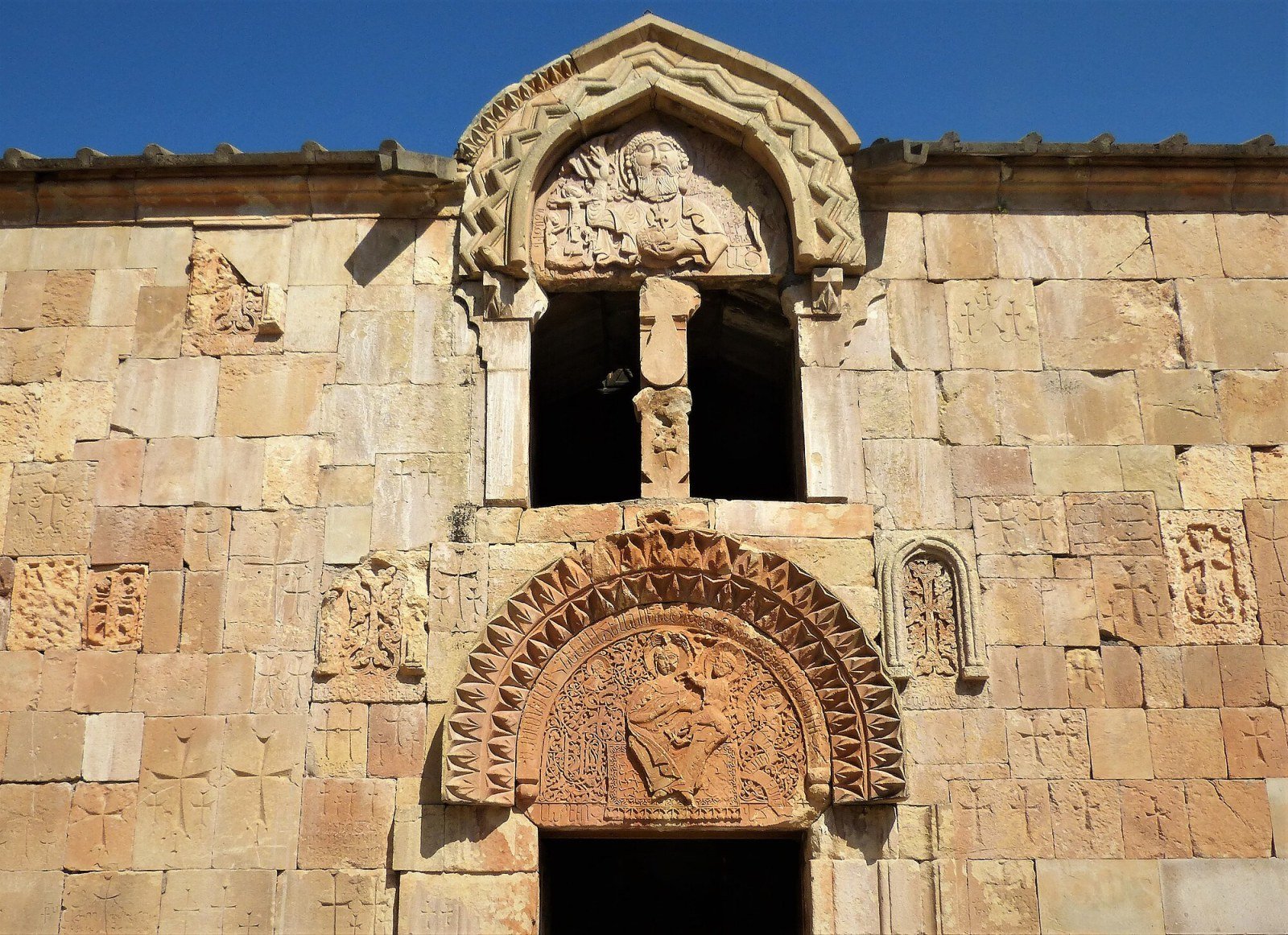
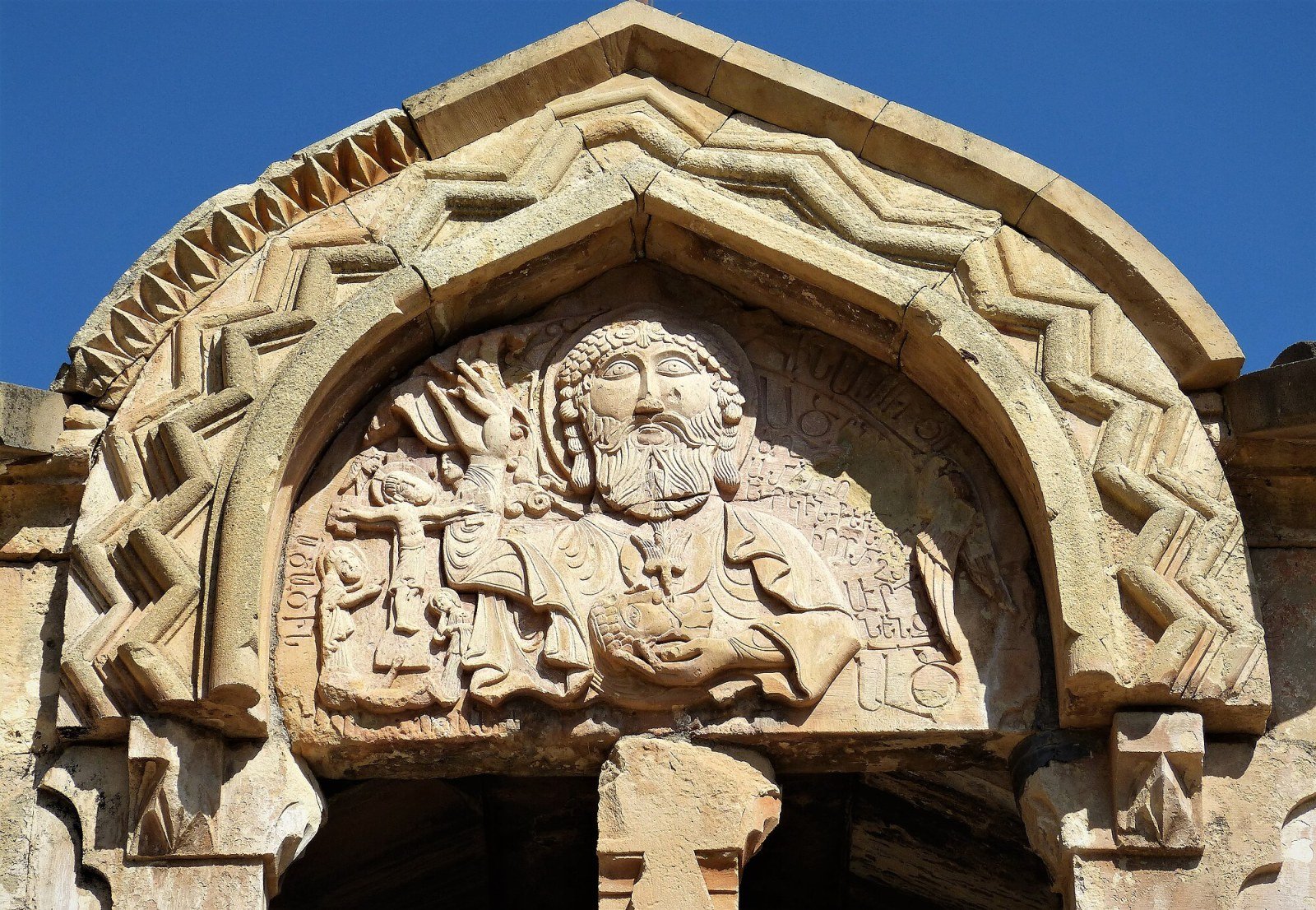
- Church of Surb Astvatsatsin (Burtelashen) Two-storeyed, completed in 1339 by Momik, with the facade covered in reliefs: a God the Father holding the head of adult Christ and, lower down, Adam and Eve in bas-relief flanking the door. The unprotected external staircase is more impressive up close than in photographs.
- Church of St John the Baptist (Surb Karapet) The oldest in the complex, from the first quarter of the 13th century, with a dark interior of bare stone, sculpted tombstones on the floor and tympana carved by Momik showing a Madonna and Child and a Christ in Majesty.
- Gavit of Surb Karapet The porch attached to the main church, with a yazik vault (typical Armenian crossed ribs) and capitals carved with human and animal heads; it is semi-ruined but can be entered.
- Chapel of St Gregory Small 13th-century funerary chapel attached to the north side of Surb Karapet, with the tomb of Prince Smbat Orbelian and a lion-dragon carved on the slab.
- Amaghu Canyon The gorge surrounding the monastery rewards a short walk: the rock changes colour by the hour and there is a viewpoint at the access bend with an overhead view of the whole complex.
Photo gallery
How to get there
Noravank Monastery is about 122 km south of Yerevan, near the village of Areni, in the Vayots Dzor region. There is no public transport to the monastery: marshrutkas from Yerevan to Yeghegnadzor or Goris stop on the M-2 road, 8 km from the site, from where you need to walk or take a taxi. The usual approach is to rent a car or hire a taxi from Yerevan (about two hours, between 20,000 and 30,000 drams return, 45–70 EUR). Many travellers combine it in a day with the Areni-1 cave and the wineries of Areni.
Best time to visit
April and May bring wild poppy fields at the canyon entrance and temperatures between 15 and 22 degrees. October and November work very well: the rock of the Amaghu canyon takes on warmer tones in the low light and there are fewer buses. Summer is dry and hot in the canyon, with midday highs of 35 degrees and almost no shade inside the enclosure. Winter can leave snow on the access track and some days the stretch from the M-2 is cut off. For a photo of the staircase in good light, come after four in the afternoon.
More information
Photo: Artur Adilkhanian / Unsplash · Unsplash License