
Motsameta Monastery
მოწამეთის მონასტერი
Medieval Georgian monastery perched above the Tskhaltsitela river canyon, 6 km from Kutaisi, housing the relics of martyrs David and Constantine.
Location in the Caucasus
Description
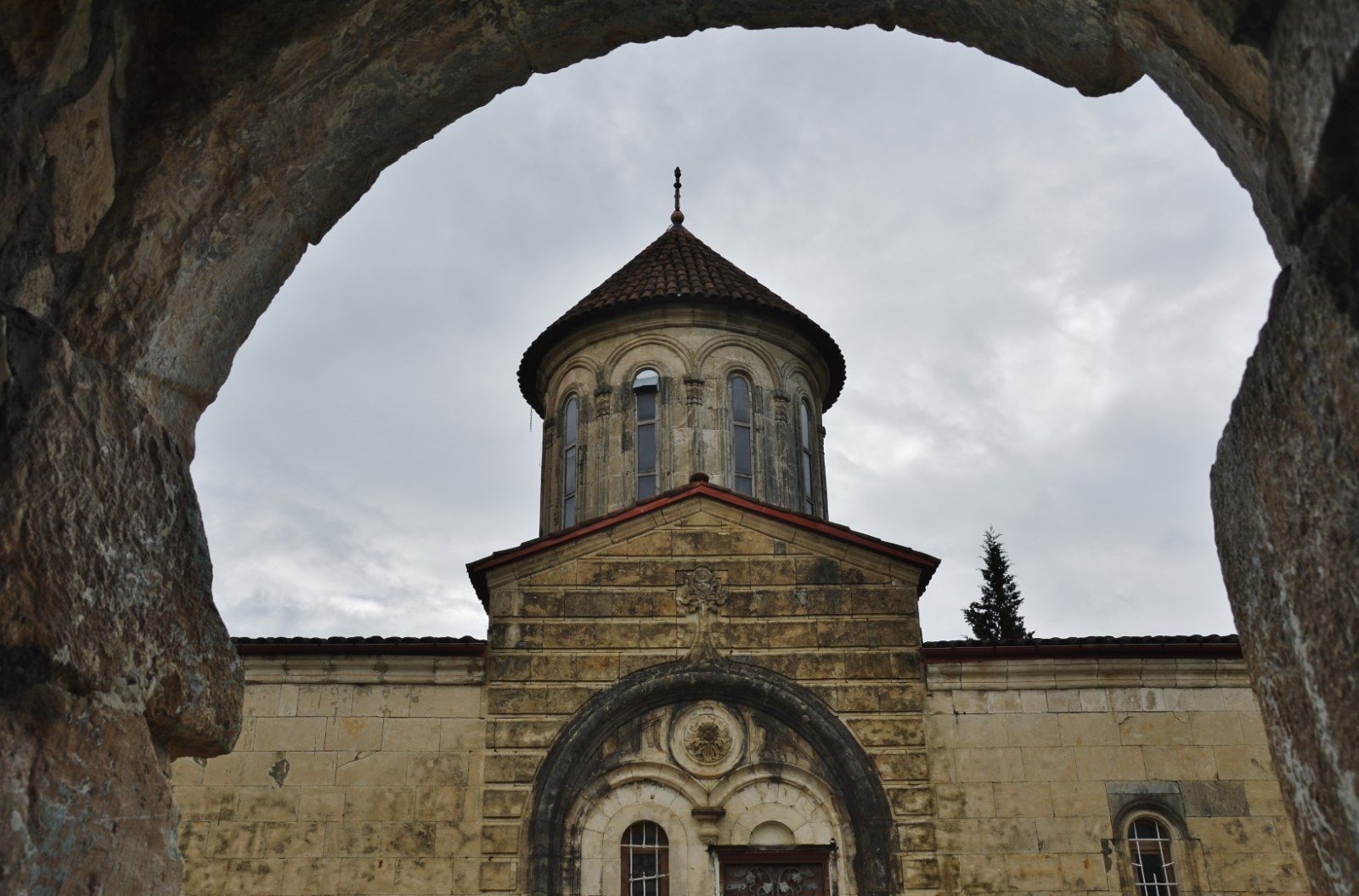
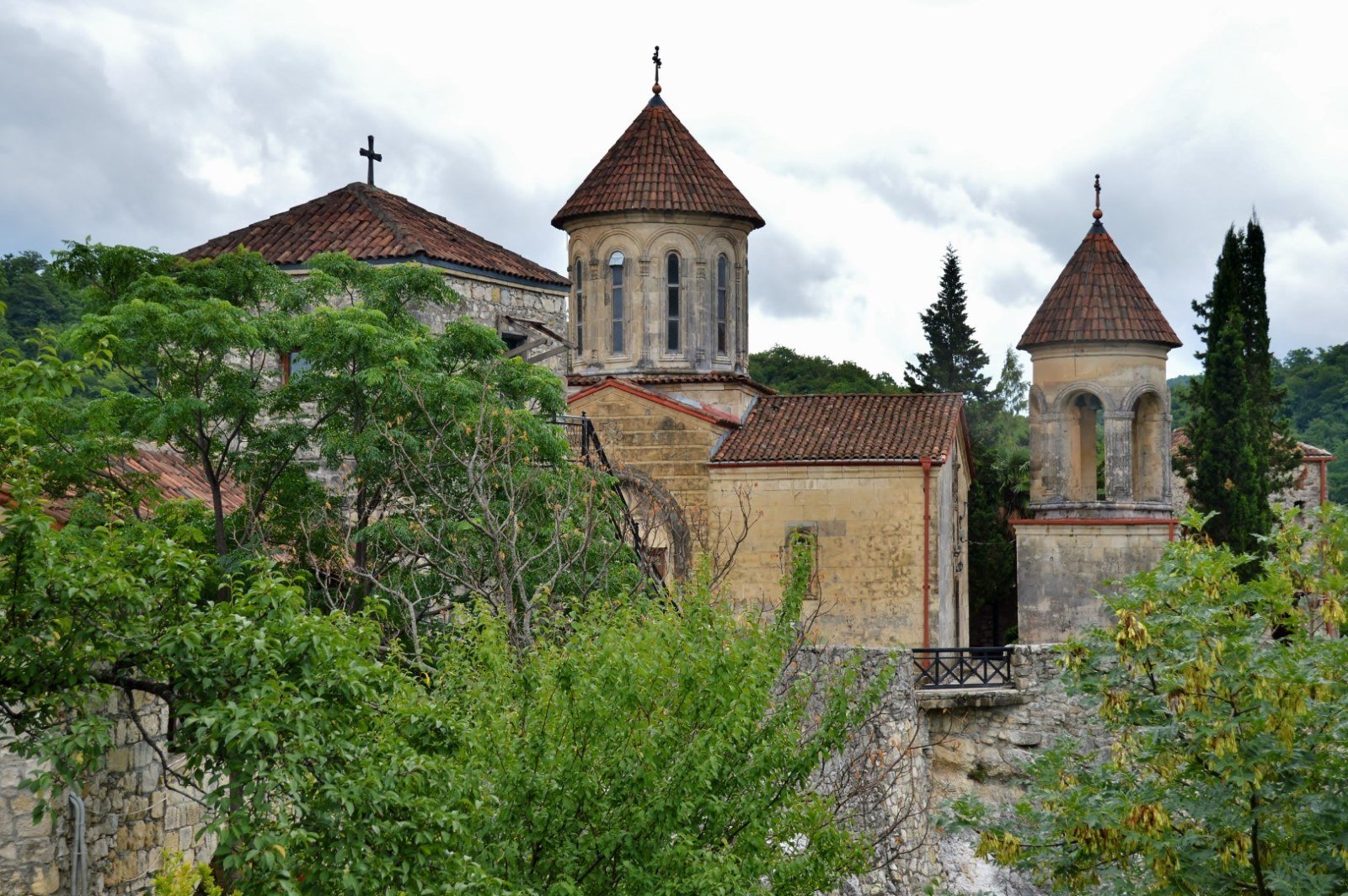
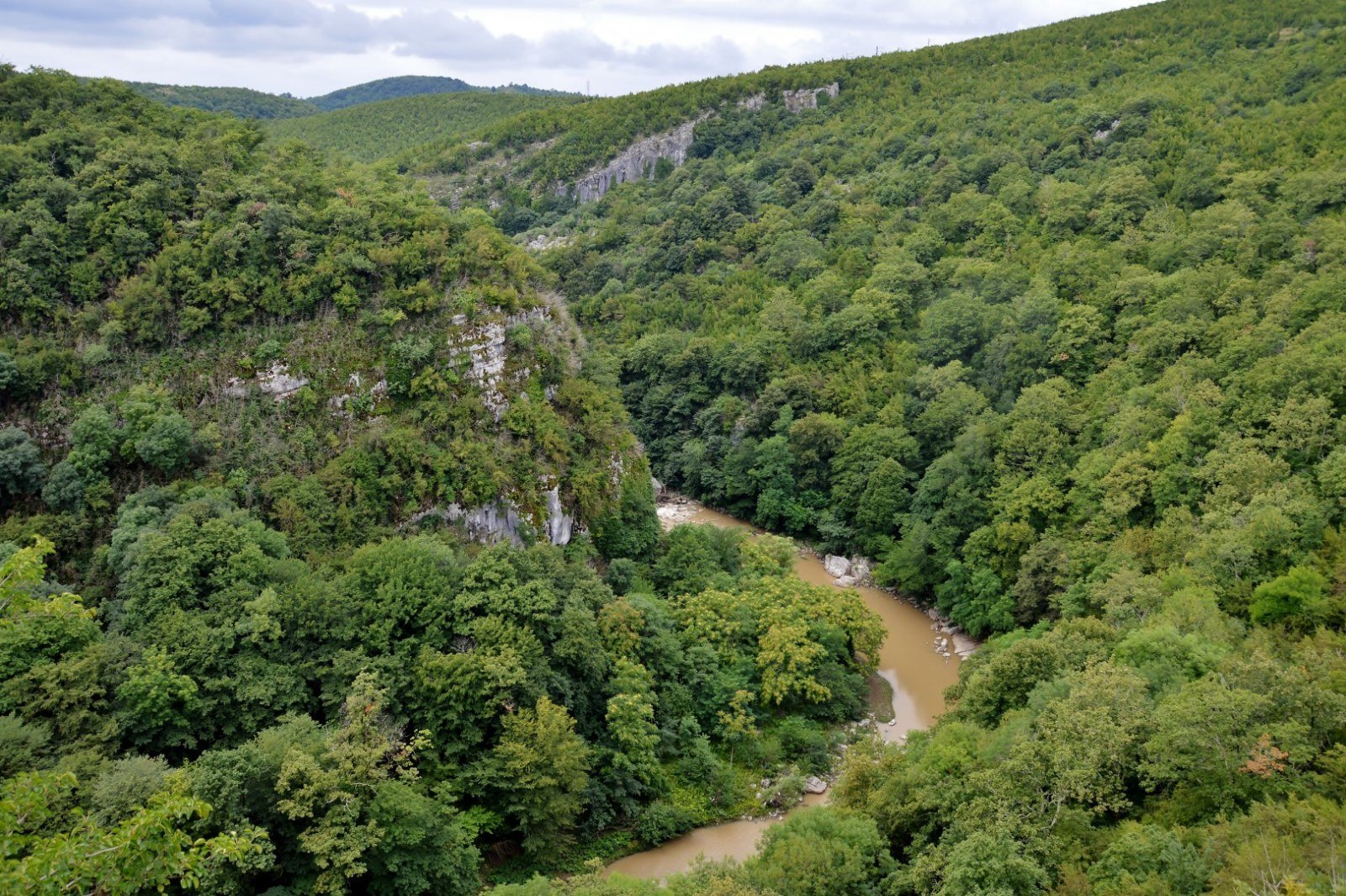
Motsameta Monastery sits on a rocky outcrop that juts out over the Tskhaltsitela river canyon like the prow of a ship suspended in mid-air. To get there you leave the car in a dirt car park and walk about ten minutes along a path through pines and beeches; the sound of the water below reaches you before any view of the building. When the Church of Saints David and Constantine appears at the end of the promontory, surrounded by air on three sides, the feeling is not one of grandeur but of something more intimate: a place built with a very specific purpose and no concessions to decoration.
The interior is small and barely any natural light enters. At the centre stands a dark wooden sarcophagus with the remains of the martyr princes David and Constantine of Argveti, executed by the Arabs in the 8th century. Local pilgrims crawl under the sarcophagus three times while making a wish; if you arrive on a Sunday, it is common to see entire families doing this while monks chant in the adjacent room. It is not a tourist spectacle: it is an active devotional practice, and it is best to move around with discretion.
The surroundings are remarkably well preserved. There are no souvenir shops or cafés on the grounds. The visit is usually combined with Gelati Monastery, about six kilometres away, making a complete half-day excursion from Kutaisi. Admission is free; a small donation in the tray by the door is appreciated.
History
Motsameta Monastery was founded in the 11th century on the spot where, according to tradition, the Arabs threw the bodies of princes David and Constantine of Argveti into the Tskhaltsitela River after their martyrdom around the year 736. They refused to renounce Christianity and were executed by the forces of the Arab governor Marwan II. The name Motsameta means «place of the martyrs» in Georgian. The current church, with its inscribed-cross plan characteristic of medieval Georgian architecture, dates from the 11th century, though it was restored at various points, most recently in the 20th century. The two princes were canonised by the Georgian Orthodox Church and their relics remain in the sarcophagus that presides over the interior, an object of uninterrupted popular devotion to this day.
What to see & do
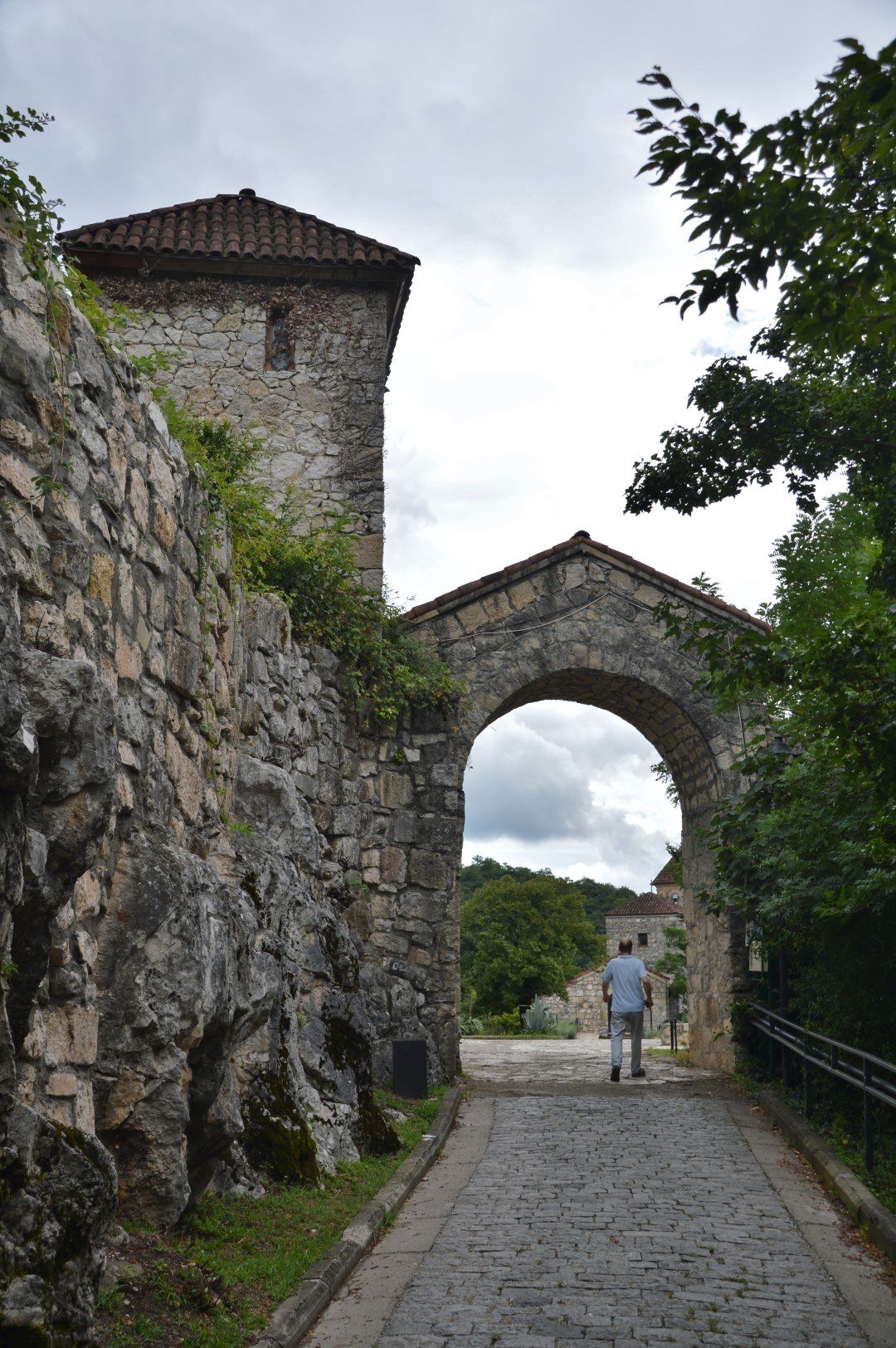
- Rocky promontory above the canyon The access path runs along both sides of the narrow outcrop; on clear days the green of the forest at the bottom of the Tskhaltsitela canyon is visible. No railing in several sections: watch out with children.
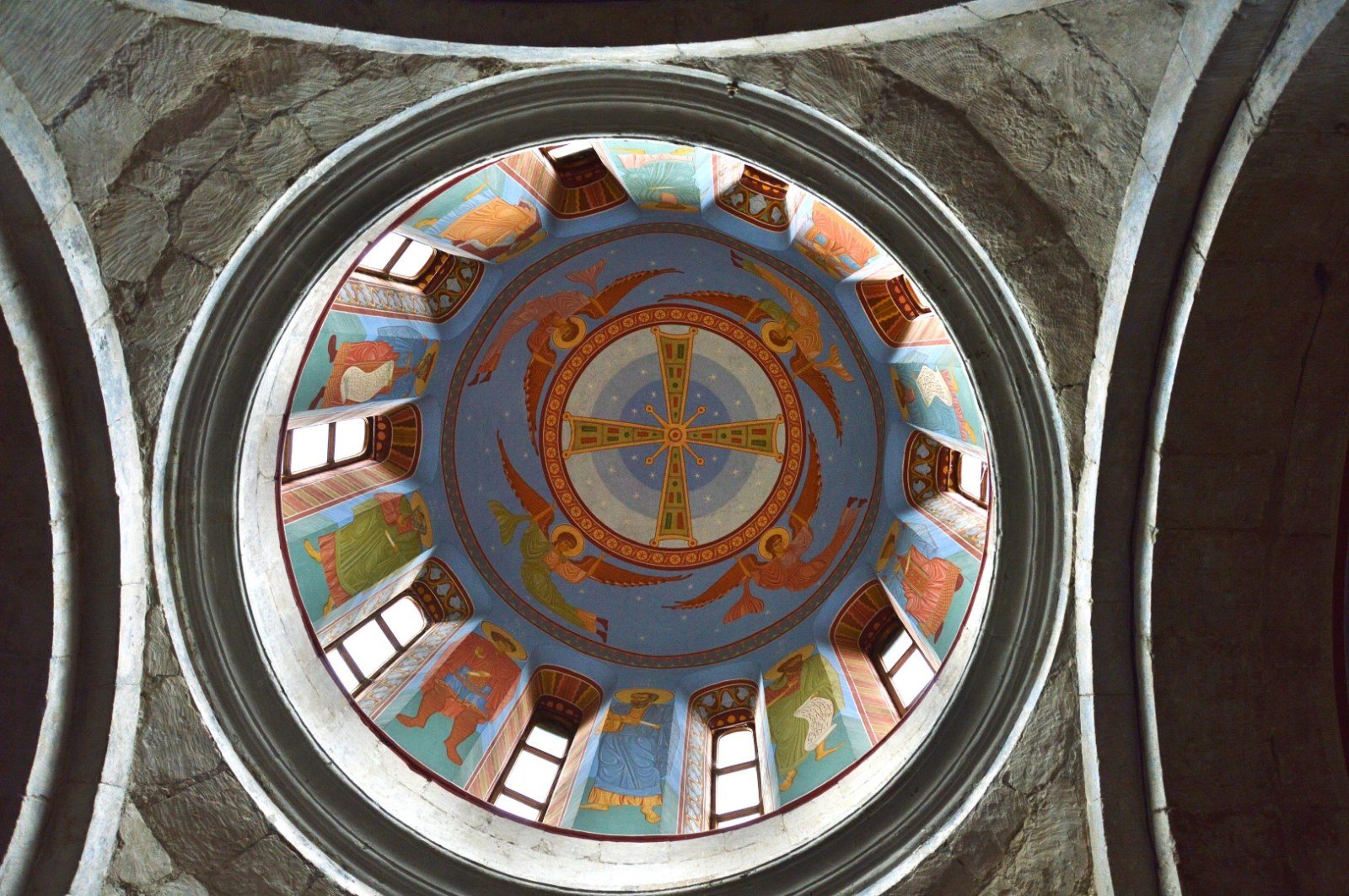
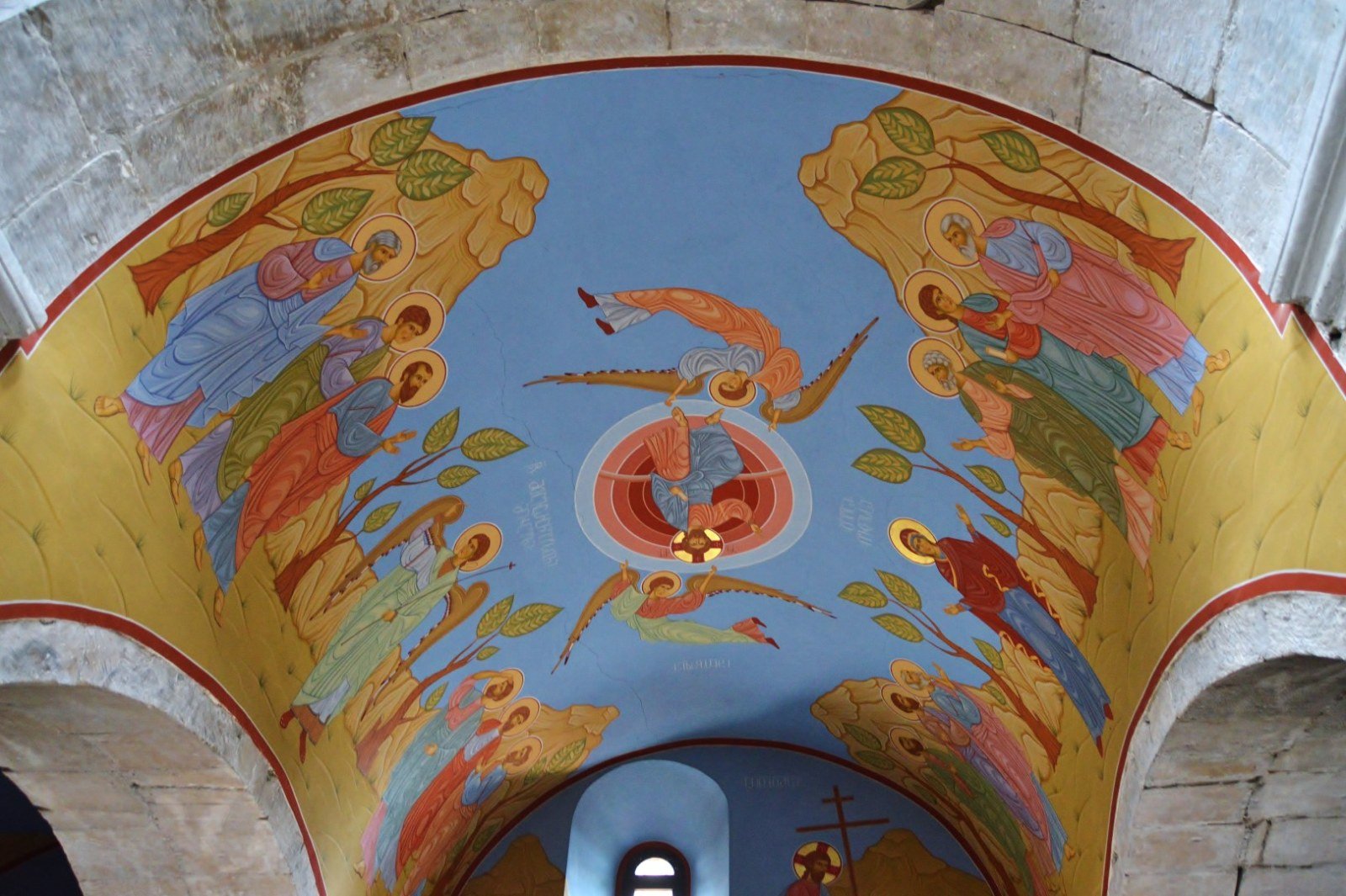
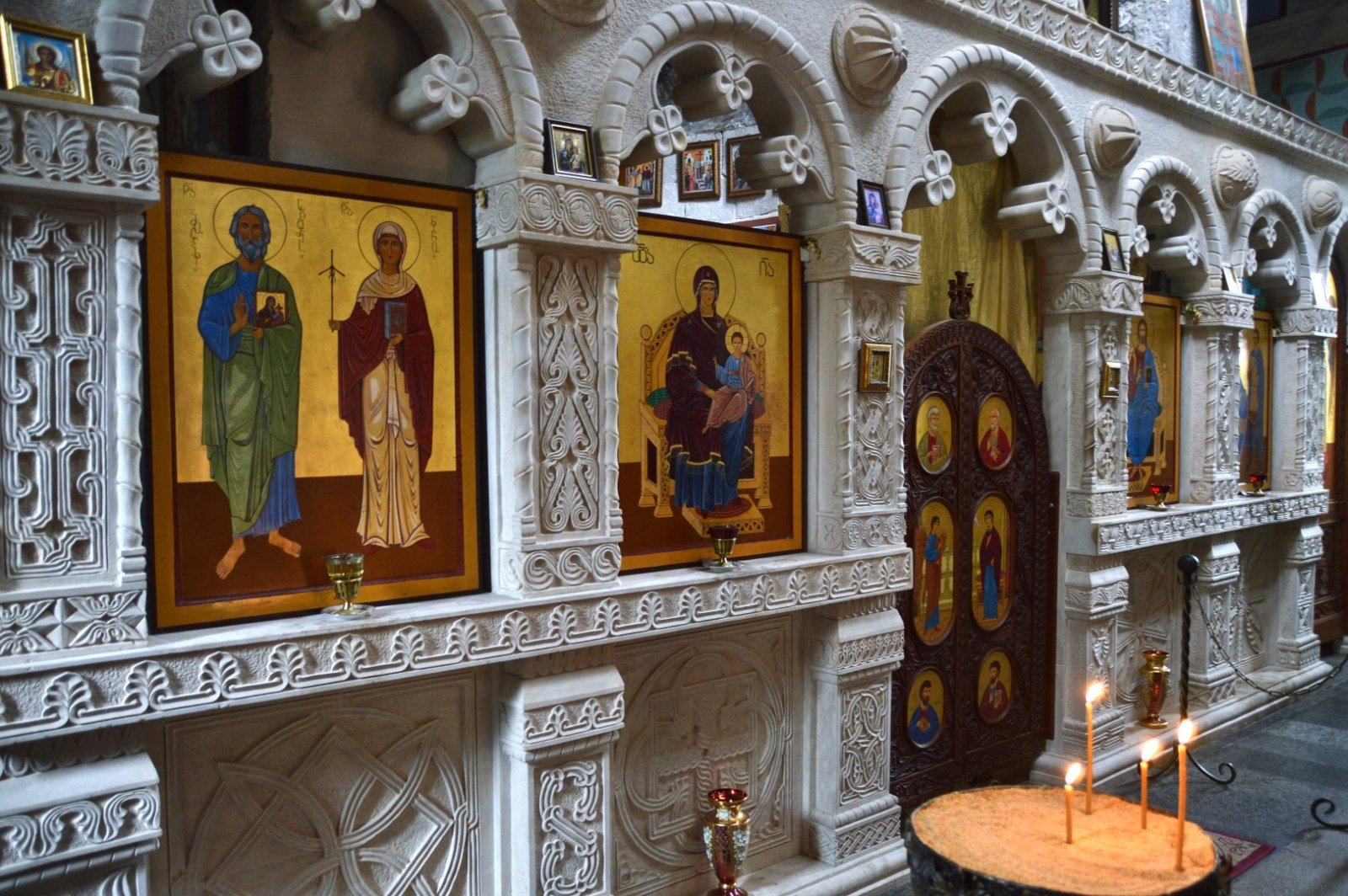
- Church of Saints David and Constantine Austere interior with subdued light. The vault frescoes and those of the nave are partially deteriorated, but the surviving ones are of notable pictorial quality. The iconostasis is simple and made of dark wood.
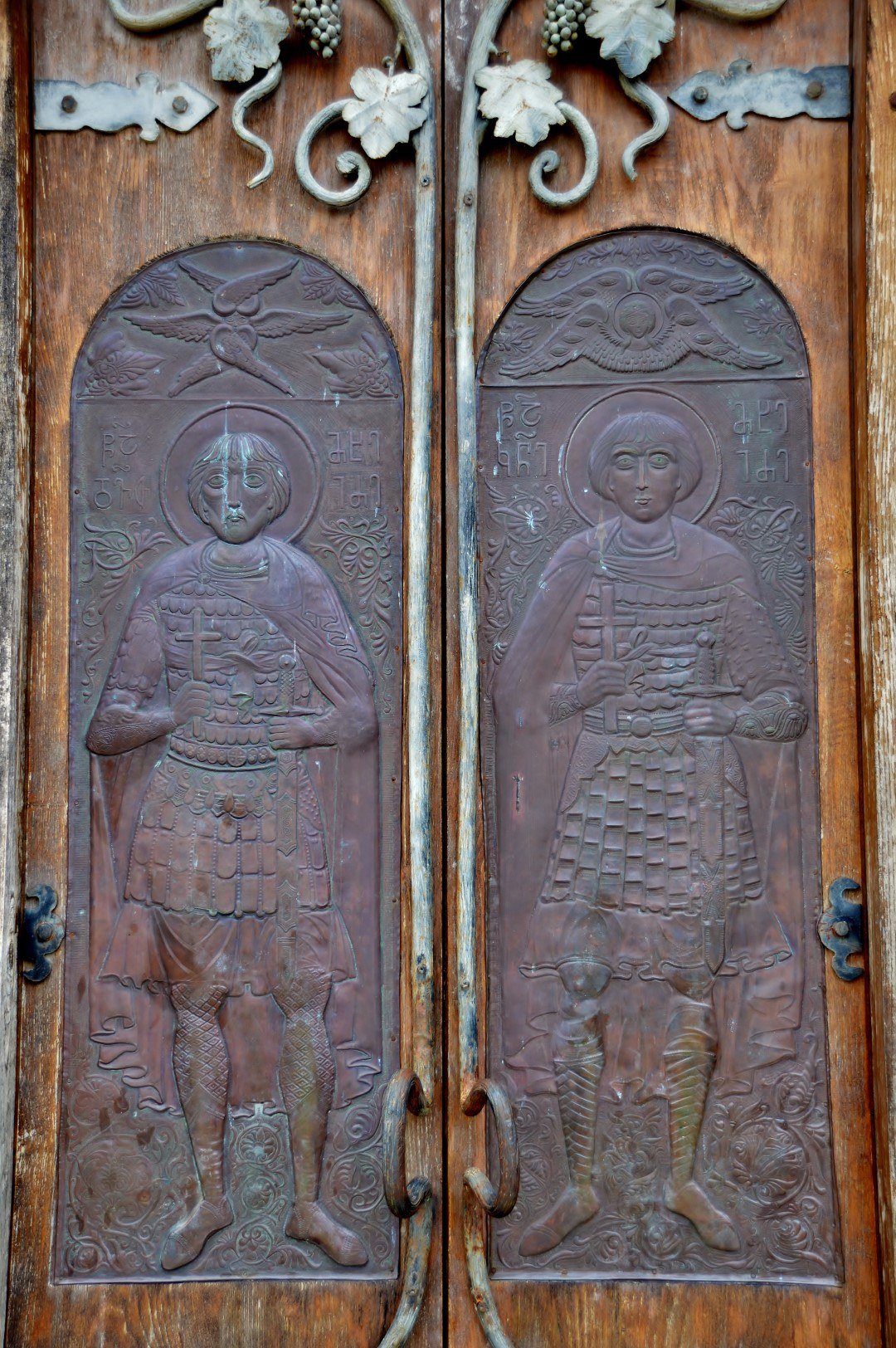
- Bronze bas-reliefs on the west door The doors of the west façade bear reliefs with the figures of the dukes of Argveti; it is worth stopping to look at them before going inside.
- Sarcophagus ritual The faithful crawl three times under the wooden sarcophagus holding the remains of David and Constantine. Witnessing it — or taking part, if you feel comfortable — is the most distinctive experience at Motsameta.
- Views over the Tskhaltsitela valley From the edge of the promontory the river can be seen squeezed between rock walls. The best light is early in the morning.
- Forest access path The stretch of beeches and pines between the car park and the monastery is particularly pleasant in spring and early autumn.
Photo gallery
How to get there
Motsameta Monastery is about 6 km northwest of Kutaisi. From the city the most practical option is a taxi (around 15–20 lari for the return trip with half an hour's wait; agree the price before you leave). There is no direct public transport. By private car it takes about fifteen minutes along the road towards Gelati. The usual approach is to visit Gelati first and Motsameta afterwards, though the reverse order works just as well.
Best time to visit
Spring (April–June) is the most pleasant time: the forest along the path is green, temperatures are around 18–24 °C and the light is good for photography. Autumn brings warm colours to the beeches and fewer visitors than in summer. In July and August it is hot, though the Tskhaltsitela canyon tempers the temperature somewhat. Winter in Imereti is rainy and cold; the path can be muddy and the rock of the promontory becomes slippery.