
Tsakhats Kar Monastery
Ծաղաց Քար
Medieval monastic complex in the heights of <strong>Vayots Dzor</strong>, among pink tufa and near-total silence above the <strong>Arpa valley</strong>.
Location in the Caucasus
Description
Reaching Tsakhats Kar Monastery requires about forty minutes of hiking from the dirt track that climbs through the village of Yeghegis. The path is unmarked: dry grass, loose tuf blocks and stretches where the wind comes down cold from the ridges even in July. It's worth downloading a photo of the route or asking in the village before heading up.
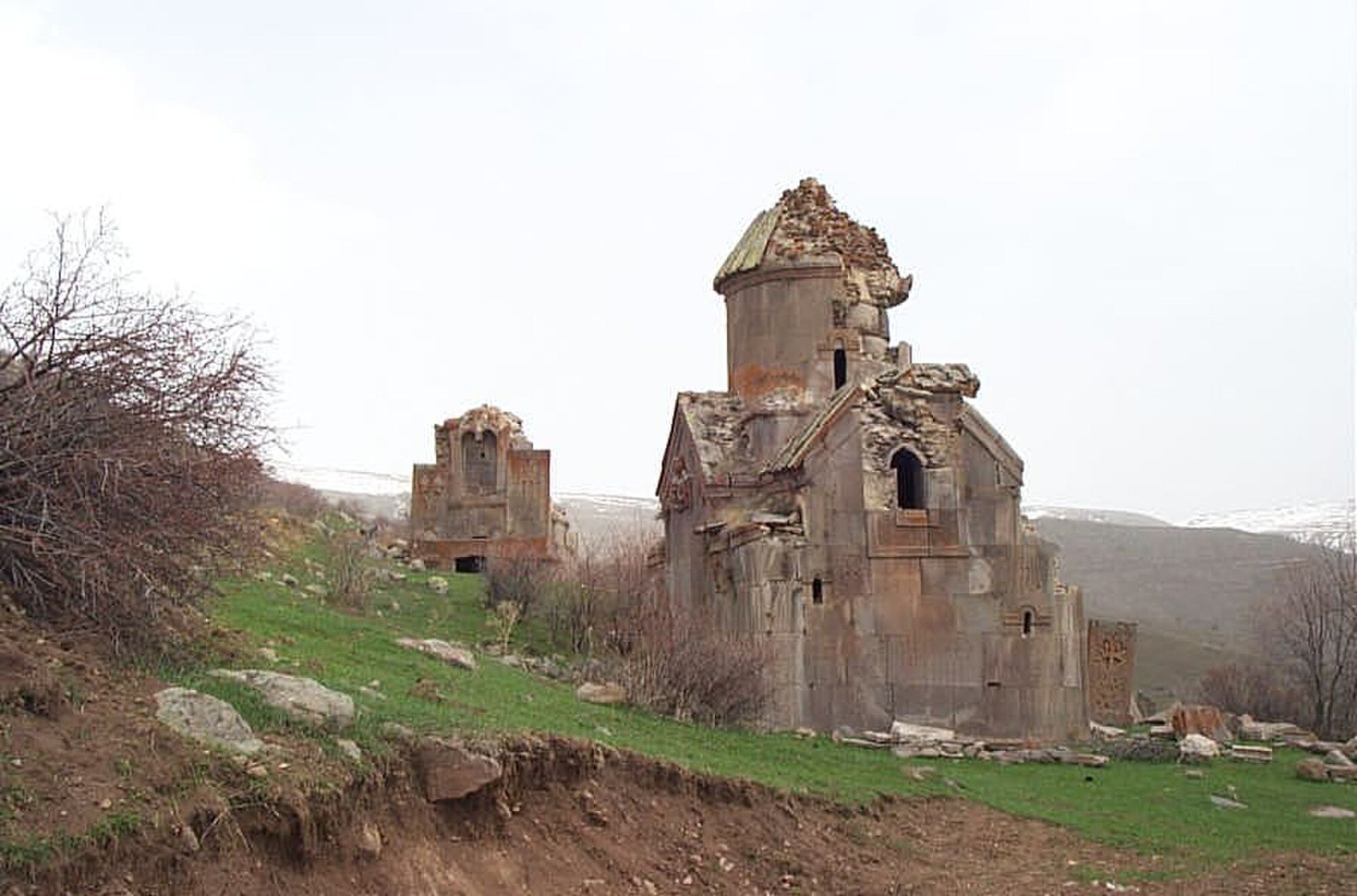
What first disorients you on arrival is not the main church but the scale of the complex. Several chapels are scattered among outcrops of reddish-brown tuf; some retain their walls intact, others are little more than scattered blocks. The stone absorbs the afternoon light in a way that erases the boundary between Tsakhats Kar Monastery and the mountain surrounding it. The silence is almost total, broken only by the wind and the occasional passing bird.
There is no ticket booth, permanent guard or shop. The visit is direct and unmediated, which can feel refreshing or disorienting depending on the type of traveller. Those who combine the climb with the nearby Medieval Jewish Cemetery of Yeghegis and Smbataberd Monastery have enough for a full day in the Vayots Dzor region without repeating the scenery.
History
Tsakhats Kar Monastery was probably founded in the 10th century and experienced its most active period between the 11th and 13th centuries under the Orbeli princes, who dominated the Vayots Dzor region. The name translates roughly as 'flower stone' in Armenian, though some sources link it to the rocky formations of the surroundings. The original complex included churches, a gavit (porticoed narthex) and monastic cells. It was gradually abandoned and never subjected to systematic restoration, which explains both its current state of partial ruin and the authenticity of the visit.
What to see & do
- Main church The best-preserved structure in the complex, with finely carved tuf walls and visible mouldings on the portal. The interior is empty but the acoustics are surprising: a murmur bounces off the walls with unexpected clarity.
- Secondary chapels Distributed among the rocks of the Tsakhats Kar promontory, some barely recognisable as buildings. It's worth walking the entire area before descending to find them all.
- Views over the Arpa river valley From the edge of the promontory where Tsakhats Kar Monastery stands, you can see the Arpa river winding below and, on clear days, part of the mountain range of southern Armenia.
- Medieval Jewish Cemetery of Yeghegis A few kilometres downhill, one of the best-documented medieval Jewish cemeteries in Armenia, with 13th-century headstones inscribed in Hebrew. Combining both sites in a single day is common.
- Smbataberd Monastery About 8 km away, another medieval fortress-monastery in the Vayots Dzor region that rounds out the area without needing to return to Yerevan.
Photo gallery
How to get there
The most practical starting point is the village of Yeghegis, about two hours from Yerevan via the M2 highway to Vayk and then local road. There is no direct public transport; the usual option is to rent a car or hire a taxi from Yeghegis or Jermuk, about 30 km away. The dirt road to the trailhead is in good condition for ordinary vehicles in summer; in winter it may be cut off by snow.
Best time to visit
May and June offer the greenest surroundings and comfortable temperatures for hiking, between 15 and 22 degrees. July and August are dry with strong sun; it's best to set out before 10 in the morning. September is perhaps the finest month: less heat, clean light and the colours of the Arpa valley already changing. In winter access to Tsakhats Kar Monastery may be cut off by snow and the dirt road becomes slippery.
More information
Photo: Raffi Kojian · CC BY-SA 3.0