
Hovhannavank Monastery
Հովհաննավանք
Armenian 12th-century monastery on the edge of the Qasagh river canyon in Aragatsotn: three-nave church, medieval gavit and unlabelled khachkars.
Location in the Caucasus
Description
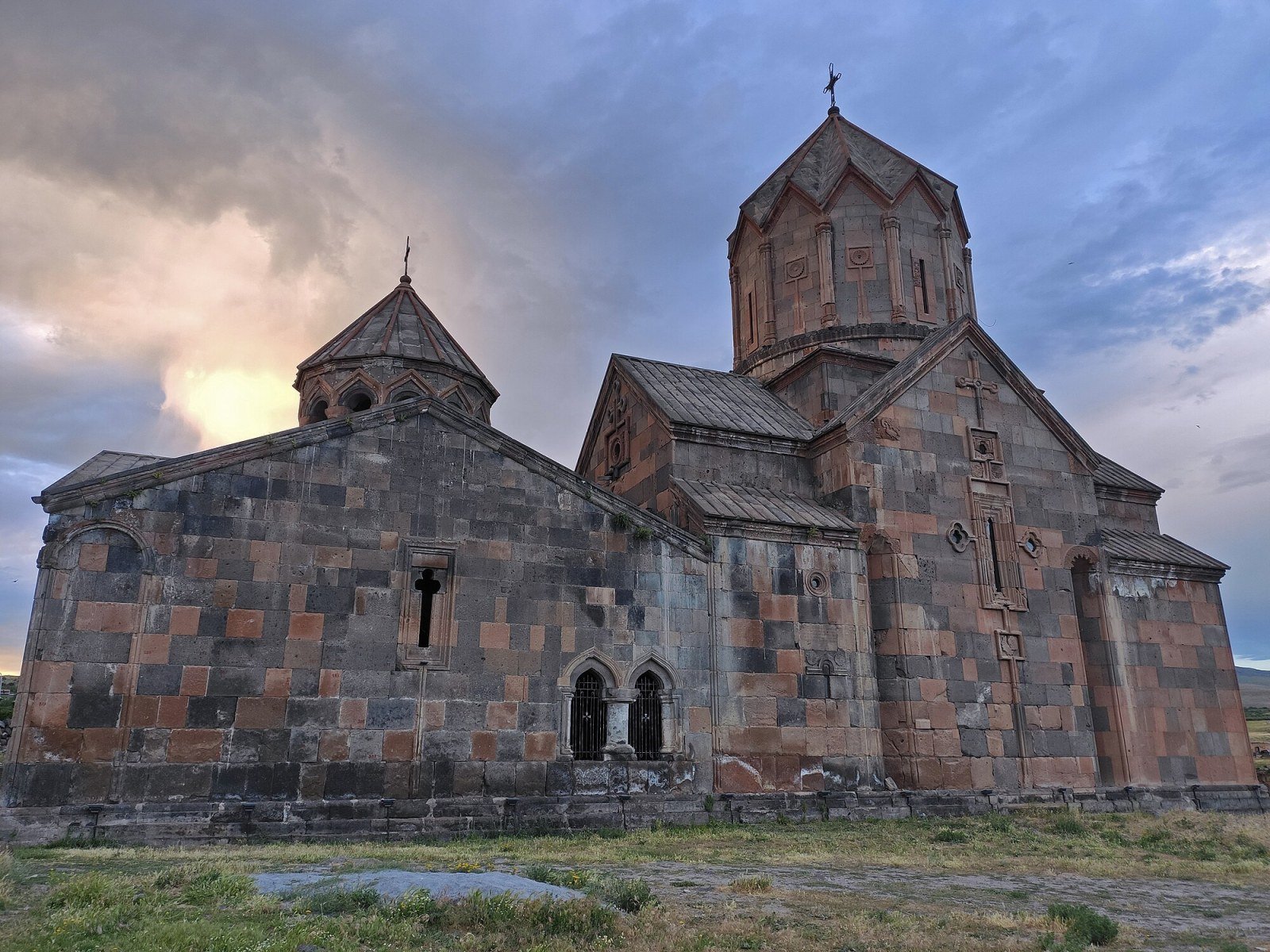
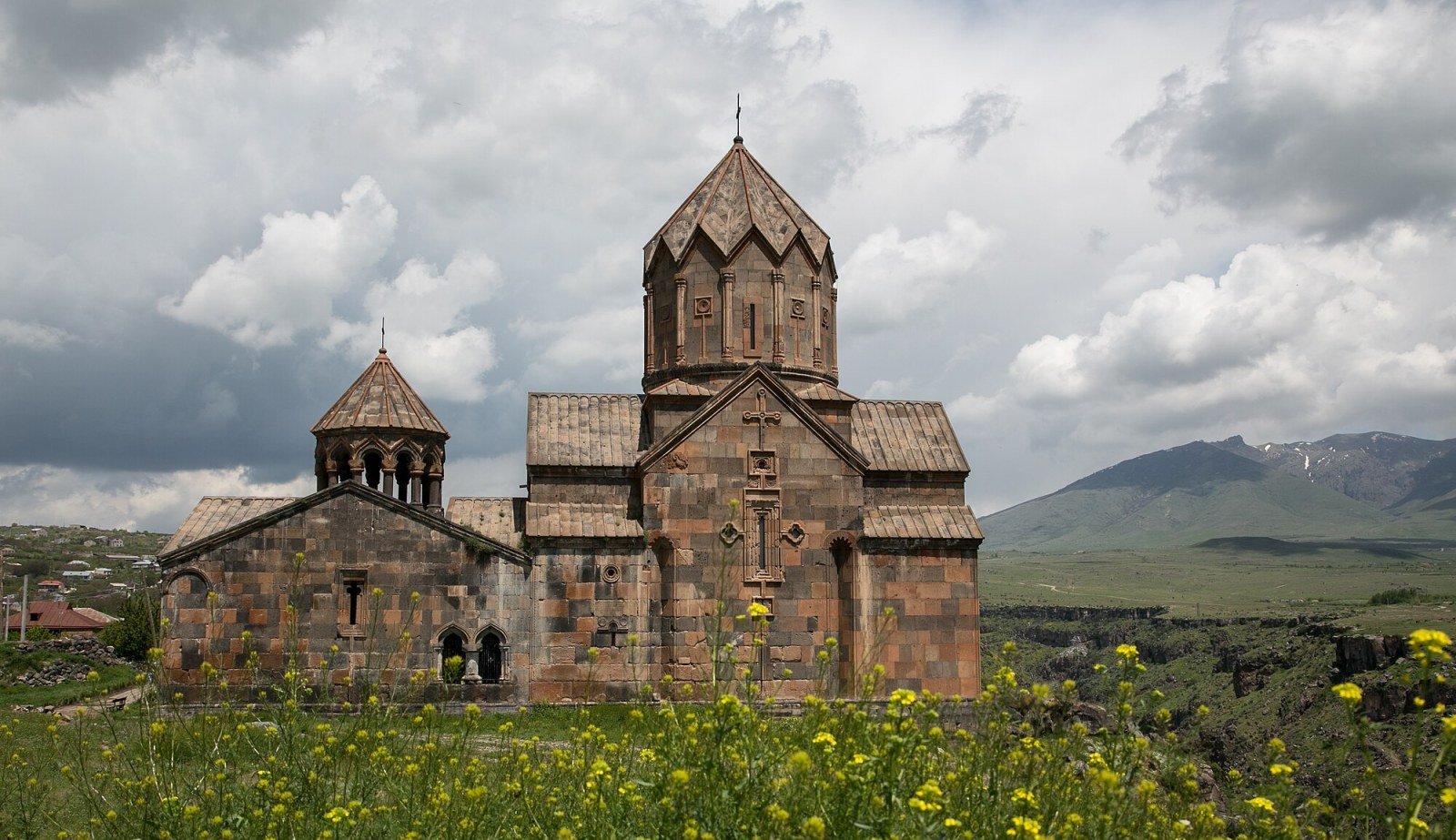
When you arrive at Hovhannavank Monastery, the first thing that strikes you is not the church but the vertigo: the complex sits on the very edge of a canyon with vertical walls above the Qasagh river, which can be heard rushing over rocks below even though it cannot be seen from above. The dark grey stone of the volcanic tuff used to build the walls absorbs the morning light in a dense, almost heavy way, and on foggy days the monastery seems to float above nothing.
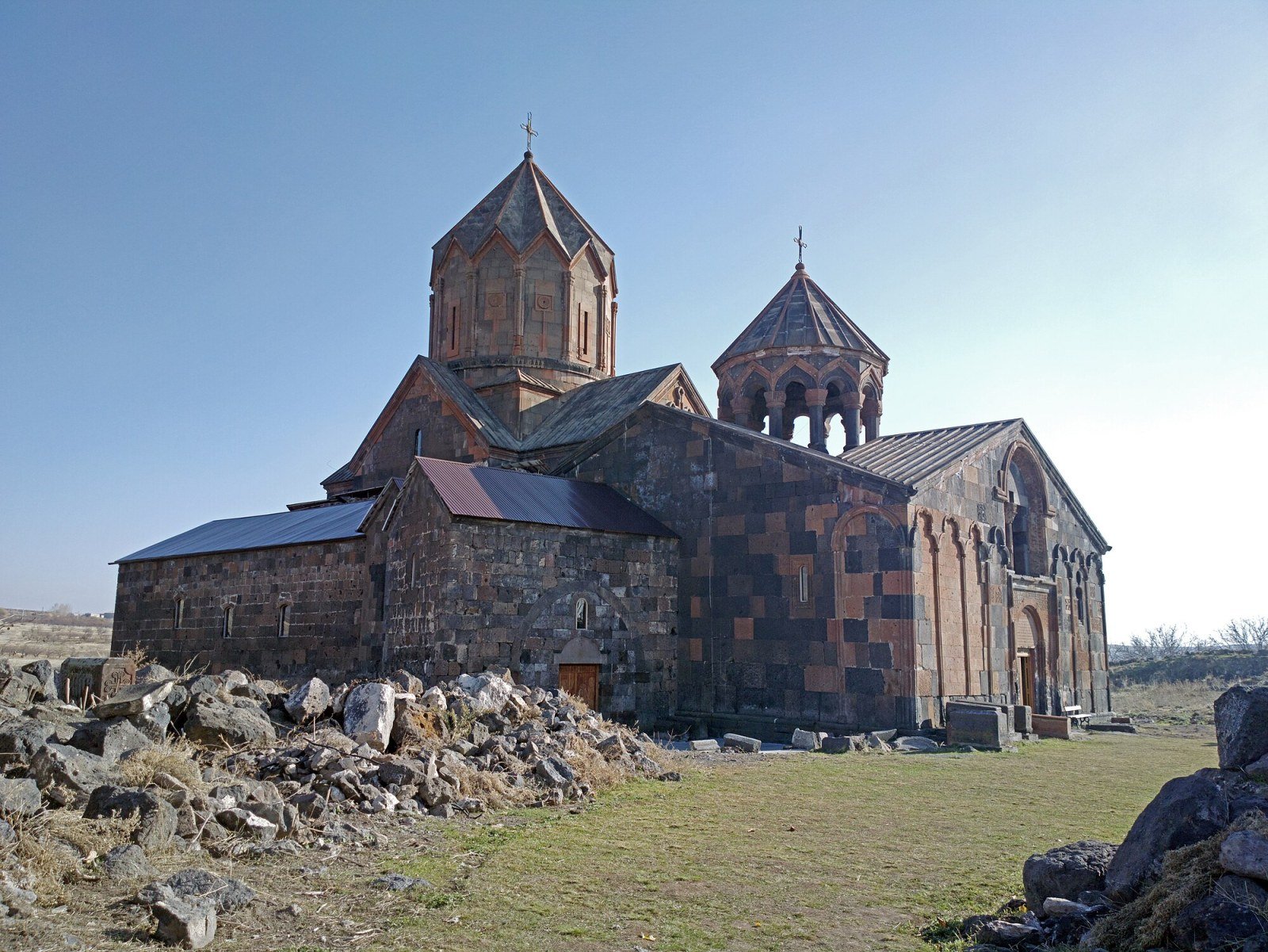
The compound is relatively small and not overcrowded. The Church of St John has three naves separated by columns, a gavit attached at the front — the domed narthex characteristic of medieval Armenian architecture — and stone khachkars emerging from the grass with no signs or labels. The monks who occasionally pass through rarely speak to visitors, which preserves an unusual stillness in the place. Compared to Saghmosavank Monastery a few kilometres away, Hovhannavank receives fewer visitors and that is noticeable.
There is no souvenir shop or café inside the compound. On summer weekends, villagers from Ohanavan — at the foot of the canyon — sell fruit and lavash near the car park. The road from Aparan has some potholes worth bearing in mind. Free entry.
History
Hovhannavank Monastery was founded in the 12th century and extended with the gavit in the early 13th century, during the period of relative stability that Armenia enjoyed under the Zakarian princes. The name refers to St John the Baptist — Hovhannes in Armenian — to whom the main church is dedicated. Like much of the heritage of the Aragatsotn region, it suffered damage during the Mongol invasions of the 13th century but was rebuilt and maintained its religious activity for centuries. The current monastic community is small and the complex is under Armenian state protection.
What to see & do
- Church of St John — S. Hovhannes (12th century) The central nave retains traces of heavily deteriorated frescoes that are still visible on some sections of the walls. You need to wait for your eyes to adjust to the dim light: light enters only through narrow windows.
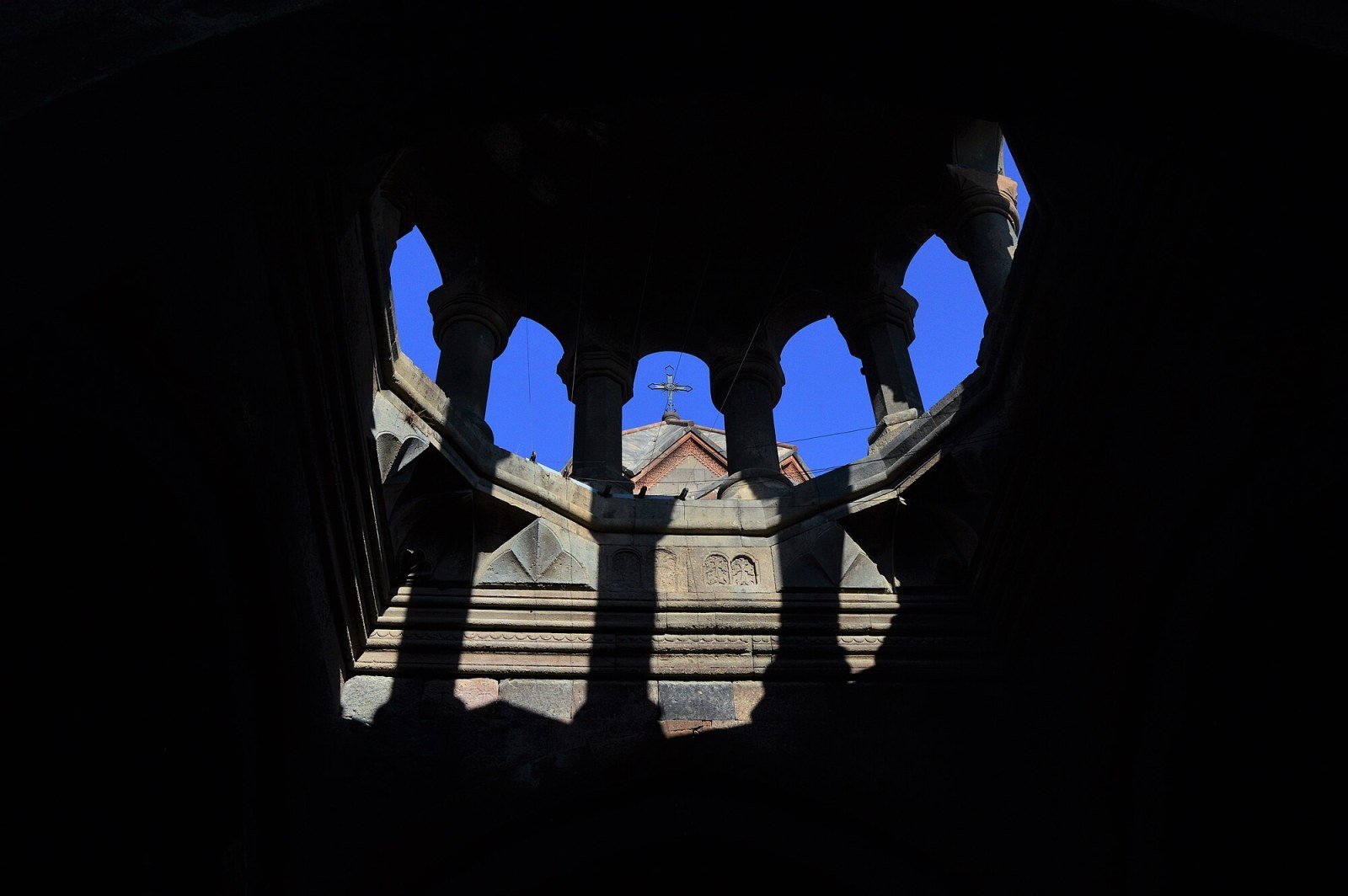
- Attached gavit (13th century) One of the best-preserved gavits in the Aragatsotn region. The stone squinches at the corners of the dome and the vegetal reliefs on the capitals deserve close attention.
- Courtyard khachkars Medieval stone crosses scattered around the compound, some half-buried, with no signage. It is common to find them without any information: part of the character of the place.
- Qasagh canyon viewpoint The northern edge of the compound offers views into the Qasagh river canyon. From here the defensive logic of the monastery's position becomes clear. No railing at the edge.
- Village of Ohanavan A few minutes by car, the village preserves volcanic stone houses and an everyday rhythm untouched by tourism. Worth a brief stroll.
Photo gallery
How to get there
Hovhannavank Monastery is about 75 km north of Yerevan, near the town of Aparan. There is no direct public transport; the most practical option is to hire a car or take a day taxi from Yerevan. Combined with Saghmosavank Monastery — about 8 km to the southwest — both can be covered in a half-day trip. From Yerevan, the M3 road passes through Aparan; from there signage leads to the monastery.
Best time to visit
May and June are the best months: vegetation in the Qasagh canyon is green and temperatures range between 15 and 22 °C. September and October are also good, with warmer golden light and fewer visitors than in summer. July and August are hot and Hovhannavank Monastery receives more organised groups. In winter there may be snow and the road down to the canyon can ice over; in some years access is closed.
More information
Photo: Emma YSU · CC BY-SA 4.0