
David Gareja Monastery
დავით გარეჯა
Rock-hewn monastic complex in the Kakheti steppe, carved into limestone cliffs near the Azerbaijan border, with 6th-century medieval frescoes.
Location in the Caucasus
Description
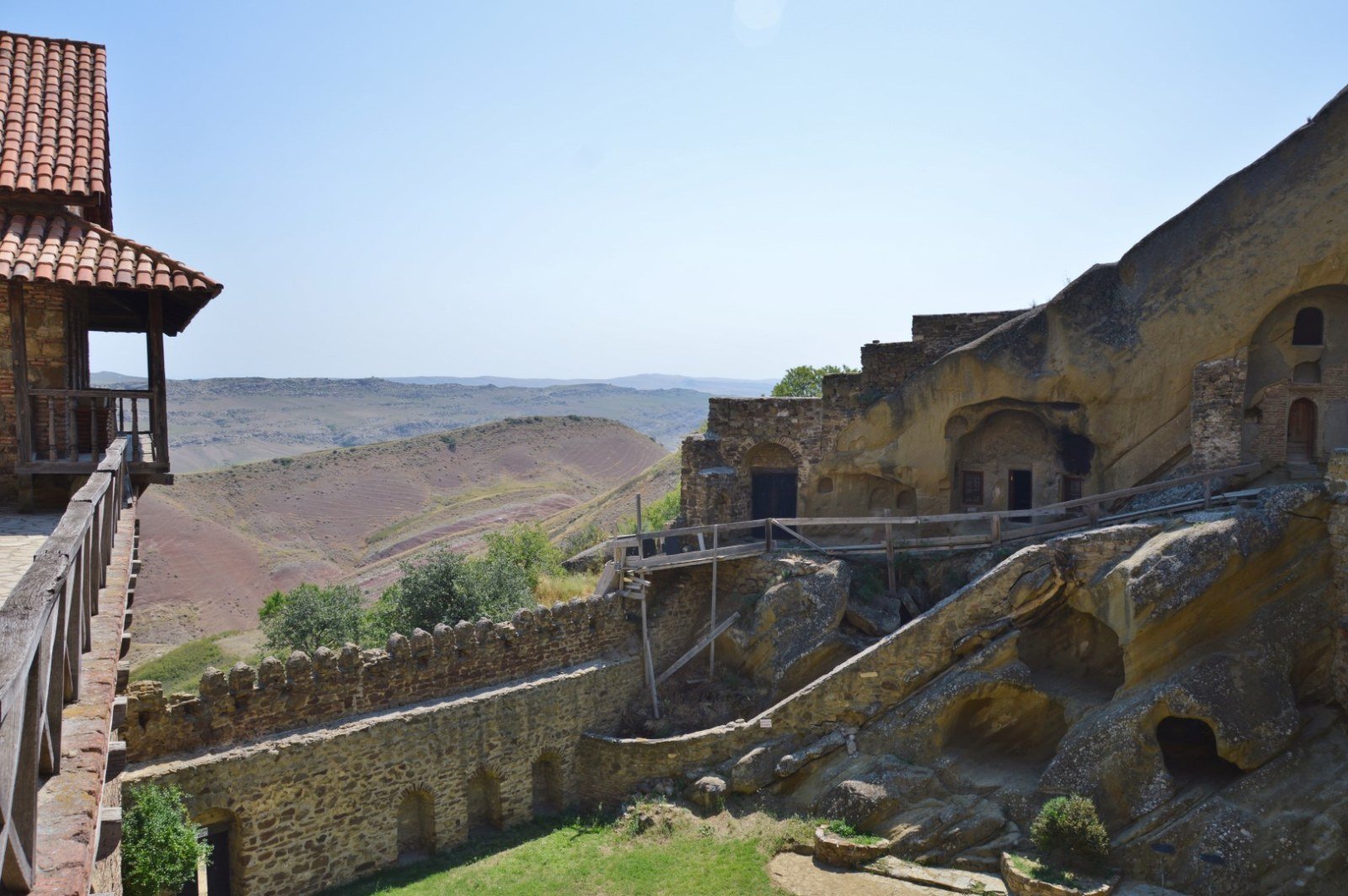
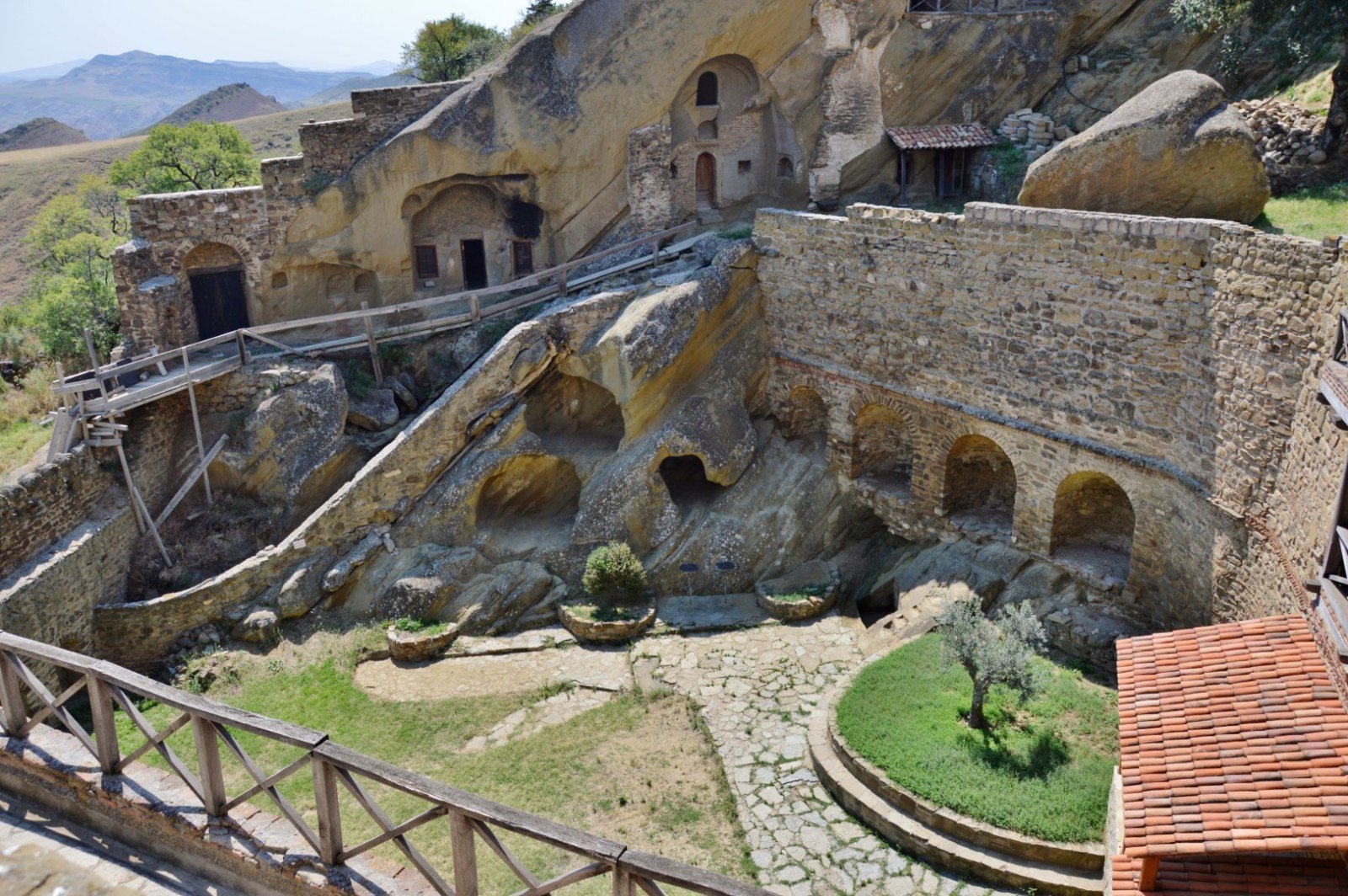
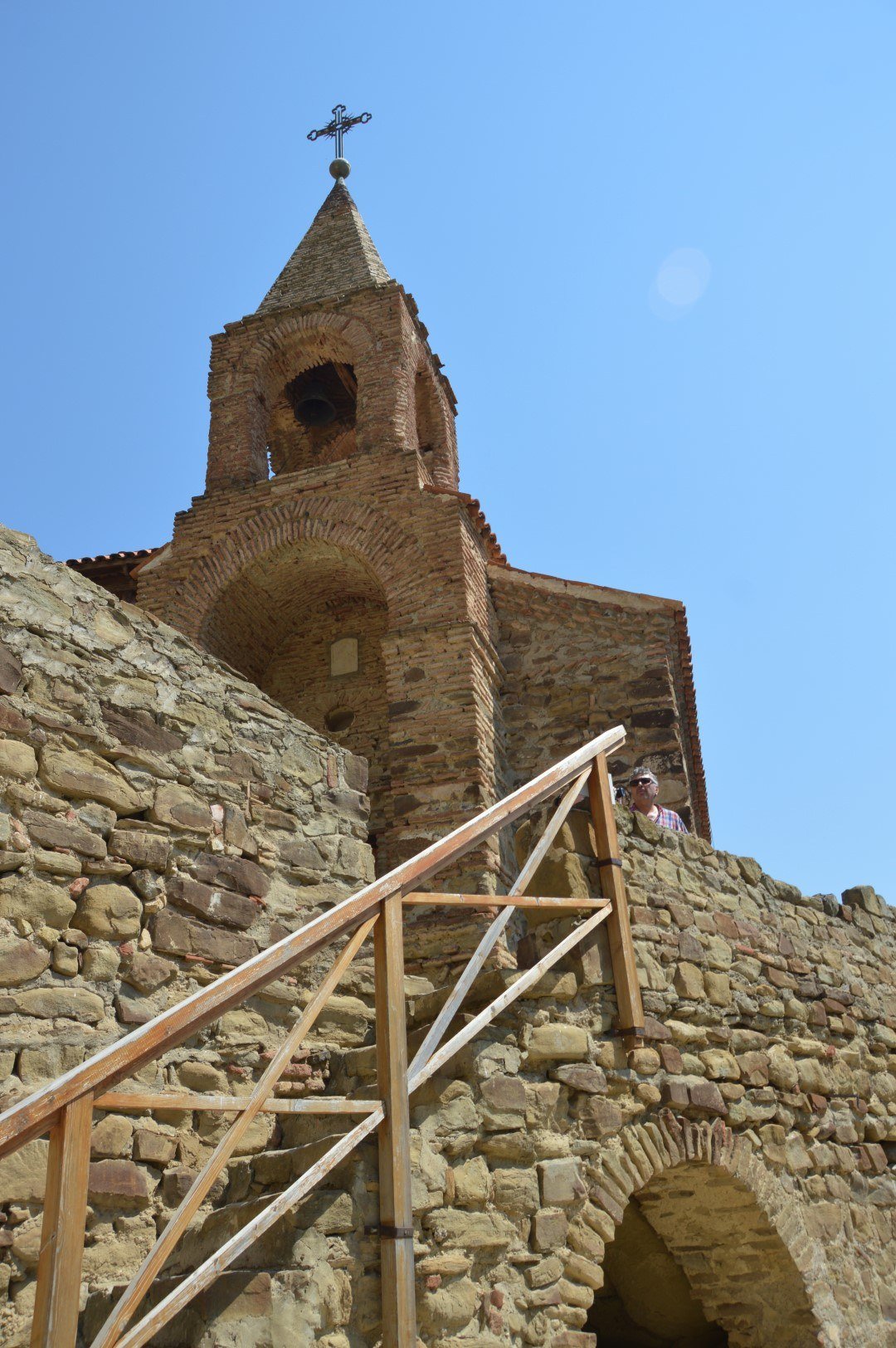
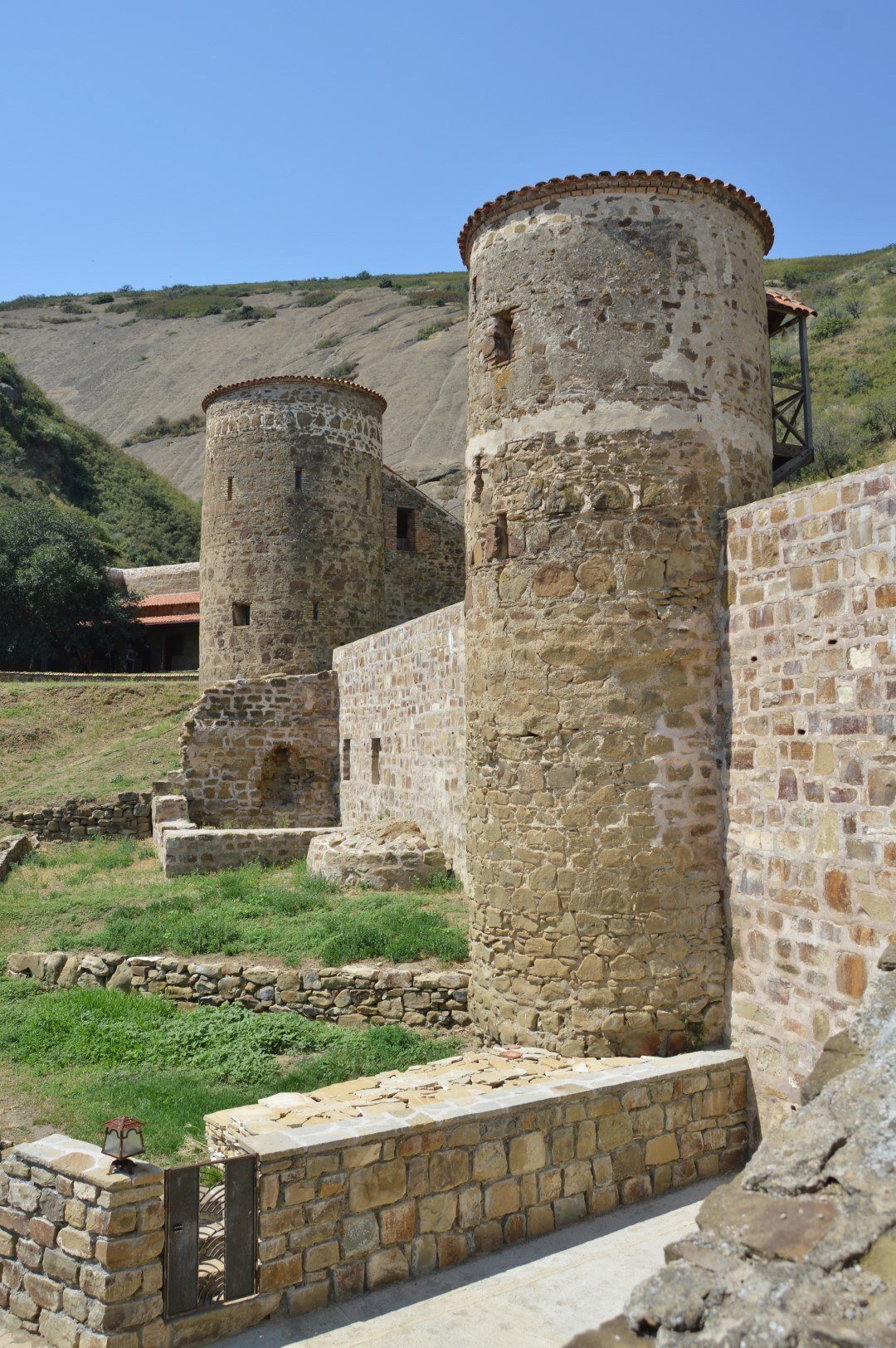
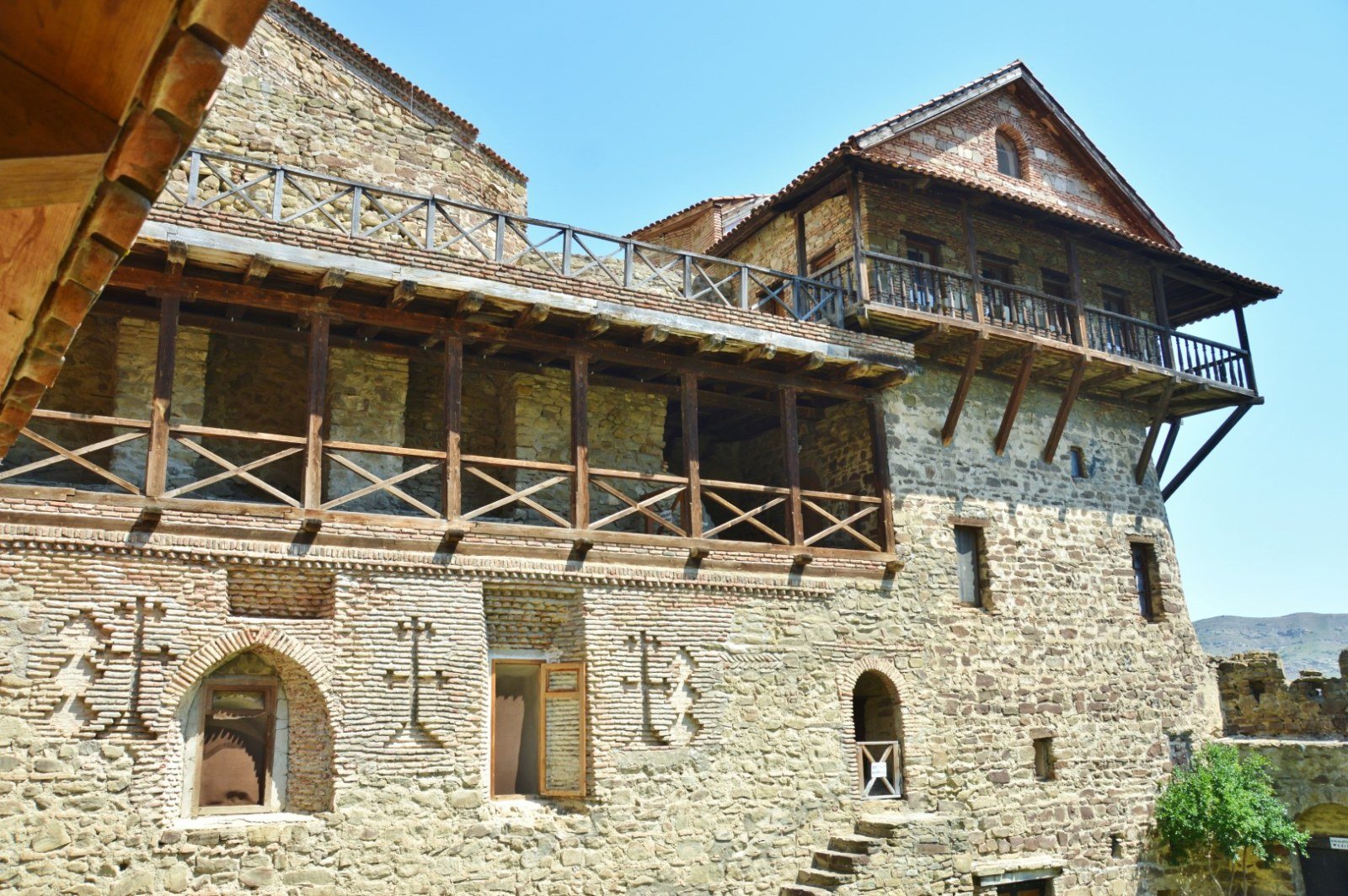
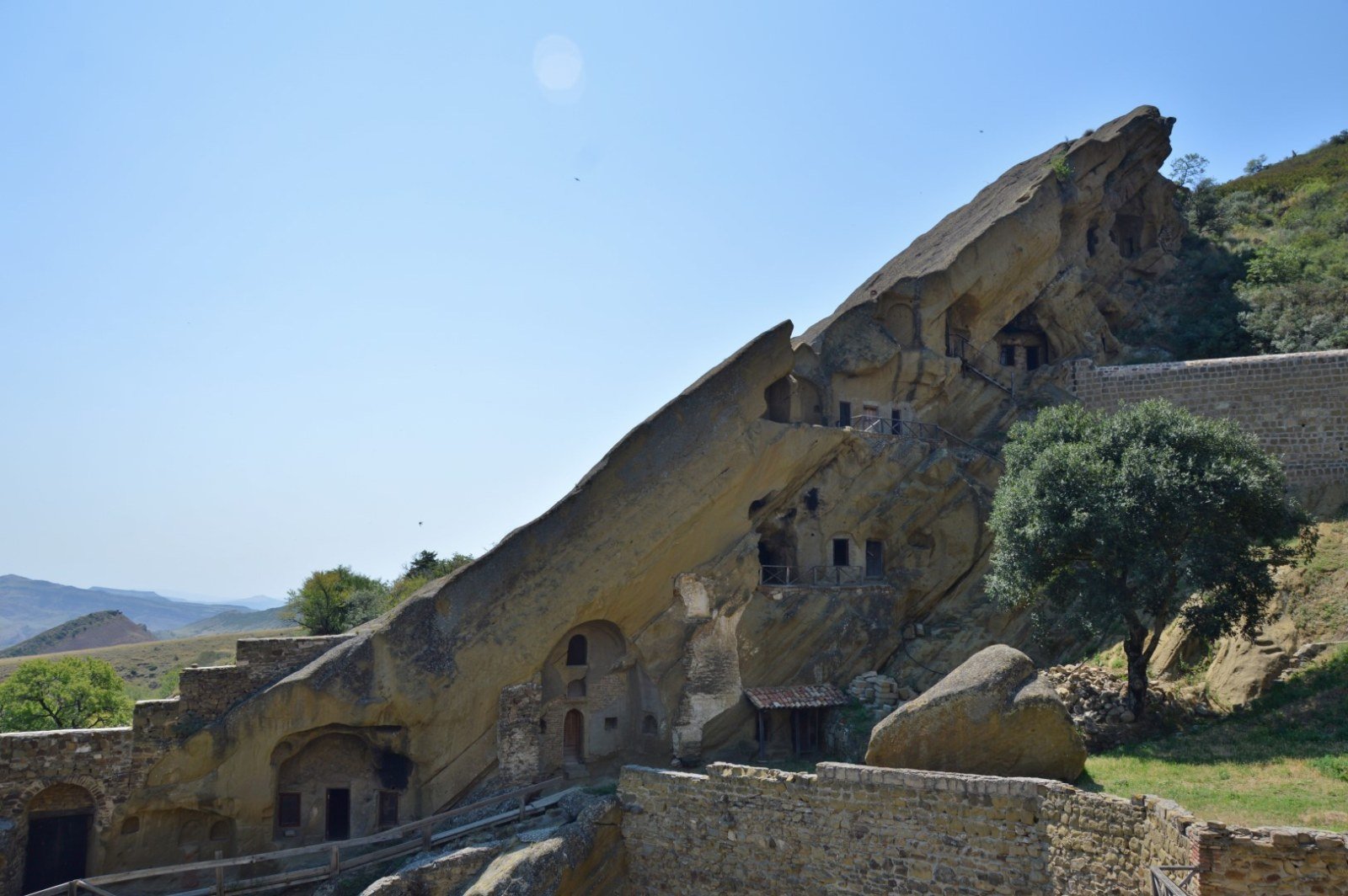
The road to David Gareja spends its final hour crossing the Kakheti steppe: treeless, with low scrub and a yellowed plain stretching to the horizon. The complex appears suddenly around a bend, carved directly into sand-coloured limestone. The caves open at varying heights along the cliff face, some with medieval frescoes still visible despite centuries of weathering and, more recently, military use of the area during the Soviet period. At Lavra monastery — the main core of the complex — monks still live and pray: arrive early in the morning and liturgical chanting can be heard from the outer courtyard before you even enter.
The standard route climbs from Lavra to the ridge dividing Georgia and Azerbaijan, where the border follows a historically ambiguous line. From the top you can see the Azerbaijani steppe to the east and the Kakheti valley to the west. On the Azerbaijani slope lies Udabno, the area with the best-preserved frescoes: scenes from the life of Christ and figures of saints painted between the 9th and 13th centuries. Access to this sector has caused diplomatic tensions between the two countries on several occasions; it is worth confirming the situation is calm before visiting.
David Gareja is a full-day trip from Tbilisi: about 65 km away, but the last 15-20 km are dirt track. There are no restaurants or shops on site, only a water stand and souvenir stalls near the car park. Bring food, enough water and comfortable shoes for the ridge climb.
History
David Gareja monastery was founded in the 6th century by David Garejeli, one of the so-called thirteen Syrian fathers who evangelised Georgia from Antioch. The first cells were simple hollows in the rock; over the following centuries the complex grew to house several hundred monks spread across more than a dozen rock-cut churches. It was sacked and burned by the Mongols in the 13th century and devastated again by the Persian troops of Shah Abbas I in 1616, who according to the chronicles had several hundred monks killed on Good Friday. The complex was rebuilt on both occasions. During the Soviet era the area served as a military firing range, and the frescoes of Udabno suffered irreversible damage. Since Georgia's independence in 1991, Lavra monastery has been functioning again as an active religious community.
What to see & do
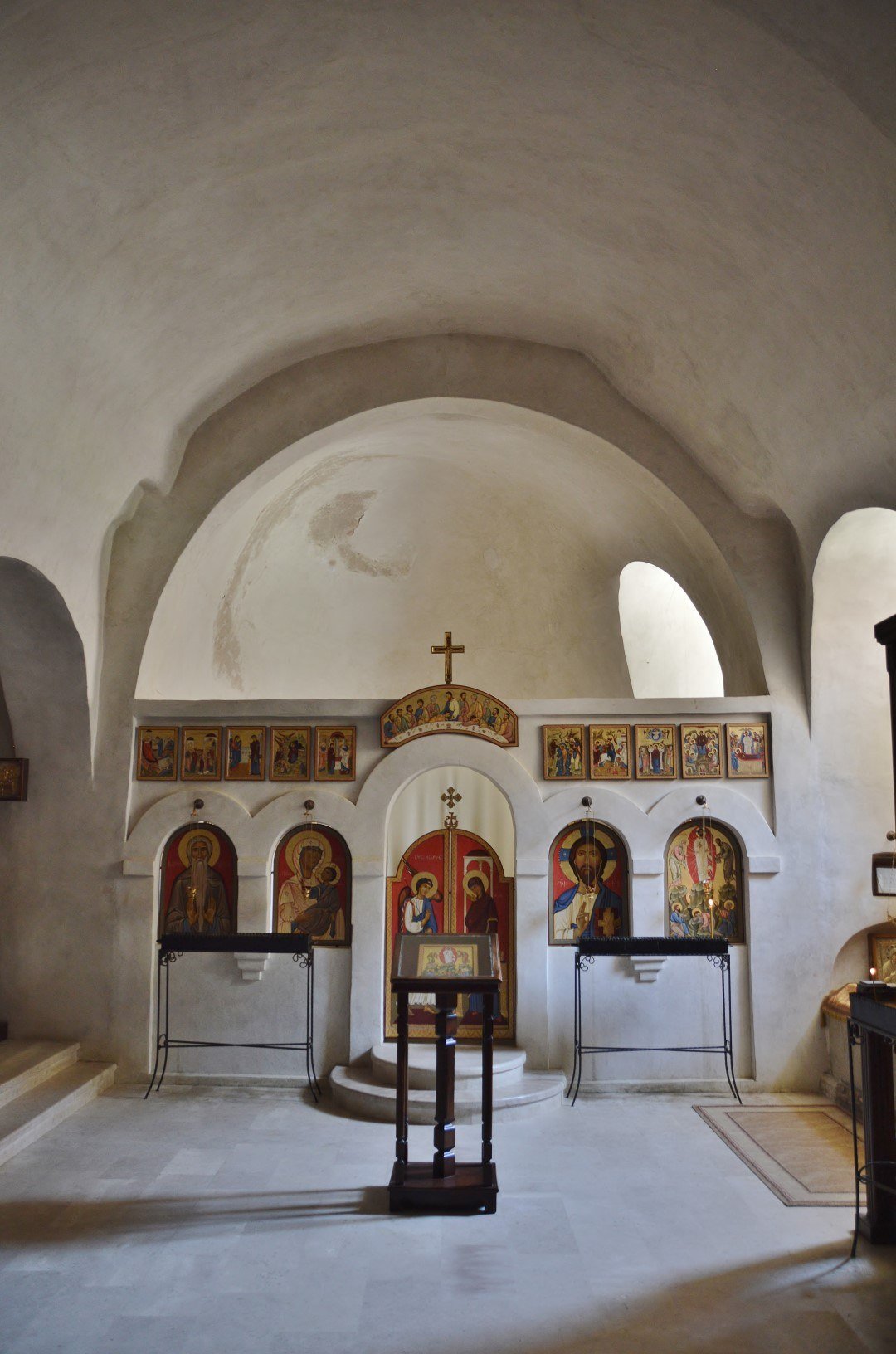
- Lavra Monastery The core of the complex: the rock-cut Church of the Transfiguration, the cave refectory and the monks' cells. The community is still active; maintain silence and keep shoulders and knees covered.
- Climb to the border ridge A roughly 45-minute trail from Lavra to the boundary with Azerbaijan. The effort is moderate and the views over the Kakheti steppe justify every step.
- Udabno frescoes The medieval paintings on the Azerbaijani slope, accessible from the ridge, depict Gospel scenes and figures of saints from the 9th to 13th centuries. These are the best-preserved in the entire complex.
- Dodo Monastery About 20 minutes on foot from Lavra, a second, smaller and less-visited complex with its own rock-cut church carved from the same stone.
- Kakheti steppe The arid landscape surrounding the complex is unusual within Georgia: steppe tortoises crossing the path, eagles circling the cliffs and aromatic plants — wild thyme, wormwood — scenting the dry afternoon air.
Photo gallery
How to get there
David Gareja is about 65 km southeast of Tbilisi. There is no regular public transport; the most affordable option is the shared tours that depart daily from Tbilisi (from 25–35 GEL per person). By hire car the journey takes around 90 minutes, but the last 15–20 km are dirt track; a standard car is fine in dry conditions. From Sighnaghi there is access via another secondary road, which allows you to combine the visit with the Kakheti vineyards.
Best time to visit
The best time is spring (April–May): the Kakheti steppe has some green, temperatures hover around 18–22 °C and the morning light falls well on the frescoes. Summer can be harsh — heat exceeds 38–40 °C in July and August and the track kicks up dust. September and October are also good: less heat and autumn light. In winter the track can turn to mud after rain and hinder access.
More information
Photo: Iberogeorgia · Todos los derechos reservados