
Sapara Monastery
საფარის მონასტერი
9th-century monastic complex among beeches above Akhaltsikhe, with medieval frescoes and forest track access that keeps crowds away.
Location in the Caucasus
Description
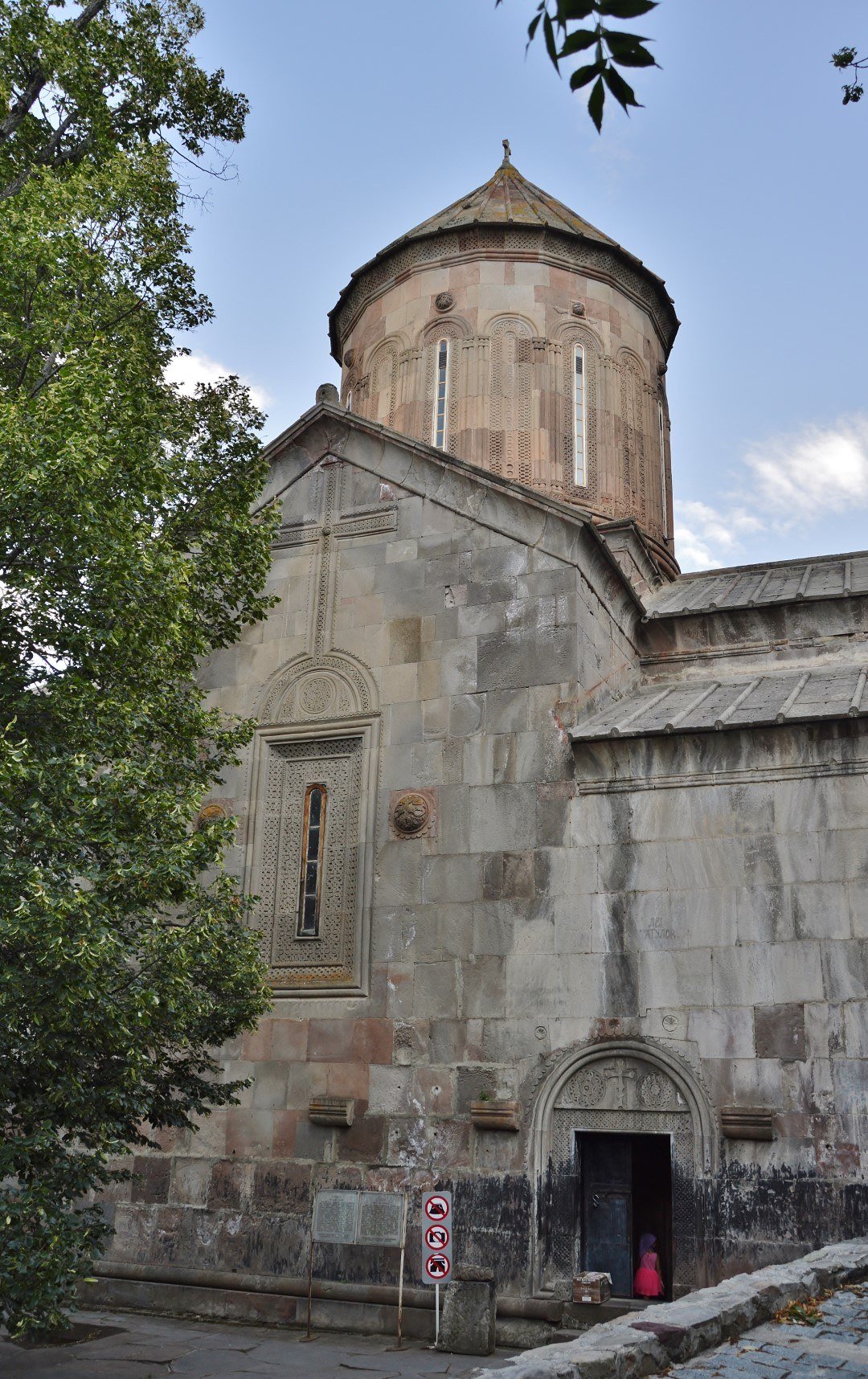
The road up to Sapara Monastery leaves the northern neighbourhood of Akhaltsikhe and becomes a dirt track before reaching the destination. It is about 12 km in total, the last 5 or 6 unpaved, with potholes and sharp bends through the beech forest. This has a direct consequence: when Rabati Castle, just minutes away in the same town, is receiving tourist buses, up here there can be almost complete silence. The cluster of dark stone buildings appears wedged between the rocks at the end of the road, with an almost defensive logic.
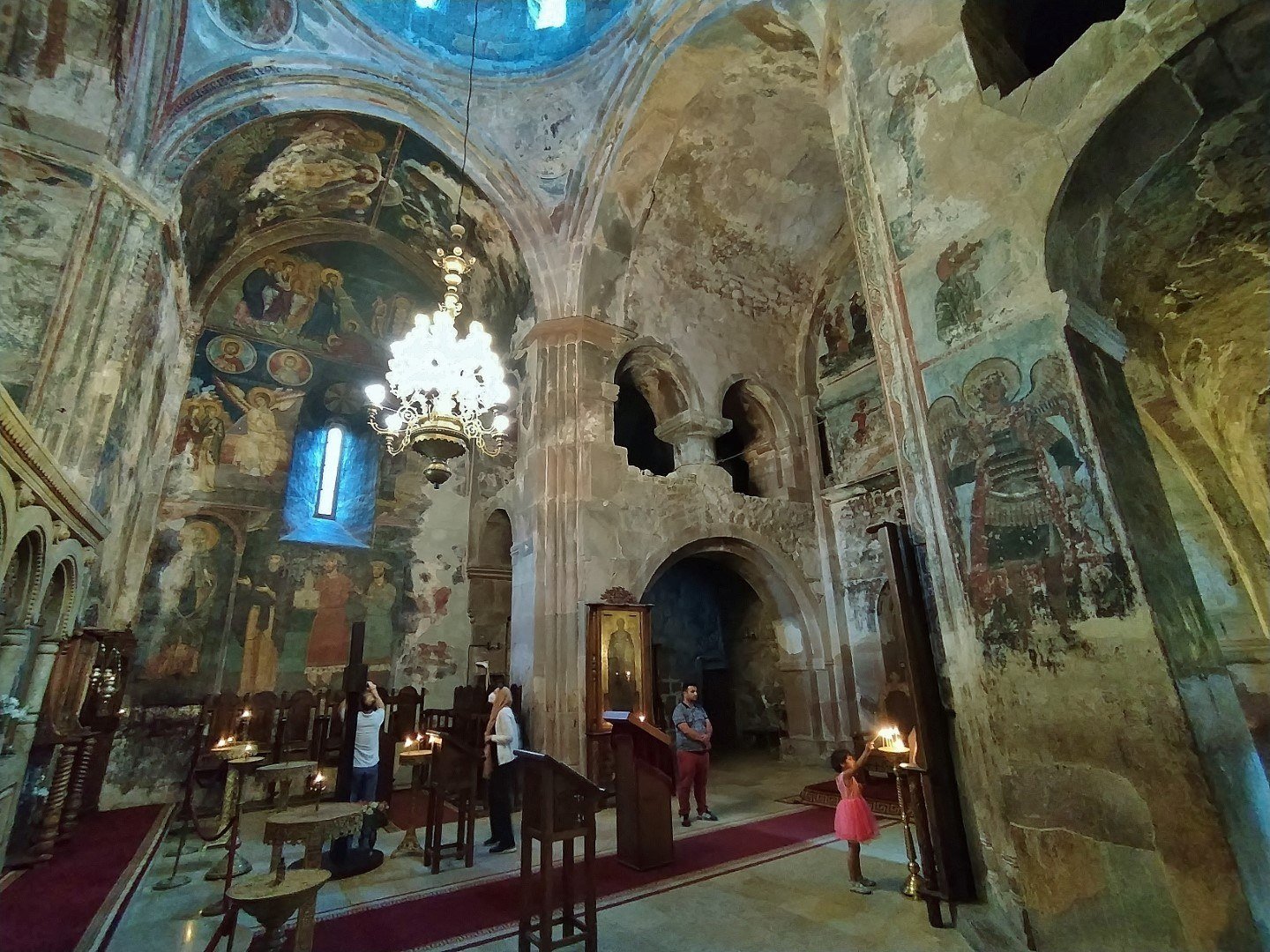
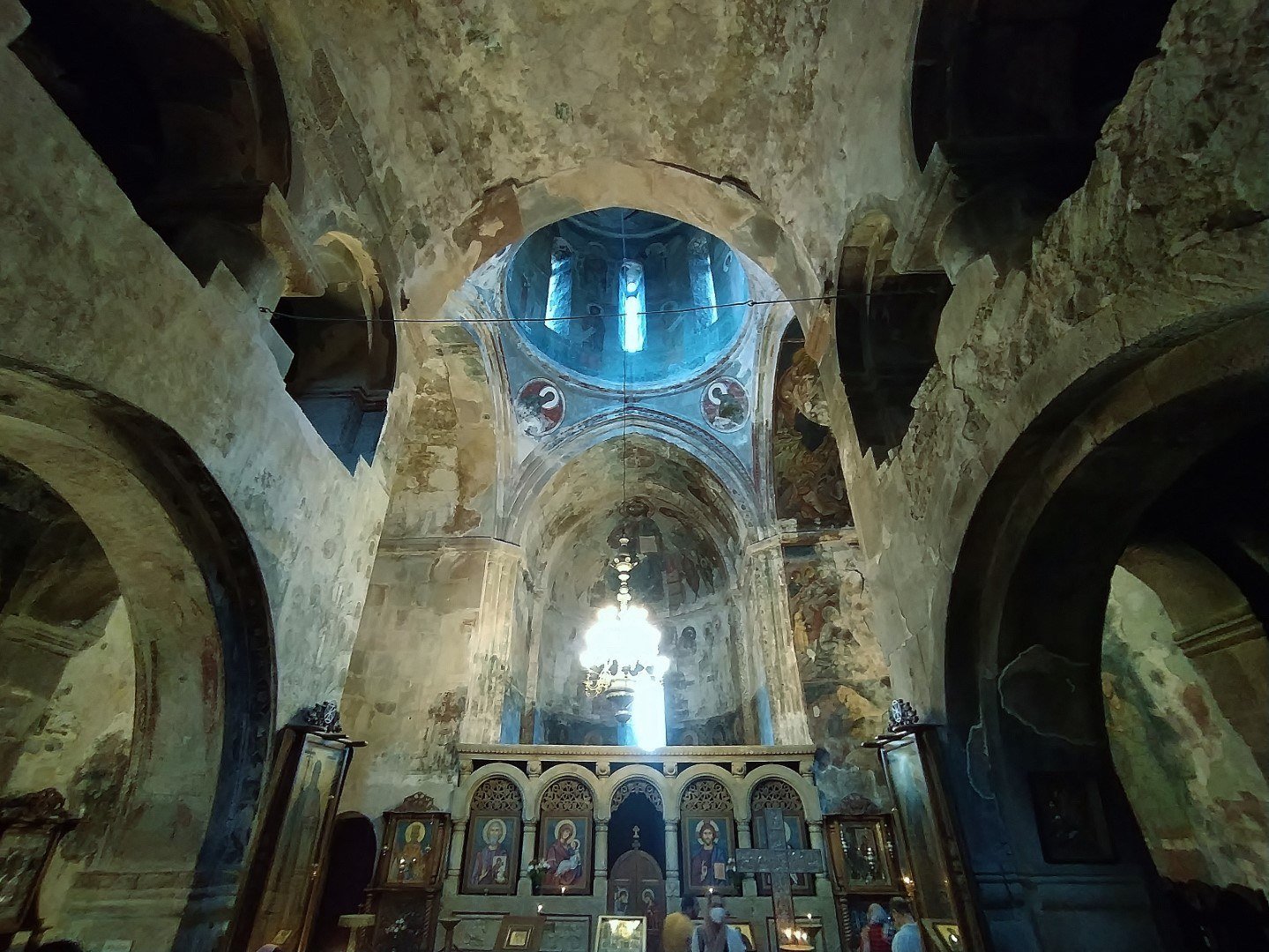
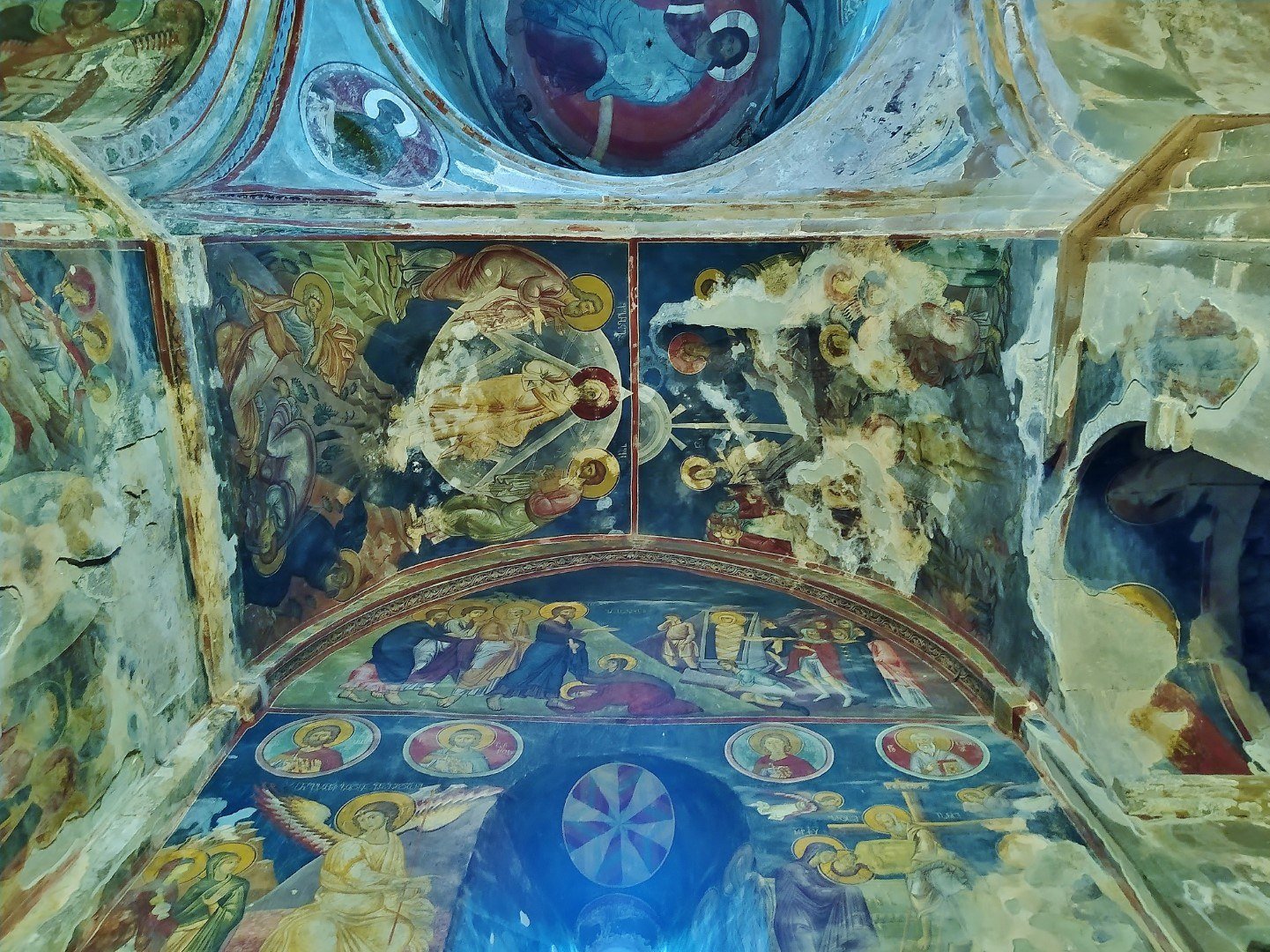
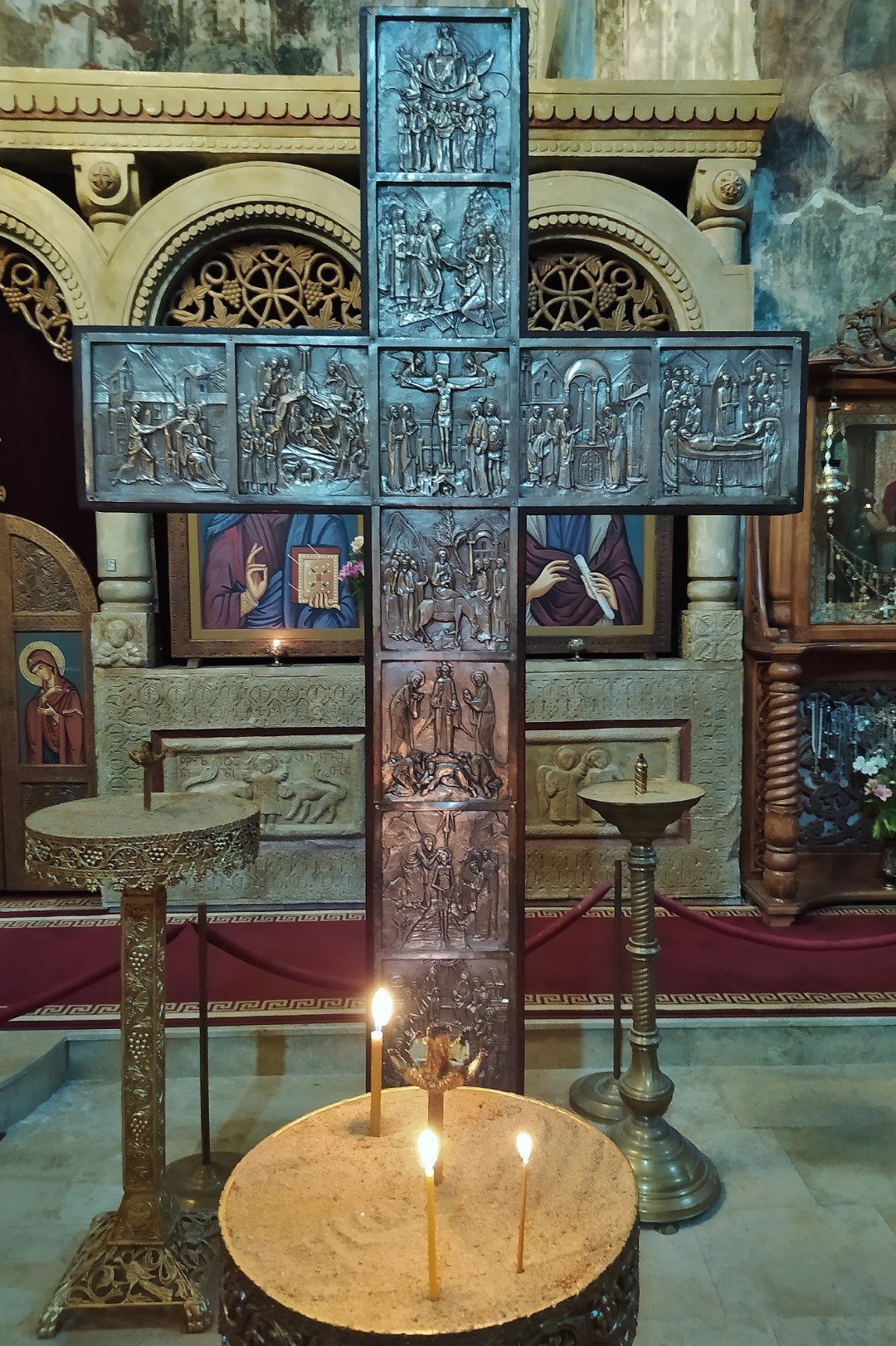
The heart of the complex is St Saba Church, built in the 13th century under the patronage of the Jakeli family, the feudal lords of Samtskhe. Inside there is a cycle of medieval frescoes in relatively good condition: figures of saints, Passion scenes and donors depicted in their Georgian medieval court dress. The light is very dim; it is worth bringing a small torch to make out the details in the darker sections of the nave. Also notable is a silver cross with bas-reliefs of remarkable craftsmanship.
The inner courtyard is small and there are large trees providing shade. An active monastic community resides in the complex, so it is worth moving with discretion and avoiding noise. There is no shop, cafeteria or facilities of any kind at the monastery, so bring water and food if you plan to spend more than an hour.
History
Sapara Monastery was founded in the 9th century, although the best-preserved buildings date from the 13th century. During the 12th and 13th centuries it was the spiritual centre of the Jakeli family, feudal lords of the Samtskhe-Javakheti region, who funded St Saba Church and the fresco cycle inside, considered among the best-preserved examples of medieval Georgian art in this area. When the Ottoman Empire took Akhaltsikhe in the 16th century the monastery lost political relevance, but its secluded position in the forest protected it from systematic destruction. It continued to function intermittently in the following centuries and underwent partial restorations throughout the 20th century.
What to see & do
- St Saba Church The main 13th-century structure, with the medieval fresco cycle in the nave and apse. The interior light is very scarce; a personal torch allows you to see the details of the saints and the Jakeli donors.
- Silver cross with bas-reliefs A piece of medieval goldsmithing preserved inside St Saba Church, with religious motifs worked in unusual detail for the period.
- Church of the Dormition The oldest building in the complex, from the 9th or 10th century, with more austere architecture and no preserved pictorial decoration. Its proportions and the dark stone give it a character of its own.
- Defensive tower A structure attached to the complex that served as a refuge in case of attack. From the top there is a view over the beech forest surrounding the monastery.
- Khachkars and funerary steles Several stone crosses with inscriptions in mkhedruli —the medieval Georgian alphabet— scattered around the complex. Some have well-preserved bas-reliefs.
- Beech forest on the access road The route from Akhaltsikhe passes through a dense forest that turns yellow and ochre in autumn. The natural surroundings are part of the appeal of the place.
Photo gallery
How to get there
Sapara Monastery is about 12 km north of Akhaltsikhe; the last 5–6 km are unpaved track. In rain or in winter a vehicle with good ground clearance is advisable. From Akhaltsikhe you can negotiate a taxi to drive up and wait, or hire a 4WD. There is no public transport. Akhaltsikhe is about 230 km from Tbilisi and has a daily marshrutka connection from Ortachala station.
Best time to visit
From May to October the dirt road is passable and the beech forest is at its best. Autumn —September and October— brings the most striking colours on the way up. Summer is mild at this altitude, between 20 and 25 °C. In winter snow and mud frequently close the access; before setting out in rainy season or after snowfall it is worth asking in Akhaltsikhe about the state of the track.