
Ubisa Monastery
უბისის მონასტერი
Medieval monastery in Imereti with 14th-century frescoes painted by Damiane, among the most refined in Georgian religious art.
Location in the Caucasus
Description
Ubisa Monastery appears without warning at the end of a secondary road that winds through the wooded valleys of Imereti: a grey stone complex surrounded by chestnut and walnut trees, with no tourist signs and no crowds. There is silence, occasionally the toll of a bell, and the smell of candle wax drifting through the half-open door of the Church of St George. On entering, your eyes take a few seconds to adjust to the dimness, and then the frescoes appear.
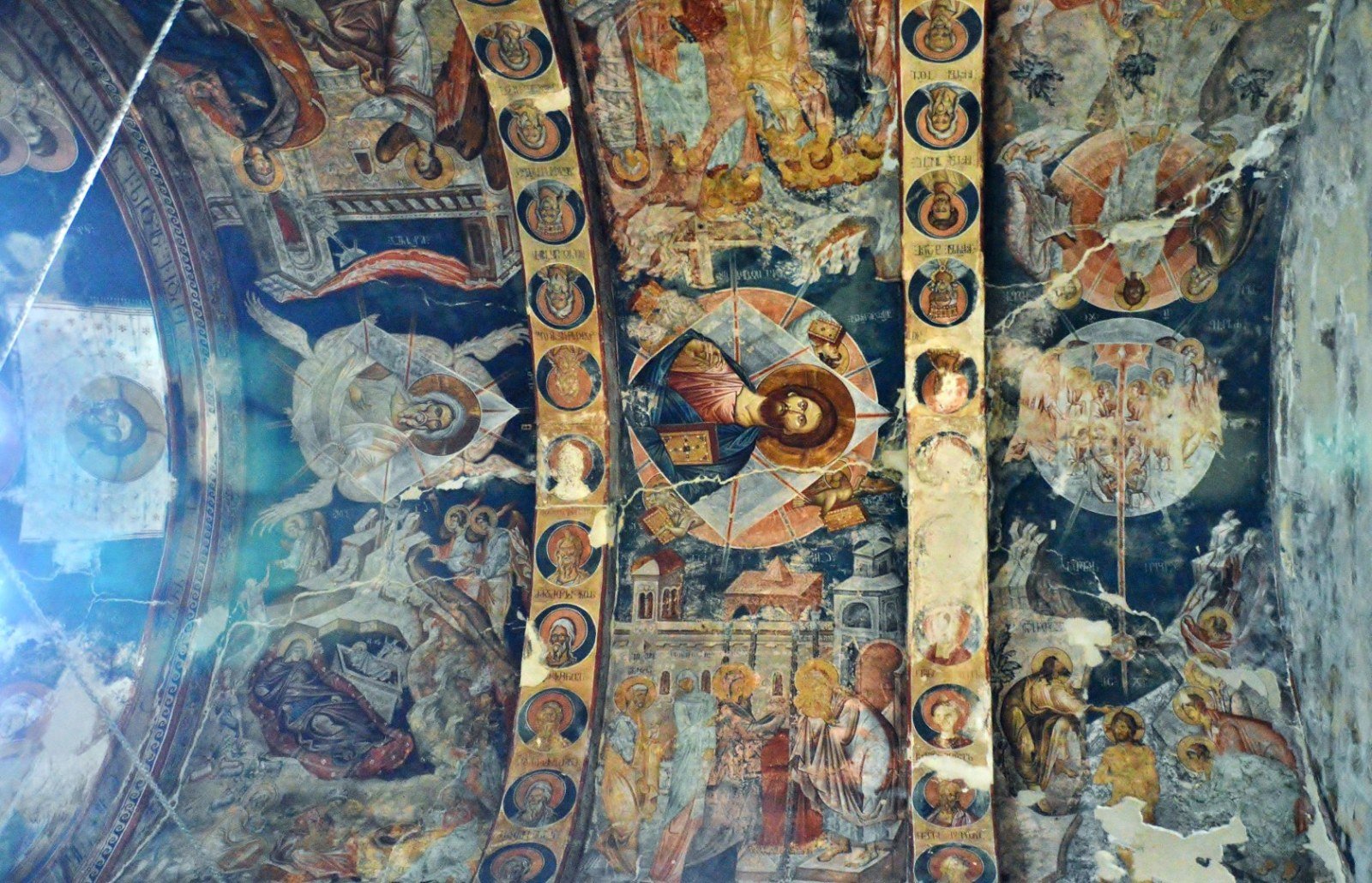
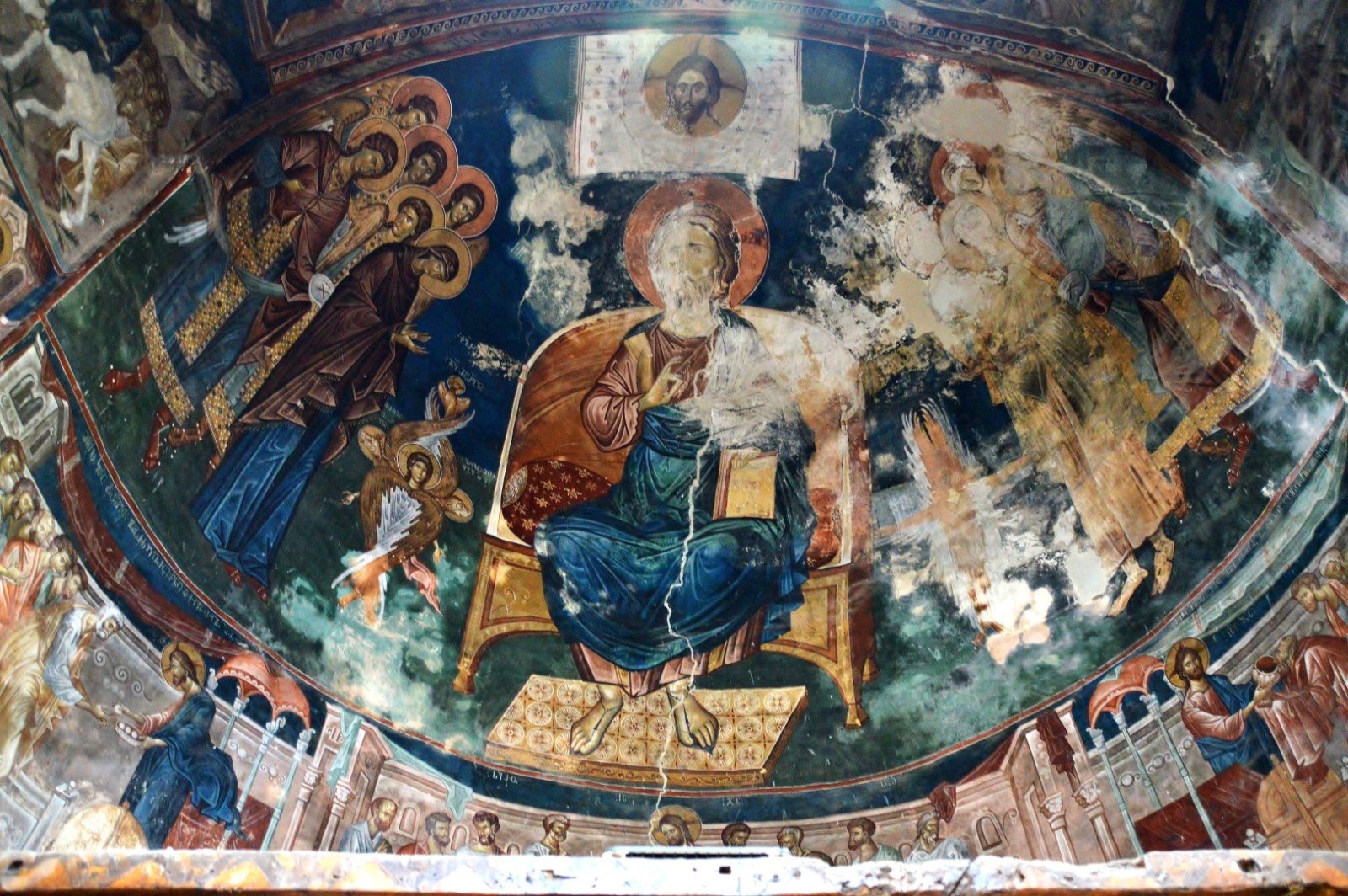
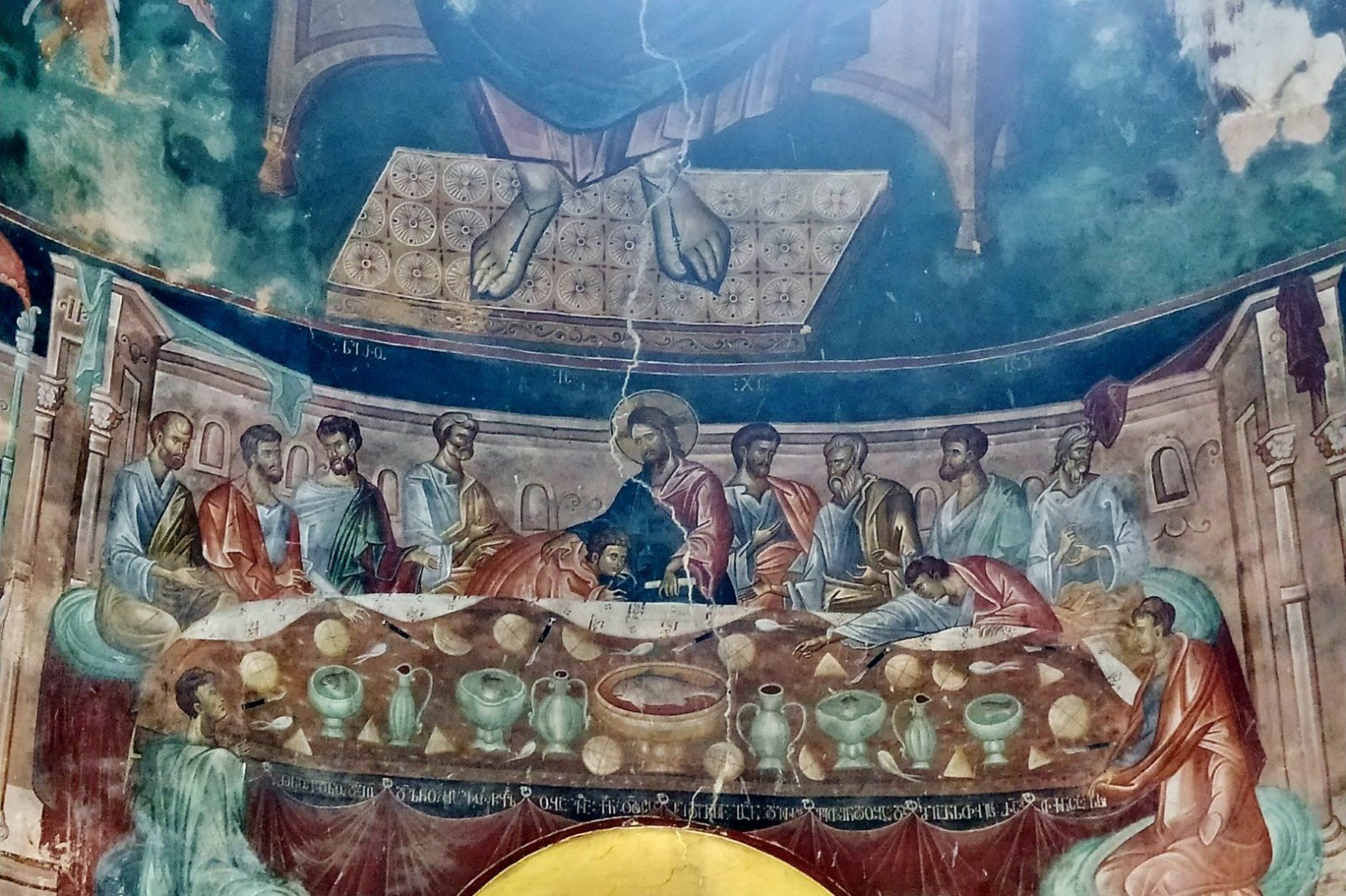
The mural paintings covering the walls and vault date from the fourteenth century and are the work of the painter Damiane, whose name was inscribed inside the temple itself. Time has muted the tones —ochres, greyish blues, rusty reds— but the figures retain an expressiveness that sets this school of Georgian painting apart from the more rigid cycles found in other monasteries of the Caucasus. The faces of the saints have an almost sculptural texture, with shadows worked patiently. The Last Supper in the apse is particularly striking: the figures lean with a naturalness that seems out of place in the fourteenth century.
Ubisa Monastery is still active, with a small monastic community. Visitors may enter freely; clothing covering shoulders and knees is expected, and scarves are available at the entrance. There is no gift shop or audio guide. A small torch is worth bringing to properly see the fresco details in the darkest corners of the temple. Entry is free, though a donation in the box by the door is appreciated.
History
Ubisa Monastery was founded in the ninth century during the period of consolidation of the Georgian Kingdom of Abkhazia, as part of the monastic expansion that transformed the region of Imereti. Over the centuries it was enlarged and decorated by successive noble patrons, but its most artistically significant moment came in the fourteenth century, when the painter Damiane decorated the Church of St George with the fresco cycle that survives today. The monastery was damaged during the Timurid invasions and the Persian conflicts of subsequent centuries, but its walls held well enough to preserve most of the interior decoration, making it one of the best-preserved medieval pictorial witnesses in Georgia.
What to see & do
- Damiane's frescoes The fourteenth-century pictorial cycle covering the walls and vault of the Church of St George. The facial details and narrative scenes —particularly the Last Supper in the apse— are the main reason to visit Ubisa. Bring a torch for the darkest corners.
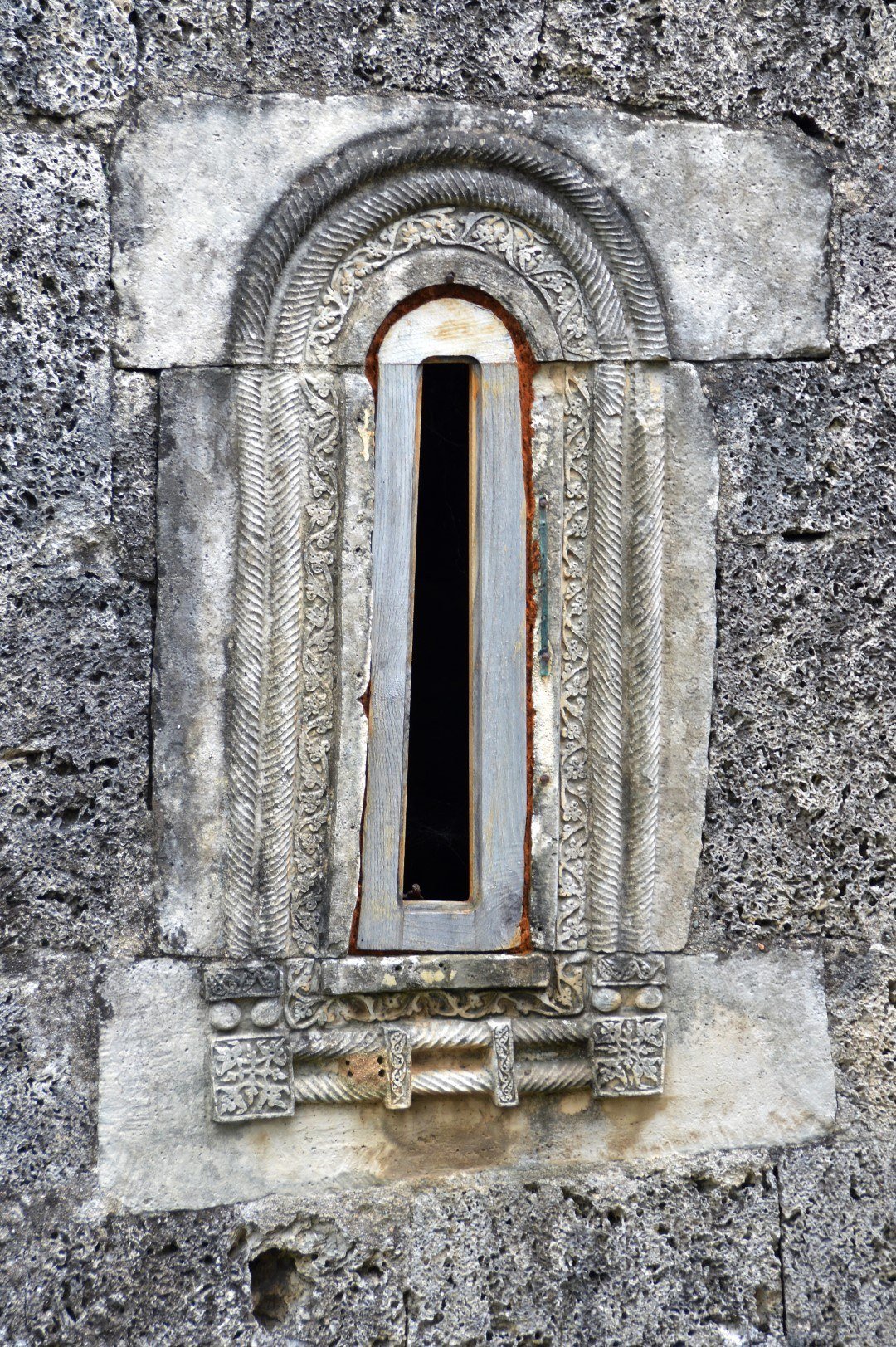
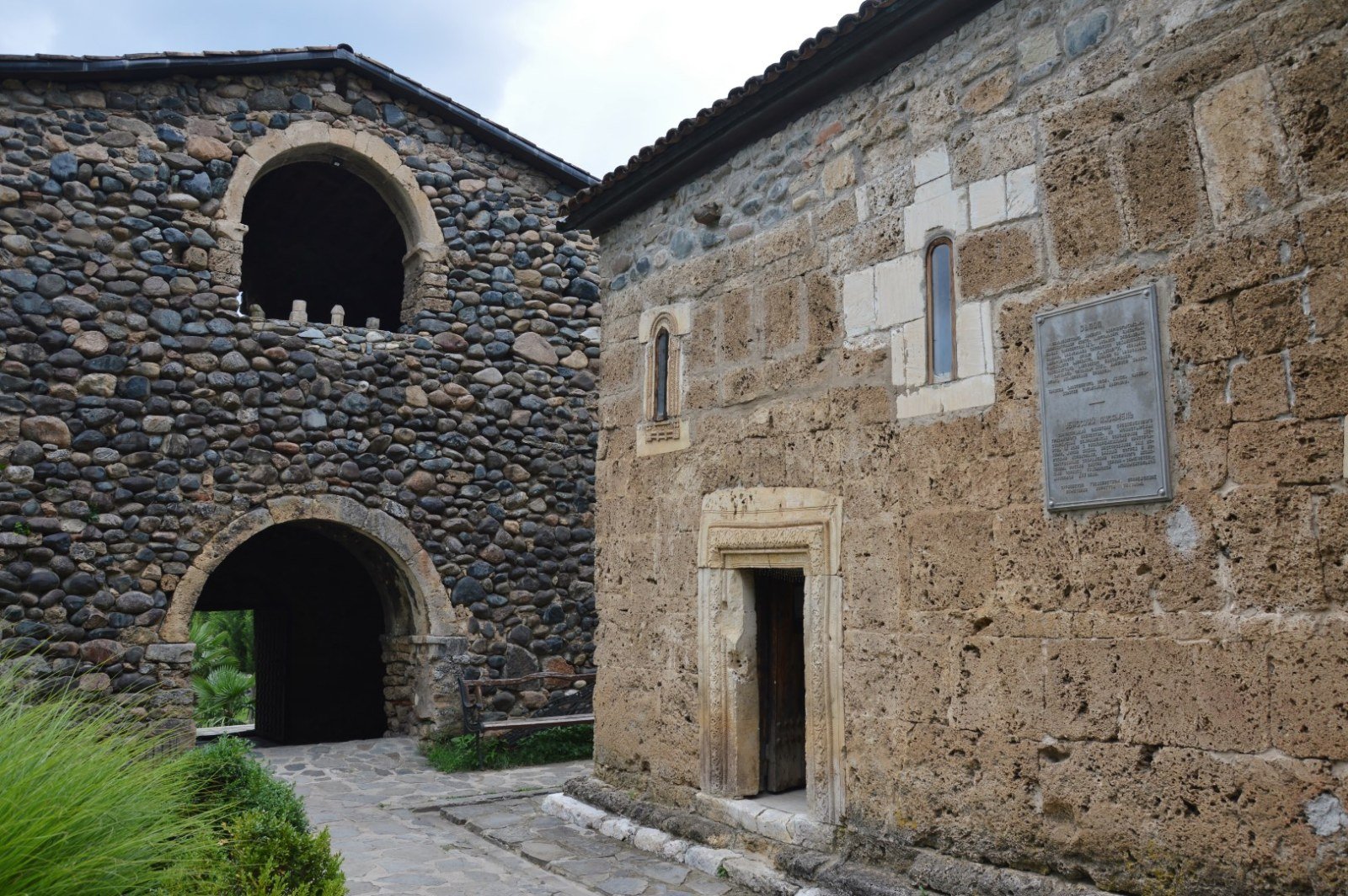
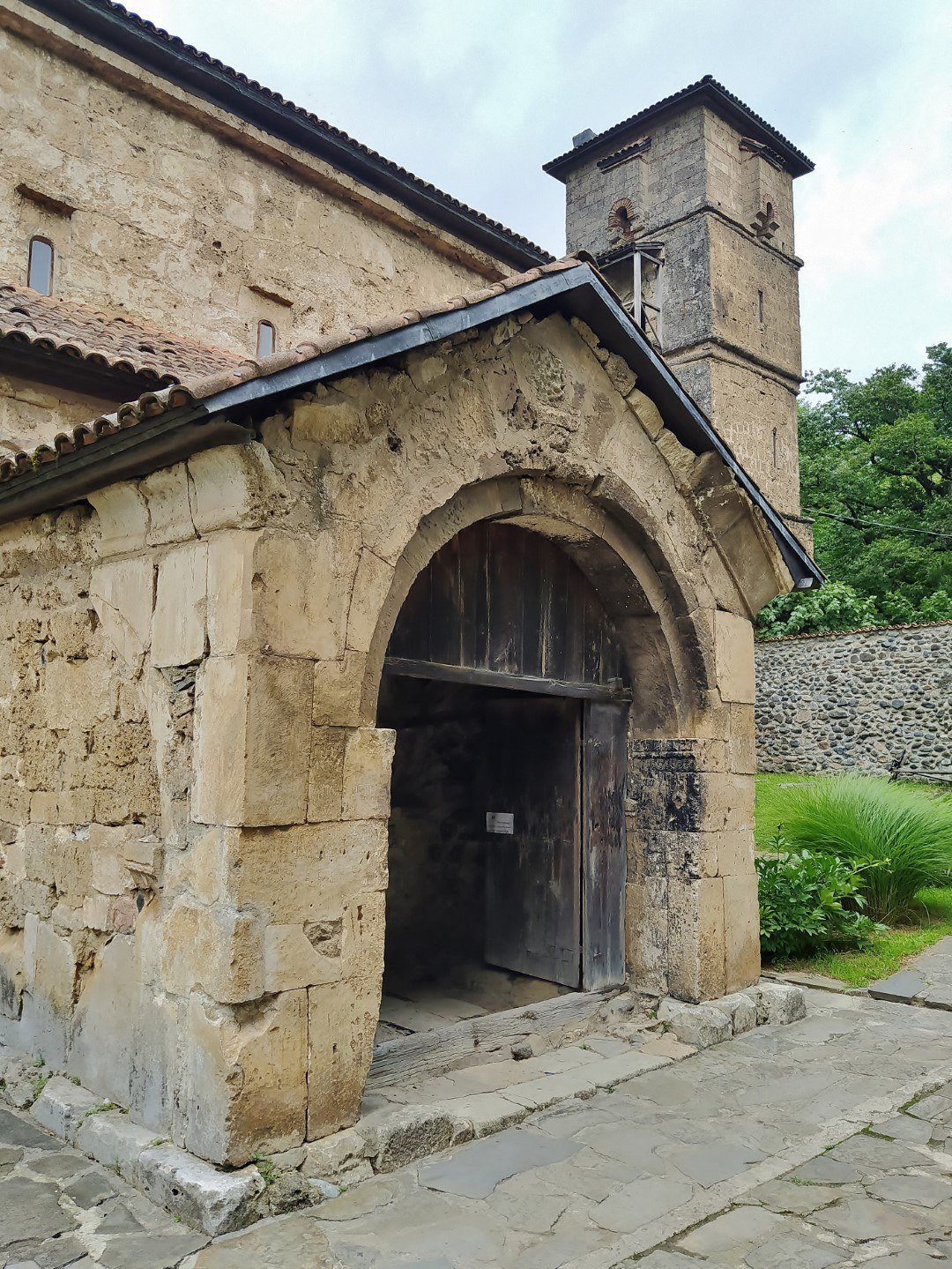
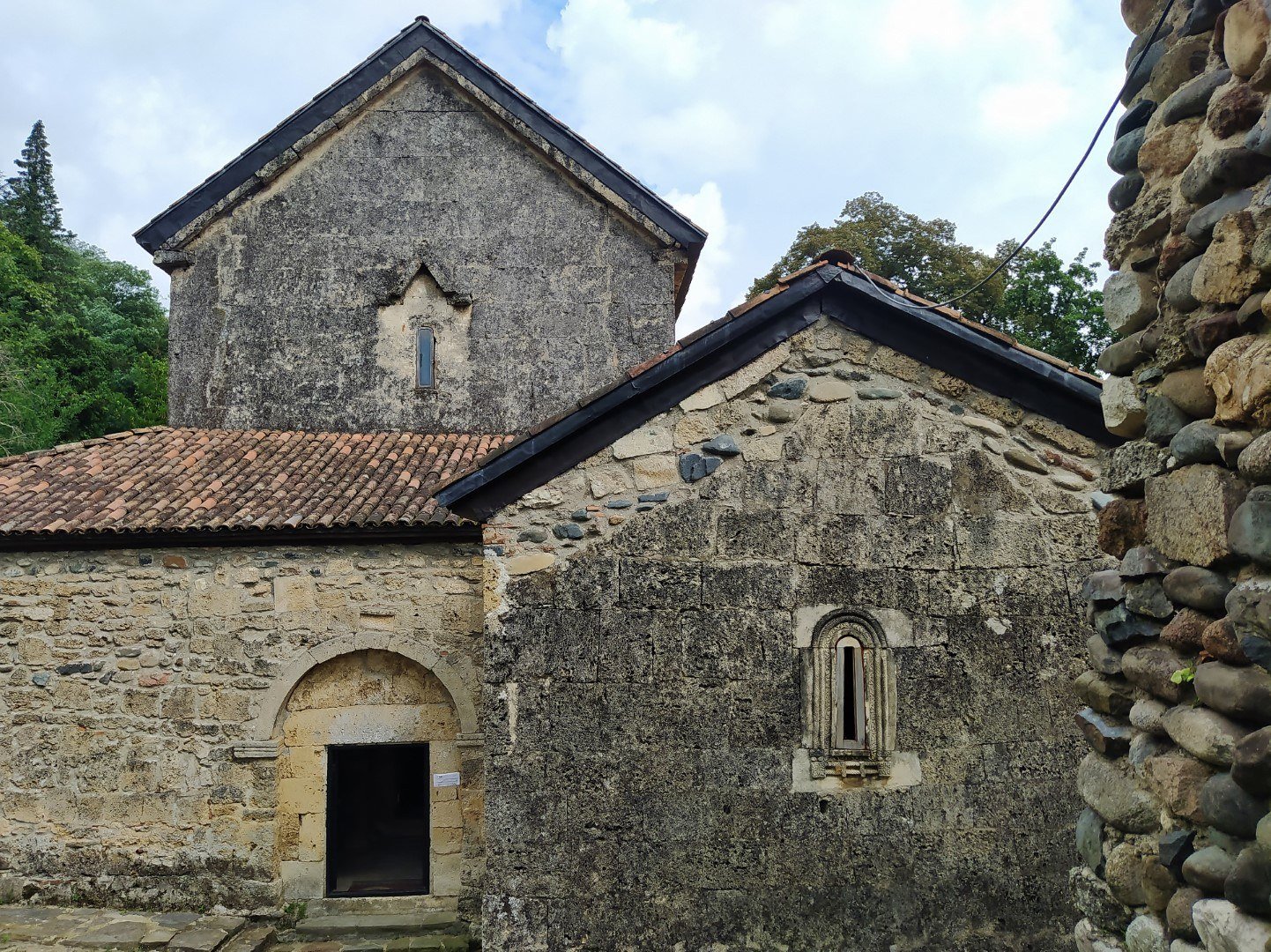
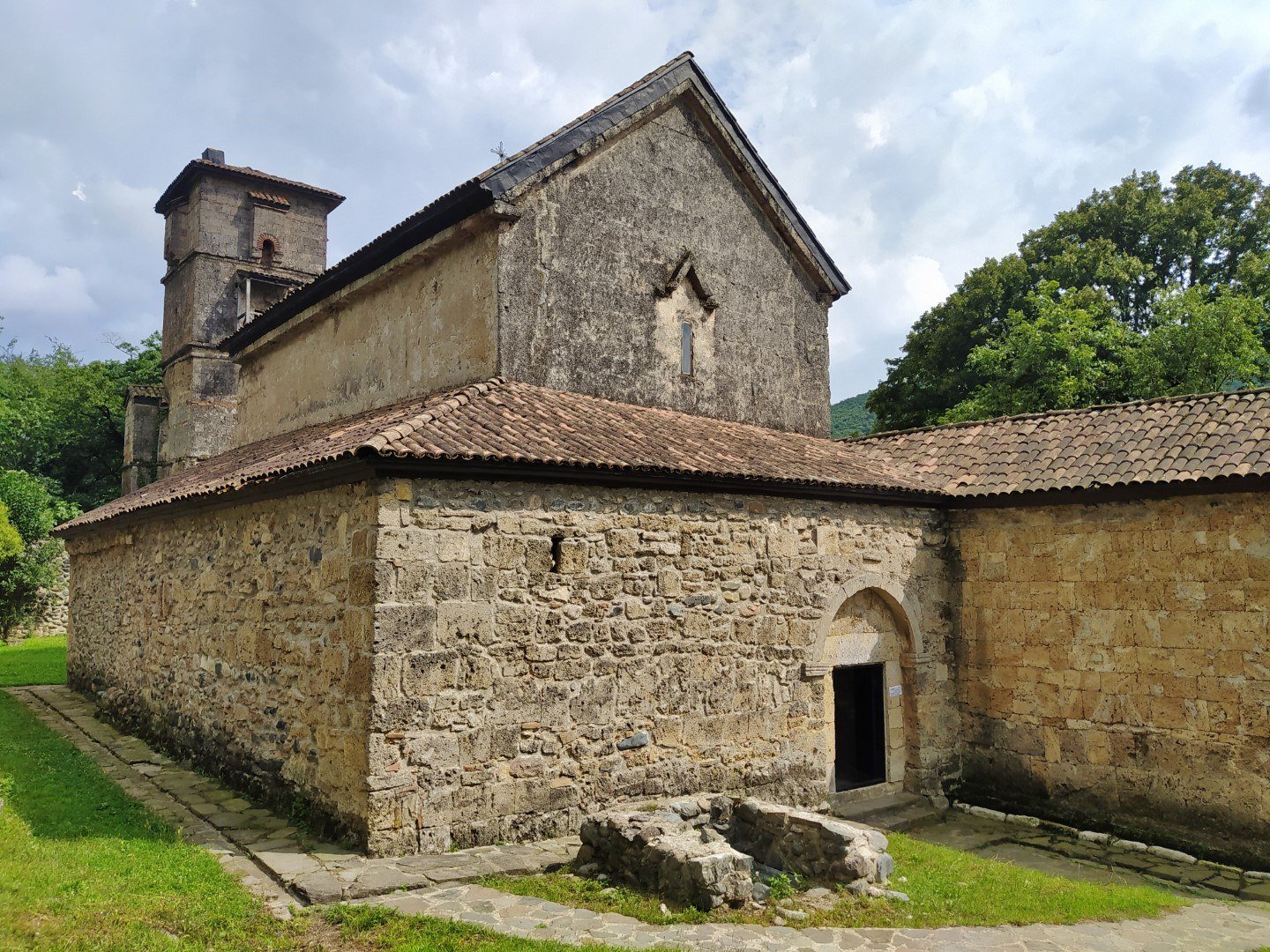
- Church of St George The main building of the complex, a single-nave church with lateral apses, built in the ninth century and modified in later periods. The southern portal retains stone carving of notable quality.
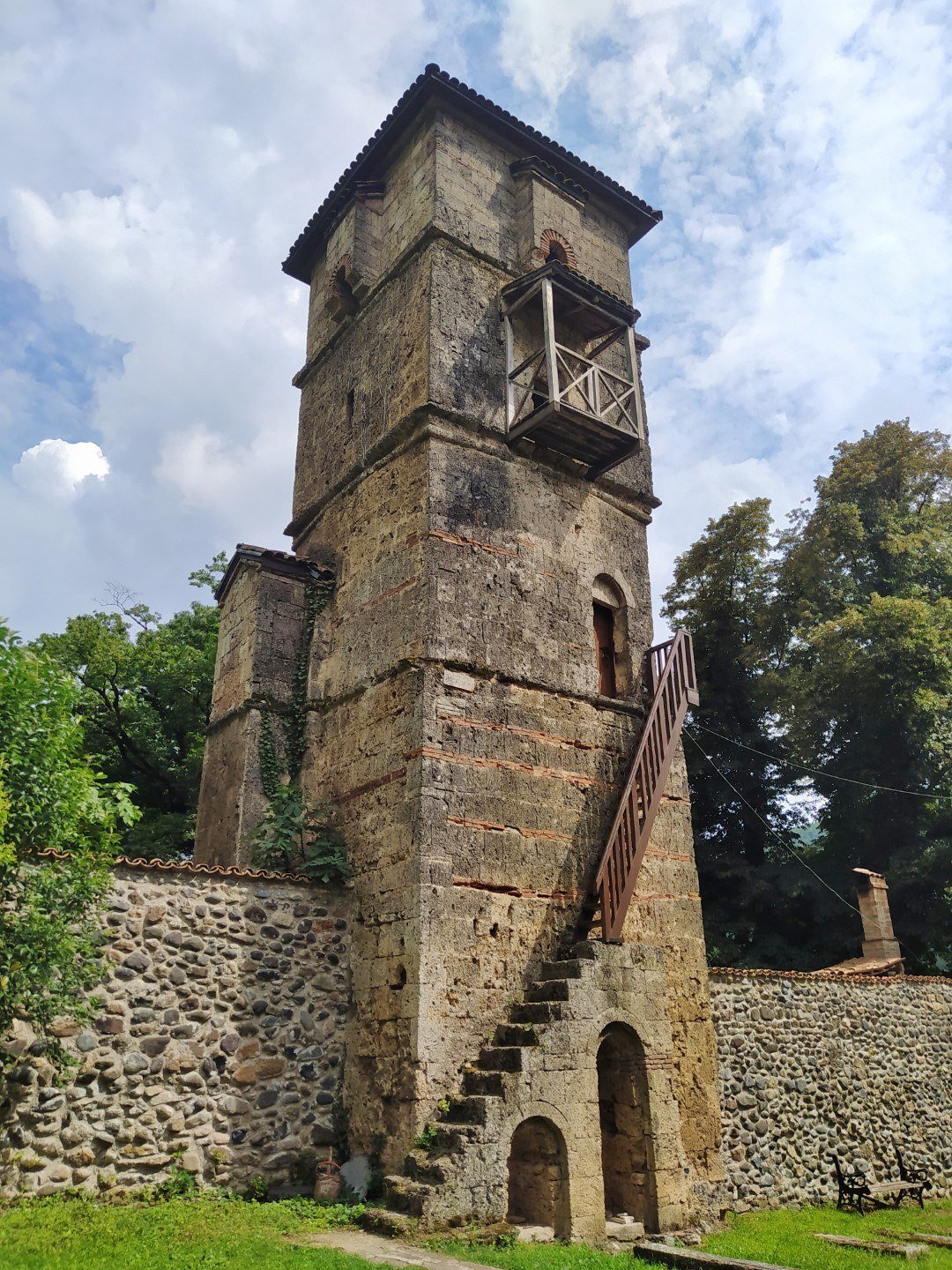
- Defensive tower The tower flanking the monastic precinct, built to withstand medieval incursions. From its base you command the wooded valley surrounding the monastery.
- Medieval inscriptions Several inscriptions in asomtavruli and nuskhuri —medieval Georgian scripts— on the temple walls, including the signature of the painter Damiane, of particular interest to those familiar with ancient Georgian writing.
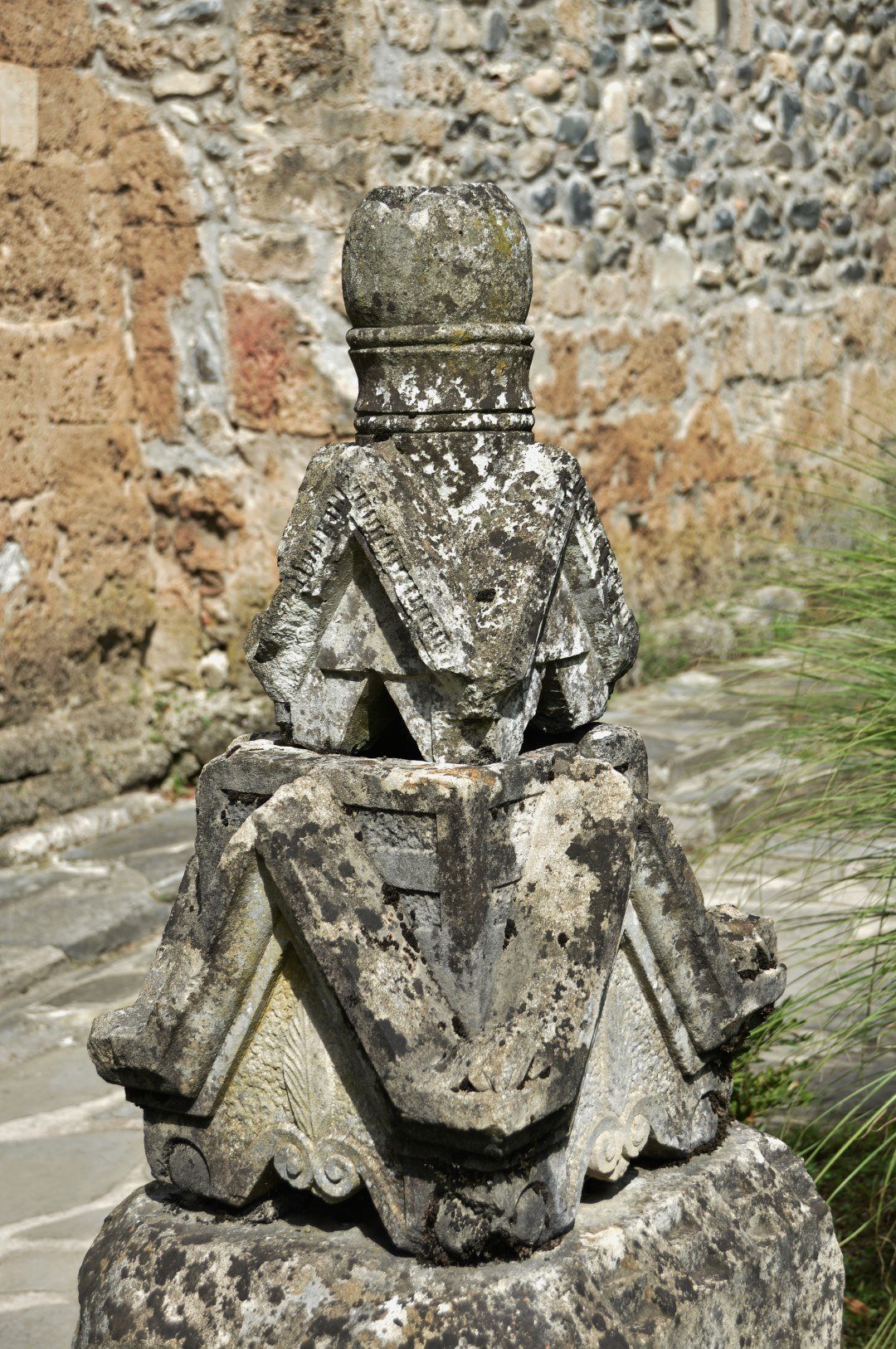
- Monastic courtyard The outdoor space between the church and the secondary chapel, with ornamental finials on pillars and a calm that contrasts with the traffic of the nearby main road.
Photo gallery
How to get there
Ubisa Monastery is located in the Imereti region, about 30 km west of Kutaisi. The most comfortable option is to hire a car or take a taxi by the hour from Kutaisi; the journey takes around 40 minutes along the road towards Zestafoni. Ubisa railway station, on the Tbilisi–Batumi line, is a few kilometres from the monastery, although long-distance trains do not stop there regularly. From Tbilisi, the E60 motorway towards Kutaisi passes near the area; the total journey takes around two and a half hours.
Best time to visit
Ubisa Monastery can be visited year-round. Spring (April–May) and autumn (September–October) are the most pleasant times: moderate temperatures and the vegetation surrounding the precinct in full colour. Summer is warm but manageable, as Imereti is more humid than inland Georgia. In winter the road access is generally easy, but the days are short and the interior of the temple is very cold; dress warmly if you plan to spend time with the frescoes.