Tatev Monastery
Տաթևի վանք
9th-century Armenian monastic complex above the Vorotan gorge, reachable by the world's longest ropeway, with medieval churches and canyon views.
Location in the Caucasus
Description
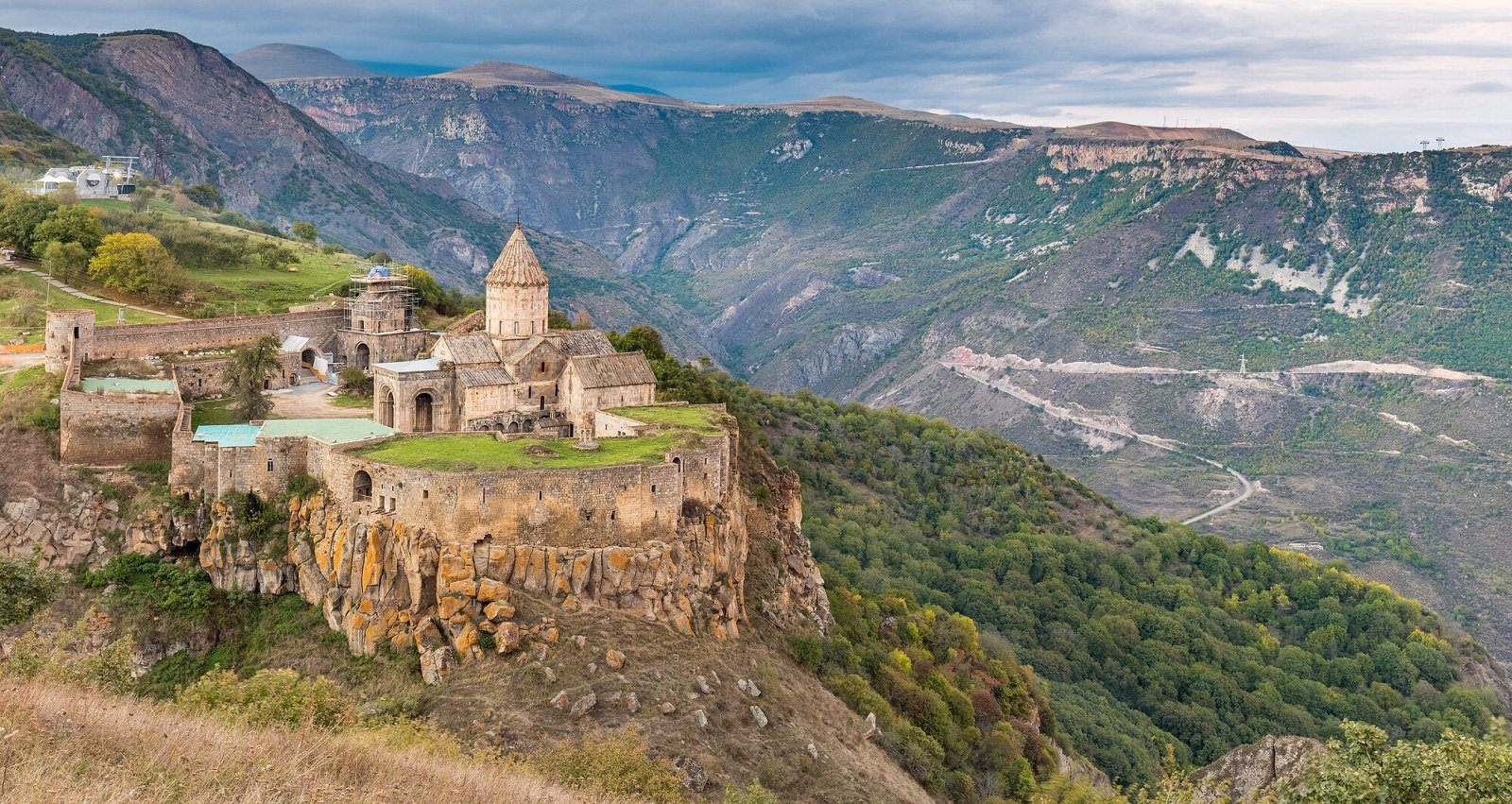
Tatev Monastery (Տաթևի վանք) stands at the end of a rocky spur that drops vertically some seven hundred meters above the Vorotan river, in the southern province of Syunik. Before the Wings of Tatev cable car was built in 2010, getting here required an hour's spiral road from the valley floor; now the 5.7-kilometer cable —recorded by the Guinness World Records as the world's longest reversible ropeway— covers it in about twelve minutes, with the gorge views below your feet. Most visitors arrive this way, which means the first image of the monastery is seen from the air.
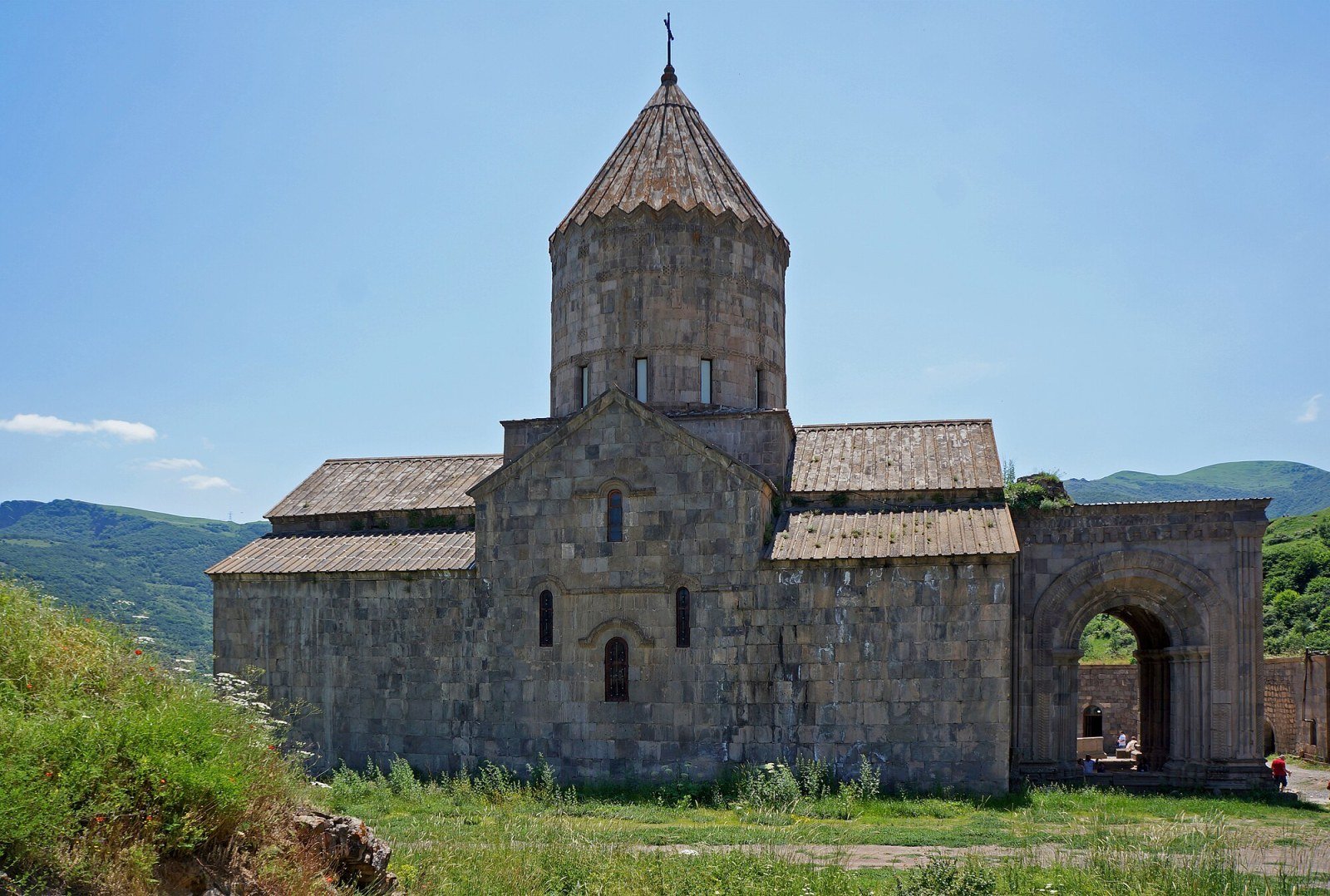
The complex has three main churches, a refectory, monastic cells, a restored library, and the gavazan, an octagonal stone column eight meters tall that sways on its base and functions, according to tradition, as a seismic detector. The walls combine the dark basalt of the area with lighter limestone; the interior of the Church of Saints Paul and Peter partially preserves an original floor of colored tiles and fresco fragments blackened by medieval fires.
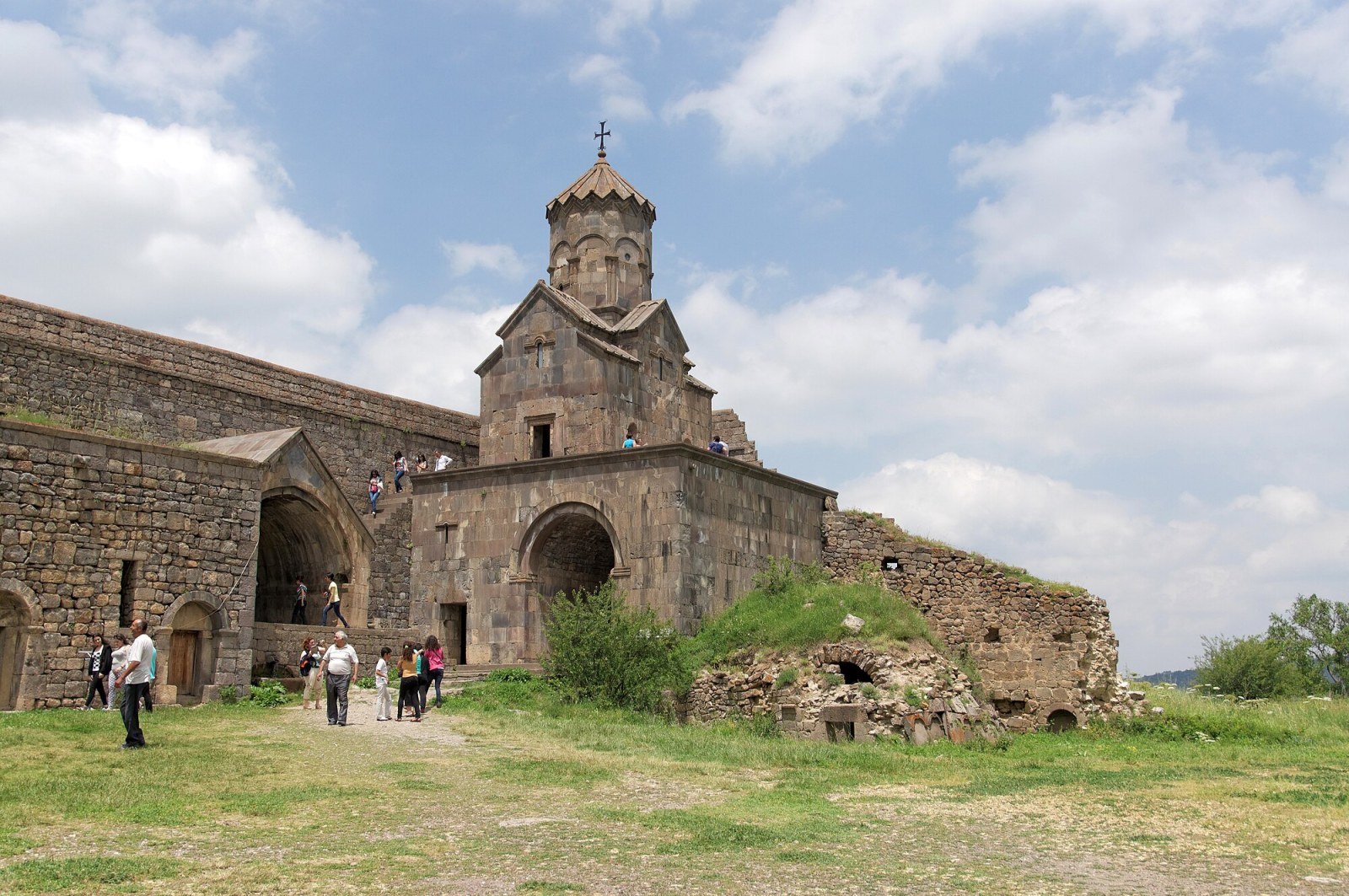
In high season there are quite a few people in the complex: guided groups, independent travelers, and organized buses from Yerevan. It smells of burning wax inside the churches and dry grass in the courtyard. In the late afternoon, when the groups leave on the last cable car, the place recovers a different quiet, with bells sounding over the wind rising from the gorge and the occasional monk crossing the courtyard between cells.
History
Tatev Monastery was founded in the 9th century on an earlier sanctuary and, between the 14th and 15th centuries, housed the University of Tatev, the largest academic center in southern Armenia, where philosophy, theology, calligraphy, music, and sciences were taught. The philosopher and theologian Grigor Tatevatsi led the school in the late 14th century and is buried next to the main church; his tomb remains a place of pilgrimage. The complex was sacked by the Seljuks, damaged by the 1931 earthquake, and nearly abandoned in the Soviet era. The major restoration between 1995 and 2010, largely funded by the Armenia National Fund and the diaspora, restored domes and walls; the construction of the cable car was part of the same project.
What to see & do
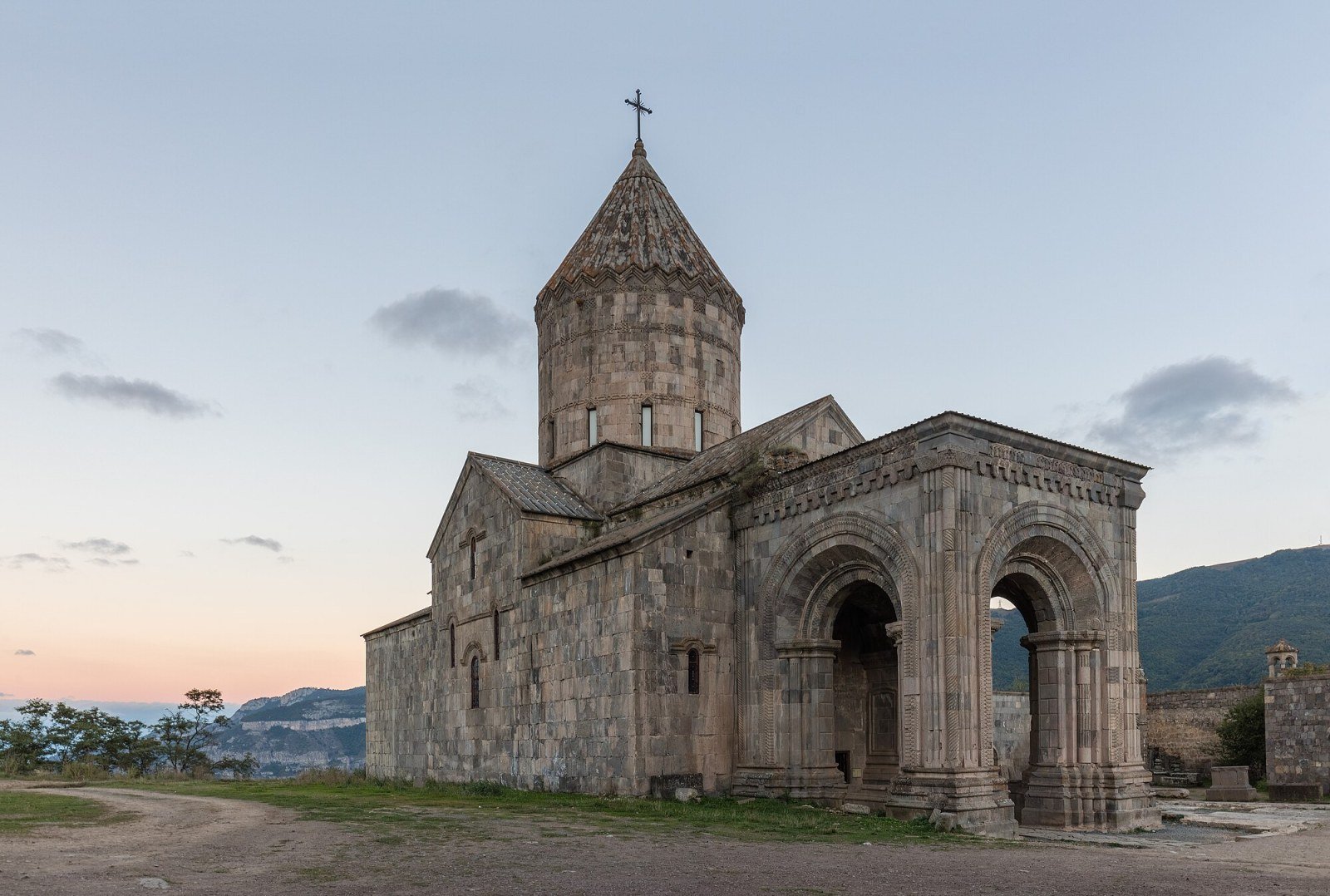
- Church of Saints Paul and Peter The main church of the complex, consecrated in 906, with a typical Armenian conical dome, remains of the medieval colored floor, and blackened frescoes. Monks celebrate the liturgy in the mornings and the sharakan chant resonates under the dome.
- Gavazan The swaying column in the courtyard, about eight meters tall and carved in 904. According to tradition, it moves differently before earthquakes; since the 1970s it has been reinforced inside and no longer swings freely, but the story is still told.
- Church of Surb Astvatsatsin (Holy Mother of God) The smallest in the complex, from the 11th century, with an austere interior and a lapidary inscription above the entrance dating its consecration.
- Tatev Oil Press A recovered building outside the main enclosure, with the tonratun (medieval press) and the stone vats where linseed oil was made for the monastery's lamps.
- Wings of Tatev cable car The twelve-minute ride over the gorge has value in itself: from the cabin you see the basalt walls of the Vorotan canyon, the Devil's Bridge, and the monastery approaching as if in a scale model.
- Viewpoints over the gorge The edges of the rocky spur allow you to see the depth of the canyon and, on clear days, the southern mountains all the way to the border with Iran.
Photo gallery
How to get there
The Wings of Tatev cable car departs from the village of Halidzor, 16 km from Goris on a paved road. Goris is about four hours from Yerevan by marshrutka from the central Kilikia station (morning departures, about 3,500 dram, €8). From Goris, taxis to the cable car station cost 2,000-3,000 dram (€5-7). The round-trip cable car ticket costs 6,000 dram (about €14). You can also drive up via the road from the village of Tatev, paved but with many bends. There is no direct public transport from Yerevan to the cable car.
Best time to visit
May to October is the recommended season. Summer is warm but not extreme at this altitude (about 1,600 meters above sea level), with highs of 26°C. Spring is green and the Vorotan runs strongly from snowmelt. Autumn has the advantage of forest colors in the gorge and clear skies; late September and October are usually the best for photography. In winter the cable car often closes due to strong wind (gusts above 72 km/h stop it) and the alternative road may be icy. Going early in the morning or after four in the afternoon avoids the tour groups.
More information
Photo: Diego Delso / Wikimedia Commons · CC BY-SA 4.0