
Spitakavor Monastery
Սպիտակավոր վանք
13th-century Armenian monastery among the forests of Vayots Dzor, with well-preserved khachkars and virtually no visitors.
Location in the Caucasus
Description
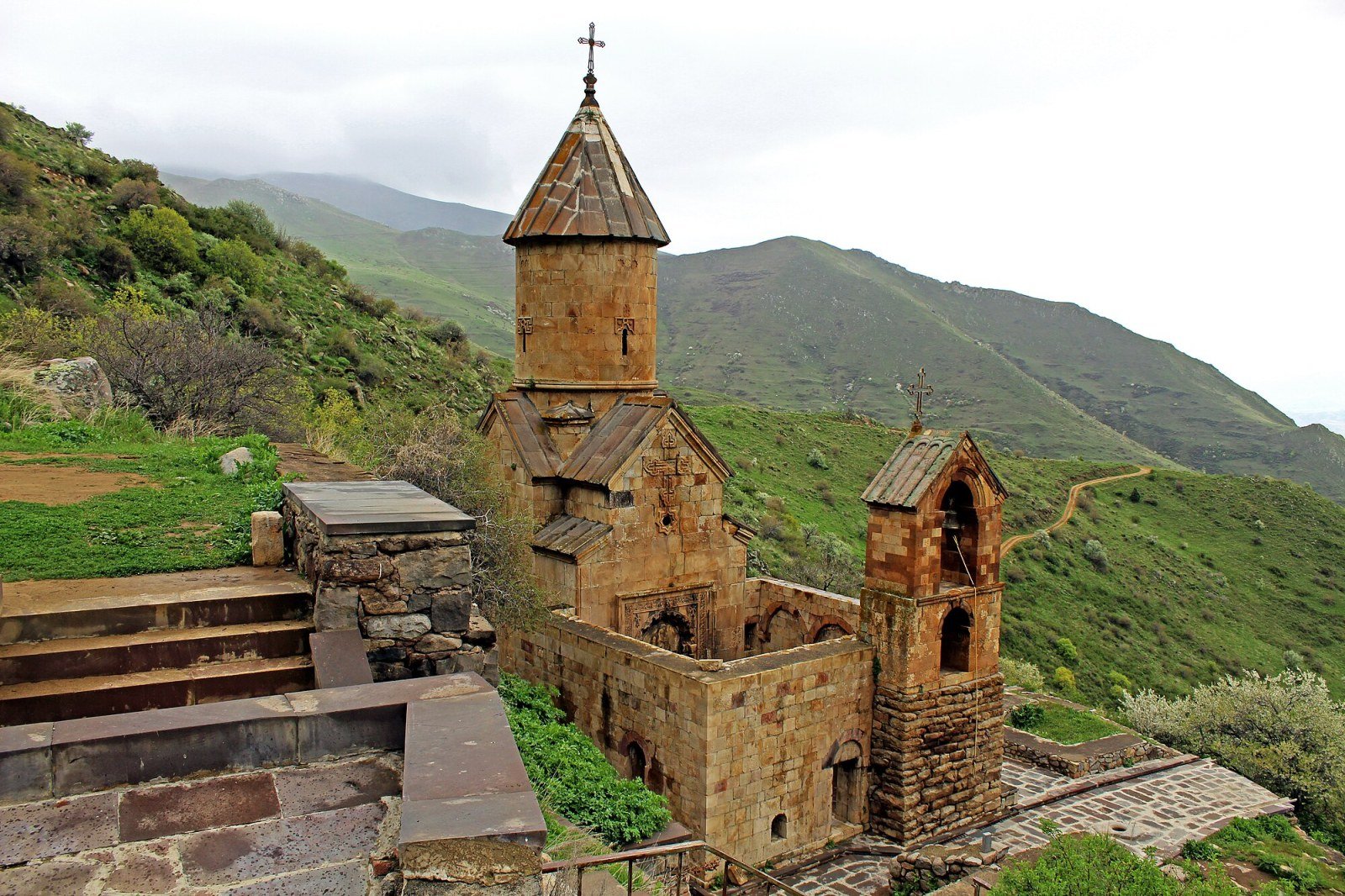
To reach Spitakavor Monastery you must leave the main road through Vayots Dzor and follow a dirt track through oak and beech forest for several kilometres. There is no visible sign from a distance. The monastery appears in a clearing halfway up the slope, with the red tufa walls standing, the roof of the main church holding up and a row of khachkars — carved stone crosses — leaning against the eastern exterior wall. The feeling on arrival is of a place preserved more by inertia than by active intervention.
There are no resident monks and no services. The main church is usually locked, but the side windows allow you to see the interior: a dark room with remains of frescoes on the walls and an uneven flagstone floor. What most justifies the detour is the quality of the 13th-century khachkars surrounding the apse — some with very elaborate interlace motifs — and the complete silence of the surrounding forest, which on weekdays is total.
It is worth bringing water, footwear with grip for the wet ground and a vehicle with good ground clearance. Spitakavor pairs well with Noravank Monastery, less than 20 km away along a forest track, and with a stop in the village of Areni to see the Surb Astvatsatsin Church and the local wineries.
History
The name Spitakavor means "the white one" in Old Armenian, probably referring to the brightness of the local tufa before lichens darkened it over time. Spitakavor Monastery was built in the 13th century under the patronage of the Orbelian princes, the same family that funded the nearby Noravank Monastery. The church was dedicated to the Virgin and functioned as a religious centre for a local community until 14th-century invasions left the Vayots Dzor region depopulated. Unlike other Armenian monastic complexes, Spitakavor was never subject to systematic restoration, which gives it an appearance closer to the original but also makes it more vulnerable.
What to see & do
- Main church The red tufa nave with a semicircular apse retains the original 13th-century structure with very few alterations. The interior, visible through the side windows, has remains of frescoes and an austerity characteristic of medieval Armenian religious architecture.
- Apse khachkars A set of khachkars with interlace and palmette motifs, some of very elaborate workmanship, leaning against the eastern exterior wall of Spitakavor Church. They are among the best preserved in the Vayots Dzor region.
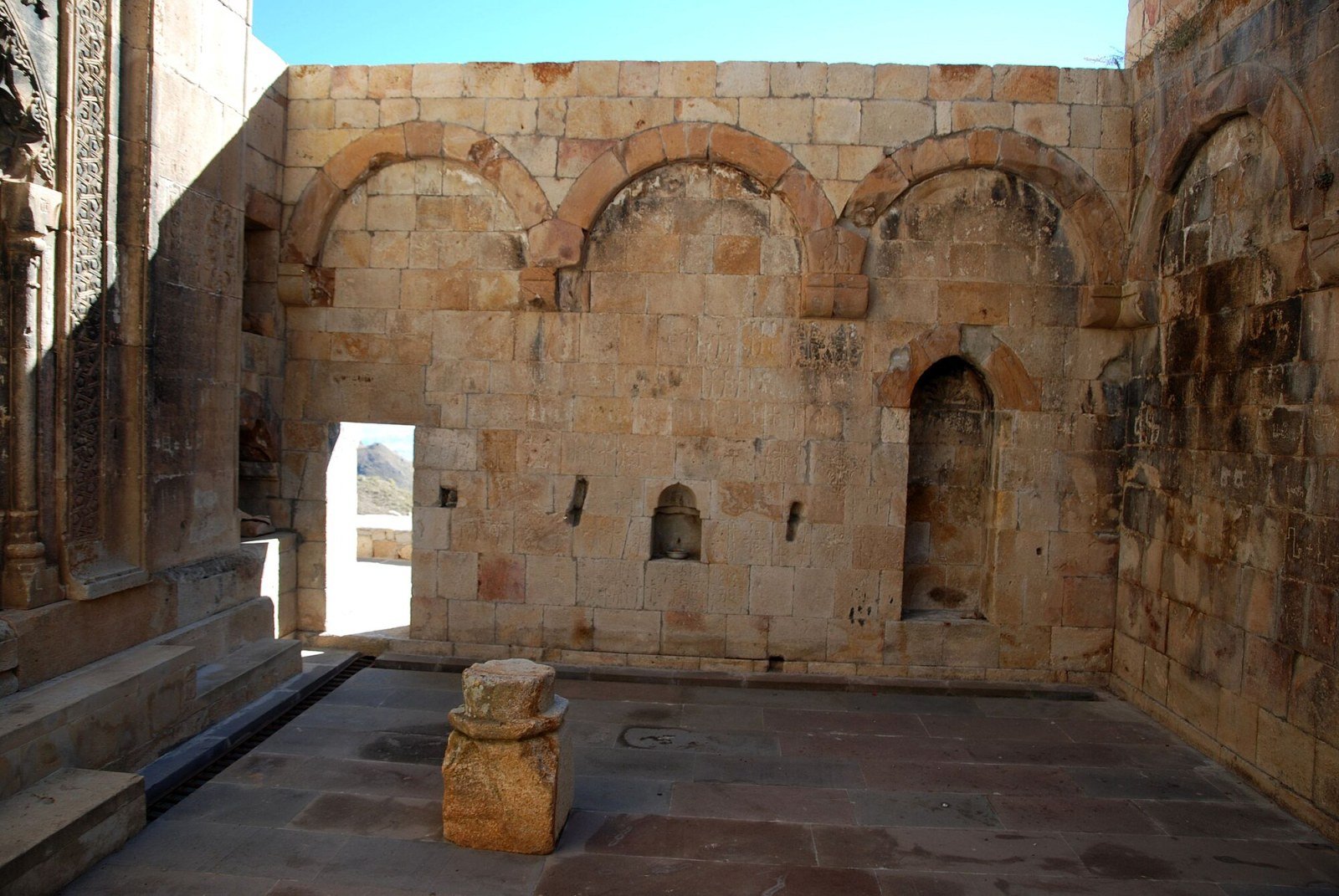
- Remains of the gavit The partial walls of the former entrance porch allow you to mentally reconstruct the original scale of the complex and give an idea of the community that used it.
- Oak and beech forest The forest setting surrounding Spitakavor Monastery has a dense canopy that takes on warm colours in autumn; the silence is almost constant on weekdays.
Photo gallery
How to get there
Spitakavor Monastery is in the mountains north of the main road through Vayots Dzor, about 15 km from Yeghegnadzor. Access requires a vehicle with good ground clearance; the dirt track may be muddy in spring. There is no public transport to the monastery. From Yerevan, the most practical option is to hire a car or arrange a taxi from Yeghegnadzor for the day. The journey from Yeghegnadzor takes about 20–25 minutes along a forest track.
Best time to visit
Spring (May–June) is the best time to visit Spitakavor Monastery: the Vayots Dzor forest is green, temperatures are around 15–20 °C and the access track is usually dry. In summer the forest provides shade and the visit is pleasant, although the track can be dusty. Autumn brings the colours of the oak and beech foliage. In winter the track can be covered in snow and impassable for normal vehicles.
More information
Photo: Soghomon Matevosyan · CC BY-SA 4.0