
Saghmosavank Monastery
Սաղմոսավանք
13th-century Armenian monastery on the edge of the Kasakh river canyon, in Aragatsotn, with views of Mount Aragats and no tourist infrastructure.
Location in the Caucasus
Description
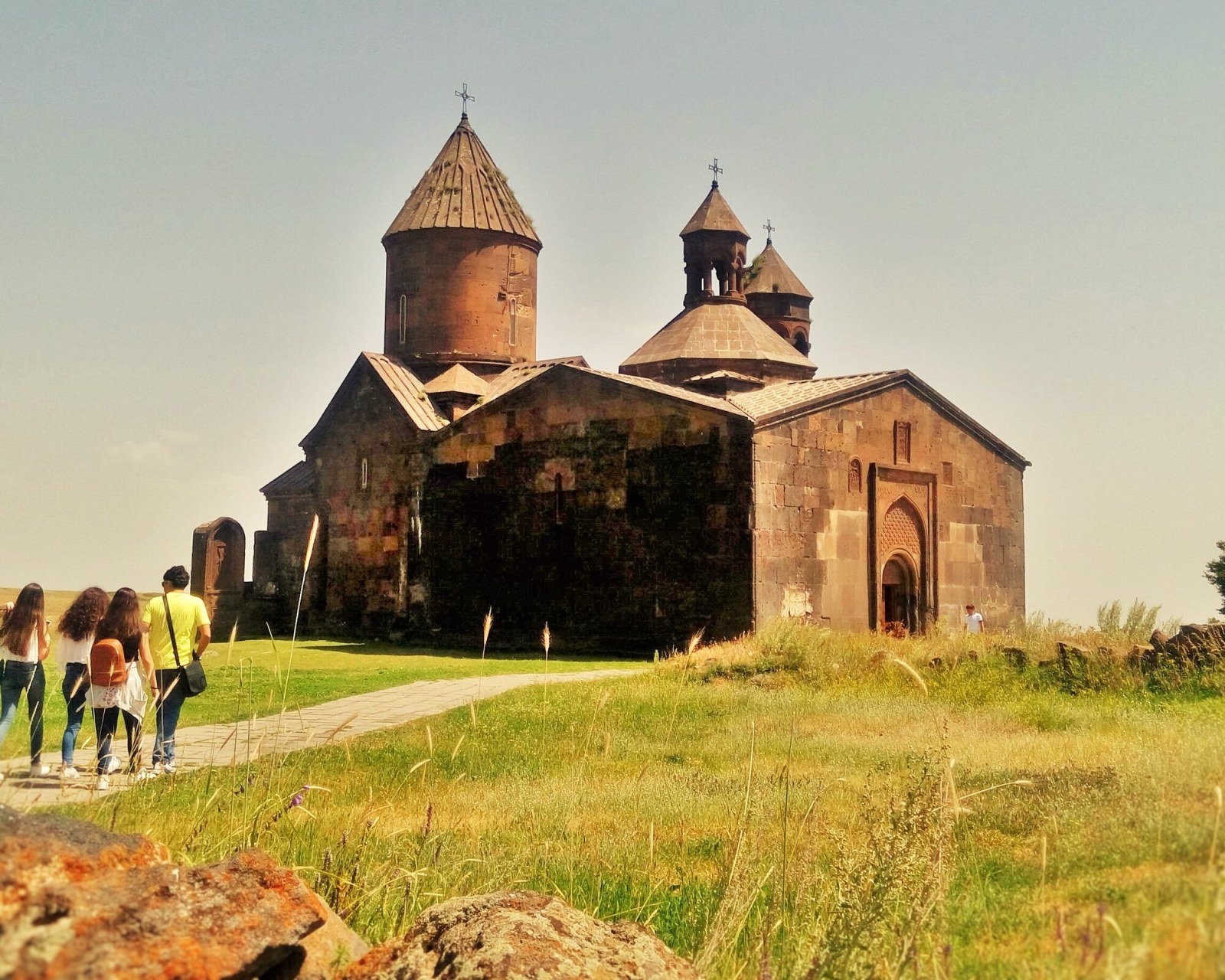
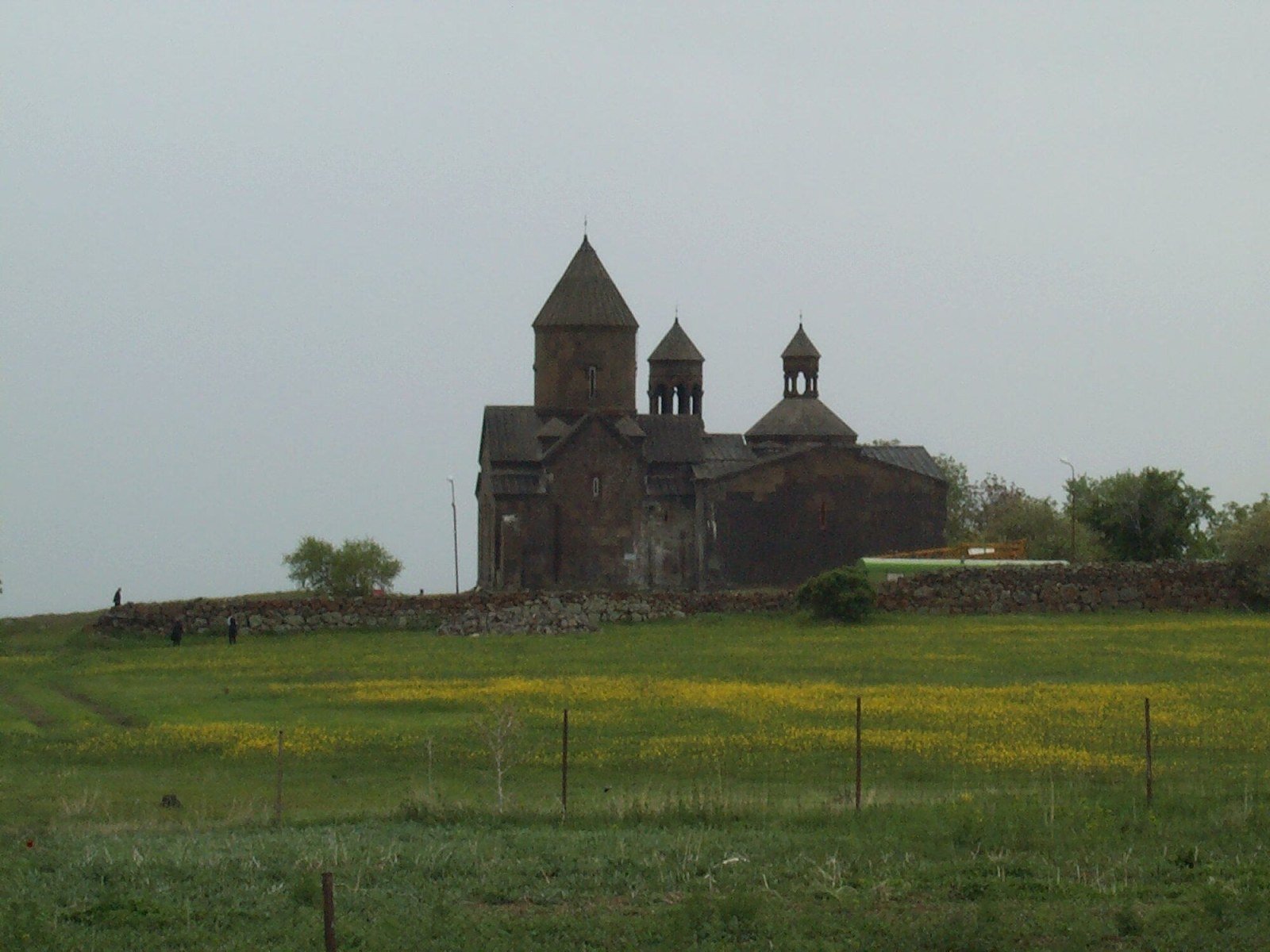
The Saghmosavank Monastery appears suddenly as you round a bend in the road crossing the Aragatsotn region: the dark stones of the main church emerge from dry grass, and behind it the ground drops vertically into the Kasakh river canyon. The first impression is one of solidity and isolation. The name means «monastery of psalms» in Armenian —saghmosavank— and there is something in the austerity of the place that justifies it: no gilding, no colour, just volcanic stone worked with precision.
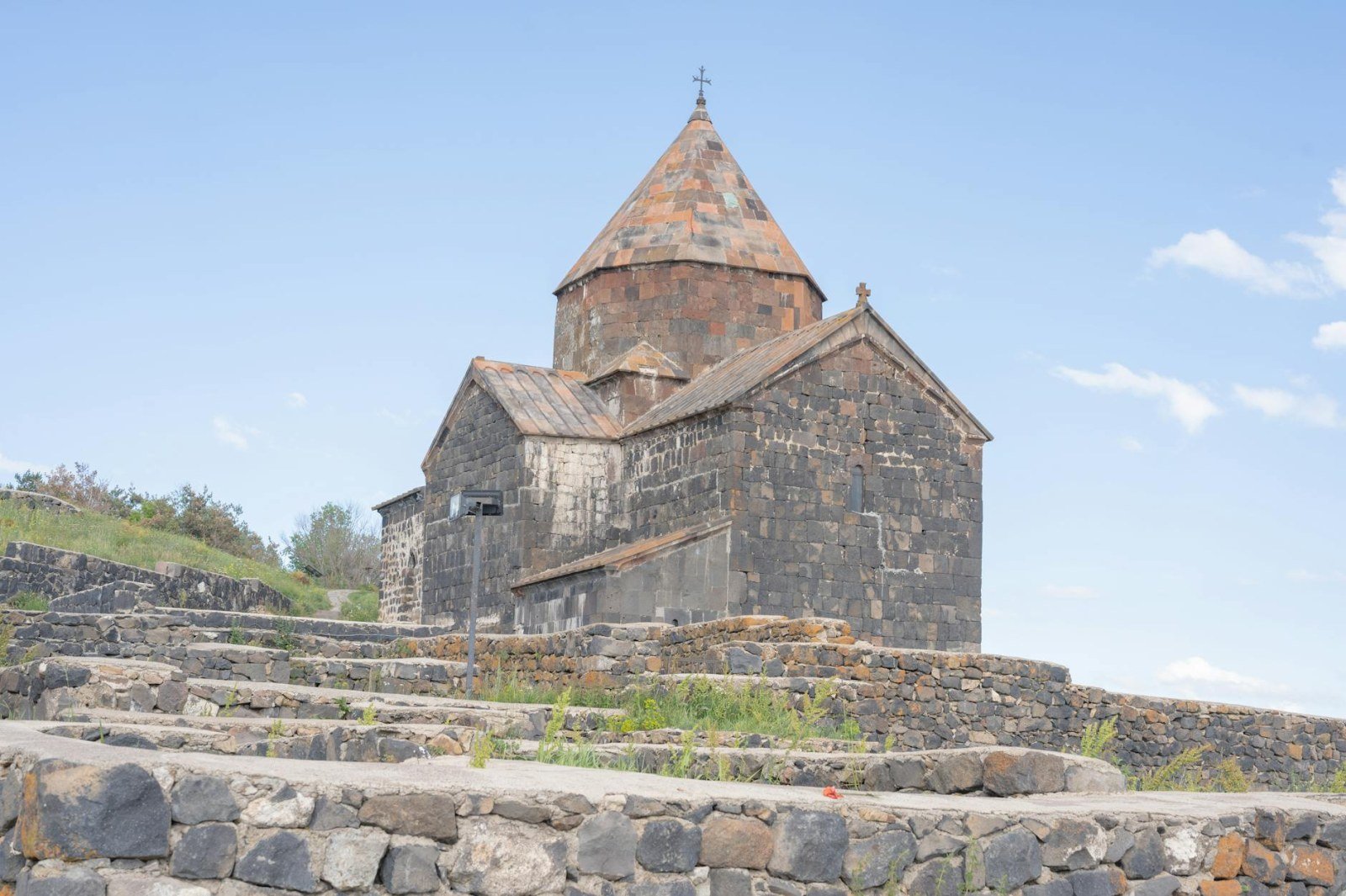
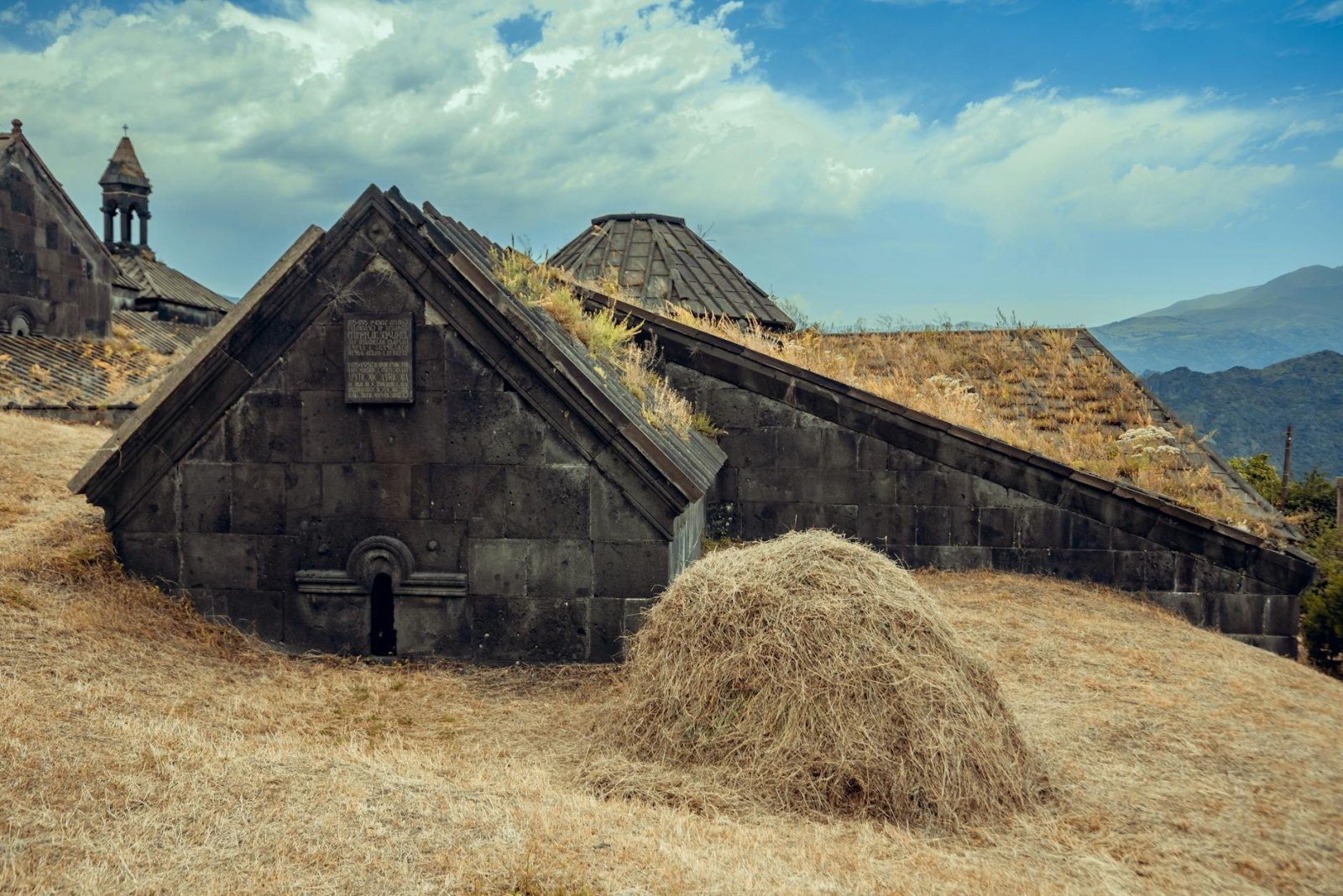
The complex has two main churches and several auxiliary buildings in varying states of preservation. The Virgin Church, from the 13th century, is the largest and has an exterior decorated with geometric bas-reliefs and khachkars set into the facade. The interior is dark and cool, with few ornamental elements; light enters only through narrow windows and at certain times of day forms beams that cross the grey stone.
The edge of the Kasakh canyon, about 50 metres from the monastery, gives views over the river far below and the eroded slopes of the gorge. On clear days the outline of Mount Aragats to the north is visible, with its four summits above 4,000 metres. There is no railing at the edge, so care is needed. Entry is free and there are no guards; the site receives visitors but has no signage or services.
History
The Saghmosavank Monastery was founded in the 13th century by Prince Vahram Pahlavuni and quickly developed as a manuscript copying centre, one of the key intellectual activities of medieval Armenian monasteries. The complex's scriptorium produced religious and scientific texts that circulated throughout the Armenian world. The Mongol invasions of the second half of the 13th century affected the Aragatsotn region, but Saghmosavank survived and remained active for several more centuries. Today it retains a partial religious function and is visited by both Armenian devotees and travellers who combine it with Hovhannavank Monastery, a few kilometres away in the same canyon.
What to see & do
- Virgin Church — Astvatsatsin (13th century) The main structure of Saghmosavank Monastery. Facade with carved khachkars and a sober interior of bare stone with a rock altar. The dome has solid, well-preserved proportions.
- Gavit (narthex) The entrance hall attached to the main church, with stone columns and a characteristic zenith lighting system with an oculus typical of medieval Armenian style. The contrast between the exterior light and the interior gloom is marked.
- Edge of the Kasakh canyon A few metres from the compound, the ground falls vertically to the Kasakh river. It is the point with the best views of the landscape, but with no protection: approach carefully.
- Khachkars in the courtyard and walls Stone crosses from different periods, scattered around the compound and set into the facades. Some have very elaborate geometric lacework.
- View of Mount Aragats On clear days, the 4,090-metre Aragats volcano dominates the northern horizon from the monastery.
Photo gallery
How to get there
The Saghmosavank Monastery is about 60 km north of Yerevan, near the village of Saghmosavan in the Aragatsotn region. By private car it is about 50–60 minutes via the M3 road towards Aparan. There is no direct public transport; the most practical option from Yerevan is taxi or rental car. It is usually visited together with Hovhannavank Monastery, a few kilometres away in the same canyon. Free entry.
Best time to visit
Spring (April–June) and autumn (September–October) are the best seasons: the Kasakh canyon is green or in ochre colours and temperatures range between 15 and 22 °C. In July and August it can be hot in the area —up to 32 °C— though the interior of the churches is cool. Winter can bring snow and the access road may become difficult. The site is open year-round without fixed hours.
More information
Photo: Azniv Stepanian · CC BY-SA 4.0