
Kecharis Monastery
Կեչառիսի վանք
11th-century Armenian monastic complex in Tsaghkadzor: red-tuff churches, medieval gavits and khachkars amid fir forests and ski slopes.
Location in the Caucasus
Description
Kecharis Monastery occupies a peculiar place in Armenia's religious landscape: it sits in Tsaghkadzor, the country's best-known ski resort, which means that in winter pilgrims and skiers share the same car park and the Tsaghkadzor ski resort cable cars pass within a few hundred metres of the main nave. In summer the situation reverses: the monastery is surrounded by calm fir forests, with few visitors and trails heading up towards the mountain.
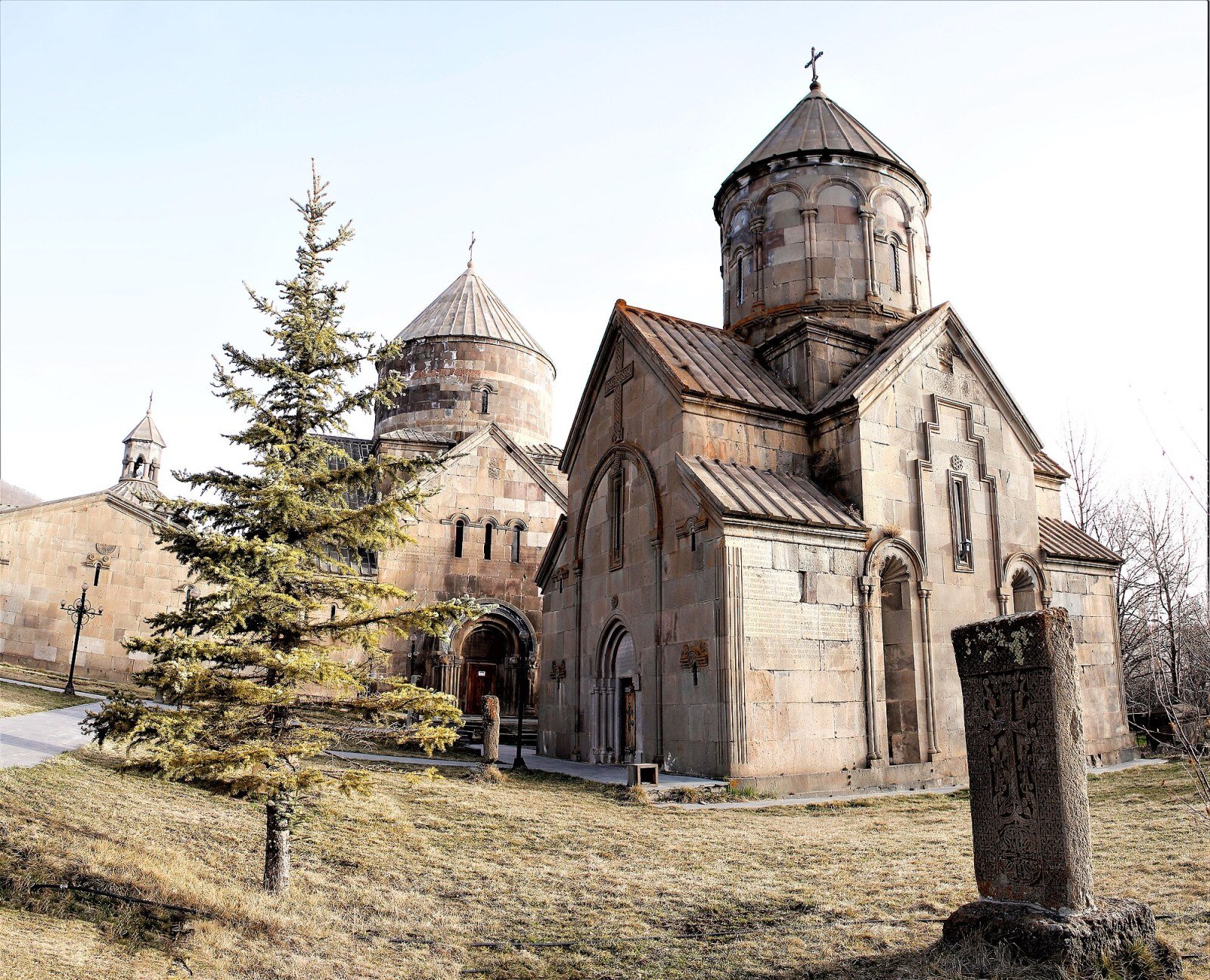
The complex comprises several structures from different periods. The dominant stone is a reddish tuff that shifts in tone depending on the hour — darker at noon, warmer and more orange at dusk. Inside, the darkness is dense and only broken by narrow windows that cut diagonally through the stone. The khachkars in the inner courtyard have well-preserved geometric interlacing, some with surfaces almost intact despite ten centuries of weathering.
The acoustic environment during ski season includes the hum of lift engines, which is worth knowing before visiting in search of silence. Outside the ski season, from May to October, Kecharis is one of the most accessible monasteries from Yerevan and can be visited in half a day combined with a walk in the forest. Entrance is free.
History
Kecharis Monastery was founded in the early 11th century by the Armenian prince Grigor Magistros Pahlavuni, one of the most influential political and intellectual figures of medieval Armenia. The name derives from Armenian and is associated with the shape of the rocky terrain on which it stands. The complex grew during the 11th and 12th centuries under the patronage of the Pahlavuni family, which funded several of the surviving structures. It suffered damage during the Mongol invasions of the 13th century and was restored in various later phases. Unlike more isolated monasteries, Kecharis was always close to transit routes, which brought it both commercial prosperity and greater exposure to the region's conflicts.
What to see & do
- Church of St. Gregory (11th century) The oldest structure in Kecharis Monastery. Densely shadowed interior with several intricately carved khachkars. The dome rests on stone squinches.
- Church of St. Katoghike (12th century) The largest in the complex, with a gavit attached to the west and well-preserved exterior relief decoration. The façade displays red tuff craftsmanship at its finest.
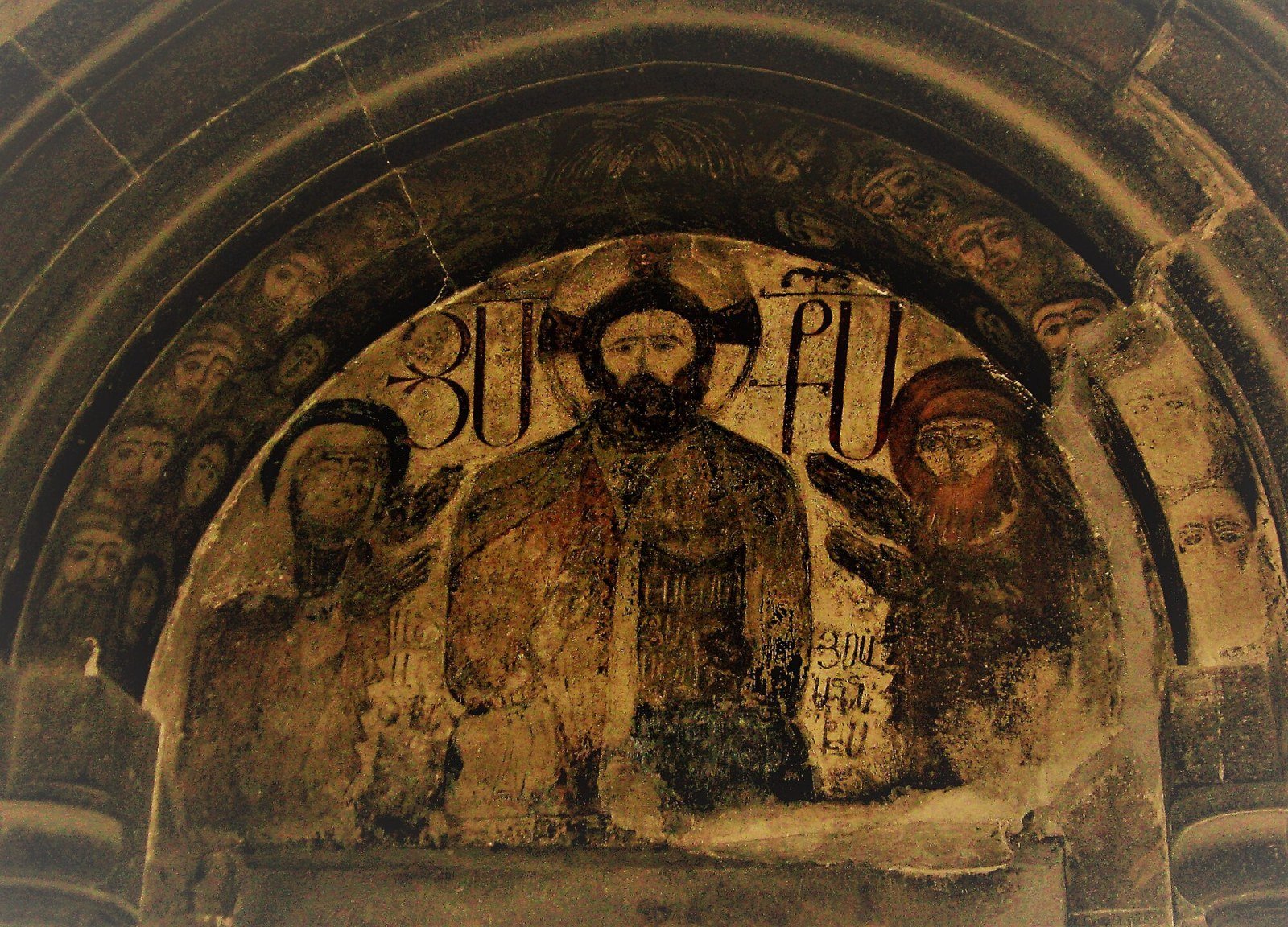
- Gavit of St. Gregory The narthex attached to the oldest church retains fragments of wall painting and a dome with stone squinches that filters light into narrow shafts.
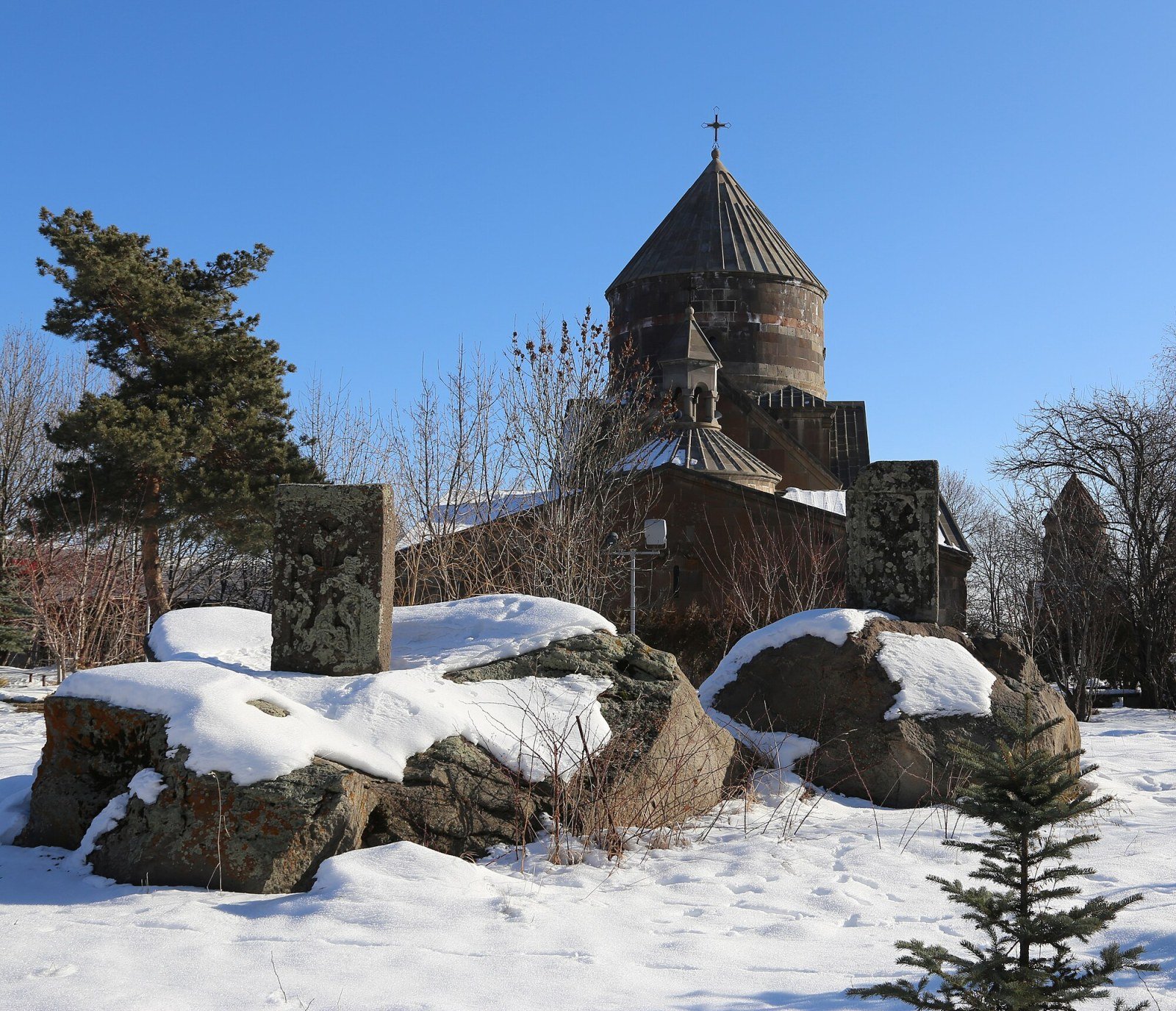
- Courtyard khachkars Several medieval crosses scattered throughout the complex, some of great decorative elaboration with still-sharp geometric interlacing.
- Tsaghkadzor forest The monastery's immediate surroundings in summer: dense conifers, marked trails heading towards the summits and fresh air at around 1,900 metres altitude.
Photo gallery
How to get there
Tsaghkadzor is about 55 km north of Yerevan on the road towards Hrazdan. There are frequent marshrutkas from the capital (70–80 minutes, departing from Kilikia bus station). By car it takes around 45–55 minutes. Kecharis Monastery is at the far end of the town, next to the cable car base station, and can be reached on foot from anywhere in Tsaghkadzor in under 20 minutes. Free entrance.
Best time to visit
June to September are the best months: the Tsaghkadzor forest is green, temperatures range from 14 to 22 °C and there are no groups of skiers. December to March brings the appeal of snow and Kecharis Monastery under a white blanket has its own character, though the surroundings are noisier due to resort activity. April and May can be muddy and the ski facilities are only partly dismantled.
More information
Photo: Inga Tomane · CC BY-SA 4.0