
Geghard Monastery
Գեղարդի վանք
13th-century Armenian monastery partially carved into the rock of a gorge, a UNESCO World Heritage Site since 2000.
Location in the Caucasus
Description
Part of Geghard is literally inside the mountain. The churches and funerary chambers hewn from the rock during the 13th century have an acoustics that amplifies every sound: when a group of pilgrims enters singing, the voices fill the cave in a way no open-air building can replicate. The stone smells of damp and candle wax, and in the deepest corners the darkness is broken only by the flame of a candle.
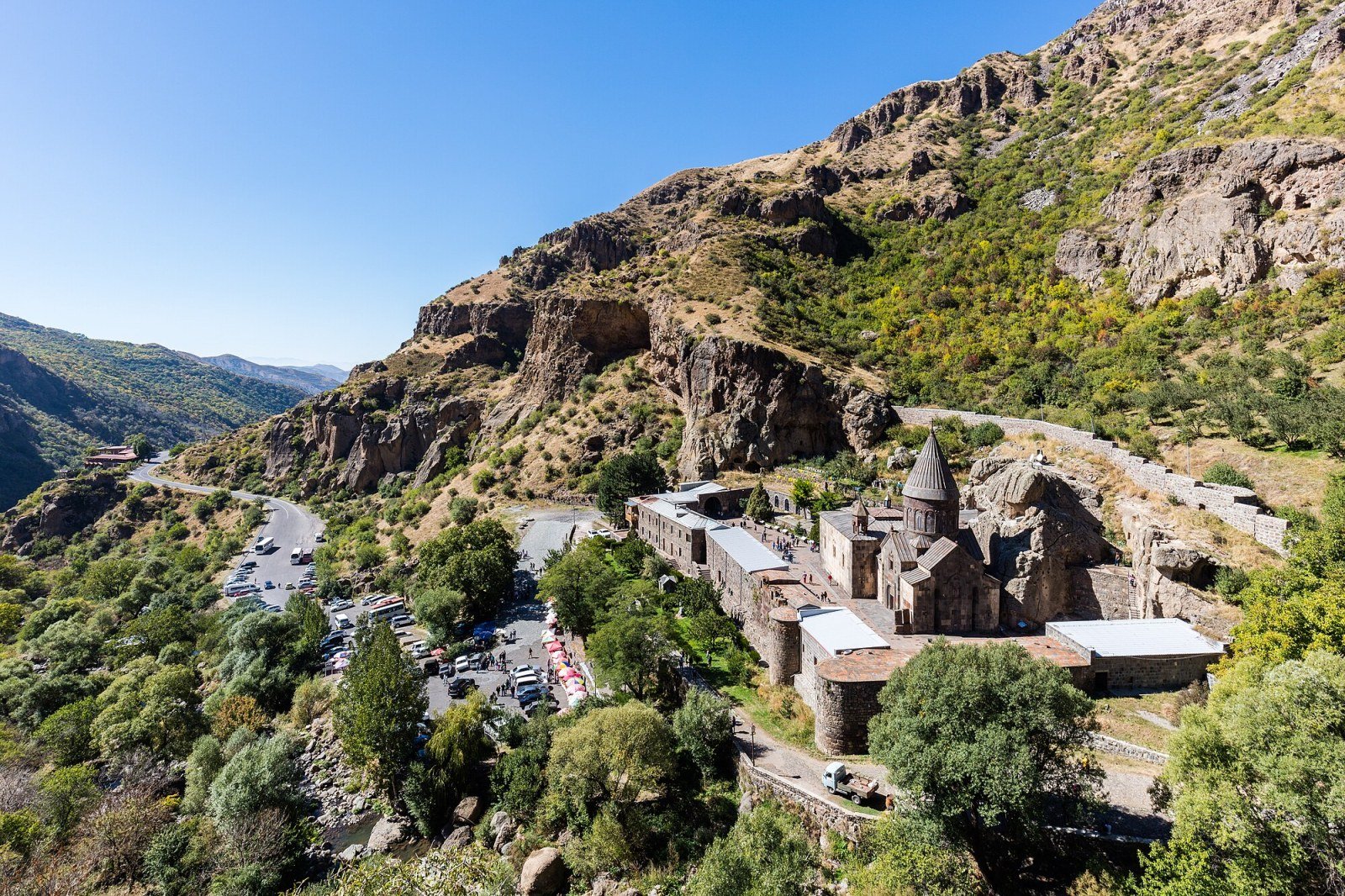
The monastery is wedged at the bottom of a gorge with near-vertical walls. The access path passes between stalls selling churchkhela — walnuts dipped in grape must — and jars of local honey. Inside the compound there is constant movement: Armenian pilgrims tie coloured ribbons into cracks in the rock, priests conduct liturgies in hushed voices and khachkars — stone-carved crosses — cover every available surface.
The visit lasts between one and two hours depending on how long you spend in each underground chapel. On summer weekends buses arrive and silence is hard to find; on weekdays or outside peak season the atmosphere is much more contemplative and the resonance of the carved chambers is far easier to appreciate.
History
Tradition places the foundation in the 4th century, though the buildings visible today date mainly from the 13th century, when the Zakarian dynasty funded a major construction campaign in Armenia. The name comes from the Armenian word for "spear": according to legend, the spear that pierced Christ at the Crucifixion was kept here before being moved to Etchmiadzin. UNESCO inscribed the monastery and the Azat valley as a World Heritage Site in 2000.
What to see & do
- Main church (Katoghike) A 13th-century nave with relief khachkars and a drum-and-dome. Light enters through a ocular opening that projects a vertical beam on sunny days.
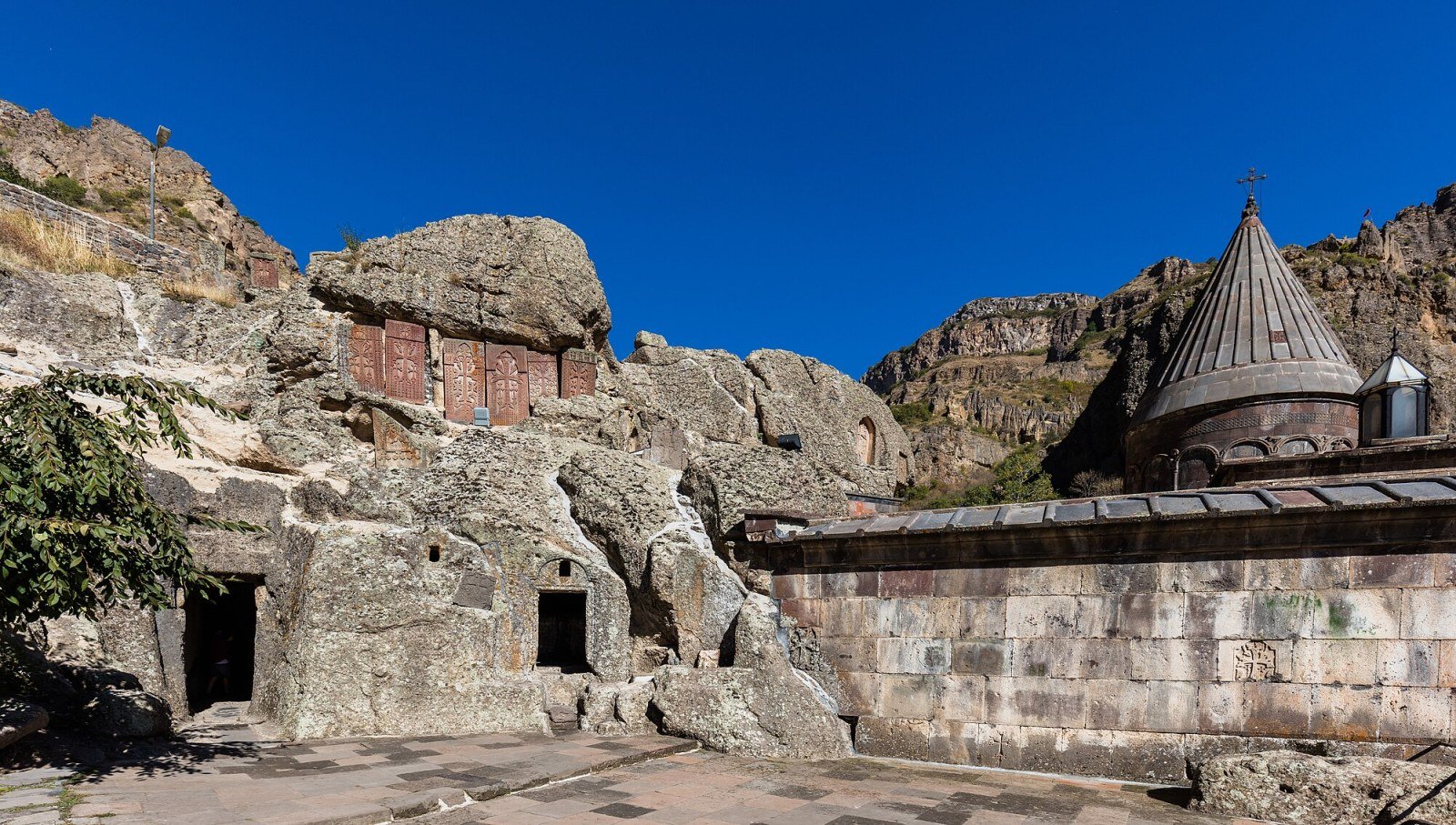
- First rock-hewn church (Avazán) Carved from the living rock, with columns and vaults taken directly from the mountain. A natural spring runs across the stone floor.
- Second rock-hewn church (Papak and Ruzukan) The deepest chamber in the complex, with funerary rooms and geometric ceiling decoration. You need to crouch at certain points.
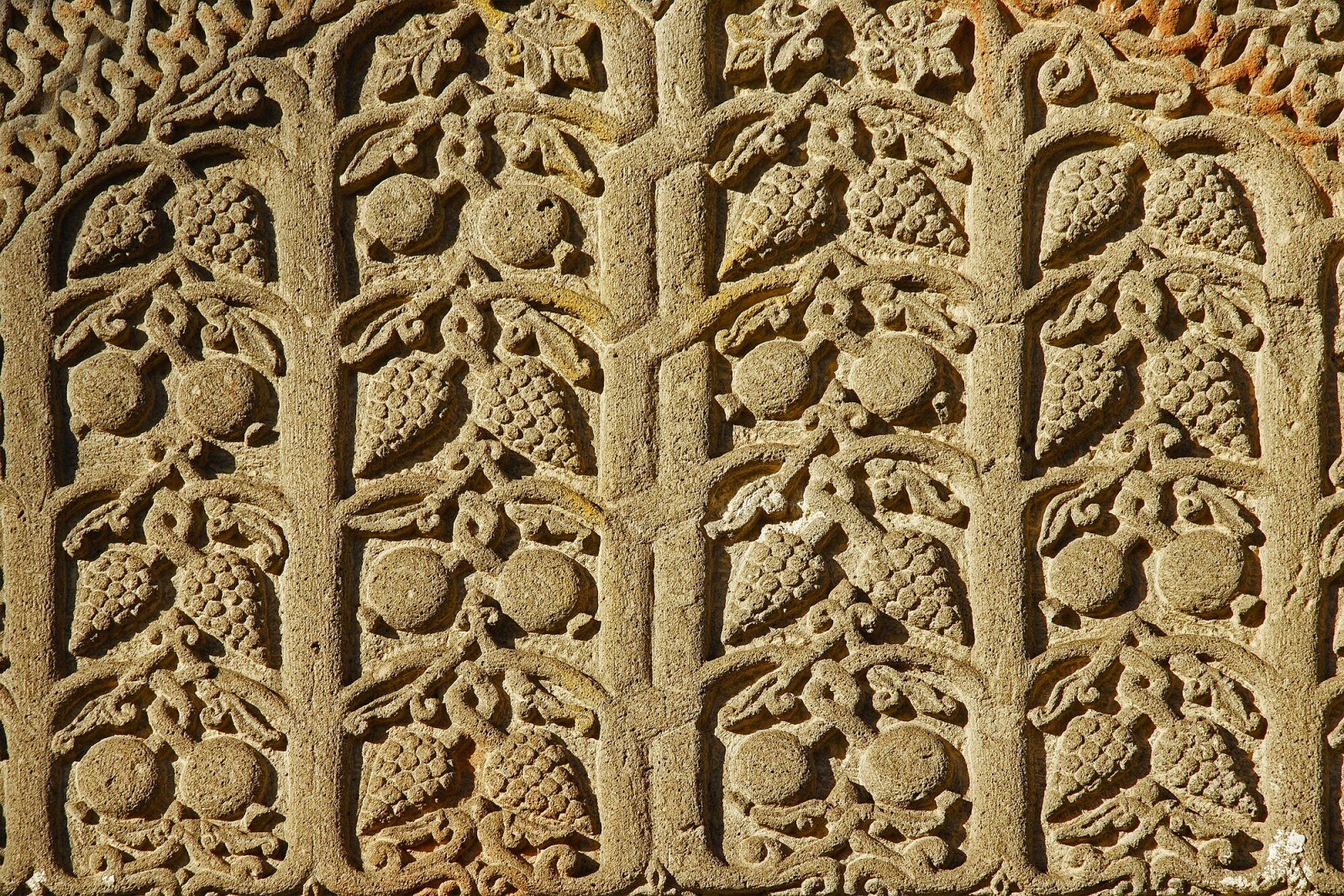
- Exterior khachkars Dozens of stone crosses carved between the 12th and 14th centuries cover the walls. Each has a different design; the most elaborate are near the entrance.
- Azat Gorge Columnar basalt walls and the river far below. Worth walking a few minutes outside the compound to see the monastery wedged in the gorge.
How to get there
Geghard is 40 km east of Yerevan and 7 km from Garni Temple. There is no direct public transport. The most common approach is a shared taxi or a tour from Yerevan; many agencies offer the Garni–Geghard combination as a half-day trip for around $15–20 per person. By private car, the road from Yerevan is paved and in good condition up to the entrance of the gorge.
Best time to visit
April to June and September to October. In summer the gorge traps heat and weekends fill with visitors; July and August are the busiest months. In winter there can be snow and the road becomes slippery, though the monastery stays open. Spring brings wildflowers on the slopes and a soft light that enters the openings of the rock-hewn churches beautifully.
More information
Photo: Vyacheslav Argenberg · CC BY 4.0