
Khor Virap
Խոր Վիրապ
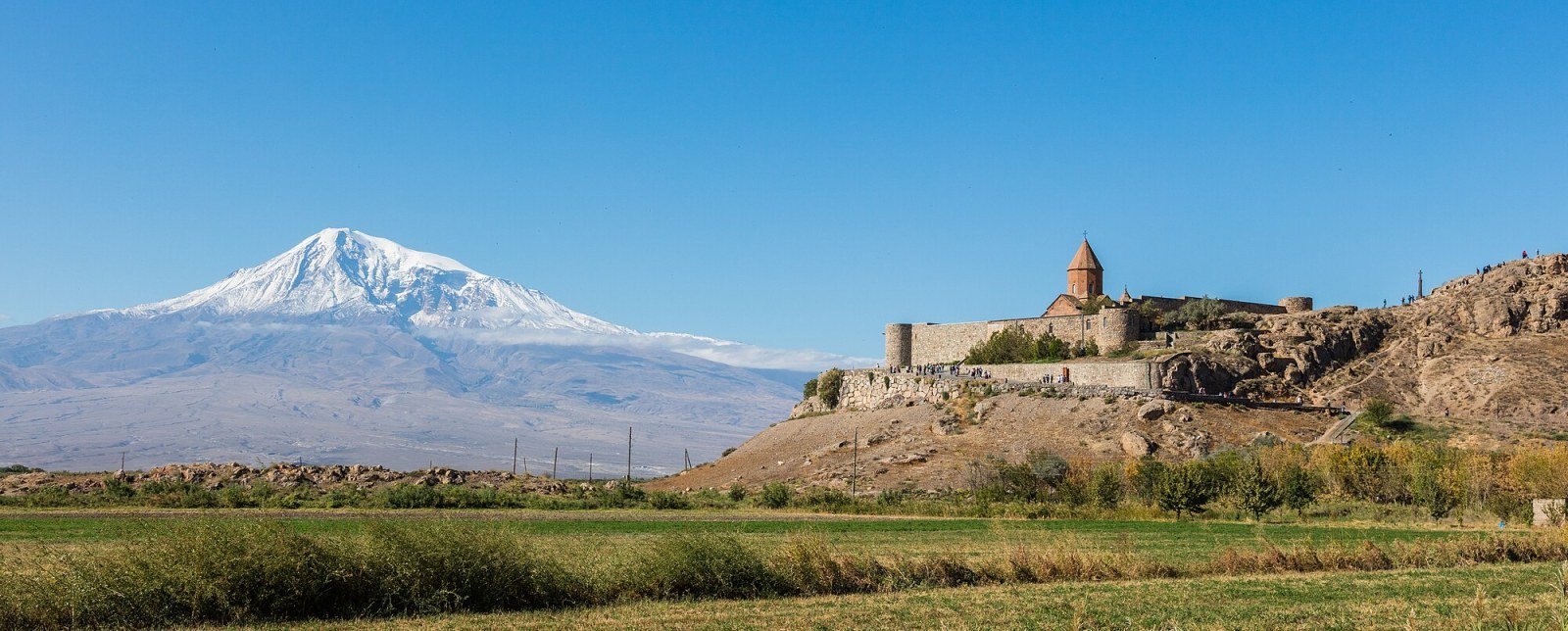
Armenian monastery on the Ararat plain, metres from the Turkish border, with snowy Mount Ararat as a backdrop.
Location in the Caucasus
Description
When you arrive at Khor Virap, the first thing that stops you is not the monastery but the mountain. Mount Ararat occupies almost the entire western half of the sky, and on clear days the snow on the summit seems within reach. The contrast between the dry yellow plain of the Araxes valley and that white peak is so striking that it is hard to look away and enter the compound.
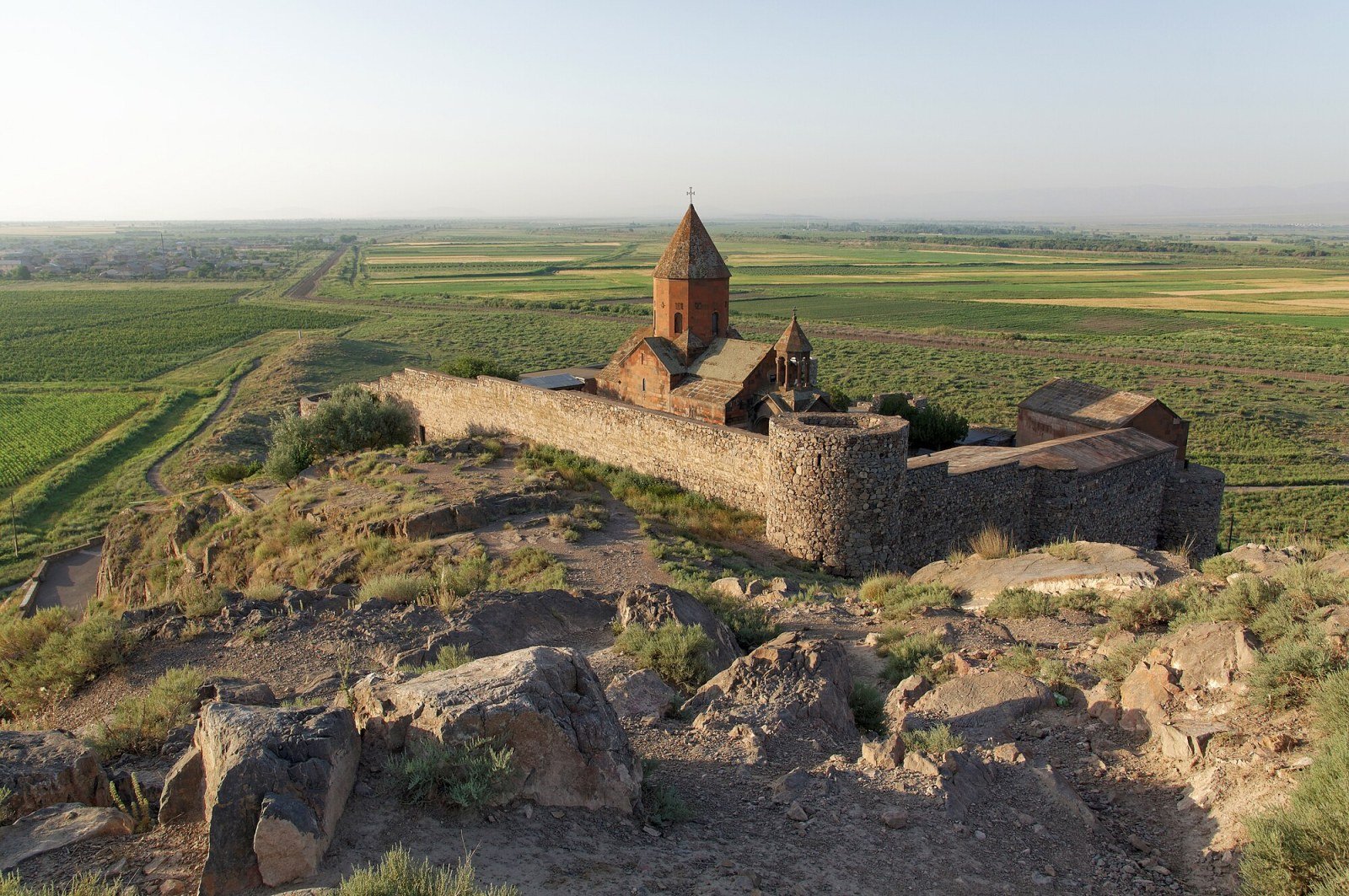
The complex itself is compact: the main Church of the Mother of God (17th century), an older chapel, and beneath it the pit where, according to tradition, Gregory the Illuminator was imprisoned for thirteen years before converting King Tiridates III. You descend by a vertical metal ladder some six metres down into near-total darkness, which gives you a fairly concrete sense of the weight of the legend.
The monastery receives tour buses from Yerevan throughout most of the day, so the middle hours can be noisy. Arriving before nine or at sunset, when the raking light turns Ararat orange, changes the experience considerably. At the car park there are vendors selling dried fruit and lavash bread, and a basic café near the entrance.
History
The story of this place revolves around Gregory the Illuminator, thrown into a pit by order of King Tiridates III at the end of the 3rd century. After thirteen years, the king himself freed him, and in 301 AD Armenia became the first state in the world to adopt Christianity as its official religion. The name Khor Virap means «deep pit» in Armenian.
A chapel was built over that pit in the 7th century and rebuilt several times since. The current structures, including the Church of the Mother of God, date mainly from the 17th century, though the site has been venerated without interruption.
What to see & do
- Gregory's pit A metal ladder descends about six metres to the underground cell where, according to tradition, the Illuminator was imprisoned. The space is narrow, dark and damp; spending a few minutes inside helps you understand why this place weighs so heavily on Armenians.
- Church of the Mother of God The main 17th-century building, with an austere interior and some partially deteriorated wall paintings. The acoustics are remarkable when a liturgical chant happens to be underway.
- Walls and views of Ararat From the perimeter wall the widest view opens up: the plain, the Araxes river and Great Ararat with its satellite, Little Ararat, right beside it.
- Turkish-Armenian border The monastery stands literally metres from the barbed wire marking the border, closed since 1993. Seeing Ararat on Turkish soil from Armenian ground carries a historical weight that is hard to ignore.
- Southern hill A five-minute climb to the low hill behind the car park gives you the classic framing: the monastery below and Ararat behind, with no fencing in between.
How to get there
From Yerevan, marshrutkas leave from the Shengavit market towards Artashat; from there you need to take another local vehicle to Khor Virap or hire a taxi for around 3,000–4,000 drams. The most comfortable option is to rent a car (45 km south on the M2 road, about 45 minutes) or book a full-day tour combining the monastery with Garni, Geghard or the Areni winery. There is no direct public transport from central Yerevan.
Best time to visit
From April to June the countryside is green and days are cool, between 15 and 22 degrees; Ararat is usually clear in the mornings before cloud forms over the summit. July and August are hot on the plain, with highs above 35 degrees and almost no shade in the compound. September and October bring golden light and moderate heat. In winter the landscape turns arid but Ararat with fresh snow is rewarding; temperatures can drop below zero.
More information
Photo: Vyacheslav Argenberg / Wikimedia Commons · CC BY 4.0