
Khndzoresk
Խնձորեսկ
Abandoned cave village in the Syunik canyon, with hundreds of caves carved into the rock and a 160 m swinging bridge over the gorge.
Location in the Caucasus
Description
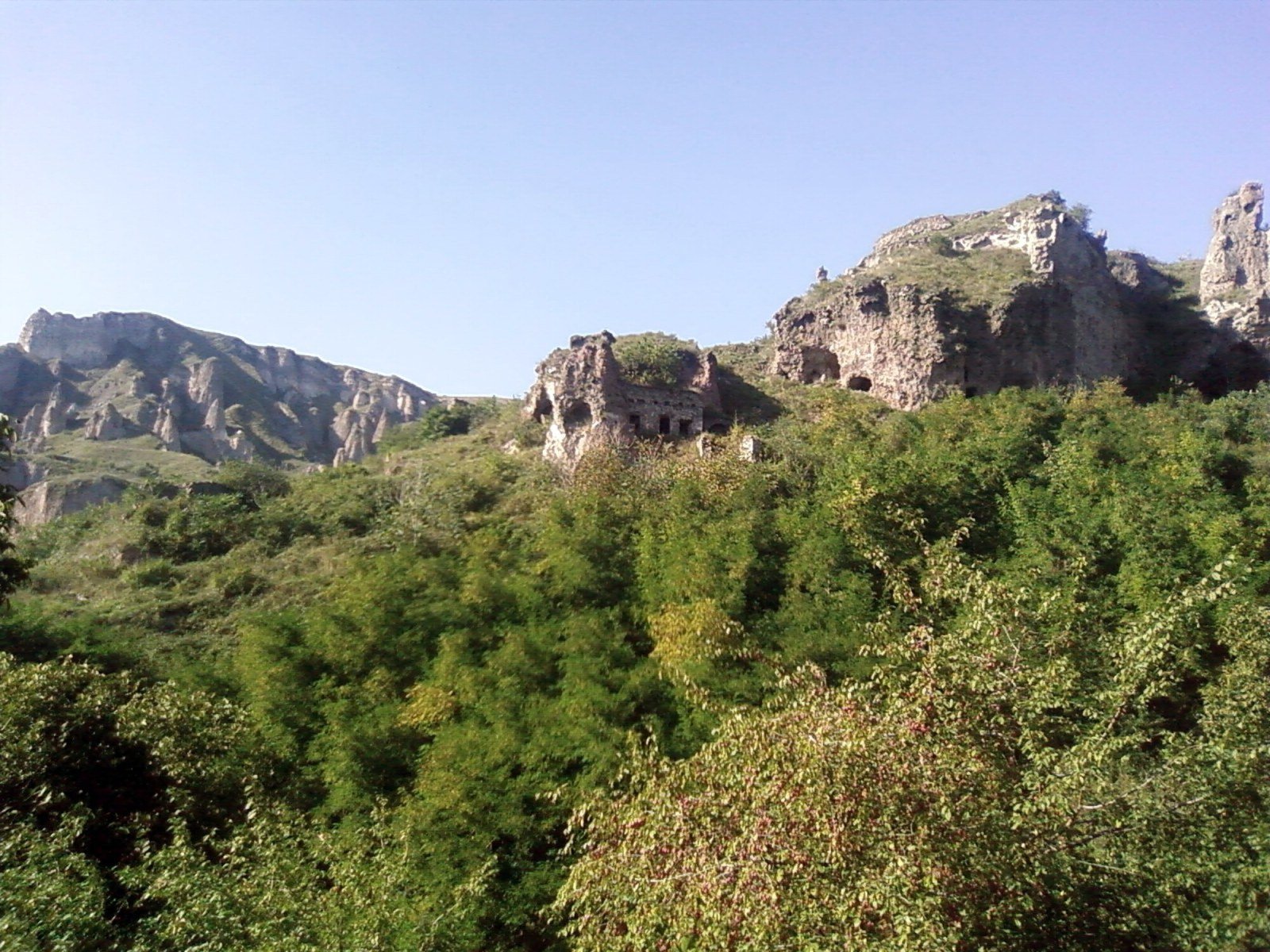
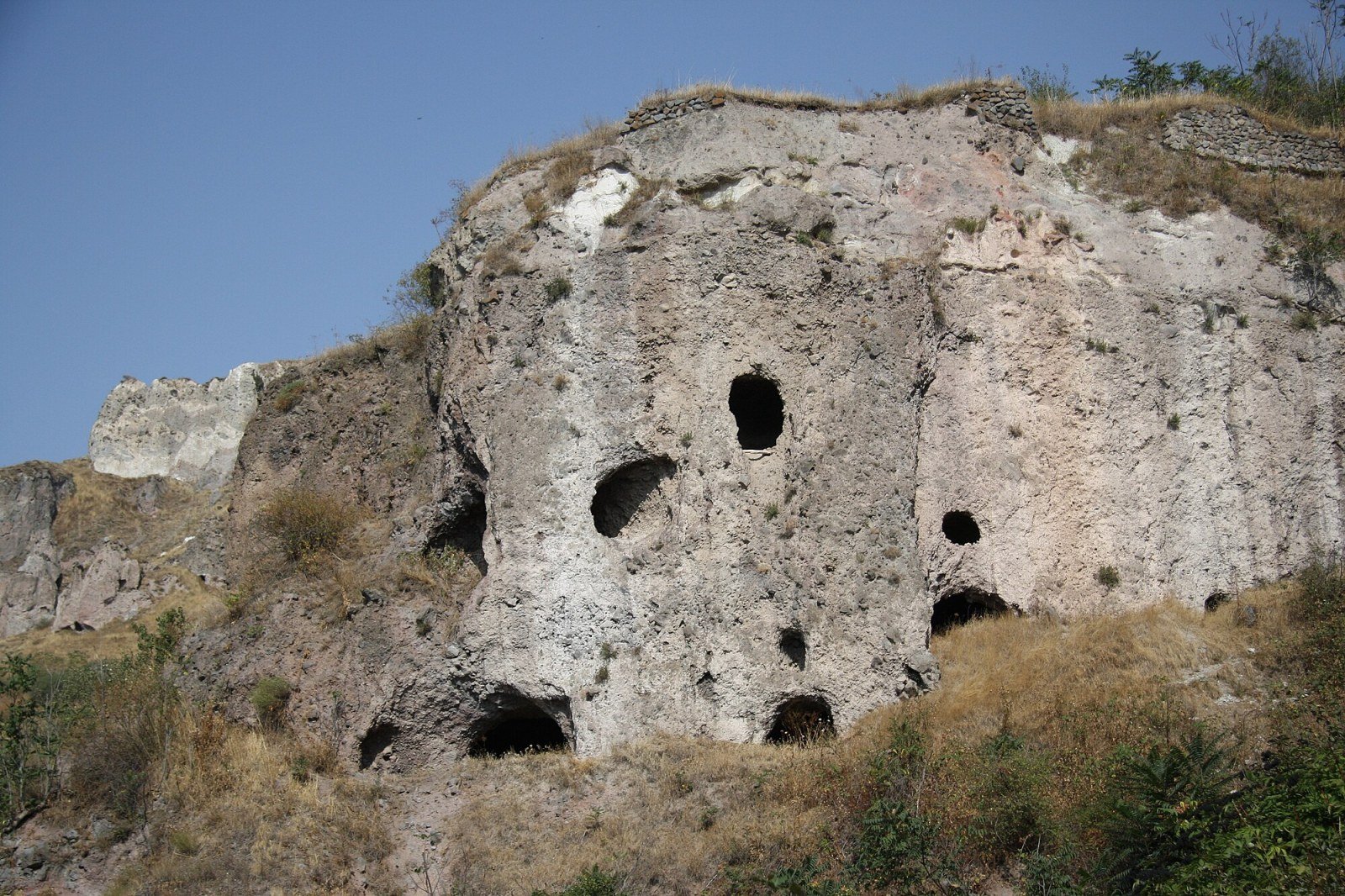
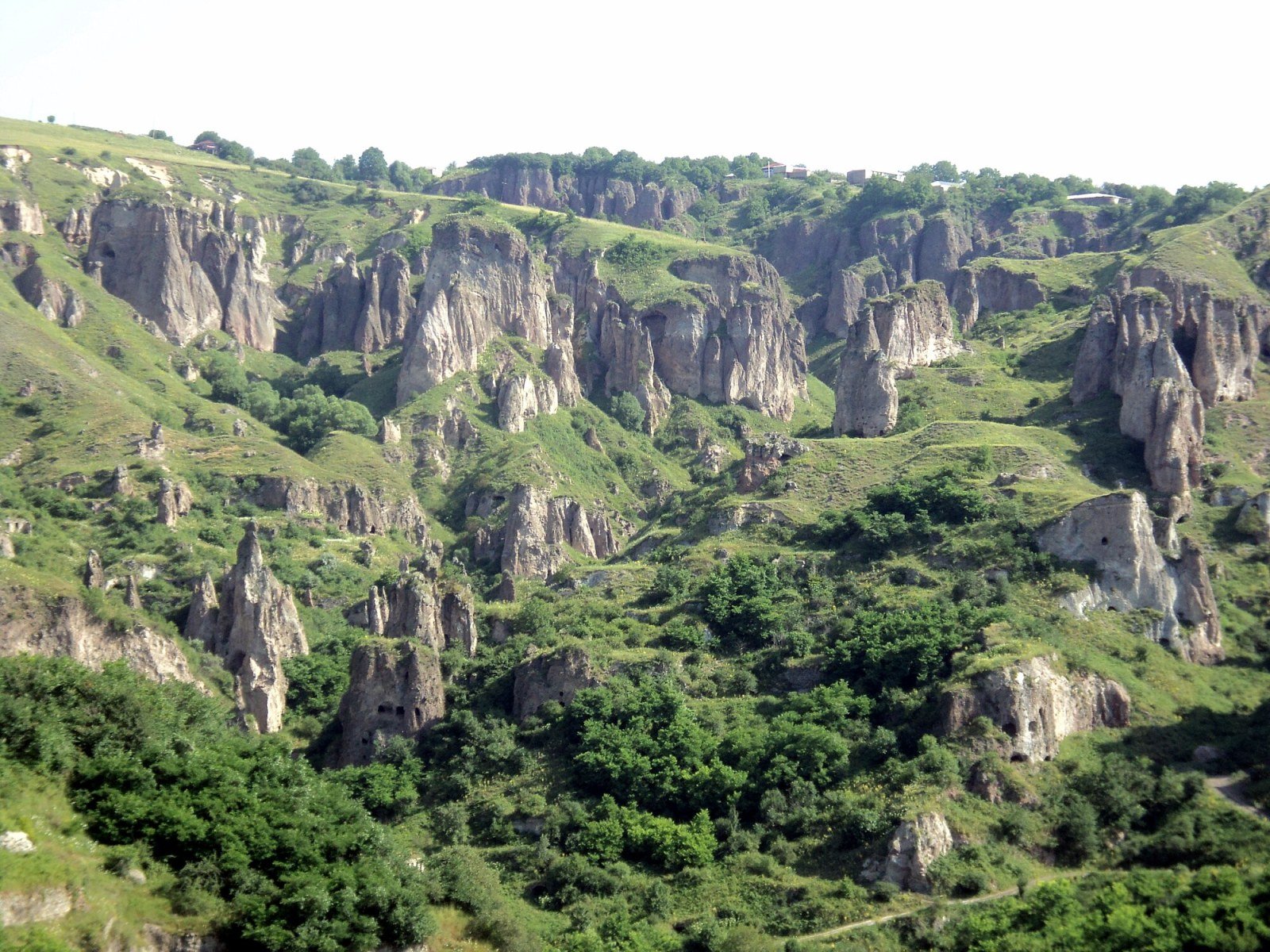
Khndzoresk appears suddenly when you peer over the canyon edge, about eight kilometres from Goris: a wall of beige and reddish rock pierced by hundreds of dark openings, some with rectangular windows chiselled out, others barely distinguishable from natural cracks. The wind of Syunik whistles between the stone ledges and the silence is broken only by the footsteps of other visitors and, occasionally, by the metallic swaying of the bridge.
The Khndzoresk swinging bridge is 160 metres long and crosses the gorge about 63 metres above the dry riverbed. It sways enough underfoot for some people to turn back halfway across. On the other side wait the largest caves in the complex, several of which served as churches: the interior walls still hold candle niches and khachkars — Armenian stone crosses — carved with the geometric decoration typical of Syunik.
Access to the site is free. At the clifftop car park there is a basic café and several vendors selling local honey and dried fruit. The full circuit — descending to the canyon floor and crossing the bridge — takes between one and a half and two hours. Grip-soled footwear is advisable: the descent path has loose-earth sections and irregular rock-cut steps.
History
Khndzoresk reached its greatest demographic weight between the 17th and 19th centuries, when it was one of the largest settlements in the Syunik region, with several thousand inhabitants spread across natural and excavated caves. The position at the bottom of the Khndzoresk canyon offered real protection against the Persian and Ottoman incursions that swept through southern Armenia during those centuries. Active churches, mills and an organised community functioned inside the gorge. In the 1950s the Soviet authorities declared the caves uninhabitable and transferred the last families to the new village built on the upper plateau, where local people still live today.
What to see & do
- Swinging bridge A 160-metre metal structure crossing the main gorge 63 metres above the ground. It sways as visitors cross; those with vertigo may feel it from the very first section.
- Western sector caves The most accessible from the bridge. Several preserve inscriptions in ancient Armenian and candle niches in the walls, evidence of continuous religious use over centuries.
- Cave church of Saint Hripsimeh Carved directly into the rock, with remnants of interior plaster and khachkars at the entrance with geometric decoration characteristic of the Syunik school.
- Canyon-edge viewpoint The starting point of the descent, next to the car park. Provides the most complete view of the complex; the light enters head-on in the early morning.
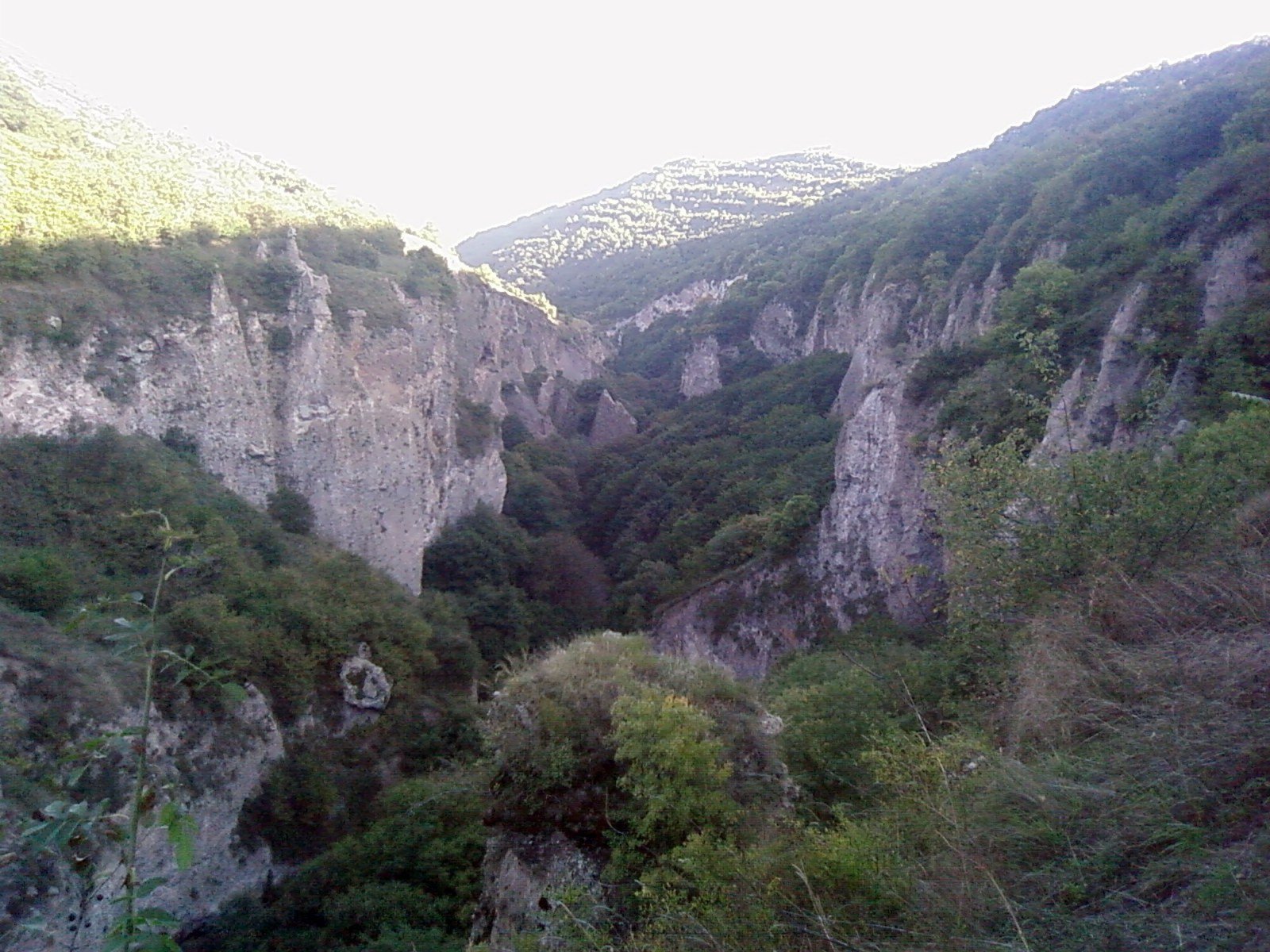
- Canyon floor trail A path leads to the dry riverbed where the Khndzoresk canyon narrows. From below, the scale of the rock walls and the density of the caves is harder to take in than from above.
Photo gallery
How to get there
Khndzoresk is about 8 km from Goris, the regional capital of Syunik. Local taxis from Goris take you to the car park for around 1,500–2,000 Armenian drams. By car, the road is signposted from the eastern exit of Goris. From Yerevan it is approximately 240 km (3.5–4 hours) via the M2 motorway through Vayk. Many travellers combine the visit with Tatev Monastery, about 30 km to the southwest.
Best time to visit
The best time to visit is May to October. In spring the canyon is green and temperatures hover around 15–22 degrees. Summer in Syunik is milder than in central Armenia: July and August reach around 28 degrees at midday and nights are cool. Autumn brings vivid colours to the gorge vegetation. In winter the road can be cut by snow and the path to the swinging bridge becomes slippery.
More information
Photo: GerritR · CC BY-SA 4.0