
Gergeti Trinity Church
გერგეტის წმინდა სამება
Medieval Georgian church at 2,170 m above Stepantsminda, with Mount Kazbek as a permanent backdrop.
Location in the Caucasus
Description
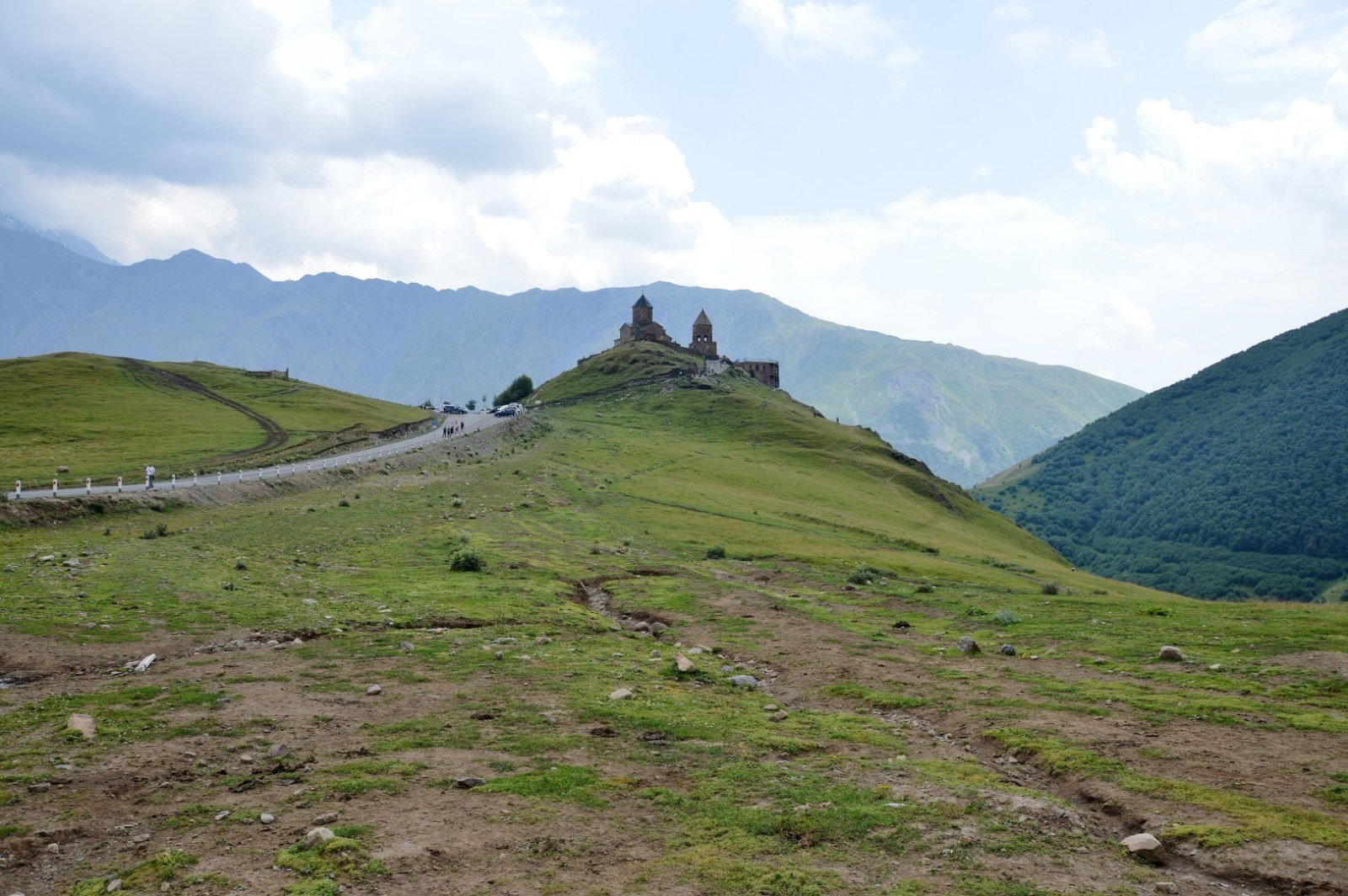
The Gergeti Trinity Church —Tsminda Sameba in Georgian— stands on a promontory at 2,170 metres above sea level, right above the village of Stepantsminda. Behind it, Mount Kazbek at 5,047 metres closes the horizon. It is the most reproduced image in Georgia, and when you arrive in person, the scene delivers on what the photos promised. What no image conveys is the wind that never stops, the cold that arrives suddenly even in July, or the real effort of the climb.
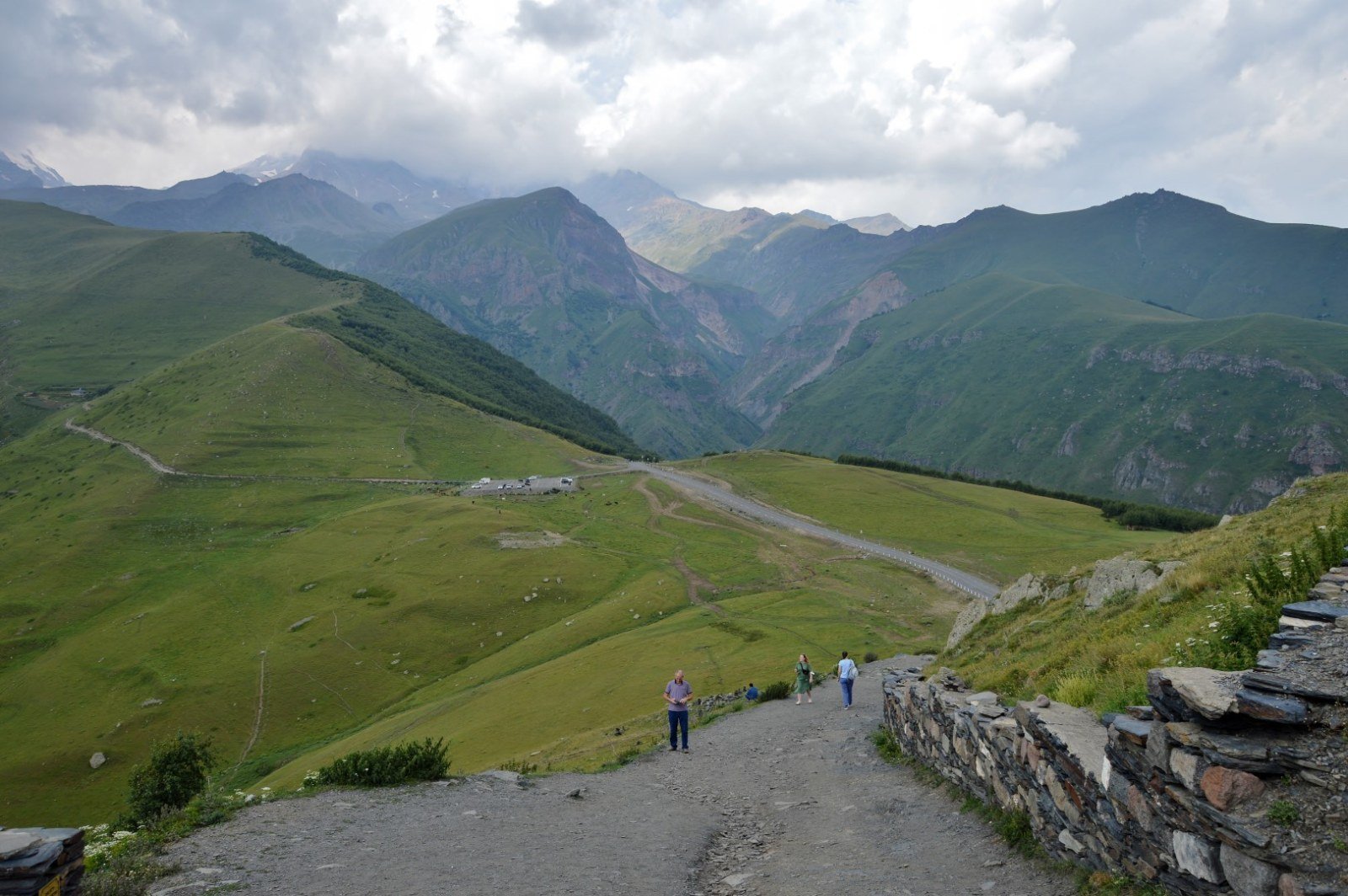
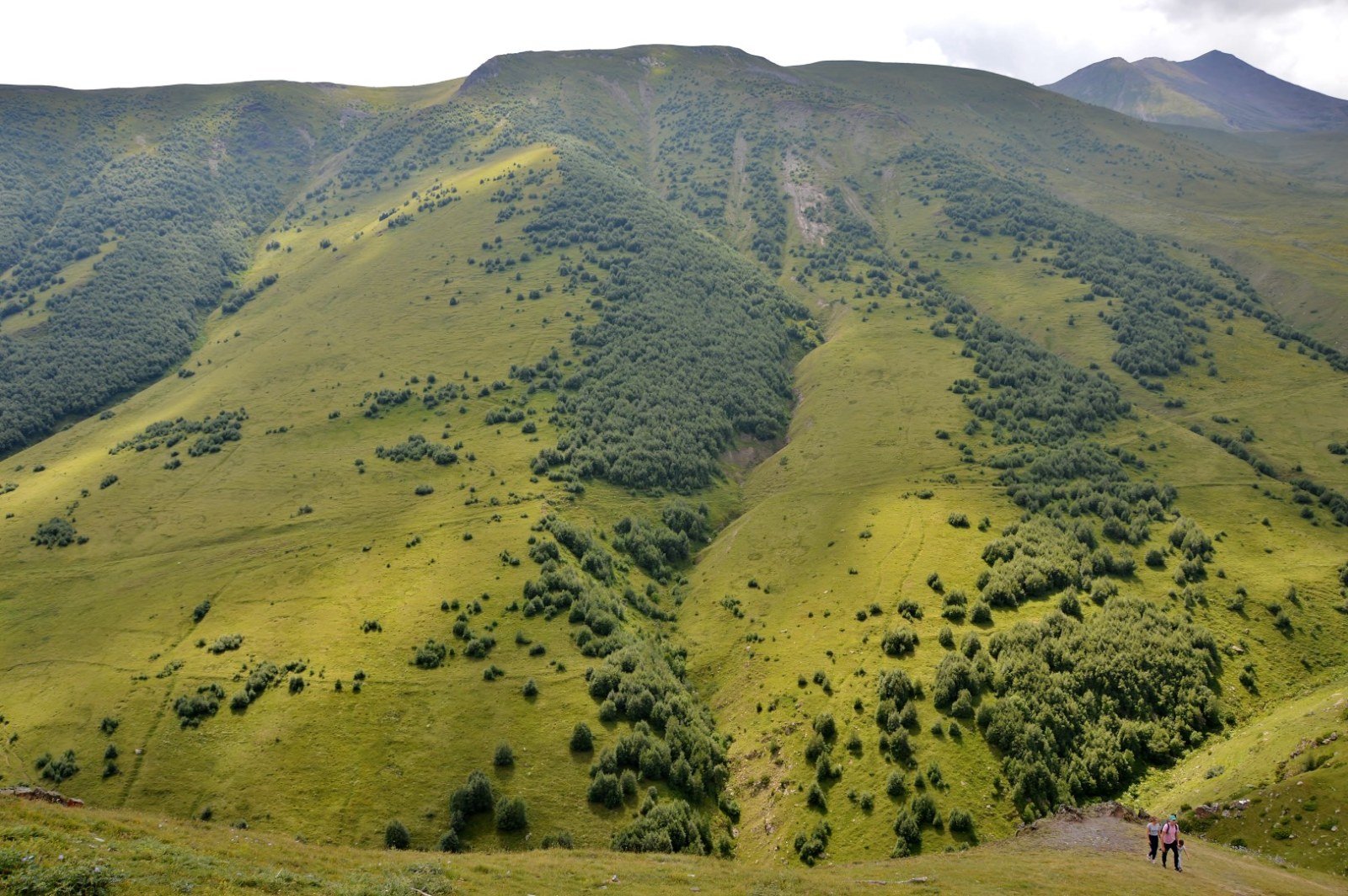
The walk from Stepantsminda takes between 1 h 15 and 1 h 45 depending on your pace. The elevation gain is around 500 metres: first through houses and gardens, then across open pastures where livestock graze. The ground at the top is short grass and grey rock. If fog rolls down from the Kazbek, the church can vanish in minutes; minutes later it reappears. There is also a dirt track for 4×4s: local drivers charge around 30–40 lari per trip, though the road is very narrow with steep gradients.
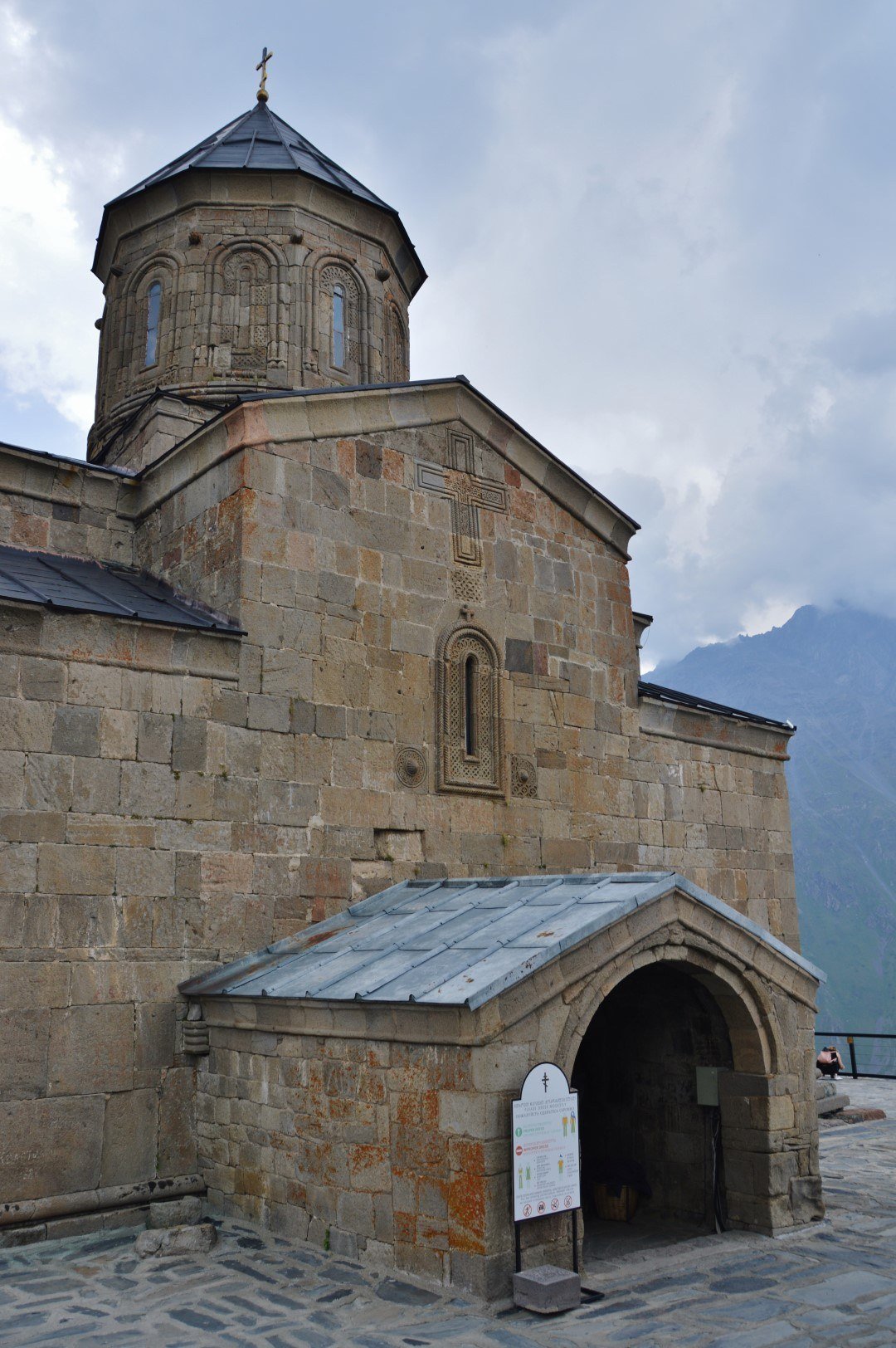
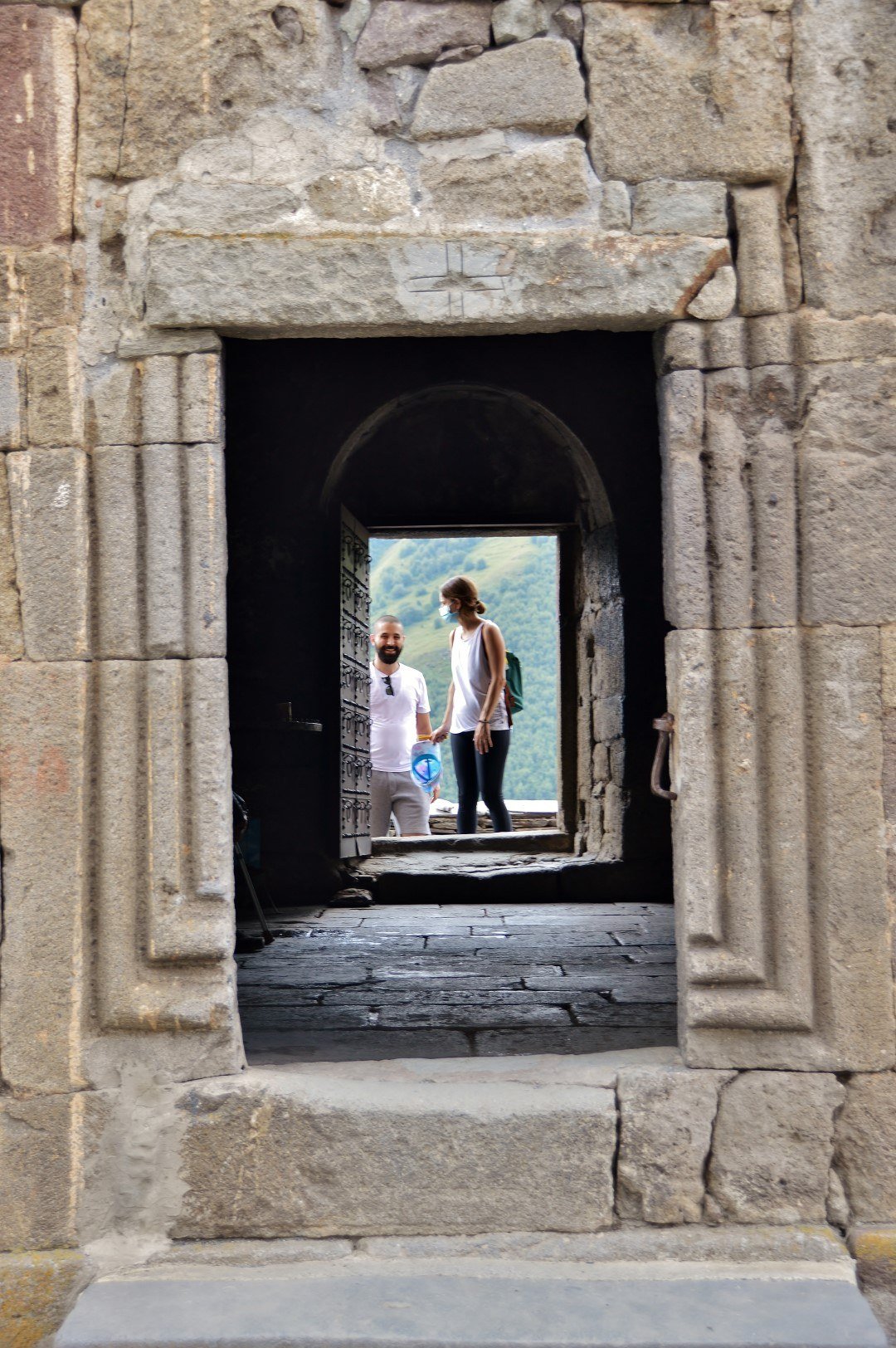
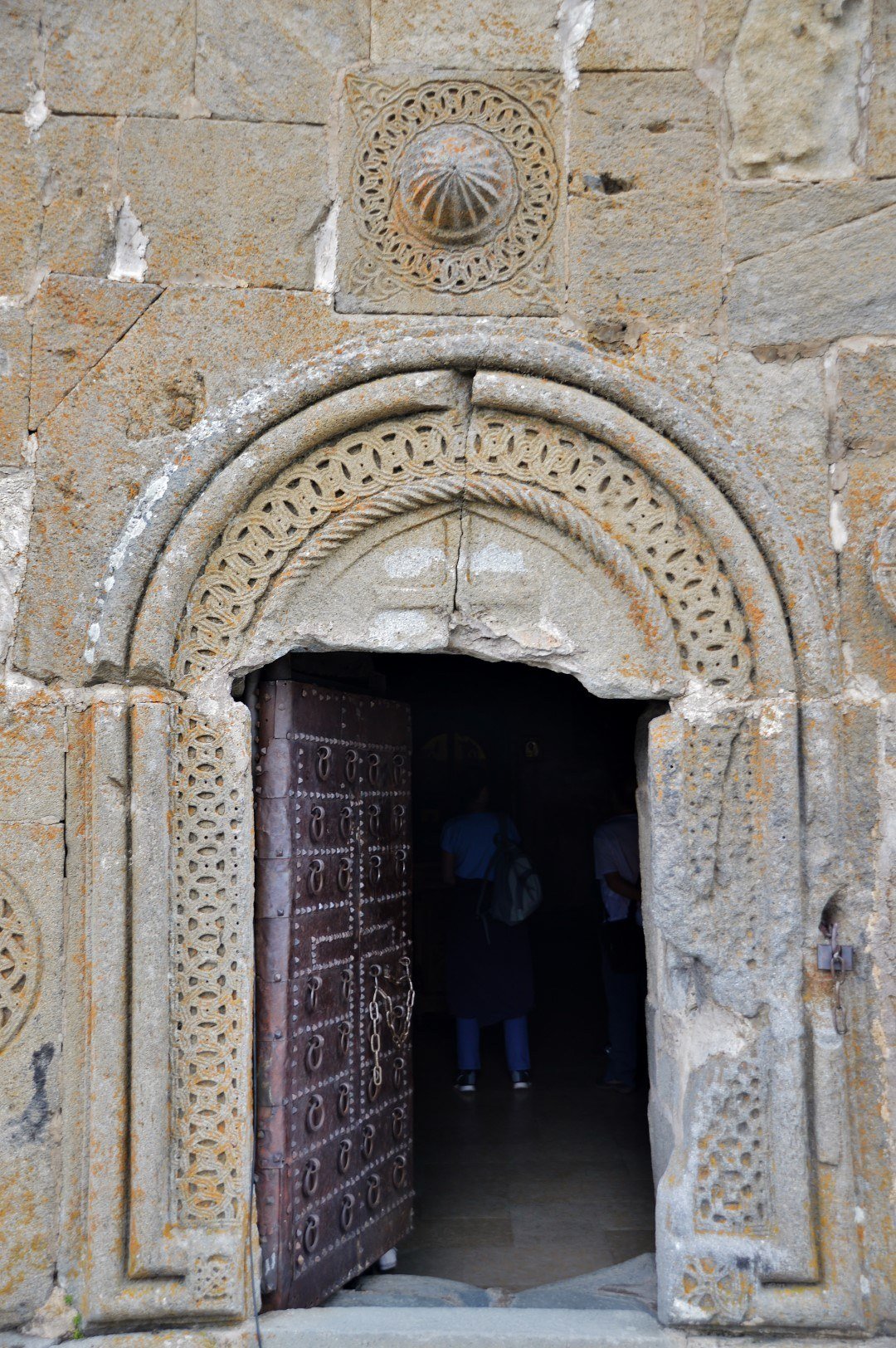
The interior of the church is small and austere: cylindrical nave, unplastered stone, candles almost always burning and sometimes a priest sitting in silence. The visit itself is brief; what lengthens the stay is standing outside on the terrace gazing at the Kazbek, with the wind in the background and the smell of damp pasture.
History
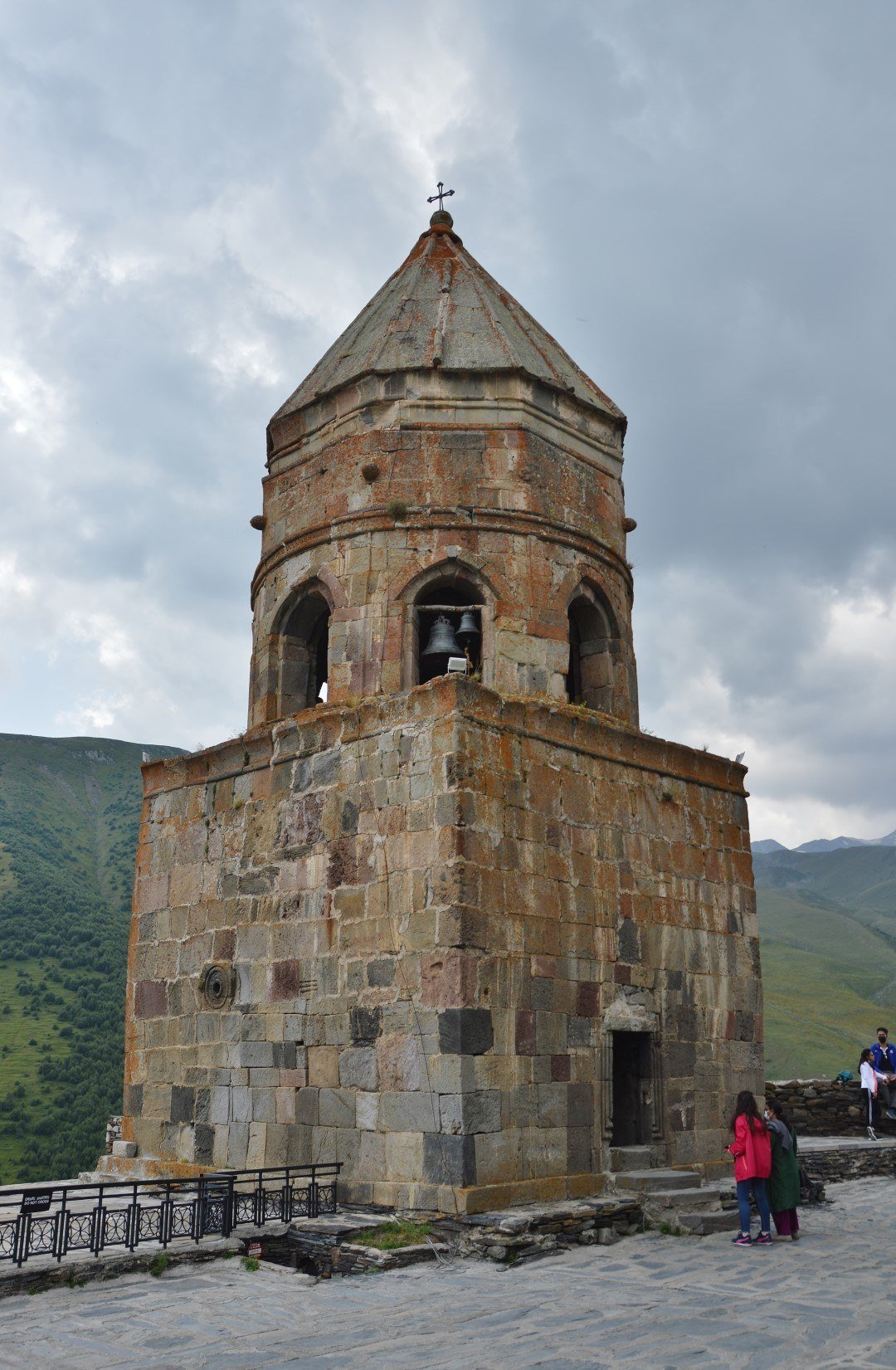
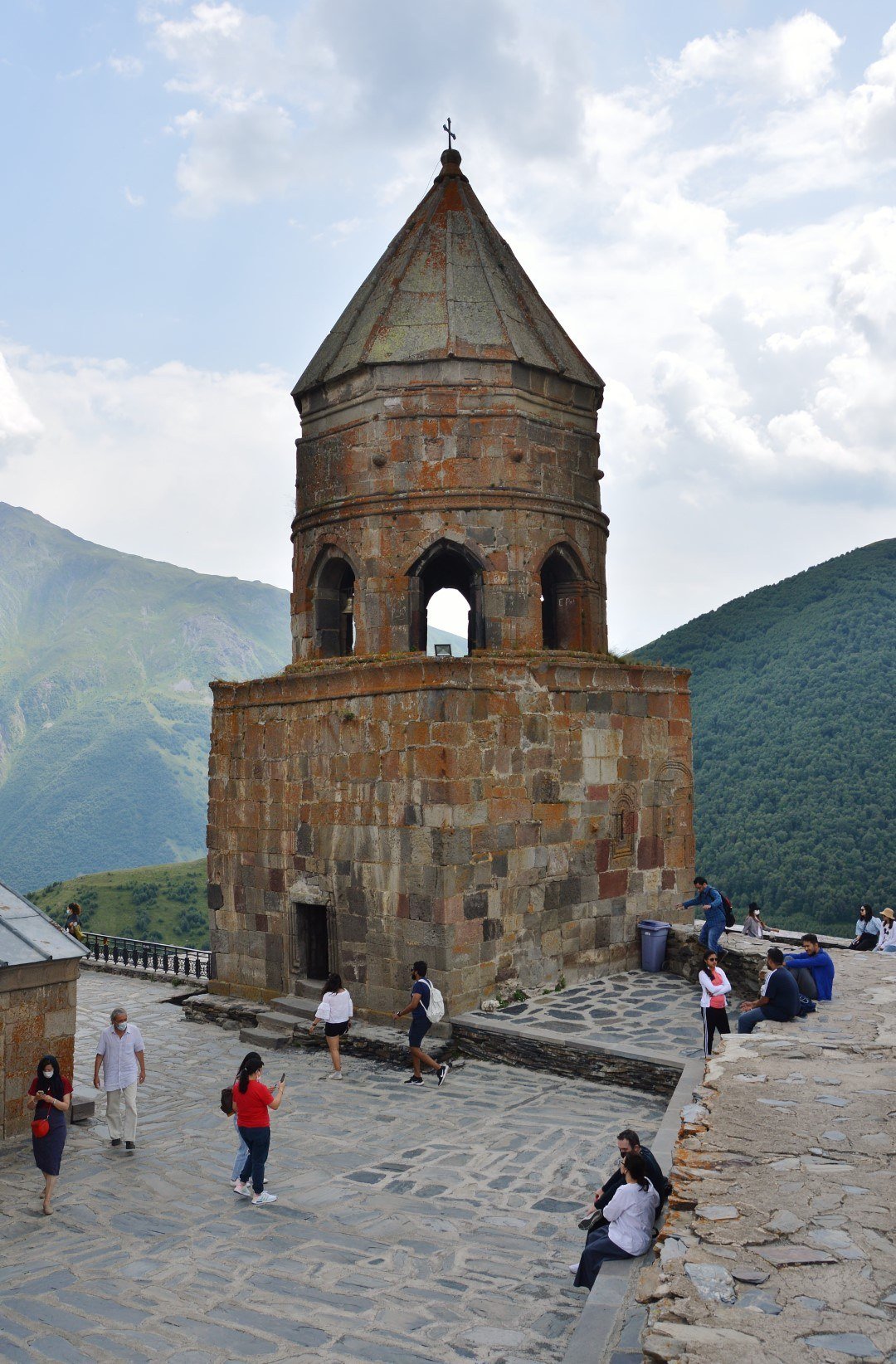
The Gergeti Holy Trinity Church was built in the 14th century, during a period of Georgian construction activity before the invasions of Tamerlane. Its position atop the promontory was not an aesthetic choice: it served as a secure refuge to safeguard the treasures and relics of Mtskheta Cathedral when invaders came from the north via the Caucasus route. The adjacent bell tower is slightly later than the main body of the church. The inaccessibility of the site in winter protected it for centuries from much of the destruction suffered by other Georgian temples. During the Soviet era it was closed for worship; liturgical use resumed after Georgia's independence in 1991.
What to see & do
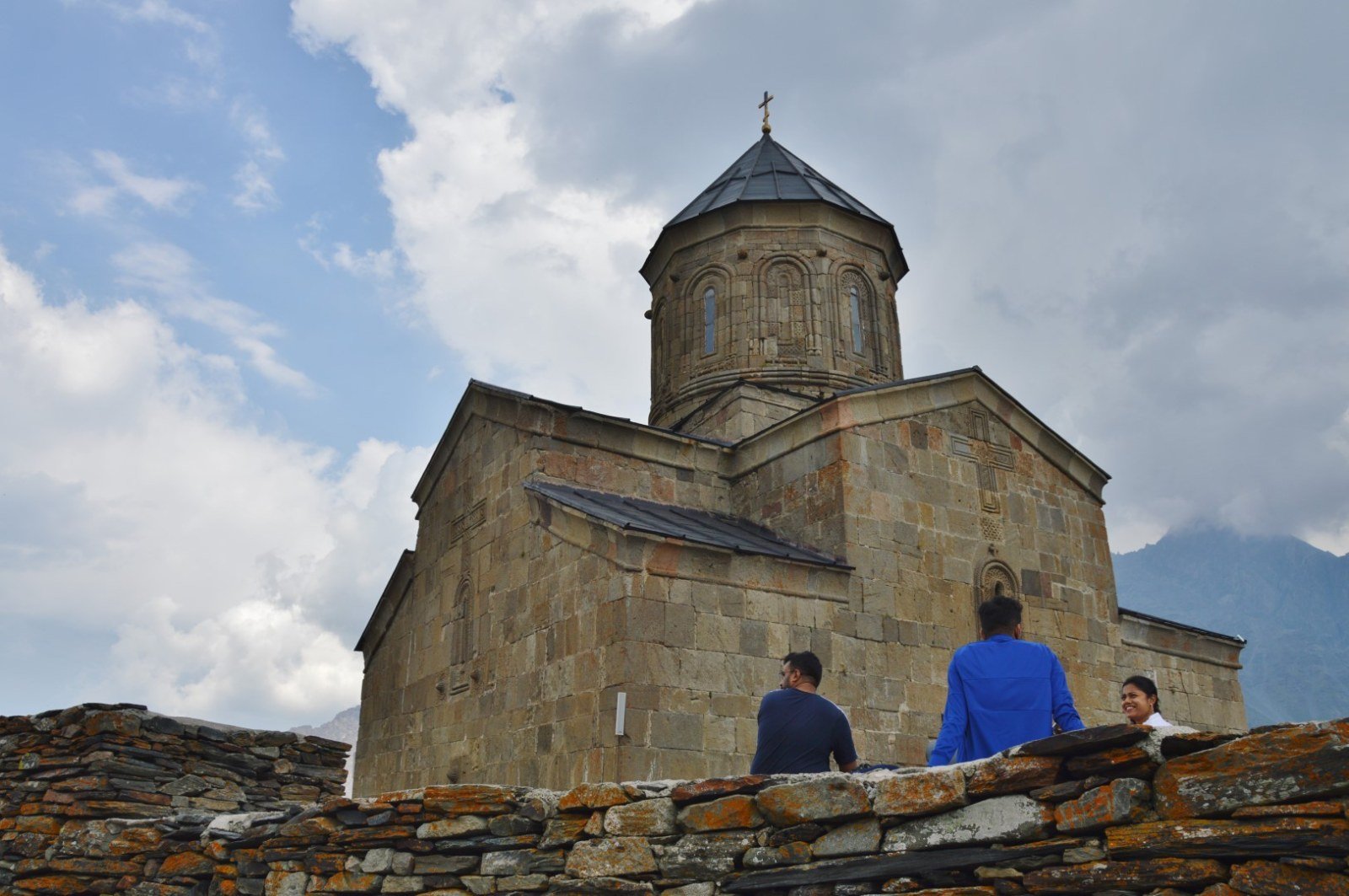
- Main nave and dome The 14th-century church retains its cylindrical nave with a drum dome and unplastered grey stone walls. The interior is austere: simple icons, candles and silence broken only by the wind outside.
- Medieval bell tower The tower adjacent to the church is slightly later than the main building. From its base you have one of the best views of the architectural ensemble against the Kazbek.
- Views of Mount Kazbek The snow-capped summit of Kazbek, an extinct volcano at 5,047 metres, dominates the northern horizon. The clearest days tend to be early morning, before slope clouds form.
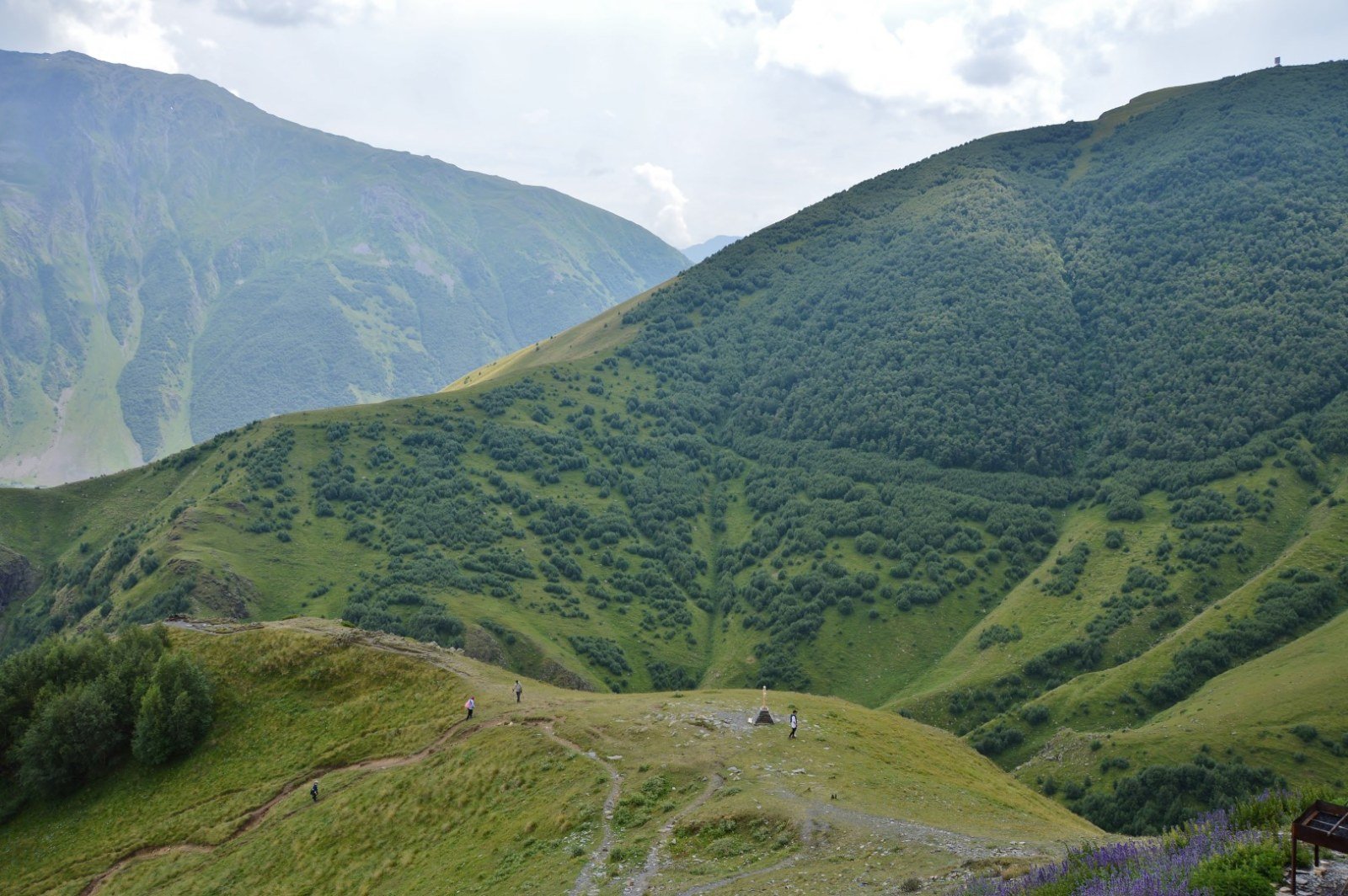
- Ascent trail from Stepantsminda The path crosses pastures with views over the Terek river valley and the village below. Around 500 metres of elevation gain; sturdy boots and warm clothing are advisable even in summer.
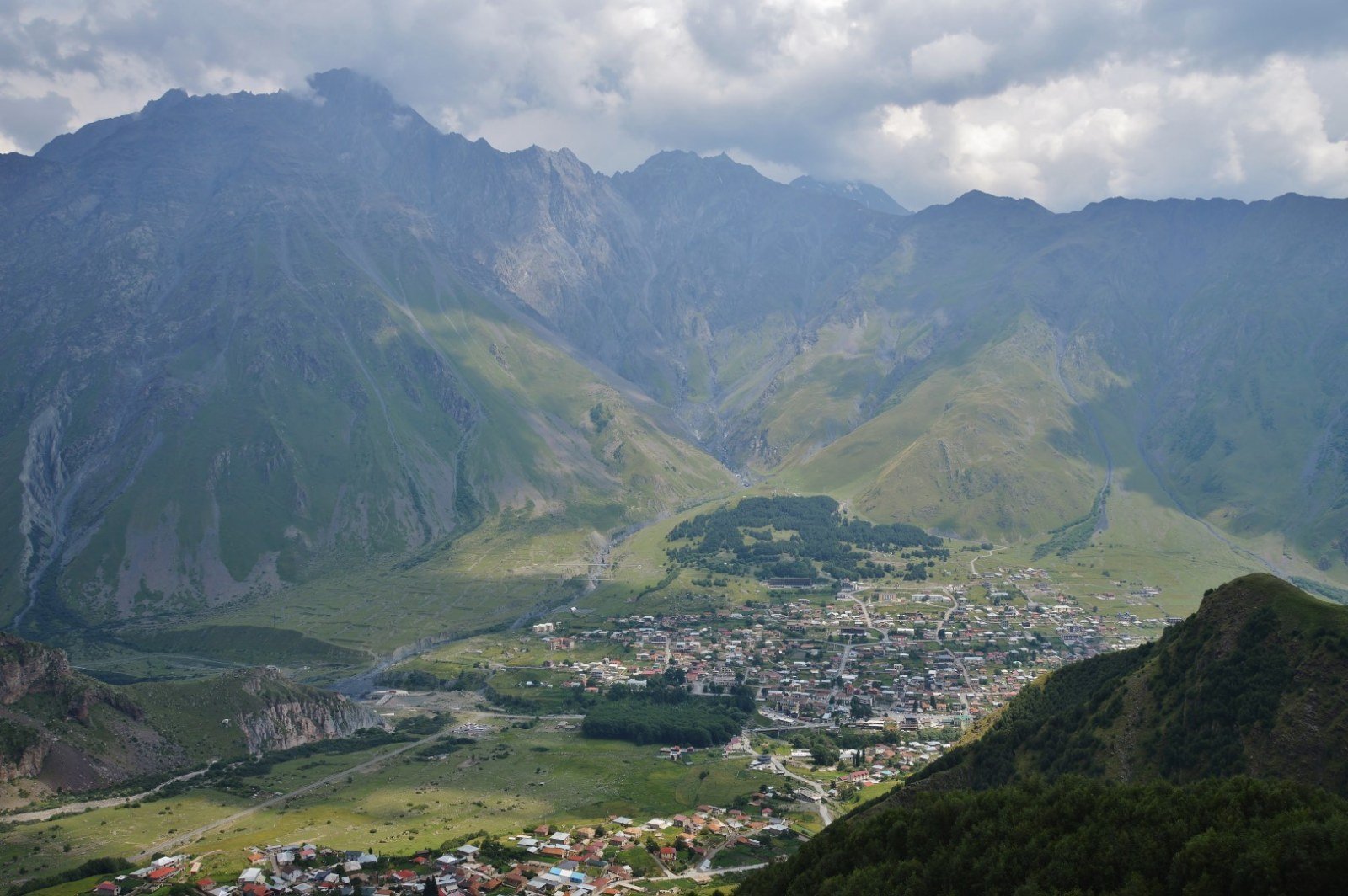
- Village of Stepantsminda At the foot of the promontory, Stepantsminda —formerly called Kazbegi— has guesthouses, restaurants serving khinkali and shashlik, and a main street that comes alive in the evening.
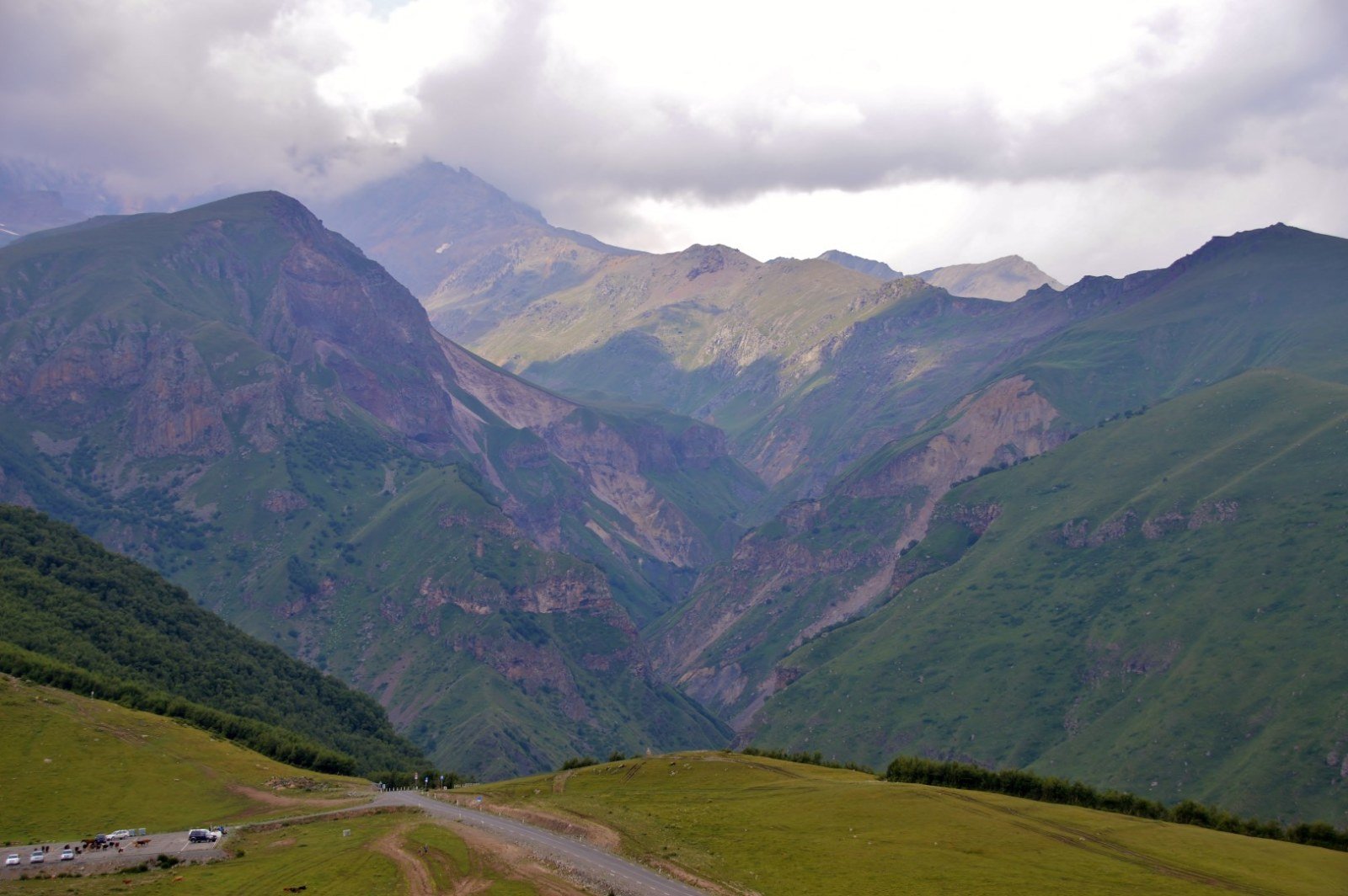
- Greater Caucasus panorama From the church terrace you can see several peaks of the Greater Caucasus besides the Kazbek. On clear days the mountain range stretches from horizon to horizon.
Photo gallery



How to get there
Stepantsminda is 157 km north of Tbilisi along the Georgian Military Highway. Daily marshrutkas depart from Didube metro station in Tbilisi (about 3 hours, approx. 15 lari); shared taxis and organised tours are also available. The route passes through Gudauri and the Friendship of Peoples Arc. In winter the road may close temporarily due to snow.
Best time to visit
From June to September the trail is passable and there is a higher chance of clear skies, though summer afternoons bring frequent storms: it is best to head up in the morning. May and October are quieter and cooler. In winter the on-foot access is frequently cut off and fog can obscure the Kazbek for several days in a row. Those seeking the church surrounded by snow usually go in December or January, accepting that the walls may be buried up to mid-height.
More information
Photo: Iberogeorgia · Todos los derechos reservados