
History Museum of Armenia
Հայաստանի պատմության թանգարան
The great archaeological museum of Yerevan, on Republic Square, with pieces from the Urartu kingdom and collections spanning from the Palaeolithic.
Location in the Caucasus
Description
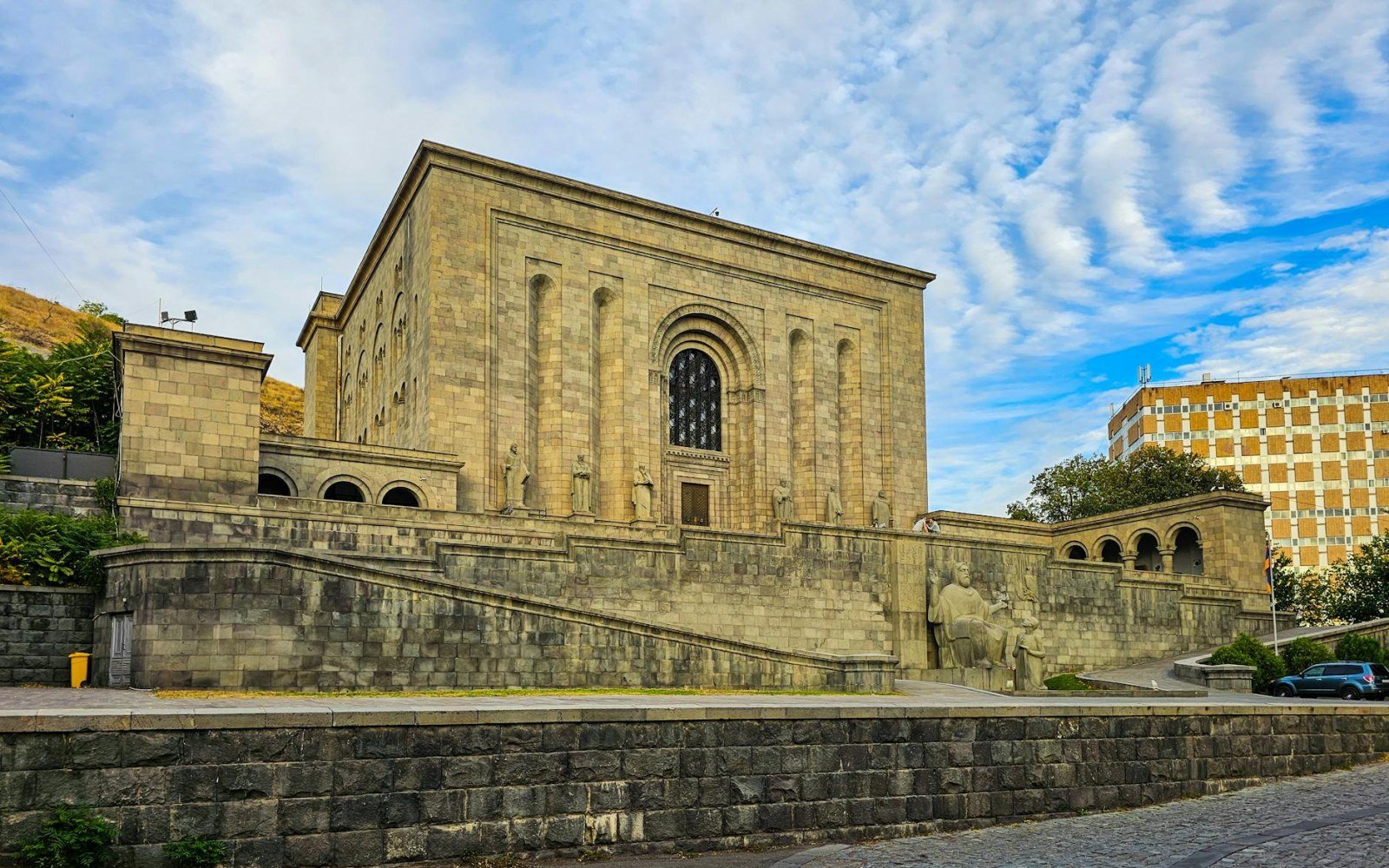
The History Museum of Armenia occupies half of the pink tuff building that closes the northern side of Republic Square in Yerevan. From outside it looks like part of the square's monumental backdrop; inside, the space is wide and quite cool even in the heat of the Armenian summer. The rooms follow a strict chronological order: it starts in the basement with flint tools from the Palaeolithic and moves floor by floor up to the 19th and 20th centuries.
The Urartian collection in the basement is the densest in artefacts: bronze vessels, shields with cuneiform inscriptions and jewellery from the kingdom that dominated this region between the 9th and 6th centuries BC. Labels are in Armenian, Russian and English, though some in the older rooms appear only in Armenian. The second floor, dedicated to ethnography, has regional costumes, carpets and a duduk in a display case worth seeking out. A full visit takes between two and three hours. Admission costs around 1,500 drams; on Sundays it is free for Armenian citizens, which increases footfall that day.
History
The museum was founded in 1921, during the early years of the Soviet Republic of Armenia, although collections had been forming for decades before. The current building on Republic Square was constructed in the 1950s to the design of architect Marc Grigoryan, in the Armenian neoclassical style that defines the centre of Yerevan. Throughout the 20th century the museum absorbed finds from excavations at Erebuni, Garni and other archaeological sites across the country, becoming the central repository of Armenia's material heritage.
What to see & do
- Urartu Collection Bronze vessels, shields with cuneiform inscriptions and jewellery from the Urartu kingdom (9th–6th centuries BC); the most visited room by researchers and one that justifies the admission on its own.
- Palaeolithic and Neolithic Hall Flint tools, arrowheads and objects from the Shengavit settlement that place human presence on the Armenian plateau more than 8,000 years ago.
- Medieval jewellery and goldsmithing Reliquary crosses, brooches and silver and gold pieces from the 11th to 17th centuries, some with inscriptions in Old Armenian.
- Ethnographic section Regional costumes, carpets, a duduk in a display case and household utensils from different historical provinces of Armenia.
- Numismatics room Coins from the Hellenistic period to the Soviet era, with complete series from the medieval and modern Armenian kingdoms.
How to get there
The museum is on Republic Square, in the centre of Yerevan. The Republic metro station (line 1) is about five minutes on foot. The building shares its facade with the National Gallery; the museum entrance is on the right-hand side. Buses running along Tigranmets Avenue stop a few metres away. From Zvartnots Airport, take a taxi or bus 108 to the centre.
Best time to visit
The museum opens Tuesday to Sunday, from 11:00 to 18:00 (until 17:00 in winter). Spring and autumn are the quietest times to visit. In summer the square fills with tourists and the dancing fountain evenings liven up the surroundings. In winter there are fewer visitors and the rooms can be explored without crowds; the interior is well heated.
More information
Photo: Doctor Unface · Pexels License