
Goris
Գորիս
Small city in southern Armenia wedged among volcanic rock spires, base for Tatev Monastery and the cave dwellings of Syunik.
Location in the Caucasus
Description
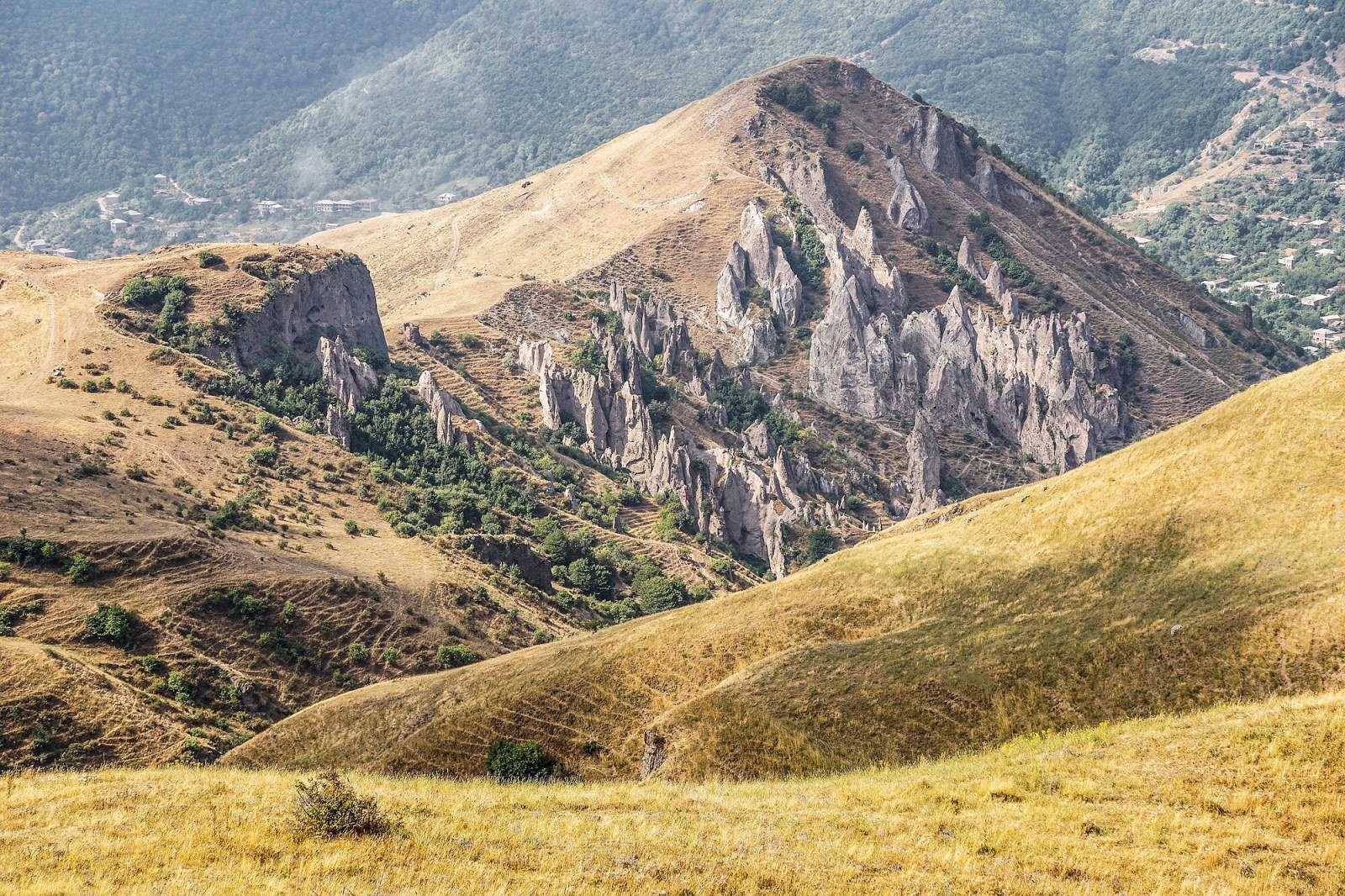
Goris is a small city nestled in a narrow valley of the Syunik region, in the far south of Armenia, at 1,375 metres above sea level. The first thing that catches your eye on arrival are the volcanic rock formations surrounding the town: spires and columns of grey stone rising from the hillsides as if someone had driven them in from above. Centuries ago those very formations housed dwellings carved out of the rock. Some are still visible in the ravines east of the centre, in the district known as Old Goris.
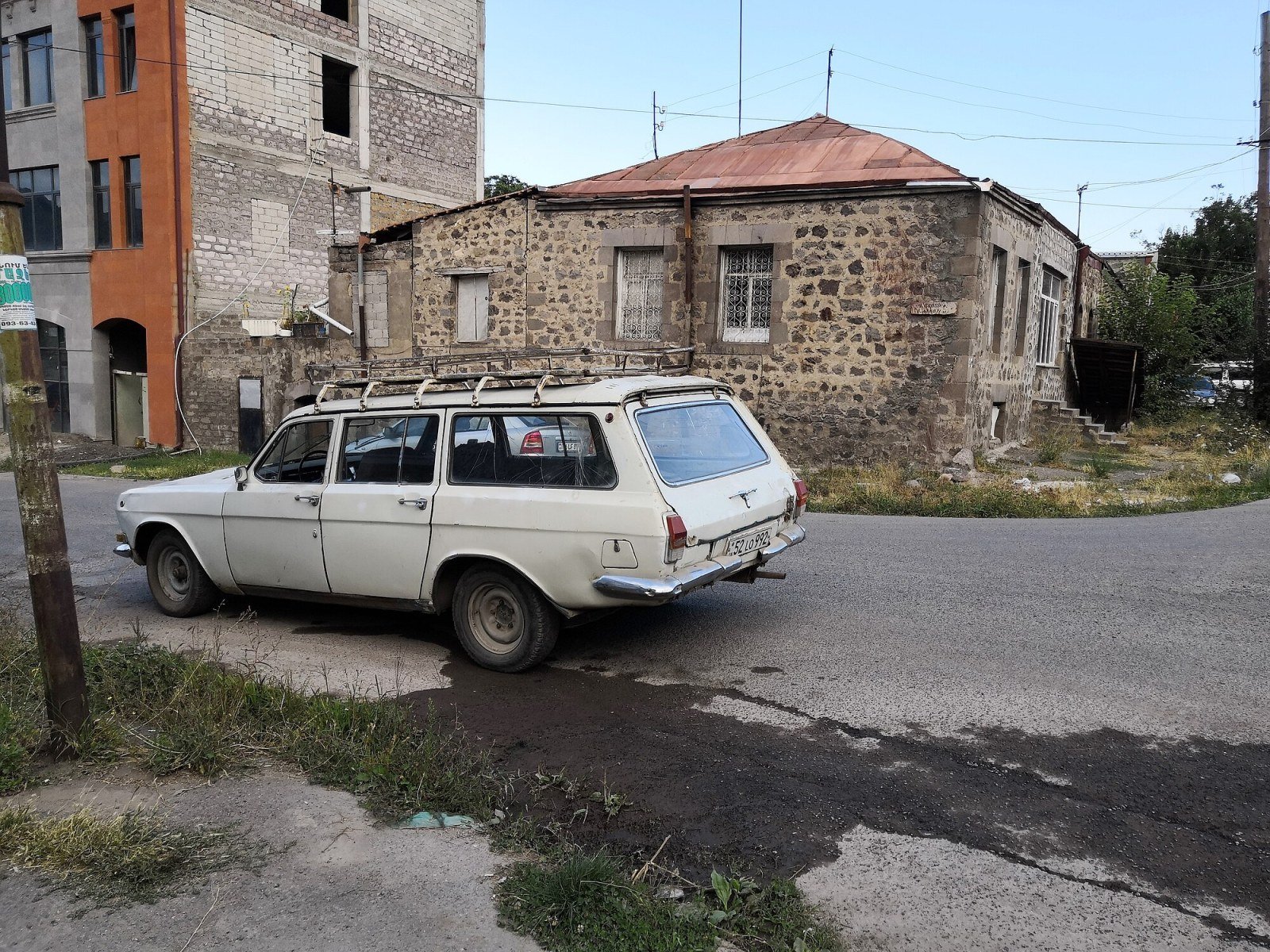
The historic centre has a comfortable scale. The nineteenth-century houses, built with carved local stone and dark wooden verandas, line quiet streets where traffic barely exists. Mashtots Street, the main pedestrian artery, has a few pavement cafés, a small bookshop and shops selling Syunik honey, wild-fruit preserves and freshly made lavash. At dusk the locals take over the benches of the main square in front of the black basalt church, and the unhurried rhythm of the place makes itself felt effortlessly.
Goris is the natural departure point for Tatev Monastery and the Wings of Tatev cable car — at 5,752 metres one of the longest in the world — as well as for exploring the Vorotan Canyon and the prehistoric site of Karahunj. Local guesthouses generally help arrange excursions if contacted in advance. The town is not a transit stop: it deserves at least two nights.
History
The Syunik region has been inhabited since prehistoric times, and the surroundings of Goris preserve evidence of medieval cave occupation. The dwellings carved into the ravines east of the city, in the Old Goris area, served as shelter and housing until the nineteenth century and in some cases until the early twentieth century. The city as such developed mainly under Russian administration from the nineteenth century onwards, when the streets of the centre were laid out using the characteristic local stone. Goris was also a waypoint on the trade routes between Persia and the Caucasus, a role that diminished as modern roads redirected traffic. Tatev Monastery, founded in the ninth century in the nearby canyon, was for centuries a spiritual and intellectual centre of Armenia.
What to see & do
- Old Goris cave dwellings Dwellings carved into the volcanic rock in the ravines east of the centre. Explored on foot along a not entirely signposted trail; good-grip footwear is advisable. Some caves are open and can be entered. Free admission.
- Tatev Monastery About 30 km from Goris, one of the most important medieval monasteries in Armenia. Reachable by negotiated taxi from the city or via the Wings of Tatev cable car (5,752 metres long). The combination of the aerial ride over the Vorotan Canyon with the monastery visit comfortably fills half a day.
- Karahunj A Bronze Age site with perforated sandstone standing stones, about 8 km from Goris. Interpreted as a possible ancient astronomical observatory, though archaeologists still debate its exact function. The open, windswept setting gives a different perspective on the Syunik landscape.
- Vorotan Canyon The Vorotan river runs between walls of columnar basalt. Trails offer views down to Tatev Monastery from above, with the cable car crossing the void over the canyon.
- Goris historic centre Streets lined with nineteenth-century carved stone houses on a human scale, easy to explore without a map. The main square with its black basalt church is the gathering point at the end of the day.
Photo gallery
How to get there
Goris is 250 km south of Yerevan via the M2 motorway. Daily marshrutkas run from the Kilikia bus station in Yerevan, taking approximately 3.5 to 4 hours. There is also a connection with Kapan, further south. The nearest airport is Yerevan airport. From Goris, taxis leave for Tatev and Karahunj; the fare is negotiated directly with the driver before departure.
Best time to visit
Spring — especially May and June — brings lush green vegetation to the Syunik canyons and pleasant temperatures. Summer can reach 30°C during the day, but nights are cool at this altitude. Autumn colours the forested hillsides around Goris. In winter there may be snow and the Wings of Tatev cable car occasionally closes in strong winds, though the road to Tatev Monastery is usually passable.
More information
Photo: Palickap · CC BY-SA 4.0