
Bjni Fortress
Բջնիի ամրոց
Medieval black basalt ruins above the <strong>Hrazdan river</strong> gorge, 35 km from <strong>Yerevan</strong>, with no ticket booth or organised tourism.
Location in the Caucasus
Description
Bjni Fortress does not appear in many guidebooks, and that is evident when you arrive: no ticket office, no signage, no official car park. In the village of Bjni you have to ask around or follow the dirt tracks that climb between orchards and plots until the terrain becomes steep. The final trail scrambles up a limestone slope with the Hrazdan river gorge below, and the fortress appears on a promontory that dominates the valley with authority. Access is free and unrestricted.
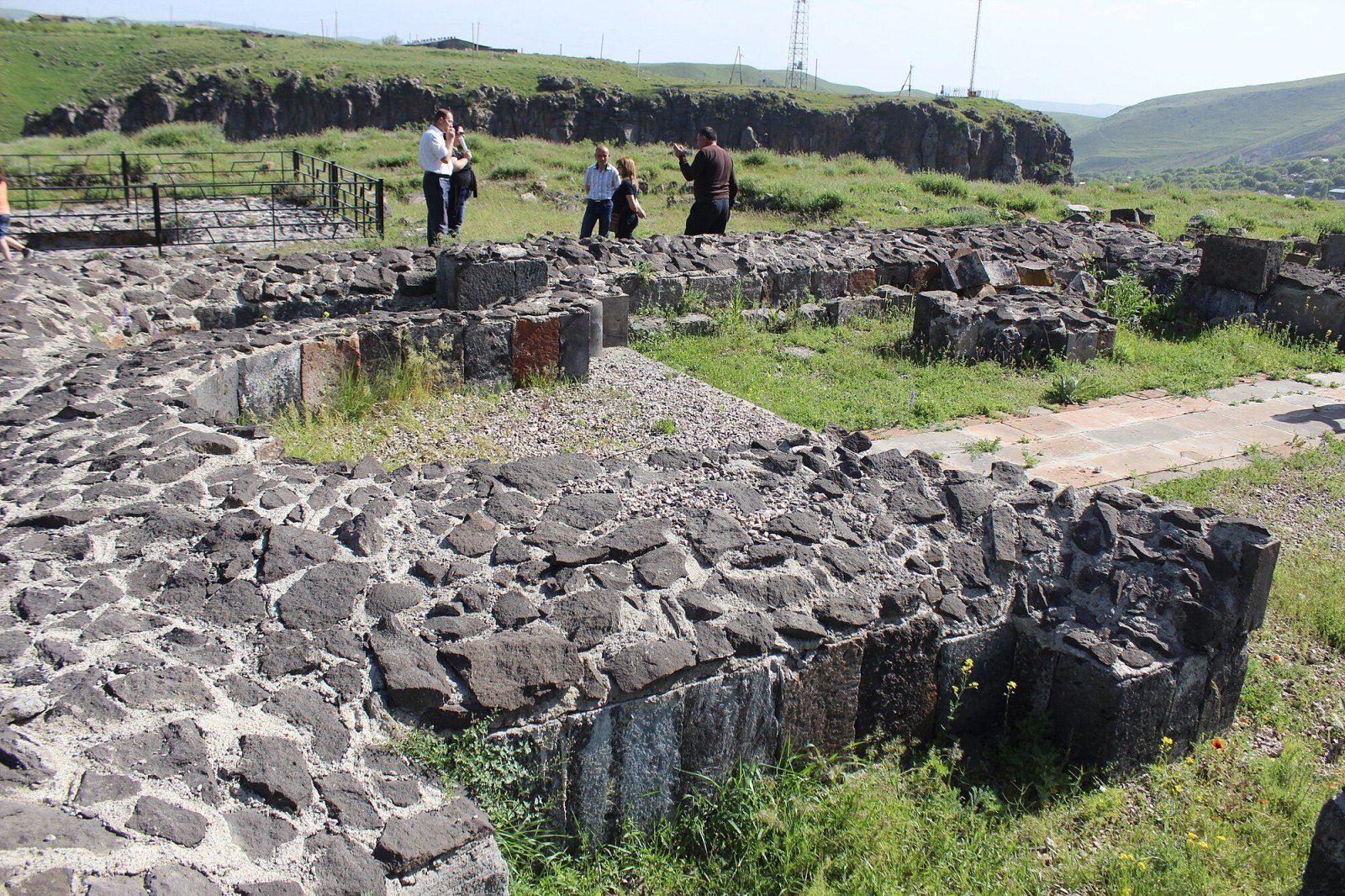
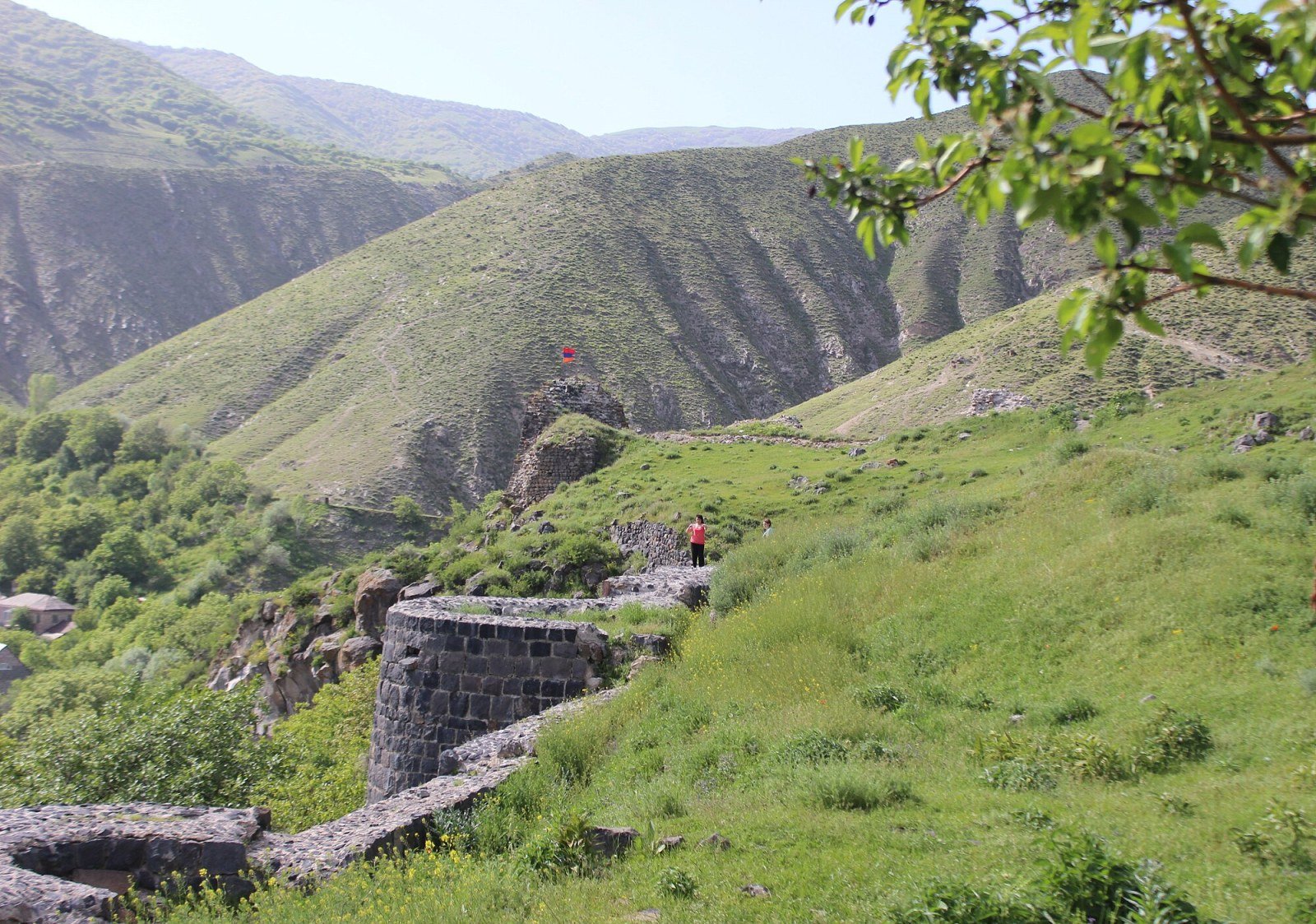
What remains are walls of black basalt stone in varying states of preservation: some sections are nearly intact, others have disappeared or merge with the landscape. The ground inside the enclosure is covered in tall grass in spring, dry and dusty in summer. There are no explanatory signs, so it is worth reading about Bjni Fortress before climbing up in order to make sense of what you are seeing.
The main appeal is the combination of landscape and ruin: the Hrazdan gorge in the background, the cultivated fields below and near-total silence. On clear days the snowy peaks of the Caucasus are visible to the north. It is not a destination for those who prefer well-organised sites, but for anyone who enjoys ruins without tourism, Bjni Fortress has its own weight, less than an hour from Yerevan.
History
Bjni Fortress dates from the Armenian medieval period, when the Pahlavuni family controlled the Kotayk region. It was a significant defensive point during the 10th and 11th centuries and served as the seat of local lords before the Seljuk invasions. Its position above the Hrazdan river gorge gave it a natural advantage: the vertical drops protected much of the perimeter without the need for walls. It later passed through the hands of several lordships and gradually fell into disuse. It has never undergone systematic restoration, which explains both its current state and the authenticity of the visit.
What to see & do
- North towers and walls The best-preserved section of Bjni Fortress, with dark basalt ashlar blocks and some recognisable merlons visible from the access path. The black stone contrasts with the blue sky on clear days.
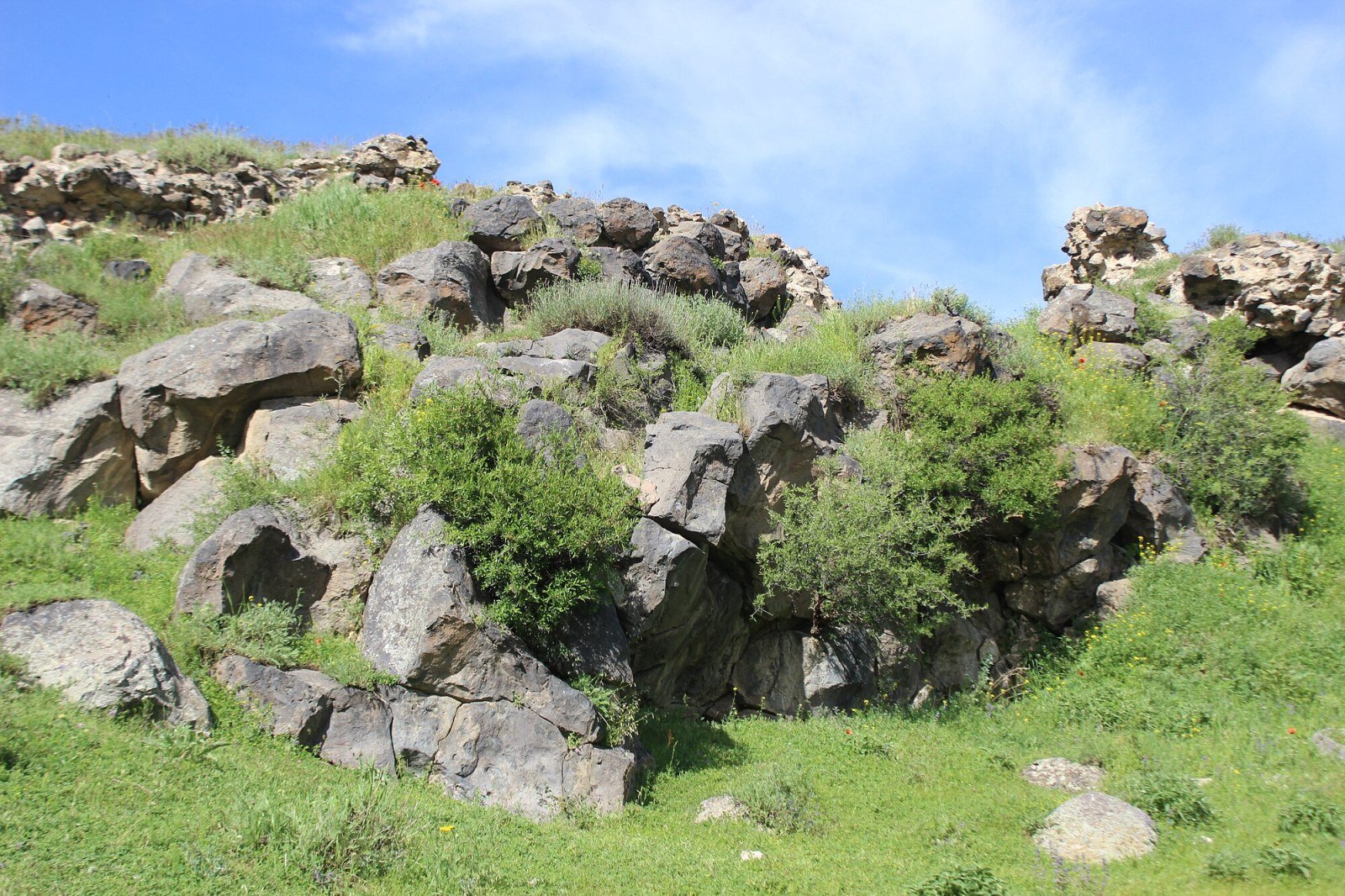
- Main promontory The highest point of the enclosure offers direct views of the Hrazdan gorge and the valley's vineyards; in spring there is green grass and poppies among the stones.
- Ruined chapel Inside the enclosure are the remains of a small medieval chapel, with the apse still identifiable though lacking a roof or covering.
- Path down to the river A steep path descends to the floor of the Hrazdan gorge; it requires sturdy footwear and is not suitable for everyone.
- Geghard Monastery About 20 km away, Geghard Monastery — a UNESCO World Heritage Site — combines well on the same day trip from Yerevan.
Photo gallery
How to get there
Bjni Fortress is about 35 km north of Yerevan along the M4 road towards Lake Sevan. There is no direct public transport; the most practical option is to hire a car or arrange a taxi from Yerevan (approximately 25–30 USD return with waiting time). It combines well on the same route with Geghard Monastery or Lake Sevan, both in the same general direction. From the village to the fortress it is a 30–45 minute walk on an unmarked trail.
Best time to visit
The best time is from April to June, when the landscape is green and temperatures in the Hrazdan gorge are mild, between 15 and 22 degrees. In July and August the dry heat makes the climb harder and the ground is parched. September and October are also good: less heat and autumn light on the black stones of Bjni Fortress. In winter there may be snow and the trail becomes slippery; a visit between December and February is not recommended without appropriate equipment.
More information
Photo: Beko · CC BY-SA 3.0