
Yerevan
Երևան
Armenia's capital in pink volcanic tuff, with Ararat in the background and urban life revolving around Republic Square.
Location in the Caucasus
Description
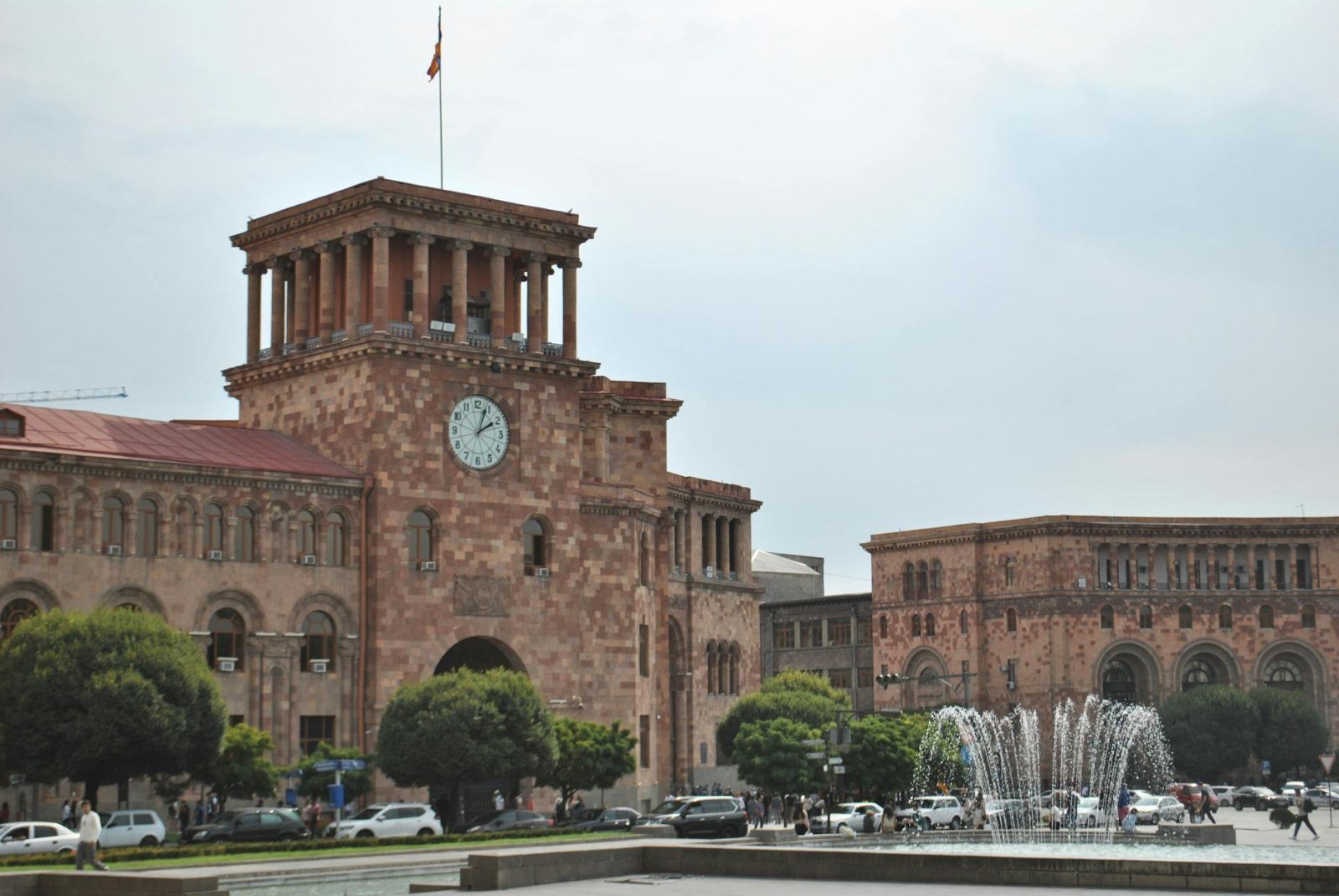
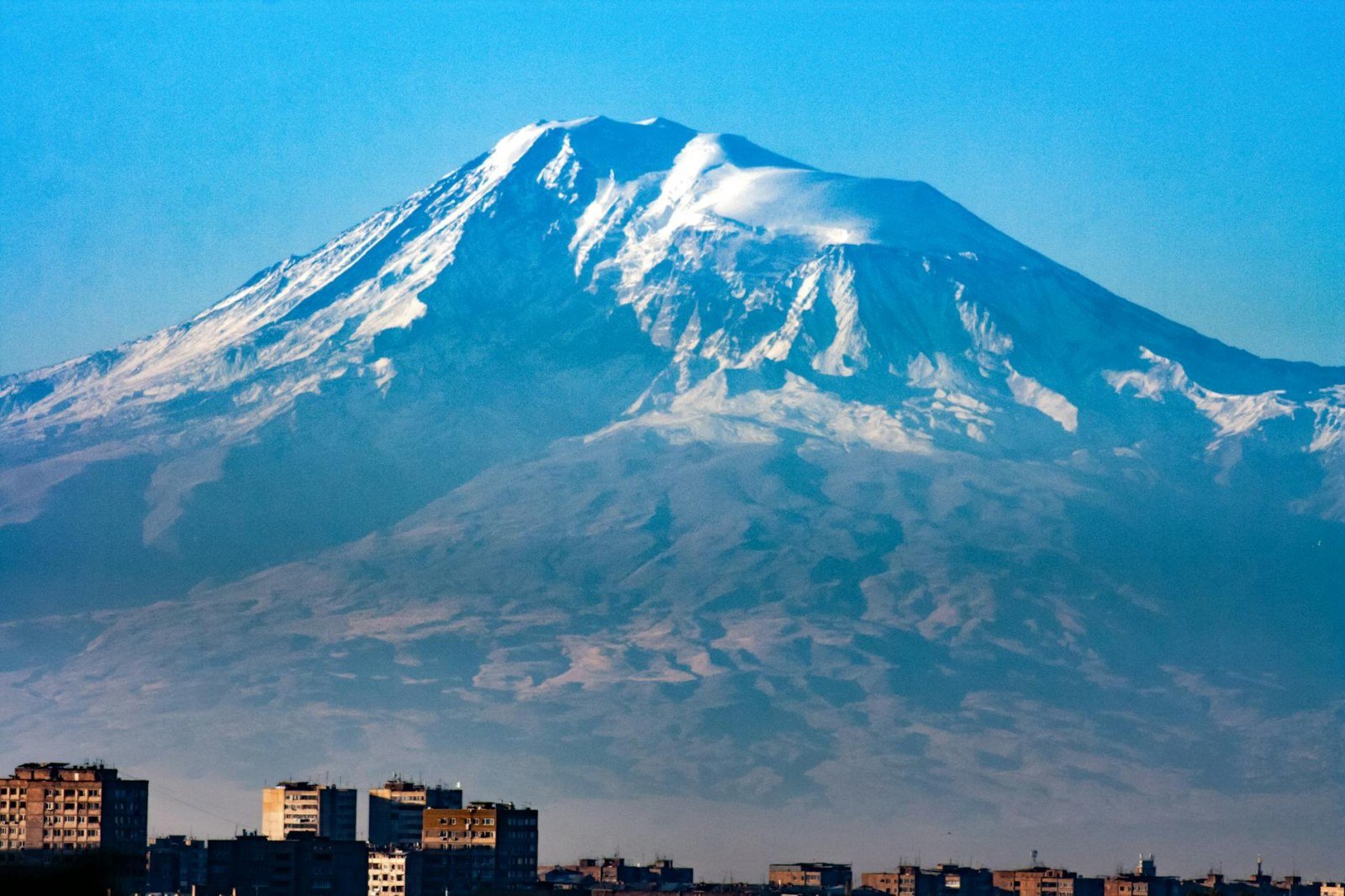
Yerevan has a color you don't see in many cities: the orange-pink of the volcanic tuff used to build its most iconic buildings. At midday, when the sun shines directly onto Mashtots Avenue or Republic Square, the stone glows in an almost unreal way. In the background, when the sky is clear — which in summer happens less often than you'd expect — Ararat appears enormous and snow-capped, belonging to another country even though it feels just around the corner.
The city is compact for a capital: the historic center fits into a two-hour walk, and the neighborhoods of Kentron and Arabkir concentrate most of the social life. Abovyan Street has cafés open until the early hours; at the Vernissage market on Sundays, carpet vendors, second-hand khachkars, Soviet coins and tourists with phones in hand all coexist. Rush-hour traffic is heavy and drivers have their own unwritten rules at intersections.
The food scene surprises with its variety: khorovats — Armenian barbecue — smells of charcoal from the terrace restaurants of Northern Avenue, and Armenian brandy appears on almost every menu. Prices are noticeably lower than in Tbilisi.
History
Yerevan is among the oldest continuously inhabited cities in the world: the fortress of Erebuni, from which the current name derives, was founded around the 8th century BC by the kingdom of Urartu. Over the centuries it served as the seat of various Armenian kingdoms and passed through Persian, Ottoman and Russian rule at different times. The modern city owes its layout to architect Alexander Tamanyan, who in the 1920s designed the radial plan, the grand boulevards and the preference for pink tuff as the primary building material.
What to see & do
- Republic Square The civic center surrounded by the government building, the National History Museum and the dancing fountains that switch on at nightfall. This is where Tamanyan's architecture is best appreciated.
- Cascade Complex Monumental stairway climbing the northern slope of the center. From the top there are views over the city's rooftops and, if the sky cooperates, Ararat. The interior galleries host contemporary art.
- Vernissage Market Open Fridays, Saturdays and Sundays next to City Park. Carpets, antiques, obsidian and local crafts in a chaotic, lively space.
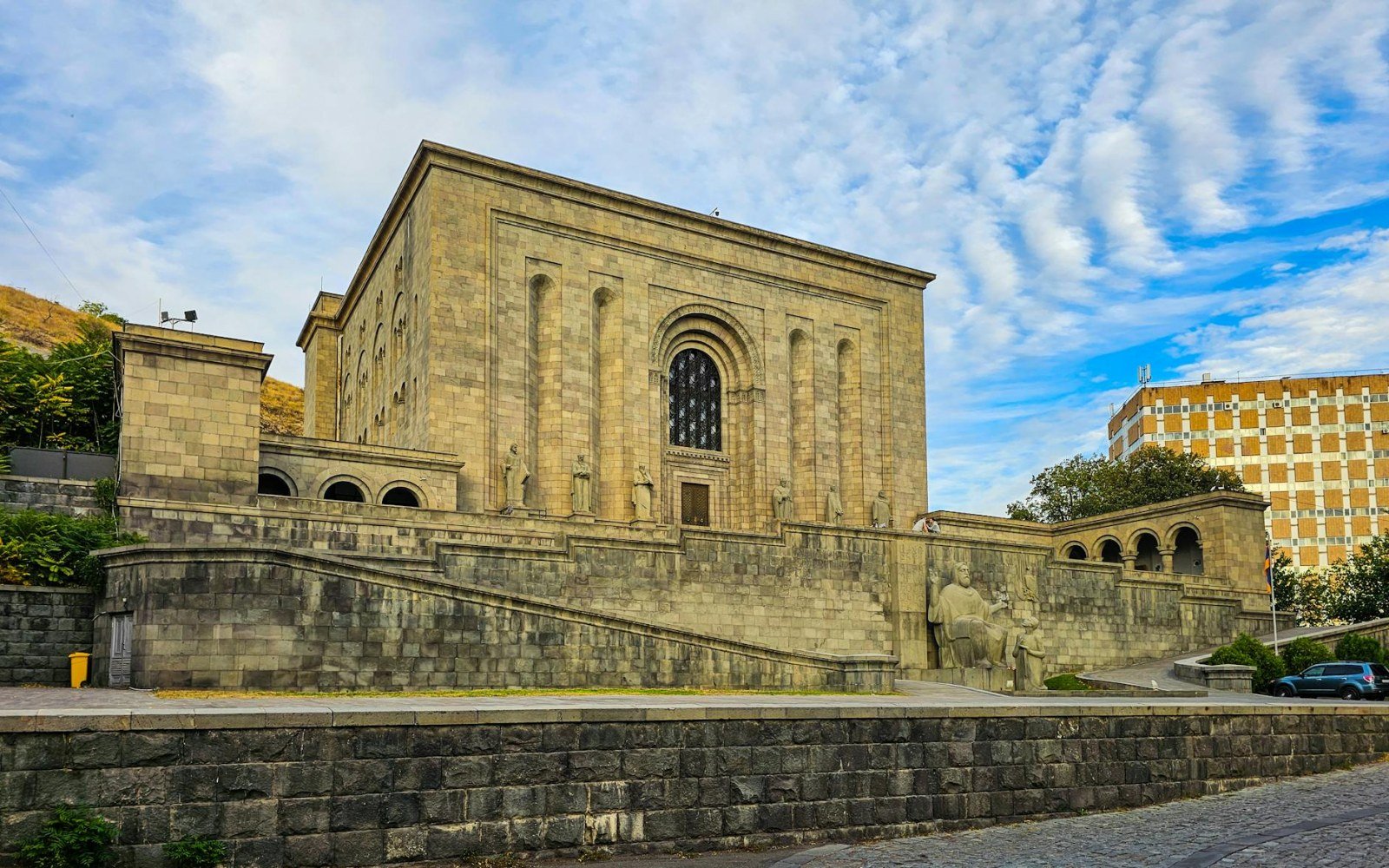
- Matenadaran Institute-museum of illuminated Armenian manuscripts with one of the world's largest collections of its kind; the oldest date from the 5th century.
- Erebuni Fortress Remains of the 8th-century BC Urartian citadel in the south of the city. The small adjacent museum displays finds from the site.
How to get there
Zvartnots International Airport is 12 km west of the center. A taxi to the center costs between 3,000 and 4,000 drams; there is no metro to the airport. From Kilikia bus station (east) and the northern terminal, marshrutkas and shared taxis depart frequently to Dilijan, Vanadzor, Gyumri and Goris, among other cities in the country.
Best time to visit
April and May are the best months: temperatures between 15 and 25 degrees, gardens in bloom and Ararat still clearly visible before the summer haze. June and September also work well. July and August are dry and hot, with highs of 35–38 degrees; midday on the street becomes oppressive. In January it occasionally snows and temperatures can drop several degrees below zero, though urban life does not come to a halt.
More information
Photo: Van Mailian · Pexels License