
Echmiadzin
Վաղարշապատ
Spiritual seat of the Armenian Apostolic Church, with the oldest continuously used Christian cathedral in the world and three 7th-century churches listed as UNESCO World Heritage.
Location in the Caucasus
Description
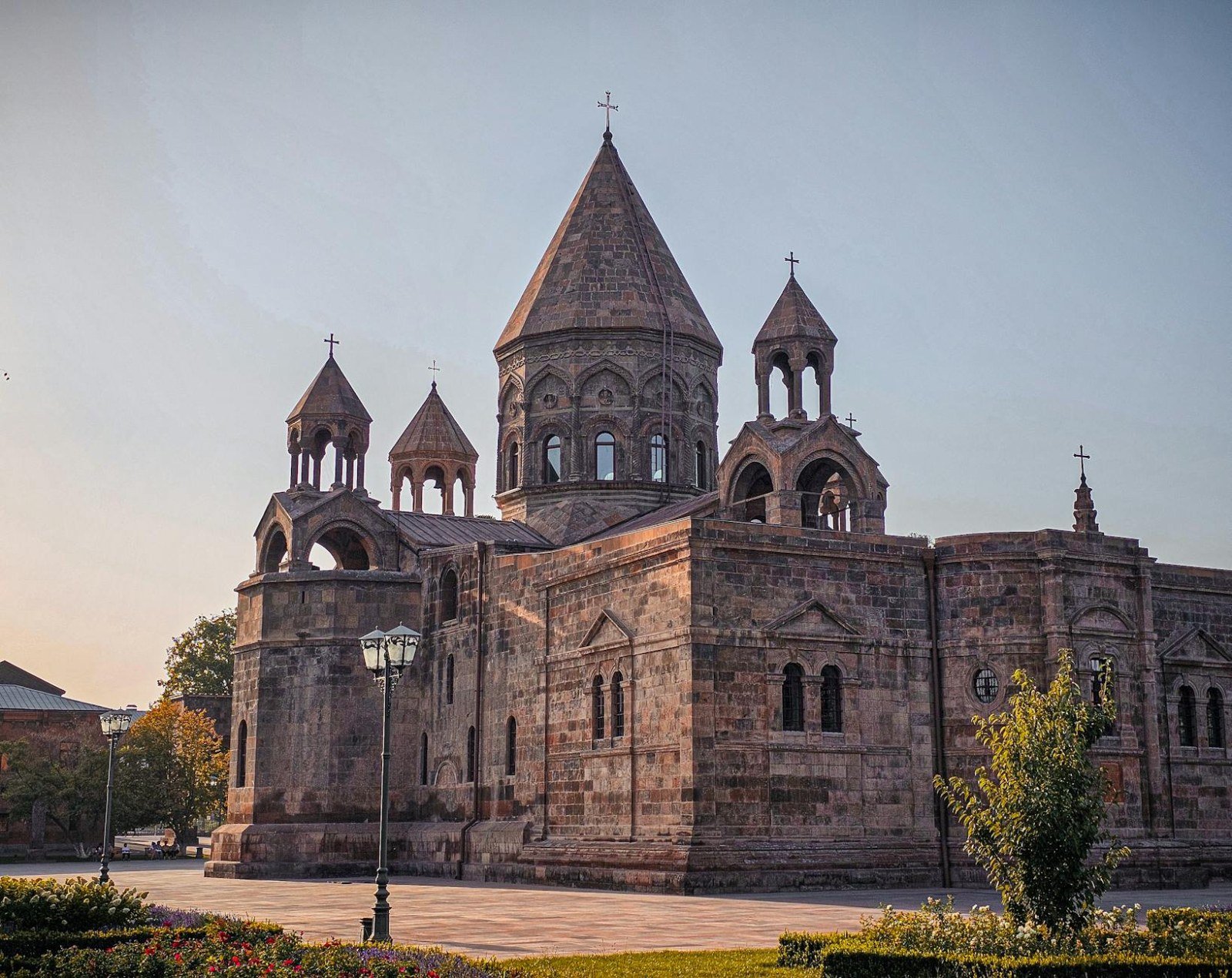
Echmiadzin smells of incense long before you reach the cathedral. The city, about 20 km west of Yerevan, revolves around the religious complex that has been the spiritual center of the Armenian Apostolic Church since the 4th century. The main cathedral, with its characteristic conical dome, stands at the end of an avenue flanked by trees and Soviet-era buildings that don't quite fit with the sacred complex, but don't clash too much either.
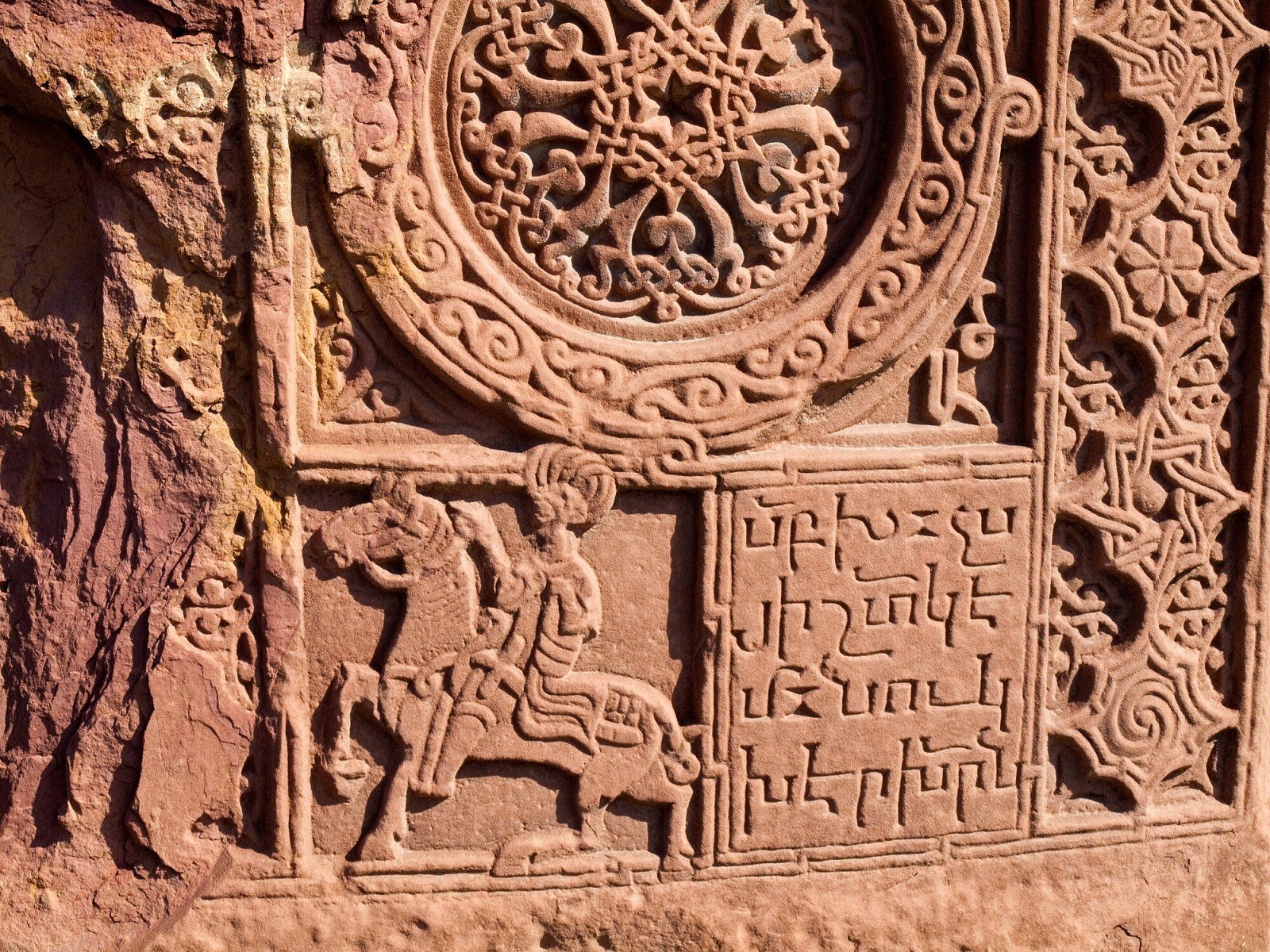
The complex includes the cathedral, several smaller chapels, the Catholicos's palace, and a museum of religious art with carved khachkars, illuminated manuscripts, and relics. Museum entry is paid; the cathedral and gardens are free. On Sunday mornings the mass draws worshippers from across the region and the sound of chanting in classical Armenian fills the space in a way that no tourist visit replicates.
A few kilometers from the center are the churches of Hripsime, Gayane, and Shoghakat, all three from the 7th century and also on the UNESCO list, much smaller but with architecture worth stopping for.
History
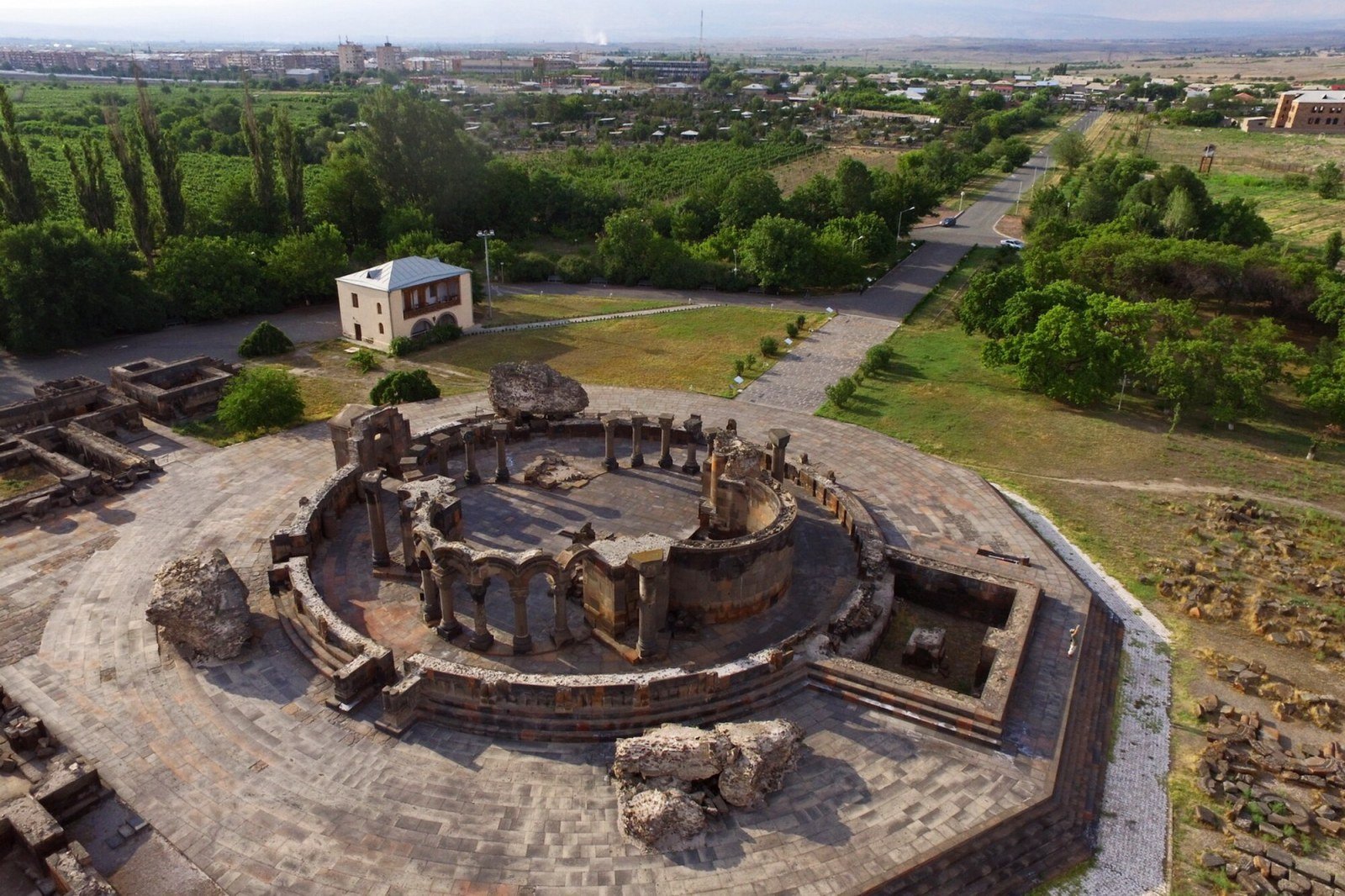
According to Armenian tradition, King Tiridates III was baptized by Gregory the Illuminator in 301 AD and ordered the construction of the first cathedral on the spot where Gregory had a vision of Christ descending from heaven: hence the name Echmiadzin, which in ancient Armenian means "the Only Begotten descended." That first structure, repeatedly rebuilt over the centuries, forms the foundation of the current cathedral. The complex was declared a UNESCO World Heritage Site in 2000 together with the 7th-century churches and the Zvartnots archaeological site.
What to see & do
- Echmiadzin Cathedral The central building of the complex, in continuous transformation since the 4th century; the conical dome and bas-reliefs on the main façade are the most photographed elements.
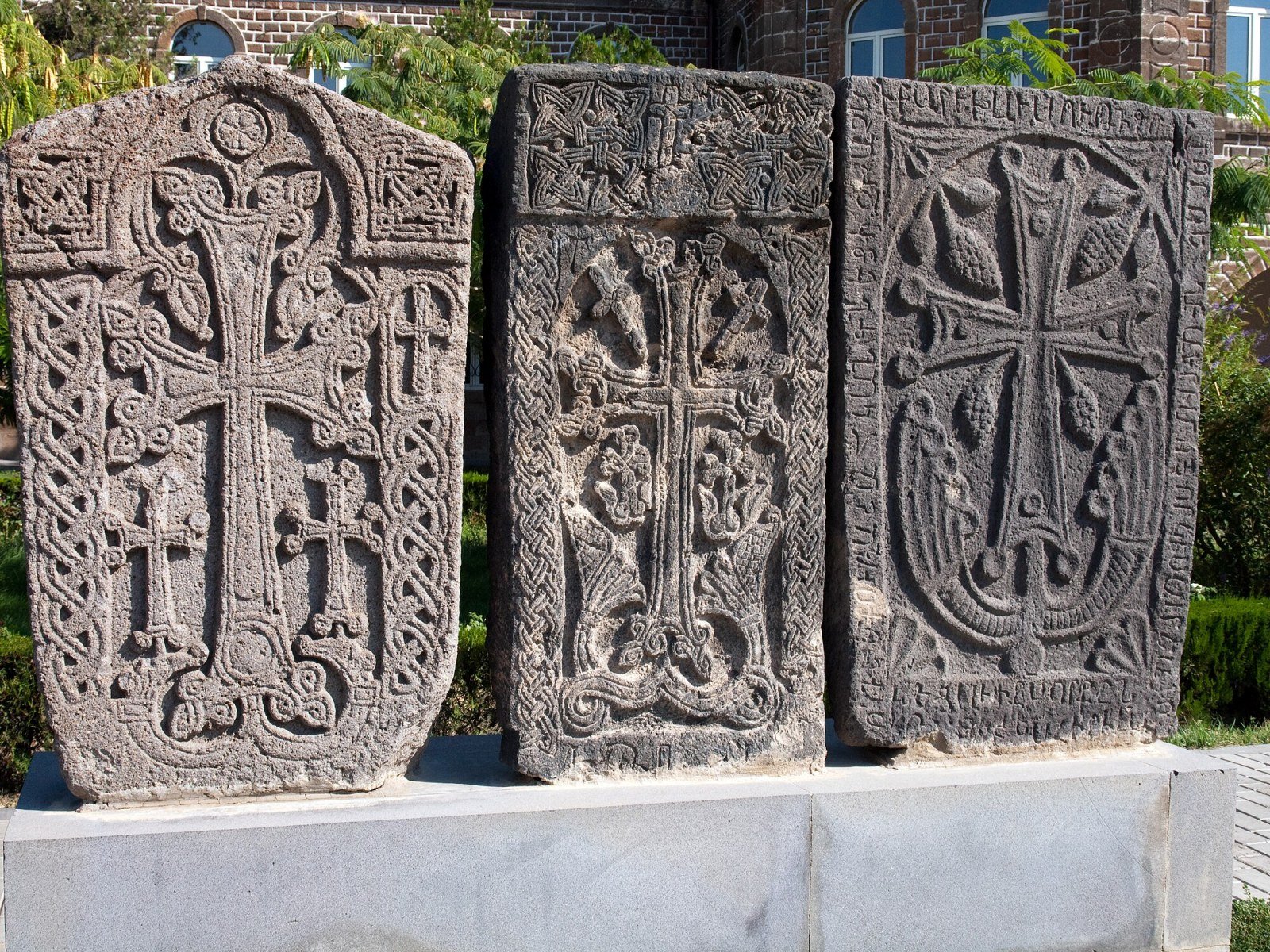
- Treasury Museum Collection of medieval khachkars, illuminated manuscripts, liturgical vestments, and the spear which, according to tradition, pierced Christ's side during the crucifixion.
- Hripsime Church 1 km from the center; built in 618 over the tomb of the martyr Hripsime, it is a representative example of medieval Armenian architecture with cylindrical drum and conical dome.
- Gayane Church Smaller and less visited than Hripsime, built in 630 and well preserved; the interior has a sobriety that contrasts with the main cathedral.
- Complex gardens The tree-lined space around the cathedral, with the Catholicos's palace in the background; a habitual walking spot for local families on Sundays.
How to get there
Echmiadzin is about 20 km west of Yerevan. The most practical option from the capital is the marshrutka from Kilikia station or in front of the GUM market; the journey takes about 30-40 minutes. By taxi the trip costs around 2,000-2,500 drams. With your own car, the M5 road connects directly. Zvartnots international airport is just a few kilometers away, making it easy to include Echmiadzin on the way into or out of the country.
Best time to visit
Echmiadzin can be visited year-round, but the most interesting dates coincide with major Armenian religious festivals: Orthodox Christmas (January 6), Vardavar (July), and the Transfiguration. In summer the heat can be intense, with temperatures exceeding 35 degrees in July. Spring and autumn are more comfortable for walking around the complex. In winter there is occasional snow but the complex remains open.
More information
Photo: Shaun Dunphy from Lindfield, United Kingdom · CC BY-SA 2.0