
Echmiadzin Cathedral
Էջմիածնի Մայր Տաճար
Seat of the Armenian Apostolic Church and UNESCO World Heritage site in Vagharshapat, considered the oldest functioning Christian cathedral.
Location in the Caucasus
Description
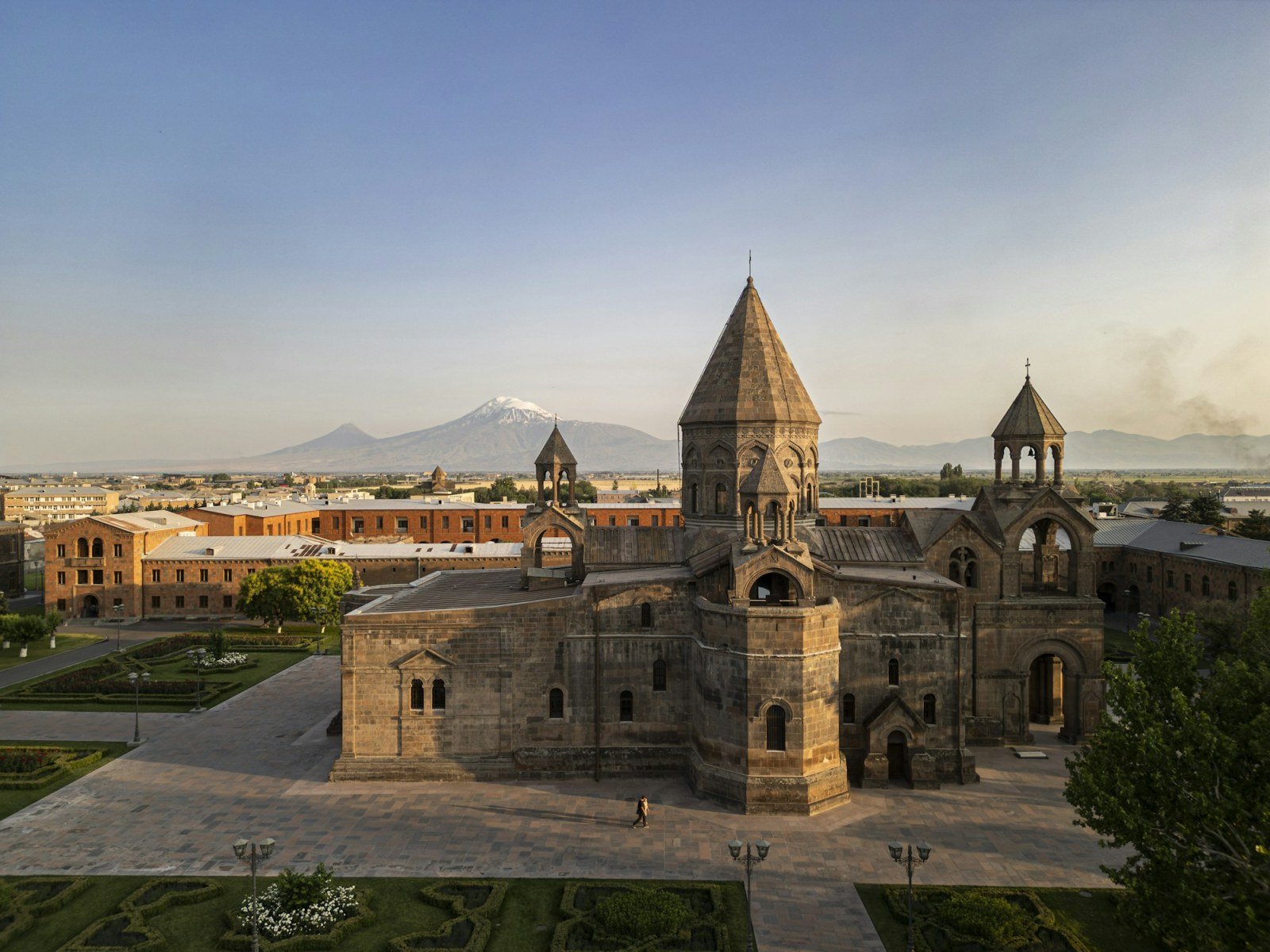
From the road coming from Yerevan you can already make out the 19th-century bell tower, tall and of dark stone, which marks the complex from a distance. The city of Vagharshapat around it is quiet and somewhat grey, with an economy that revolves around the religious institution. The grounds have high walls and a monumental entrance; crossing through it, everything changes: tended gardens, birds, the murmur of prayers coming through the open doors of the cathedral.
The interior is dark and fragrant, with the dense smell of incense impregnated in the volcanic tuff walls. 18th-century frescoes cover vaults and side walls with scenes from the New Testament and figures of Armenian saints. The eye takes time to adjust to the dimness. Armenian diaspora faithful, local pilgrims and families with children dressed for the occasion mingle with tourist groups without too much tension.
The complex includes several smaller churches from the 5th–7th centuries within the same grounds and the Treasury Museum, with relics, illuminated manuscripts and liturgical objects. The ensemble was declared a UNESCO World Heritage Site together with the nearby ruins of Zvartnots.
History
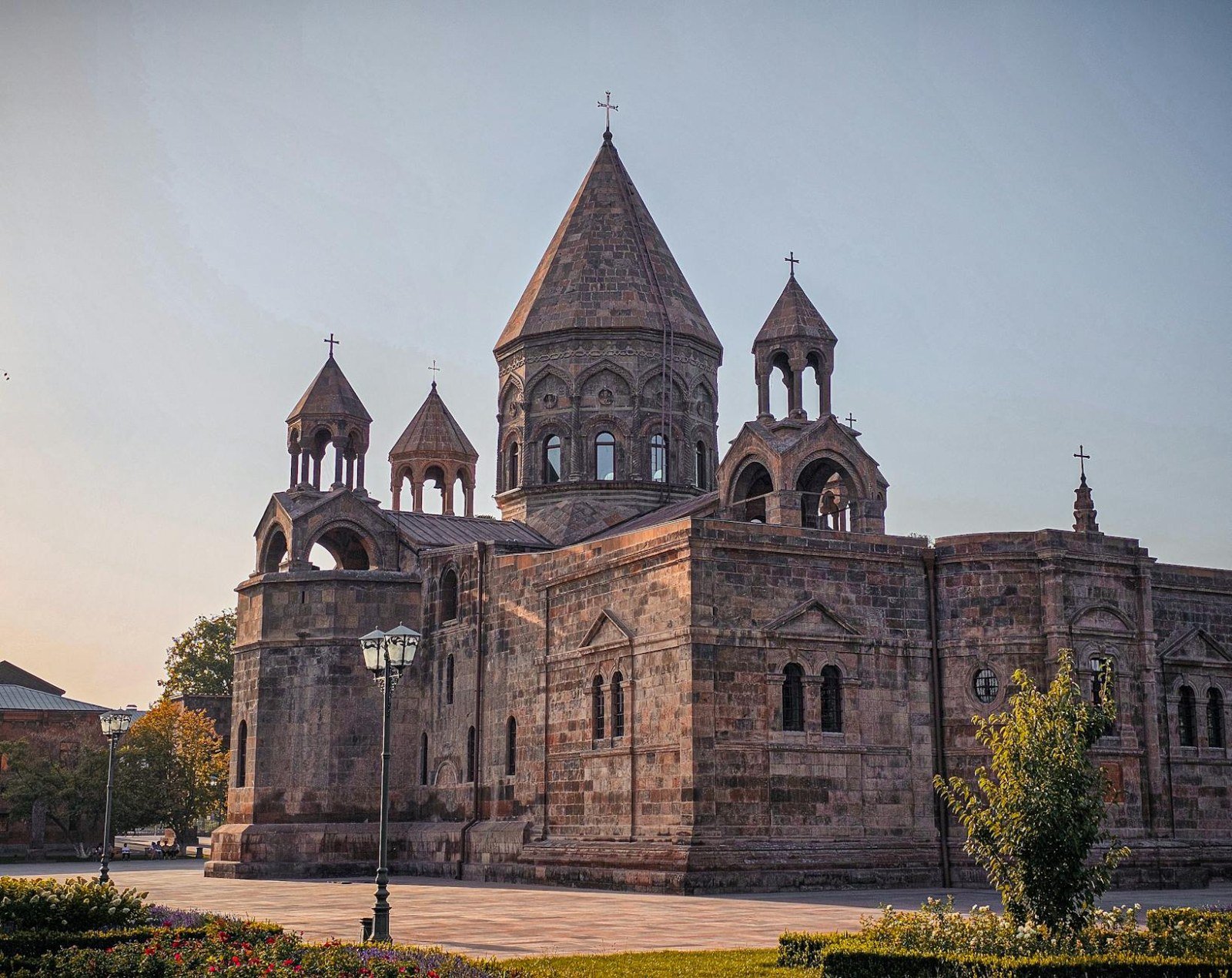
Tradition places the founding in the year 301, when King Tiridates III proclaimed Armenia as the first Christian state in the world. The name Echmiadzin means "the place where the Only Begotten descended," from a vision of Bishop Gregory the Illuminator. The original cathedral was modified and expanded over centuries; the current building blends elements from different periods. Echmiadzin is the seat of the Catholicos, the supreme leader of the Armenian Apostolic Church, with faithful spread across dozens of countries.
What to see & do
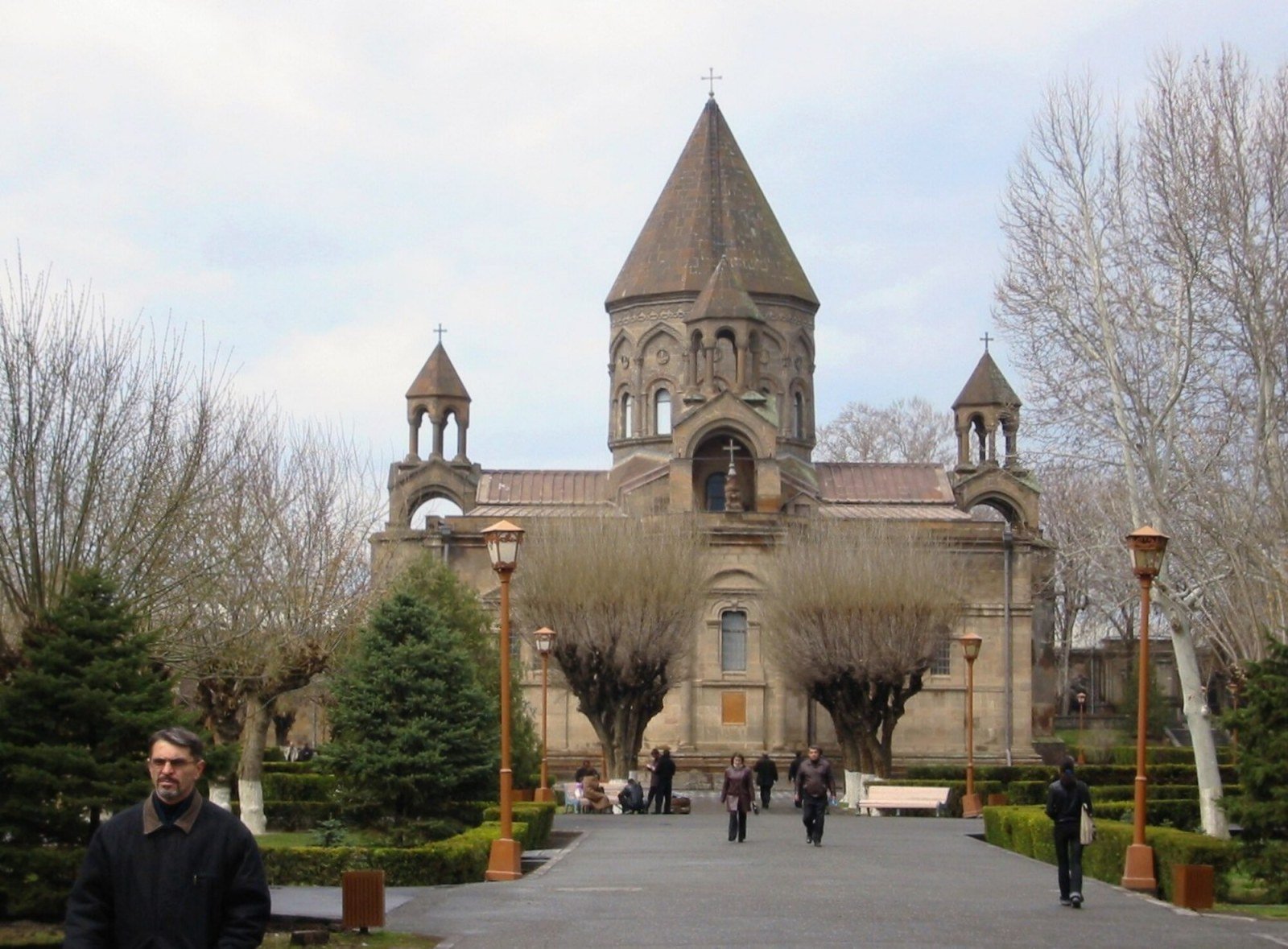
- Main cathedral The central building of the complex, with 18th-century frescoes on the vaults and the crypt where, according to tradition, the lance that pierced Christ's side is kept.
- Treasury Museum Relics, medieval khachkares, illuminated manuscripts and liturgical vestments. Separate entry ticket.
- Church of St Hripsime About 500 metres from the grounds, one of the best-preserved 7th-century Armenian churches.
- Church of St Gayane Another 7th-century church within the extended grounds, with an exterior of tuff that has not been excessively restored.
- Ruins of Zvartnots 3 km to the east, the remains of a 7th-century cathedral with a circular plan, also a UNESCO World Heritage Site.
How to get there
Echmiadzin is 20 km west of Yerevan. There are frequent marshrutkas from Kilikia station (about 30 minutes, 300 drams). By taxi from the centre of Yerevan it is 20–25 minutes and 2,000–2,500 drams. The visit is usually combined with the Zvartnots ruins, 3 km away. Zvartnots Airport is right on the road between the capital and Echmiadzin.
Best time to visit
The complex is open year-round. In spring (April–June) the gardens are in bloom and the climate is mild. In summer the heat on the plain can reach 35–38 degrees in July and August, though the interior of the cathedral stays cool. On liturgical celebration days — Easter, the Feast of the Assumption in August — the grounds fill with the faithful and the atmosphere changes completely. In winter the complex is quiet and accessible.
Photo: Kel Avelino · Unsplash License