
Dvin Ruins
Դվին
Ancient Armenian capital on the Ararat plain: walls, palaces and cathedral excavated 35 km south of Yerevan.
Location in the Caucasus
Description
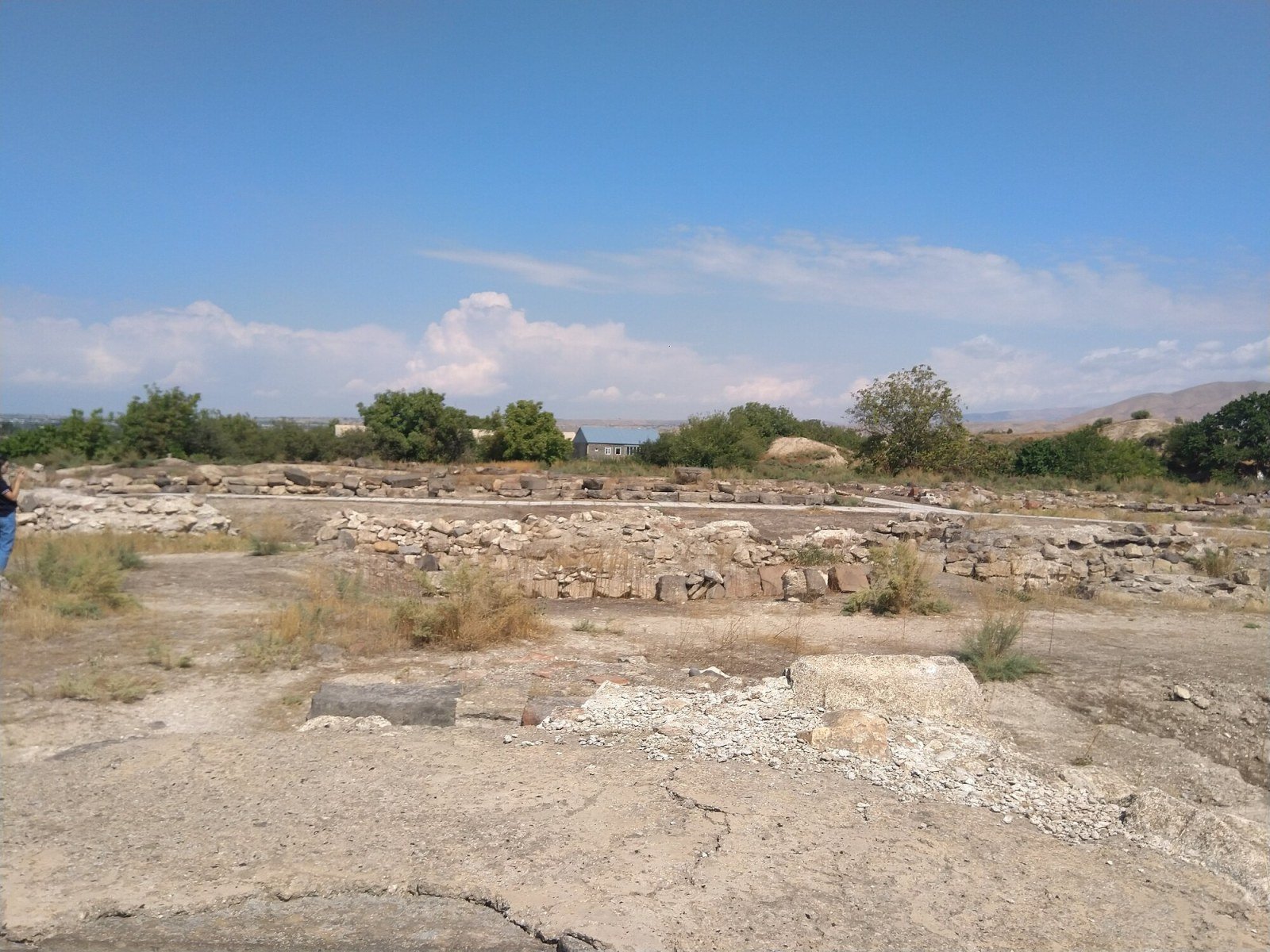
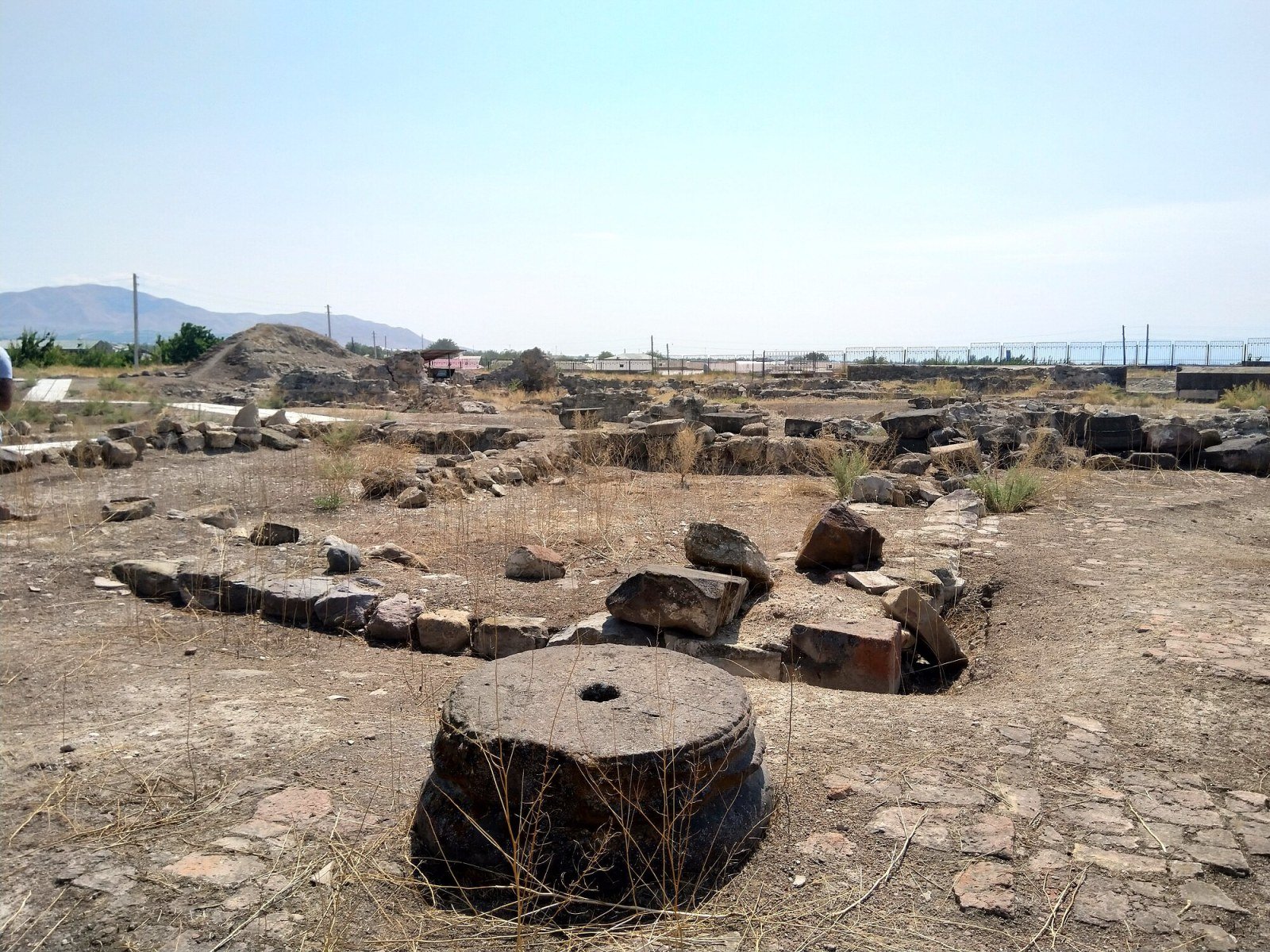
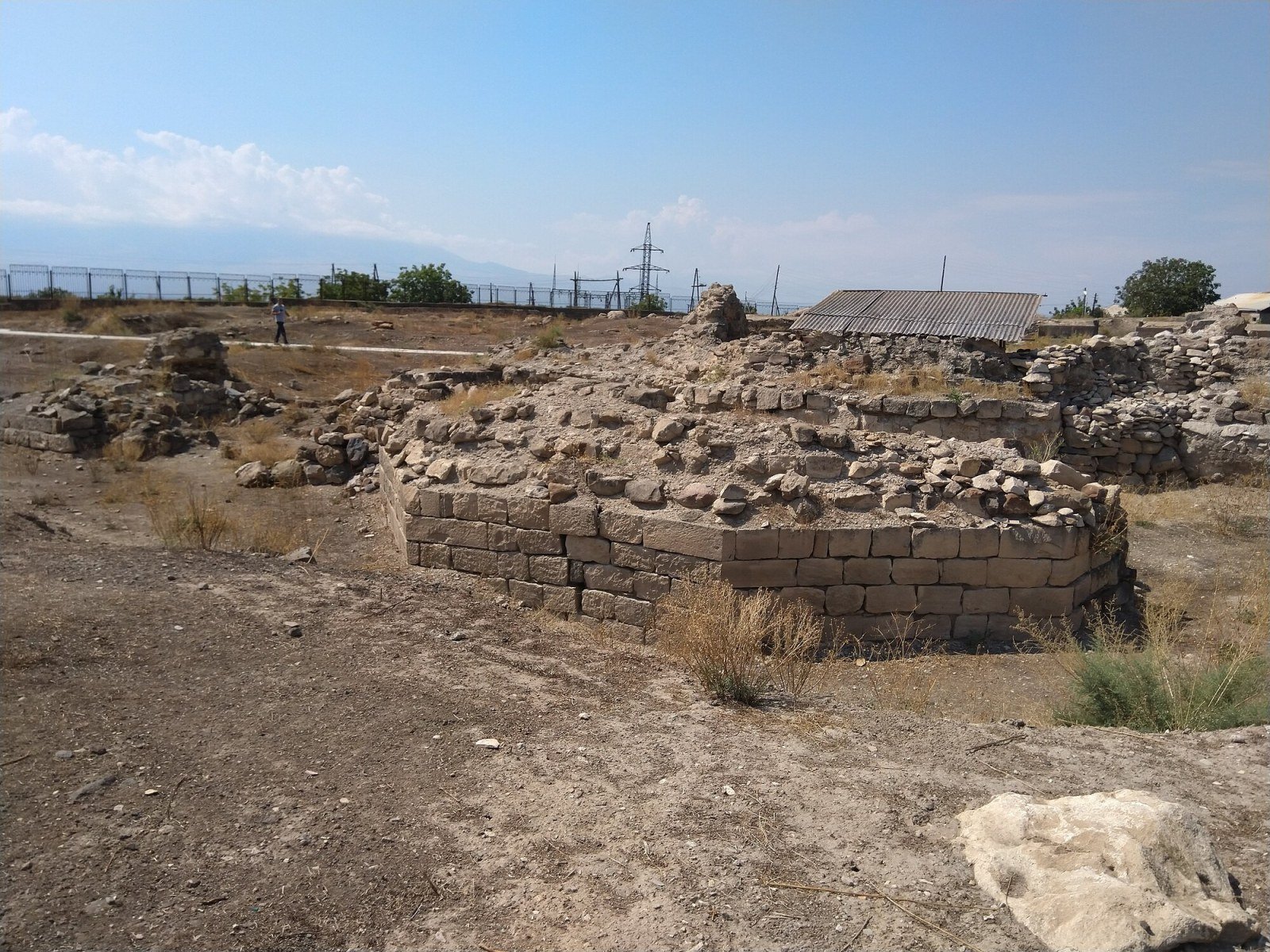
The ruins of Dvin spread across a low hill south of Yerevan, surrounded by fields that give no hint of what lies there. On arrival, the first feeling is one of strangeness: excavation trenches, adobe and stone walls barely above ground level, the occasional stretch of wall that barely reaches a metre and a half. There is no monumentality. There is dust in summer, mud in winter, and the intermittent silence of birds flying over the Ararat plain. To understand what you are looking at requires prior context, and it is well worth seeking it before you go.
The site has a small on-site museum with panels in Armenian and English that help with orientation: here was the royal palace, there the episcopal cathedral, further south the artisan quarter. The excavations have brought to light ceramics, coins, bronze objects and mosaic fragments now kept at the History Museum of Armenia in Yerevan; the site museum holds replicas and minor finds sufficient to gauge the scale of what the city once was.
There are no shops or restaurants at the site or nearby. Entry is free or at a token charge. Combined with a stop at the monastery of Khor Virap, a few kilometres further south, the day rounds off well: medieval Armenia, Mount Ararat in the background and the plain that connects everything.
History
Dvin was founded in the 4th century as the capital of the Armenian kingdom under the Arsacid dynasty. At its peak it held tens of thousands of inhabitants and served as a key commercial hub between Persia, Byzantium and the Caucasus. It continued as capital under Sassanid Persian rule and later under the Arab Caliphate, which maintained an administrative seat there during the 7th and 8th centuries. Earthquakes in that same period badly damaged the city, and successive looting eventually reduced it to rubble. The seat of the Armenian Catholicate was moved from here before the city was definitively abandoned. Systematic archaeological excavations began in the 20th century and continue intermittently to this day.
What to see & do
- City walls The best-preserved stretches of the defensive perimeter, built in volcanic stone and adobe. Some sections reach a metre and a half in height and allow you to sense the extent of the original enclosure.
- Royal palace area The excavated zone corresponding to the residences of the Arsacid rulers and later Arab administrators. The foundations reveal the plan and scale of the building.
- Remains of the episcopal cathedral The apse and part of the south wall of the ancient cathedral of Dvin, one of the first great religious buildings of medieval Christian Armenia.
- On-site museum Small building within the site with ceramics, coins and explanatory panels on the history of Dvin. Useful for orientation before exploring the site.
- Panorama towards Ararat From the site's hill you can see the Ararat plain and, on clear days, the outline of Mount Ararat to the southwest. The view is part of the site's appeal.
Photo gallery
How to get there
Dvin is about 35 km south of Yerevan, near the town of Artashat. From Kilikia station in Yerevan, marshrutkas run to Artashat (about 45 minutes); from there you take a local taxi to the site. By car it is about 40 minutes along the southern road. It combines well with a stop at the monastery of Khor Virap, a few kilometres further south.
Best time to visit
Spring (April–May) and autumn (September–October) are the best times: pleasant temperature and good visibility over the Ararat plain. In summer the heat on the plain is intense — between 35 and 40 degrees — and there is no shade at the site; if going in July or August, arrive before 9 in the morning. In winter, rain can leave access roads in poor condition, though Ararat appears sharper on cold, clear days.
More information
Photo: Vardouhie Ghazarian · CC BY-SA 4.0