
Uplistsikhe Cave Town
უფლისციხე
City carved into sandstone rock beside the Mtkvari River, with 3,000 years of history 80 km from Tbilisi.
Location in the Caucasus
Description
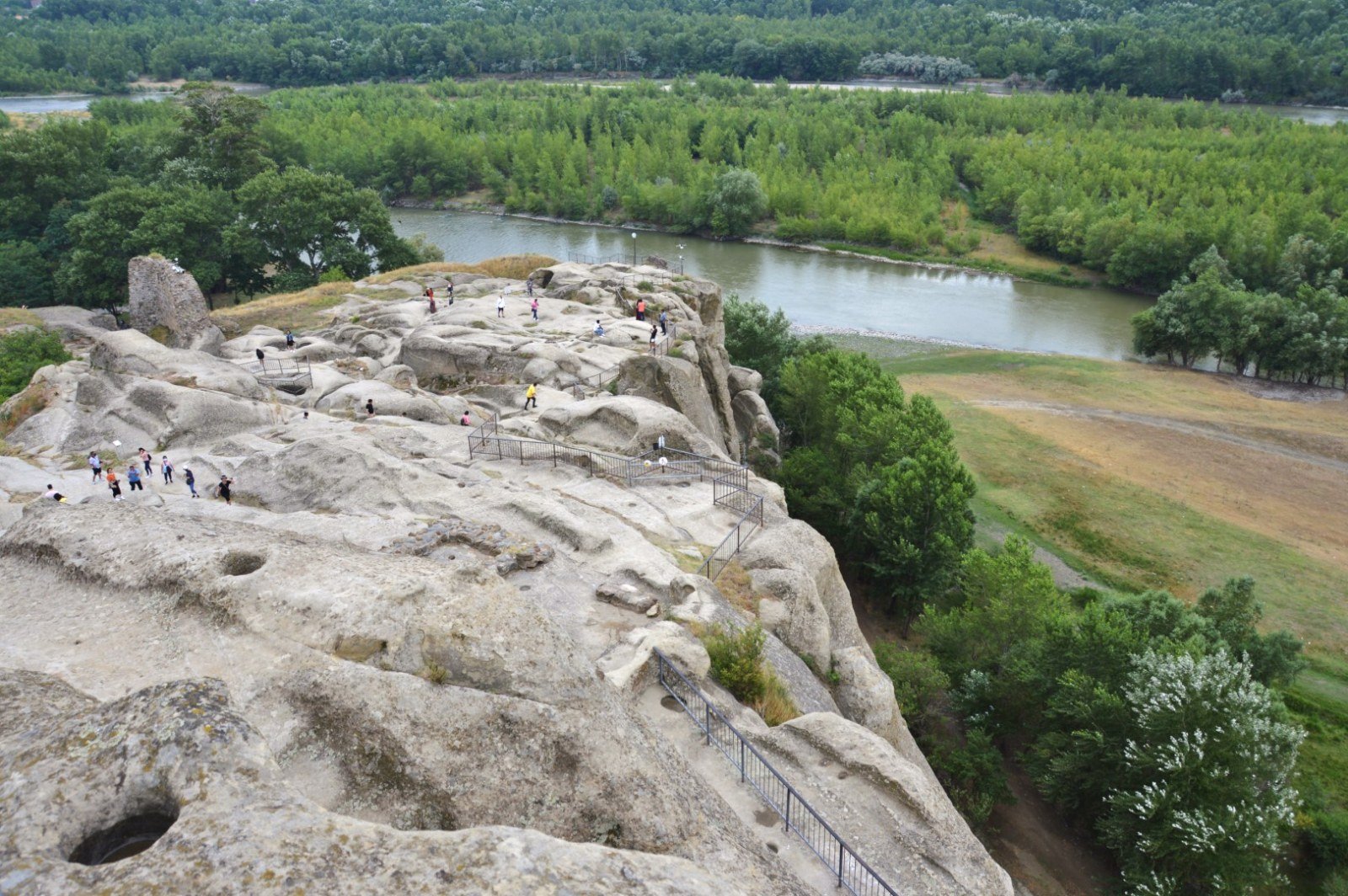
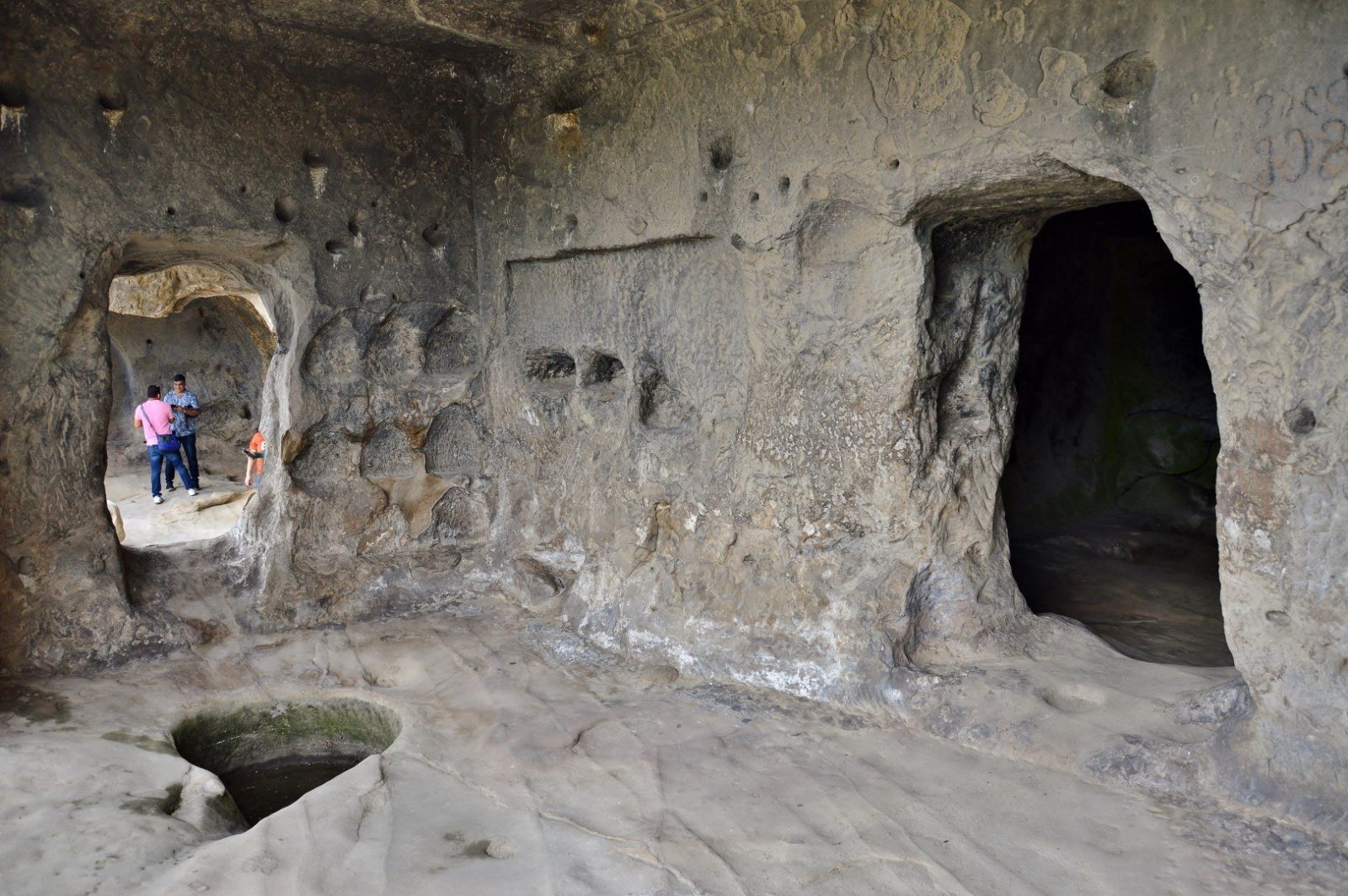
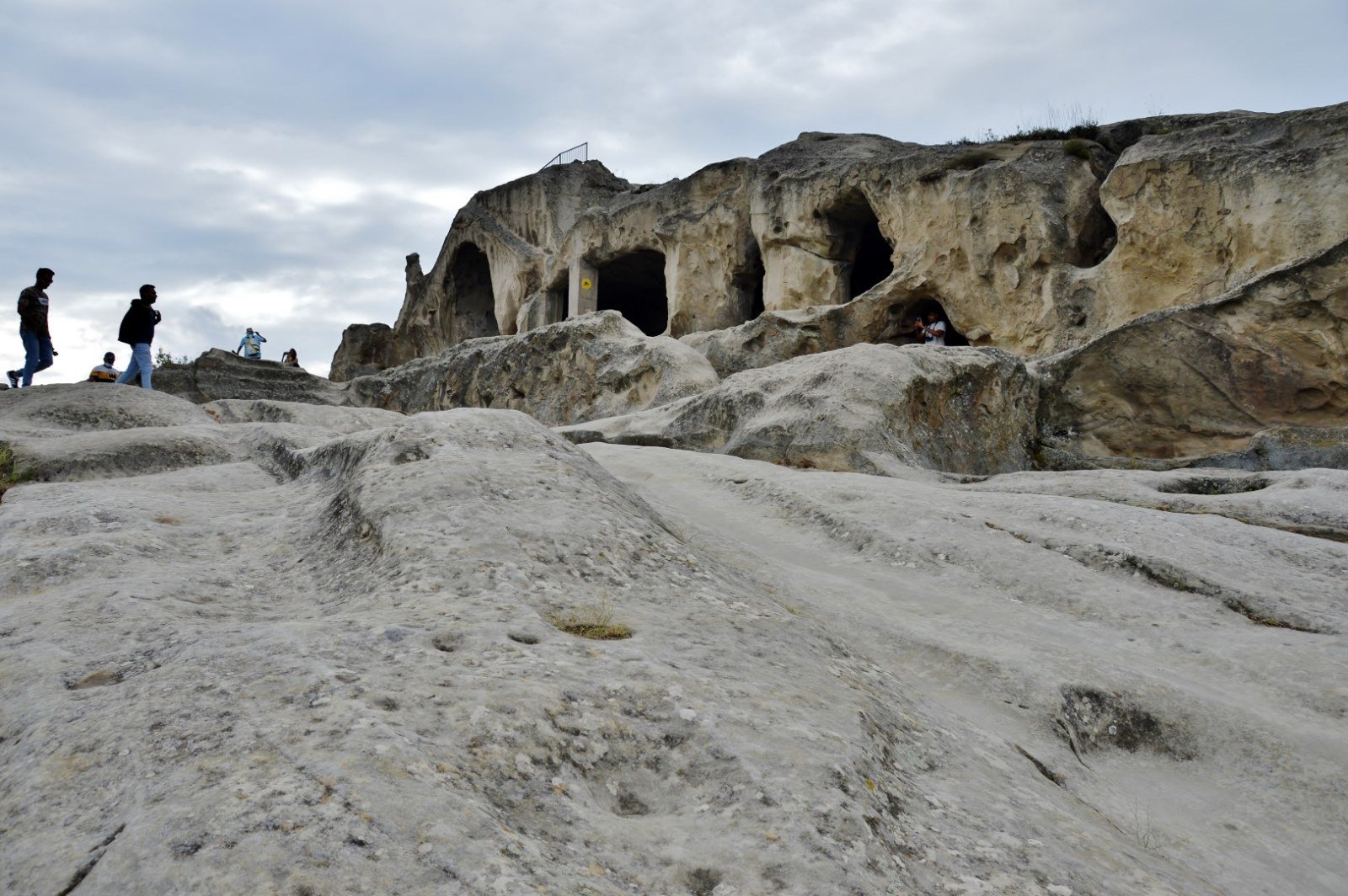
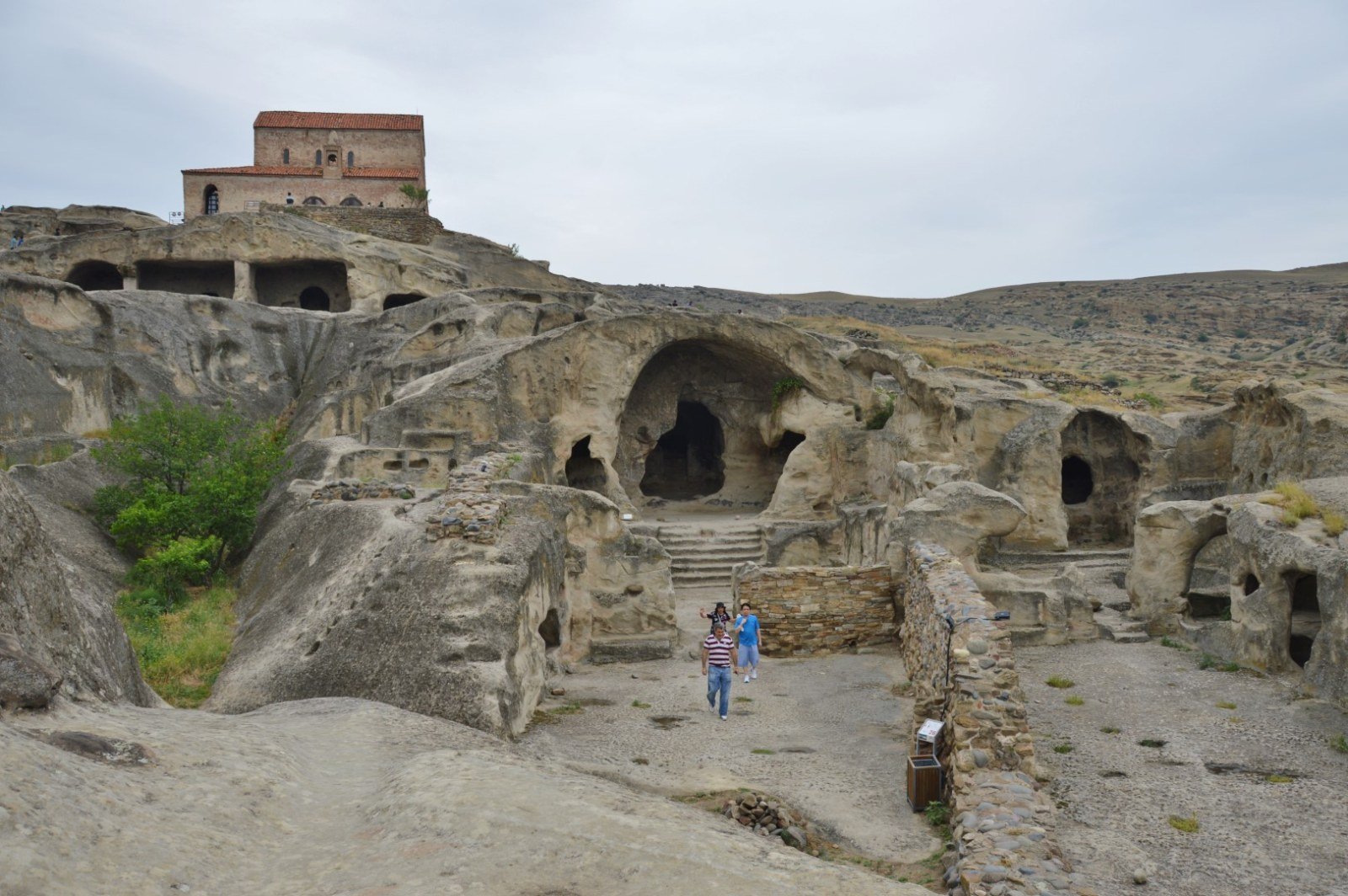
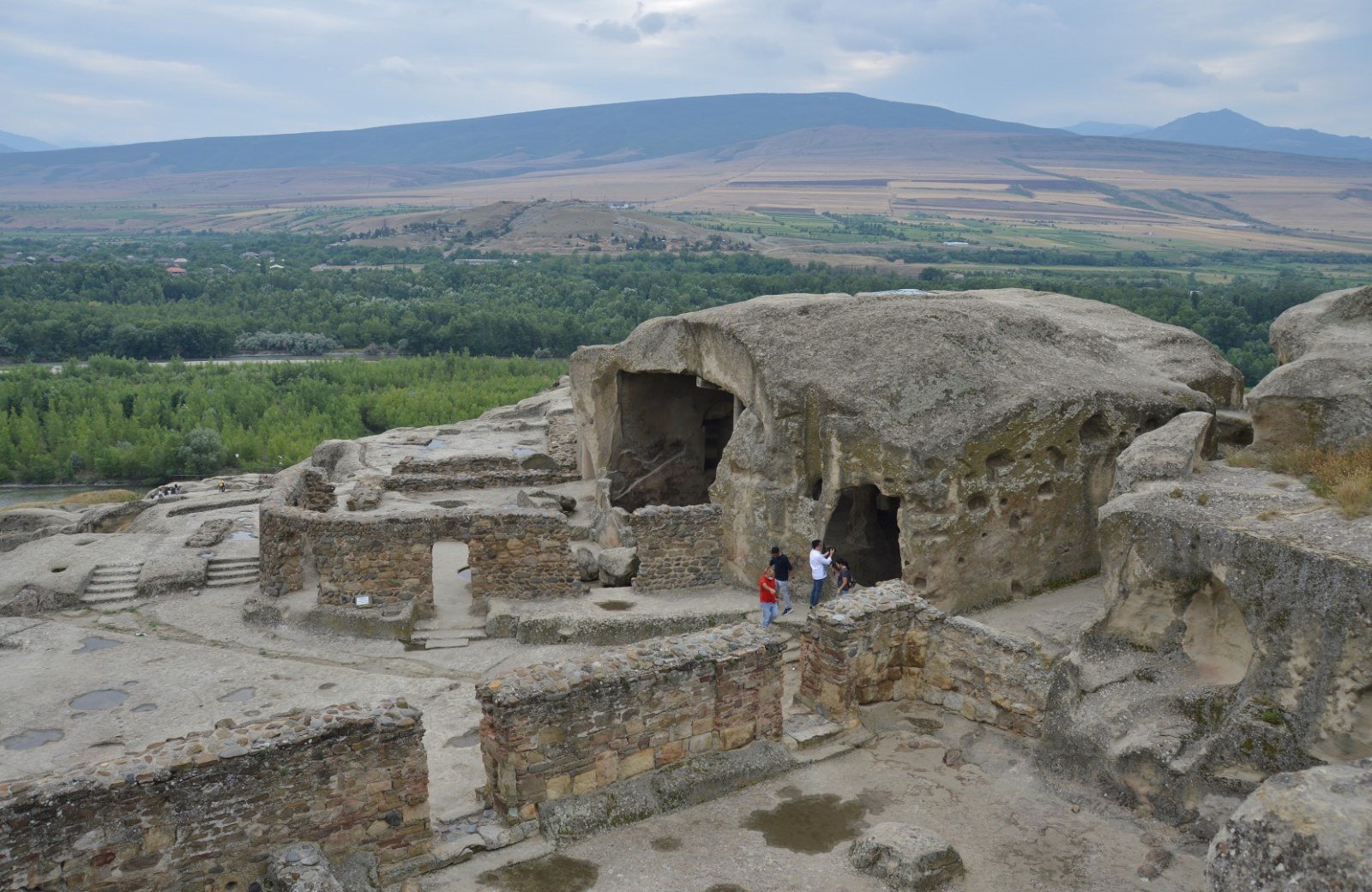
Uplistsikhe can be seen from a distance: a honey-coloured sandstone spur jutting out above the left bank of the Mtkvari River —also known as the Kura— its mass cut through with dozens of hollows, galleries and passages. Walking up from the car park, about ten minutes along a dusty track, the true scale of the complex gradually becomes clear. This is not a temple or a fortress but an entire city carved into the rock: streets, columned halls, wine cellars, granaries and a semicircular open-air theatre.
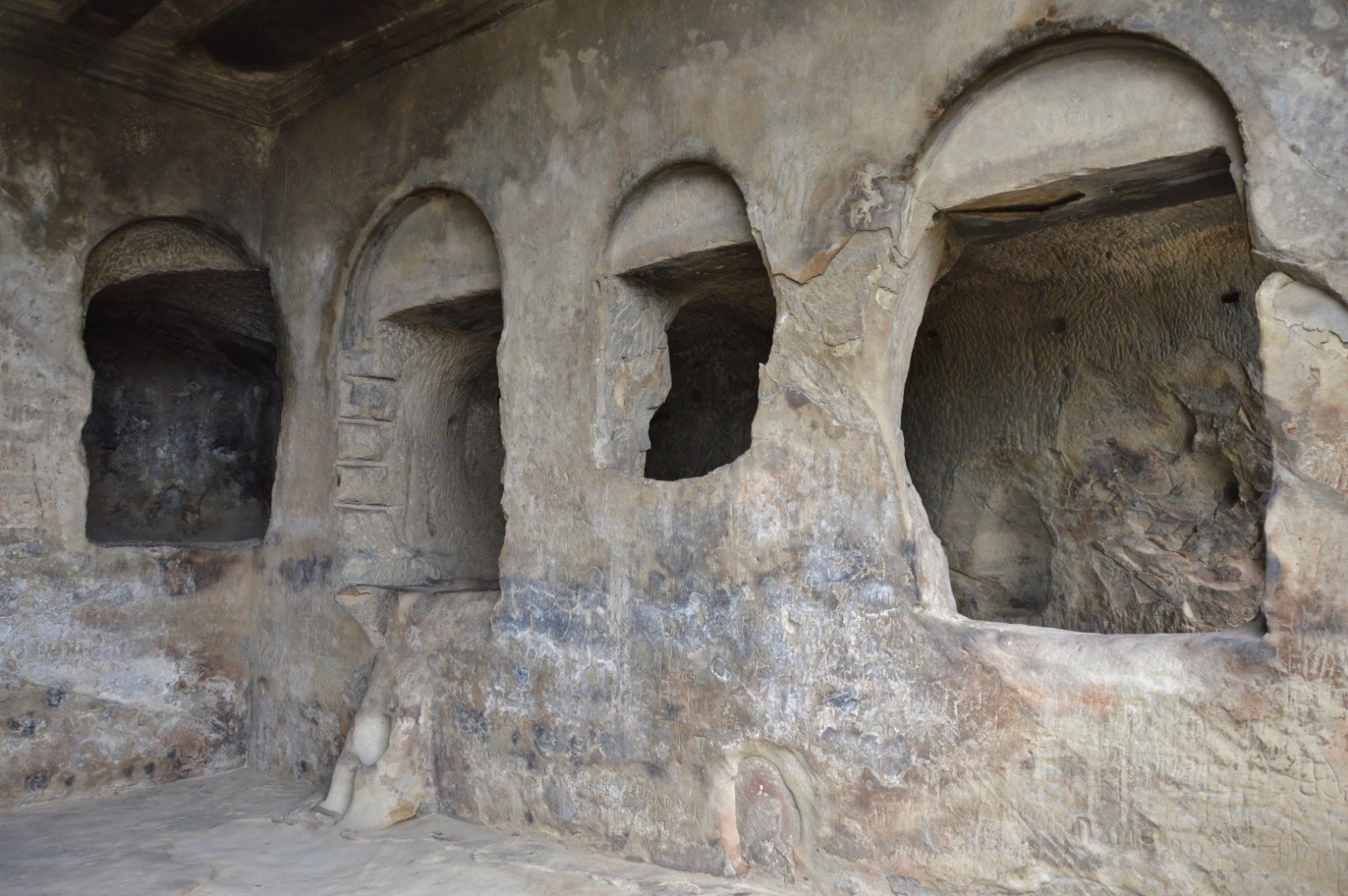
Nothing is perfectly preserved. Some ceilings have collapsed and the winds of the Shida Kartli valley have eroded the details of reliefs and doorways. But that makes the visit feel more like walking through a living archaeological site than strolling through a reconstructed park. The vaulted-ceiling rooms with columns carved directly from the rock are still standing; the central corridor running north to south through the complex has a scale that cannot be anticipated from outside. The only sounds are the wind and, sometimes, the murmur of the river below.
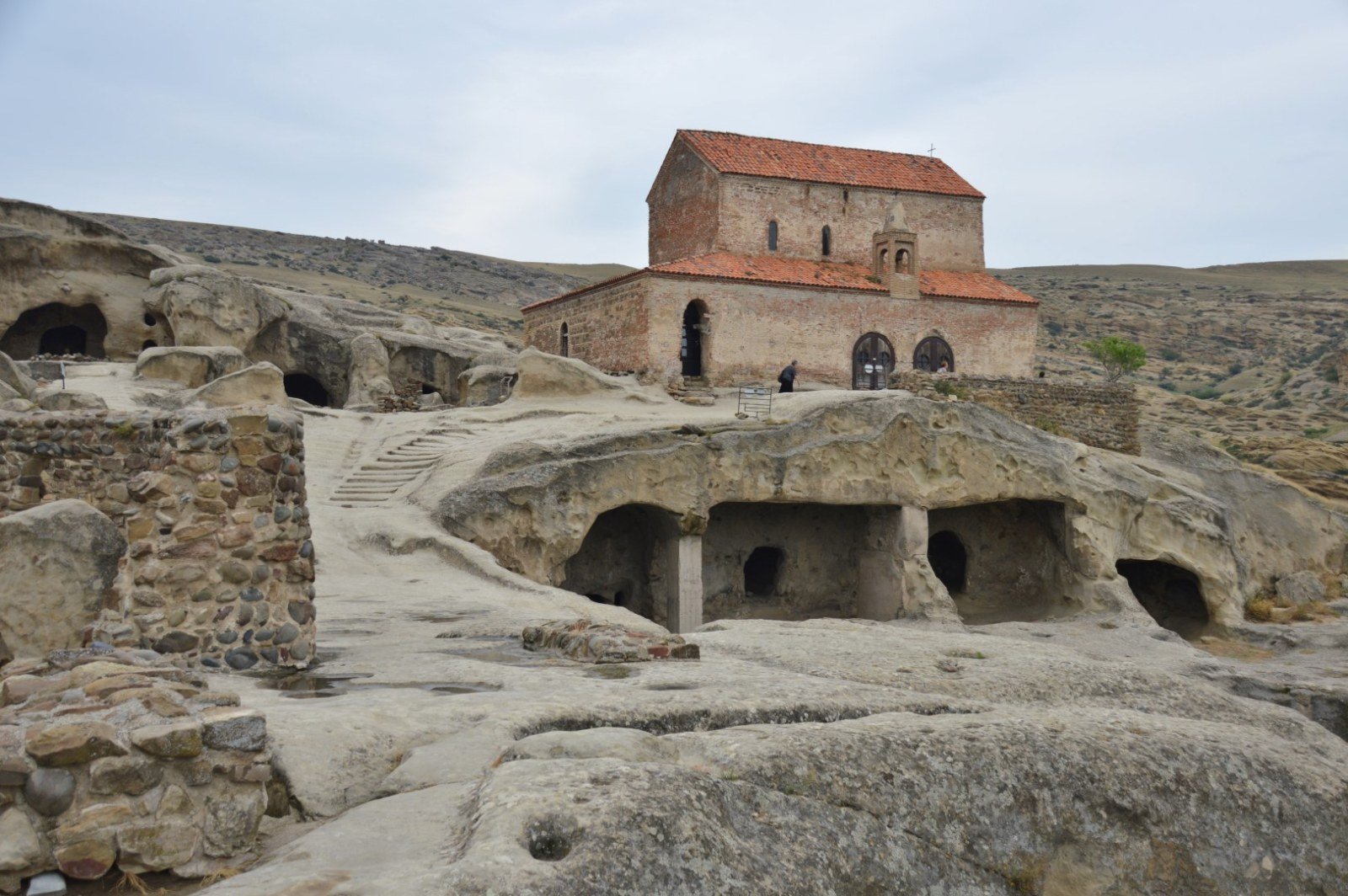
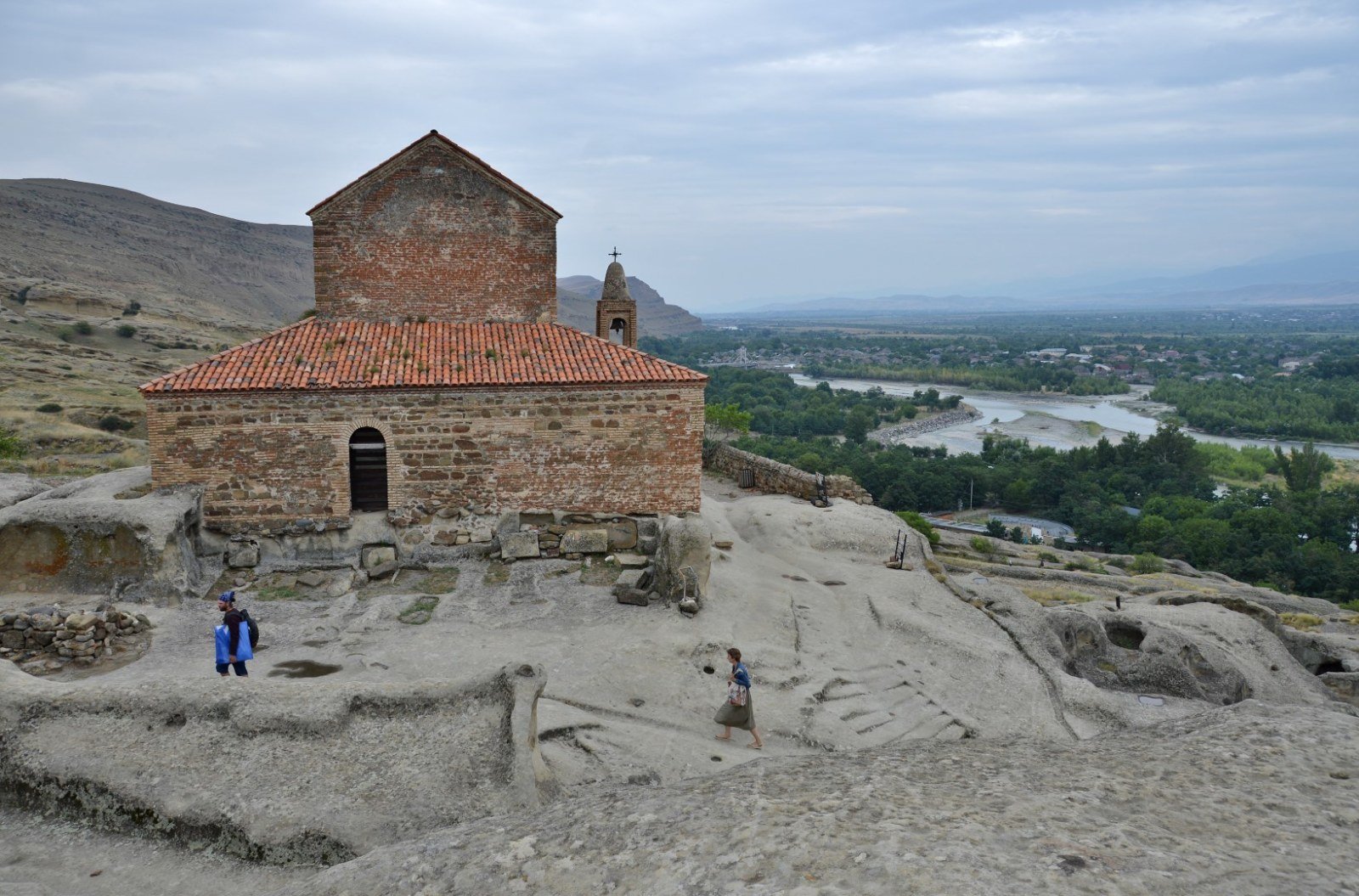
At the highest point of the site stands a small medieval three-nave basilica, built in the ninth century over earlier pagan structures. From here you can see the meander of the Mtkvari, the arid hills surrounding it and, on clear days, the distant silhouette of the Caucasus. A full visit takes between one and a half and two hours. Entry costs around 7 GEL (about 2.50 EUR).
History
Uplistsikhe began to be inhabited around the first millennium BC, during the Iron Age, and grew to become one of the political and religious centres of the ancient Iberian kingdom of Kartli. At its peak, between the first century BC and the third century AD, it housed pagan temples, dwellings and public structures carved directly into the sandstone. With the Christianisation of Georgia in the fourth century, pagan temples were replaced or repurposed; the three-nave basilica that crowns the complex today was built over the most sacred structures of the earlier period. The city was sacked and destroyed by the Mongols in the thirteenth century and never recovered its importance, gradually being abandoned in favour of nearby Gori. Systematic archaeological excavations began in the twentieth century.
What to see & do
- Main street The central axis of Uplistsikhe, flanked by open halls and columned structures carved from the rock, offers the clearest reading of the urban layout and gives a sense of the city's scale at its height.
- Queen Tamar's Hall and the Throne Room Two of the most elaborate chambers on the site, with vaulted ceilings and architectural details that demonstrate the constructive sophistication of Kartli's golden age.
- Hellenistic theatre A semicircular cavity carved into the rock, interpreted as a gathering or performance space, with formal echoes of Greek influence in the cave architecture of Uplistsikhe.
- Makvliani Temple and Box Temple Two pagan sacred structures with carved niches and decorative elements illustrating the religious life of the city before the Christianisation of the fourth century.
- Medieval three-nave basilica Built in the ninth century at the top of the site, it is the only building constructed above rock level. From its surroundings you get the best view of the Mtkvari River and the arid hills of Shida Kartli.
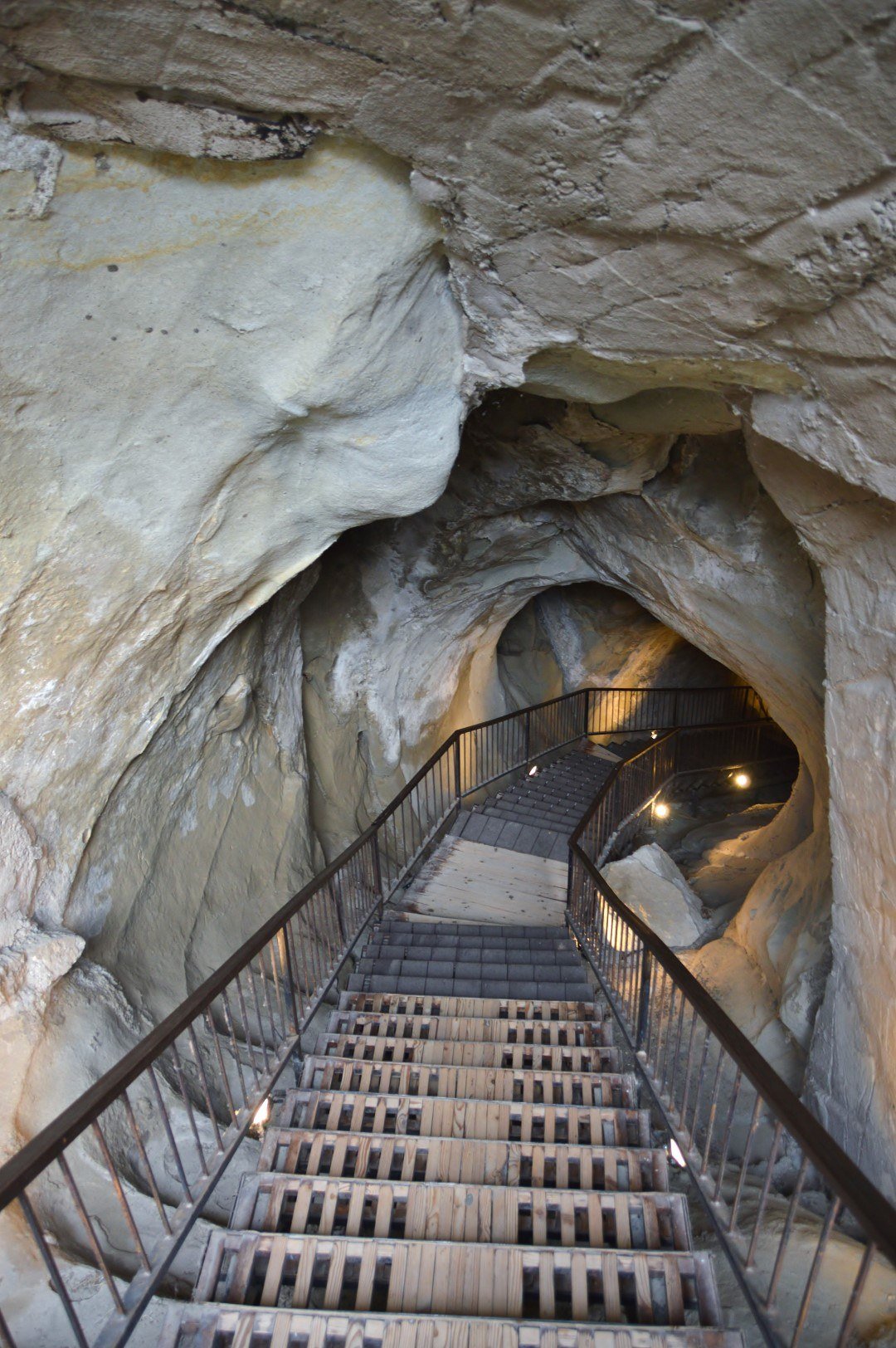
- Descent tunnel and rock-cut wine cellars A carved passage connecting the different levels of the complex, alongside a series of conical storage pits used for wine and grain, similar in concept to the kvevri still used in Georgia today.
Photo gallery



How to get there
Uplistsikhe is 10 km east of Gori, which in turn lies about 80 km west of Tbilisi along the E60 motorway. From Tbilisi there are frequent commuter trains and marshrutkas to Gori; from there, a taxi to the site costs around 15–20 GEL and takes 15 to 20 minutes. By car from Tbilisi the journey takes approximately one hour. There is a car park beside the Mtkvari River and the site has an entrance fee (around 7 GEL).
Best time to visit
The best time to visit Uplistsikhe is spring (April–May) and autumn (September–October), when temperatures are mild and the low-angle light enhances photography of the sandstone. In summer the sun beats down and temperatures regularly exceed 35°C; carrying plenty of water is essential. In winter the site is open and almost deserted, though mist over the Mtkvari can reduce visibility. The early morning hours are always the quietest.
More information
Photo: Iberogeorgia · proprietary