
Noratus Khachkar Cemetery
Նորատուսի գերեզմանատուն
Armenia's largest khachkar field: over nine hundred basalt crosses carved between the 10th and 17th centuries on the shores of Lake Sevan.
Location in the Caucasus
Description
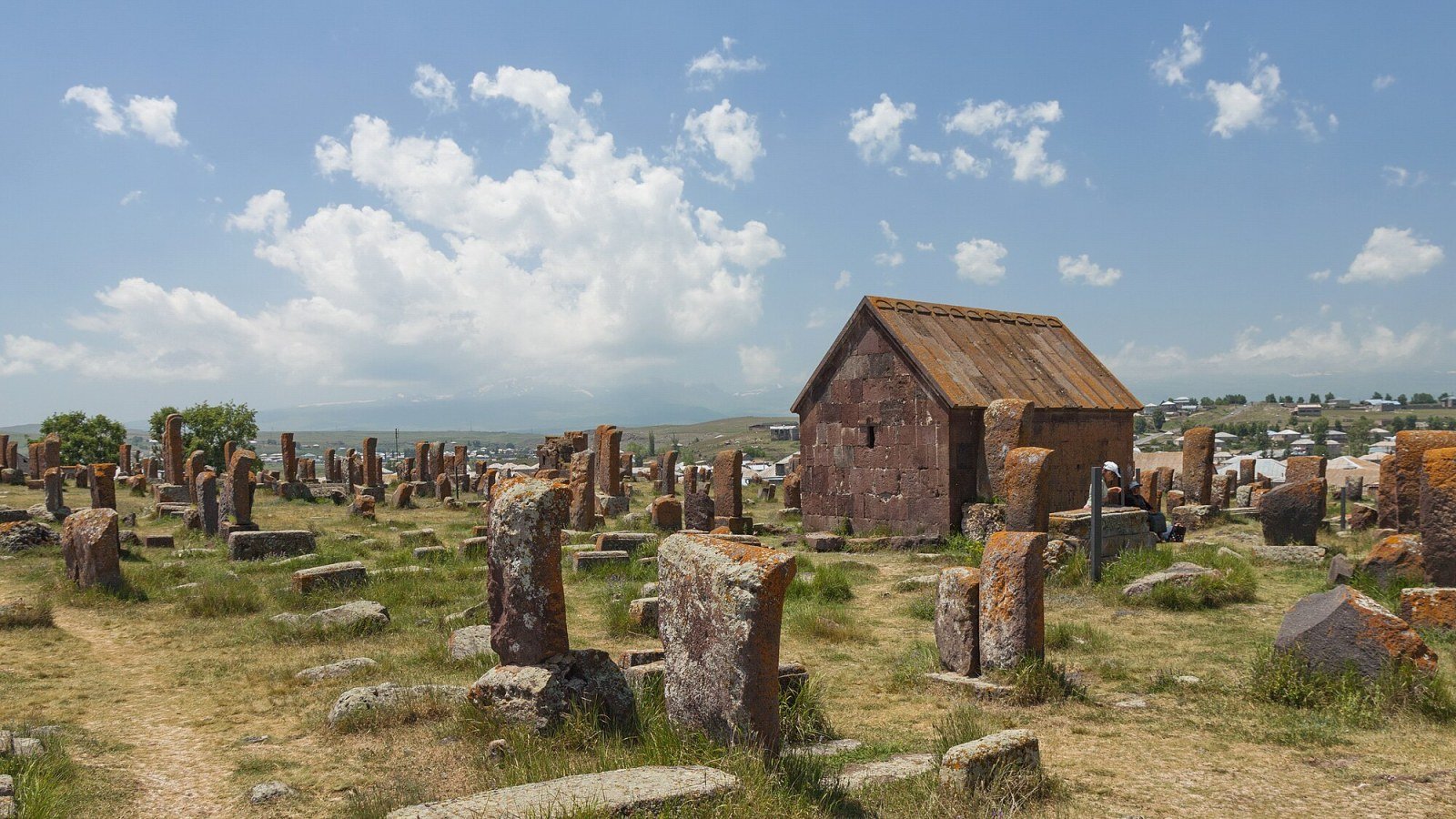
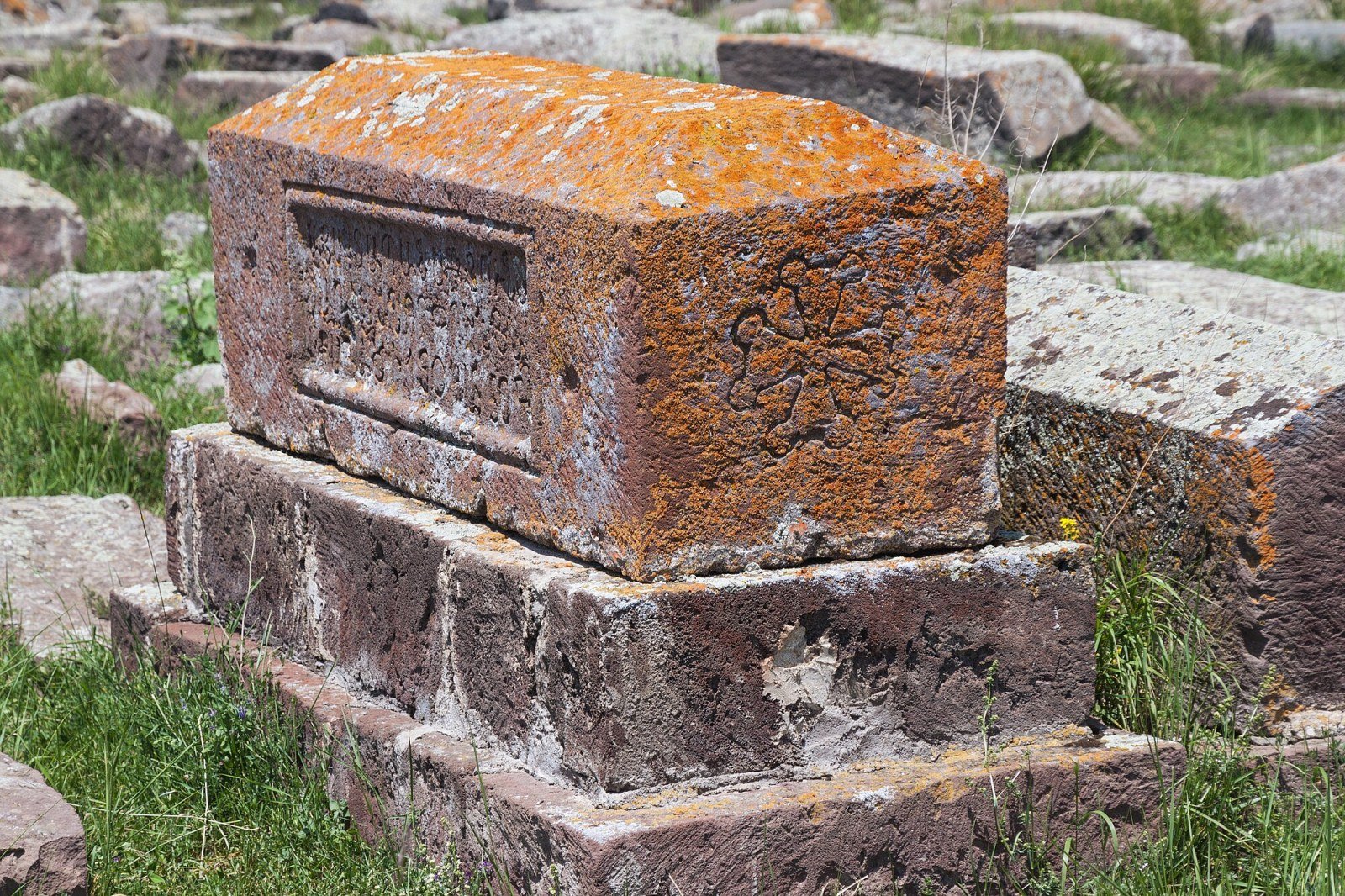
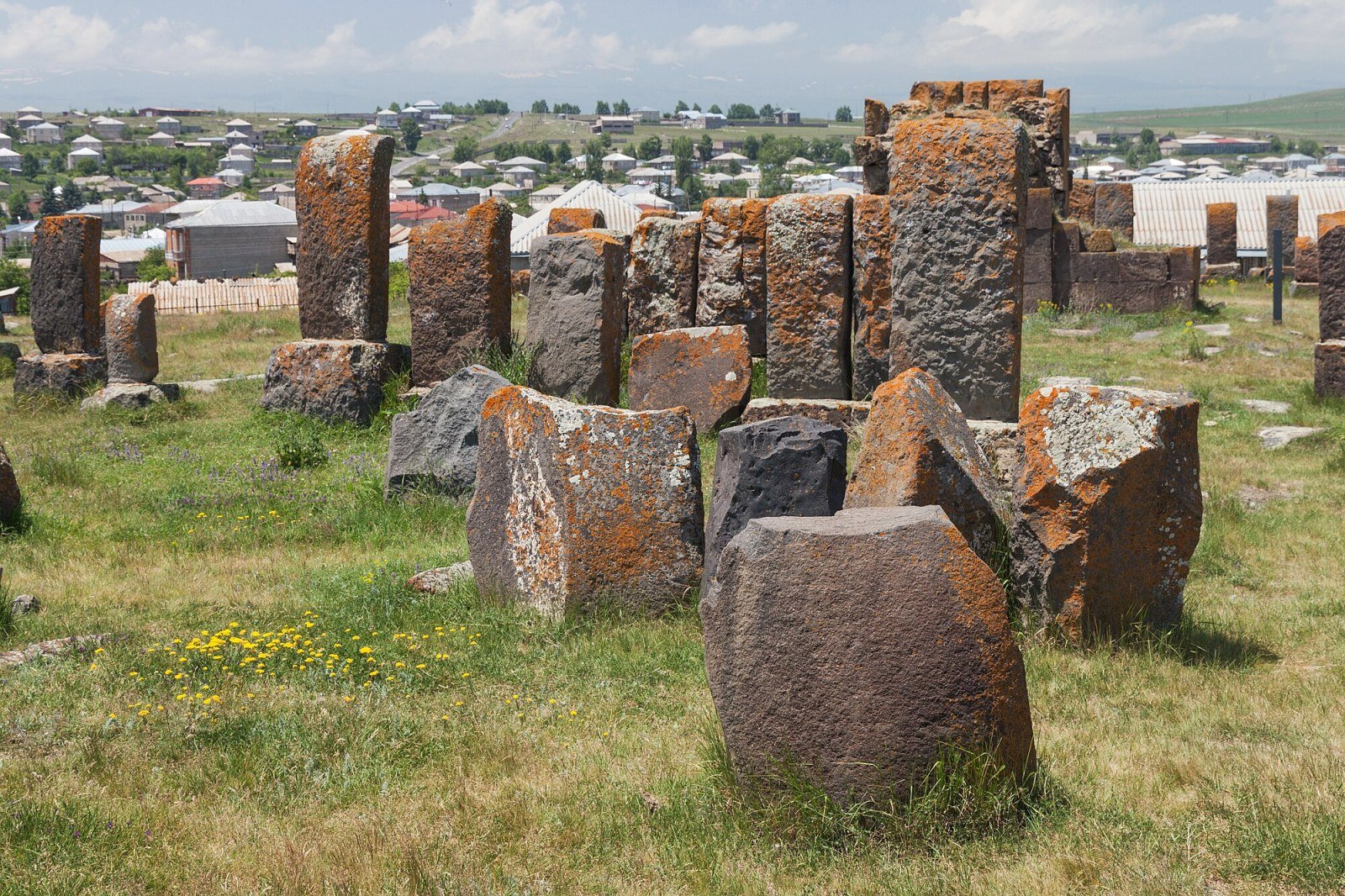
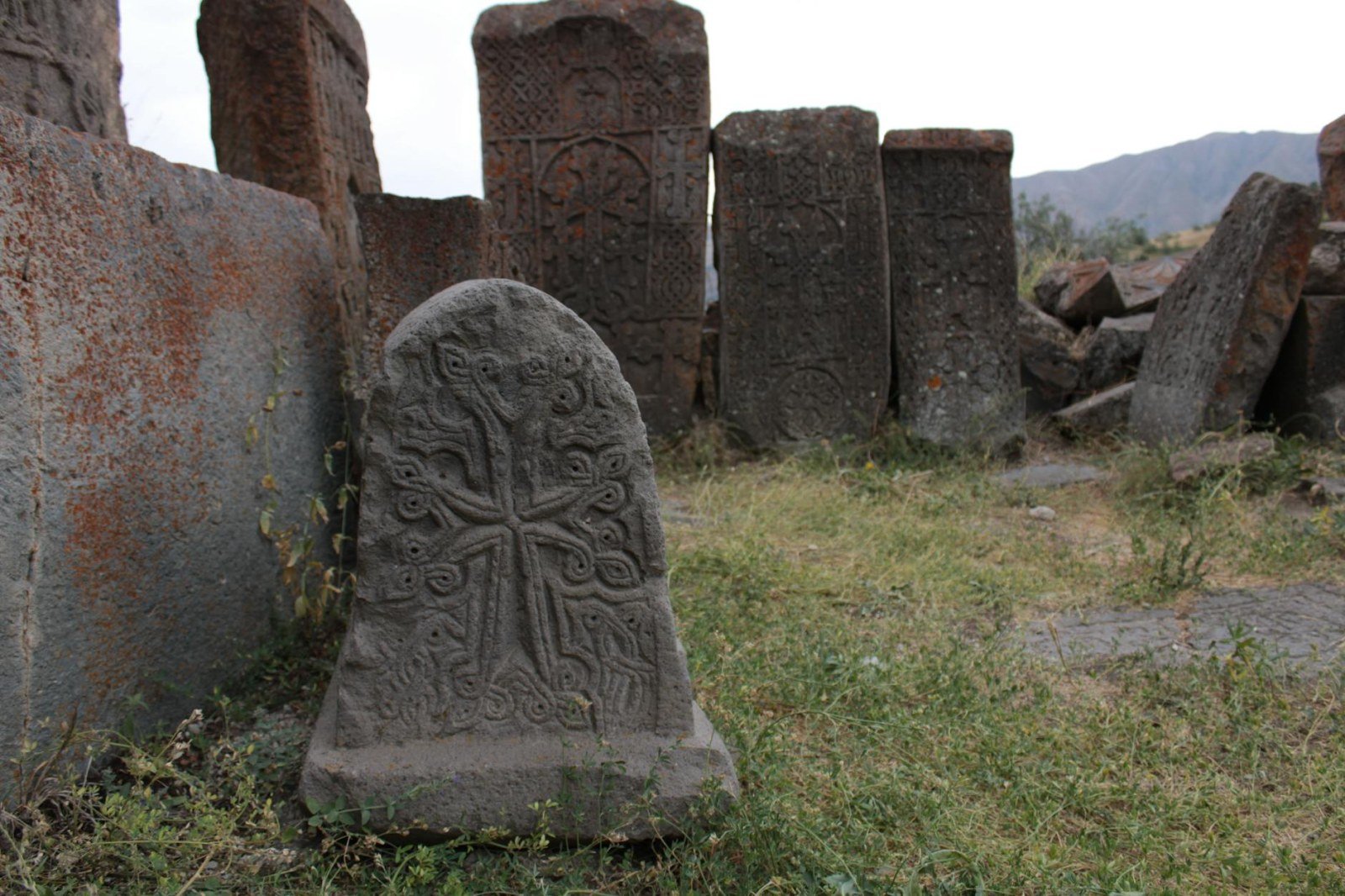
When you enter the Noratus Cemetery the first thing that catches your attention is not the number of stones — though there are many, clustered in irregular rows on the grass — but the texture of the carving. The khachkars, Armenian dark basalt crosses, are covered in geometric interlace that in some cases remains as sharp as the day it was chiselled, and in others has been blurred by centuries of rain and orange lichens. The low-angle morning light makes them more legible; in full midday sun the details are lost in short shadows.
The enclosure has neither fence nor marked entrance: the cemetery merges with the village of Noratus and the open landscape that descends towards the shore of Lake Sevan. A few hundred metres away the blue-grey water is visible, and on clear days the sky's reflection shifts the tone of the whole scene. There is almost always wind, even in summer, a cold wind coming down from the hills of Gegharkunik province.
There are no guides on site and no signage in English. To understand the iconography of the khachkars, it helps to bring prepared information or hire a guide from Gavar or Yerevan. Entry is free. Even without explanation, the place has a quiet, accumulated weight that needs little mediation.
History
The Noratus Cemetery accumulated khachkars over several centuries, from the 10th to the 17th, in parallel with the life of an active medieval Armenian community. The stelae are mostly grave markers of local nobles, craftsmen and clergy; some carry inscriptions with the name of the carver. In the early 20th century, the nearby village of Agulis in Nakhchivan was destroyed and its khachkars demolished; since then Noratus has stood as the most numerous and best-preserved collection of Armenian funerary crosses in the country, with over nine hundred catalogued pieces.
What to see & do
- 10th–12th century khachkars The oldest in the cemetery, concentrated in the northern part of the enclosure. They have more austere designs: simple crosses on a plain background, without the later decorative density. The dark basalt is heavily worked by erosion.
- Late 17th-century stelae The most elaborate ones, with tracery covering the entire surface and, in some cases, human or animal figures at the edges. They show the evolution of khachkar art over seven hundred years.
- Church of St Carpos Small medieval church beside the cemetery, still in use. Austere black-stone interior with no ornamentation. Worth looking inside if it is open.
- Views over Lake Sevan From the southern end of the enclosure you can see the waterline of Lake Sevan and, on clear days, the Sevan Peninsula with Sevanavank Monastery silhouetted on the horizon.
- Adjacent active cemetery The most recent section, with 20th- and 21st-century headstones, contrasts with the medieval khachkars and gives a sense of funerary continuity on the same ground.
Photo gallery
How to get there
Noratus Cemetery is about 5 km south of Gavar, on the eastern shore of Lake Sevan, and about two hours by car from Yerevan via the motorway towards the lake and then the M10. There is no direct public transport; from Gavar a local taxi costs around 500–700 drams. The visit is often combined with Sevanavank Monastery and, on the southwest shore, Hayravank Monastery. Free entry.
Best time to visit
May and June are the most pleasant months: the surroundings are green, Lake Sevan reflects vivid tones and temperatures hover around 15–20 °C. July and August bring clear skies but strong wind off the lake. September offers golden light and fewer visitors. Winter is long and cold at 1,900 metres altitude — snow possible from November to March — though the snowy landscape among the khachkars has its own character.
More information
Photo: Marcin Konsek · CC BY-SA 4.0