
Svetitskhoveli Cathedral
სვეტიცხოვლის ტაძარი
Georgia's largest medieval cathedral, in Mtskheta, houses the relic of Christ's tunic and has been a UNESCO World Heritage Site since 1994.
Location in the Caucasus
Description
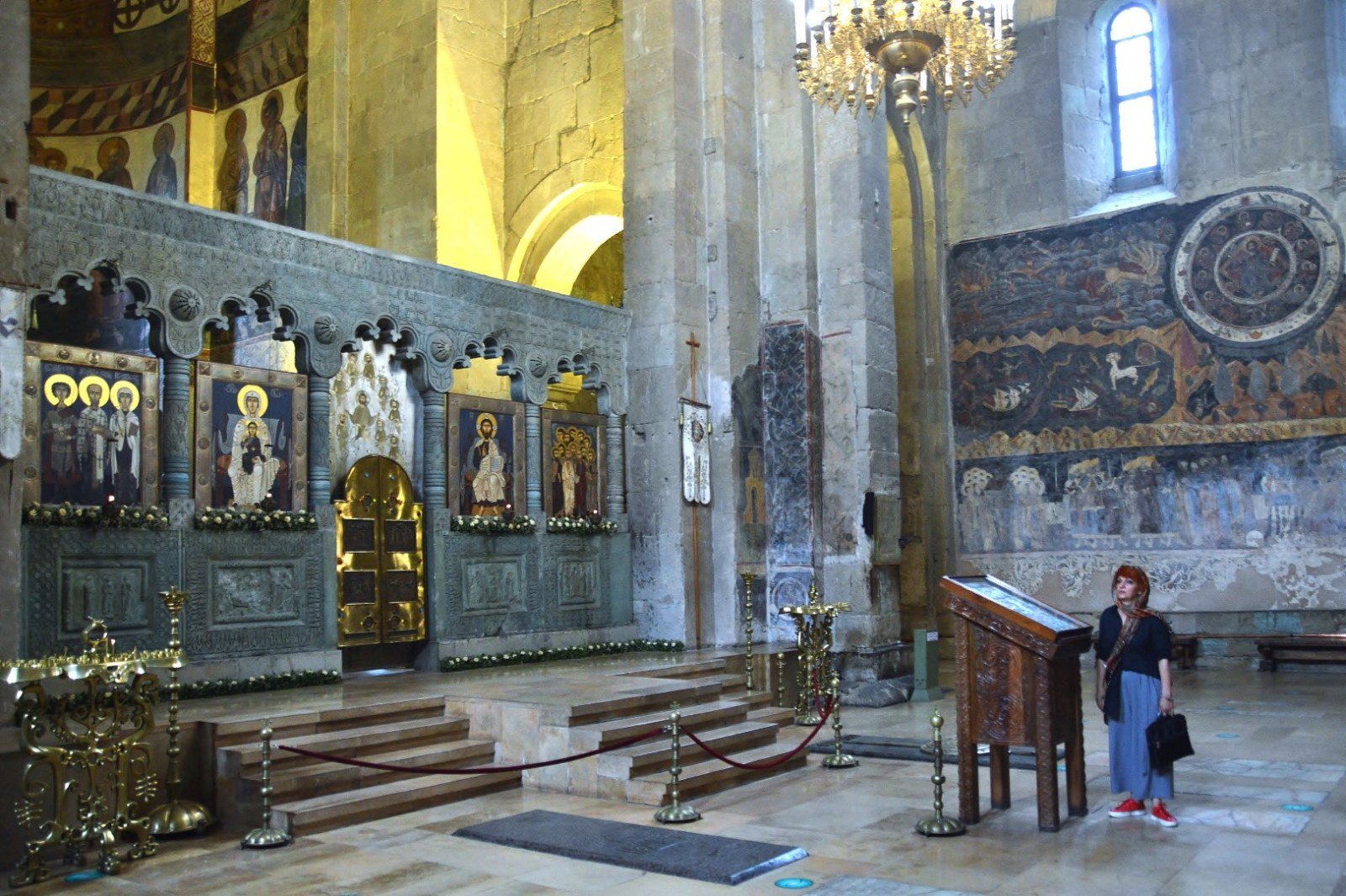
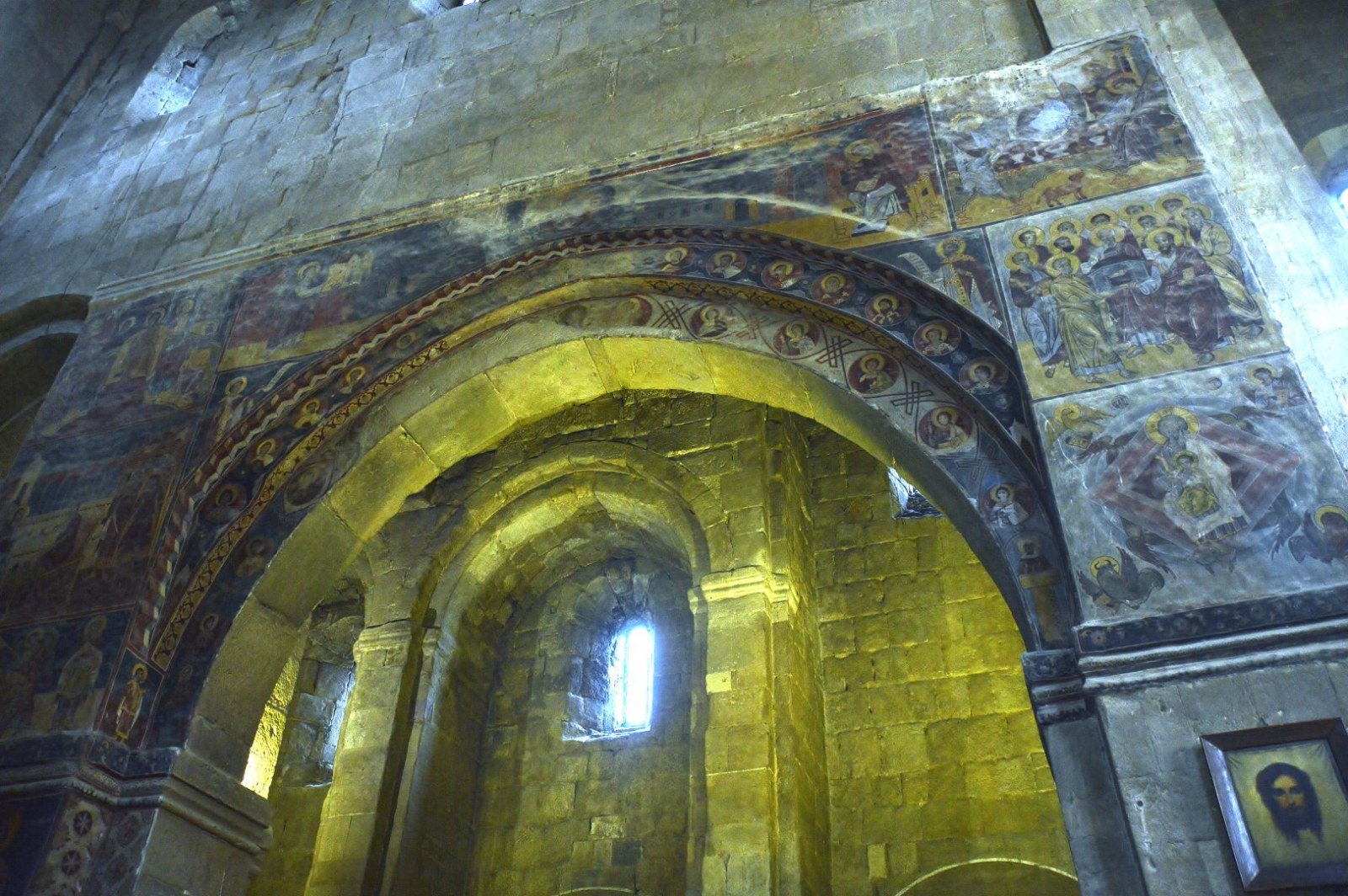
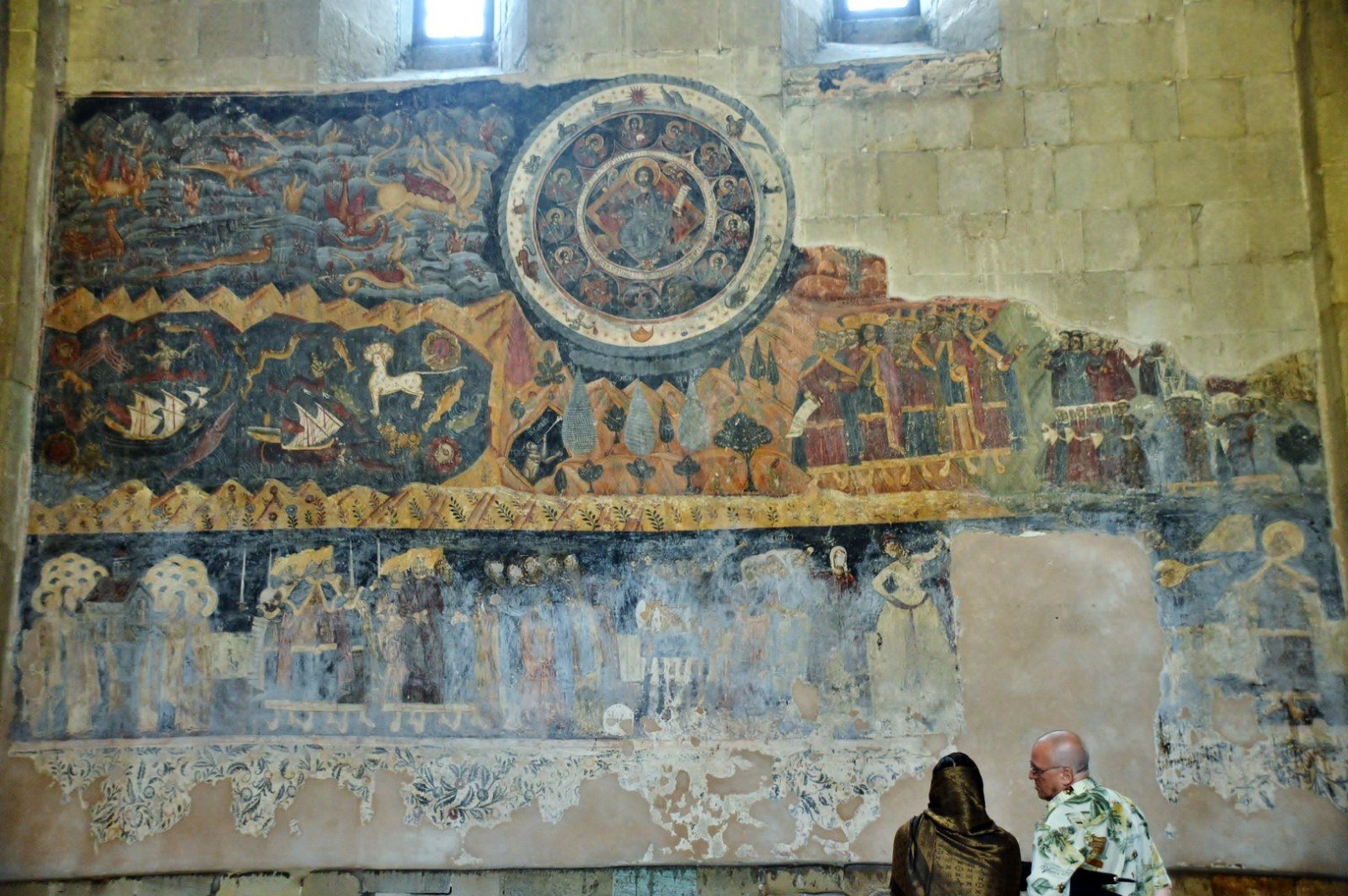
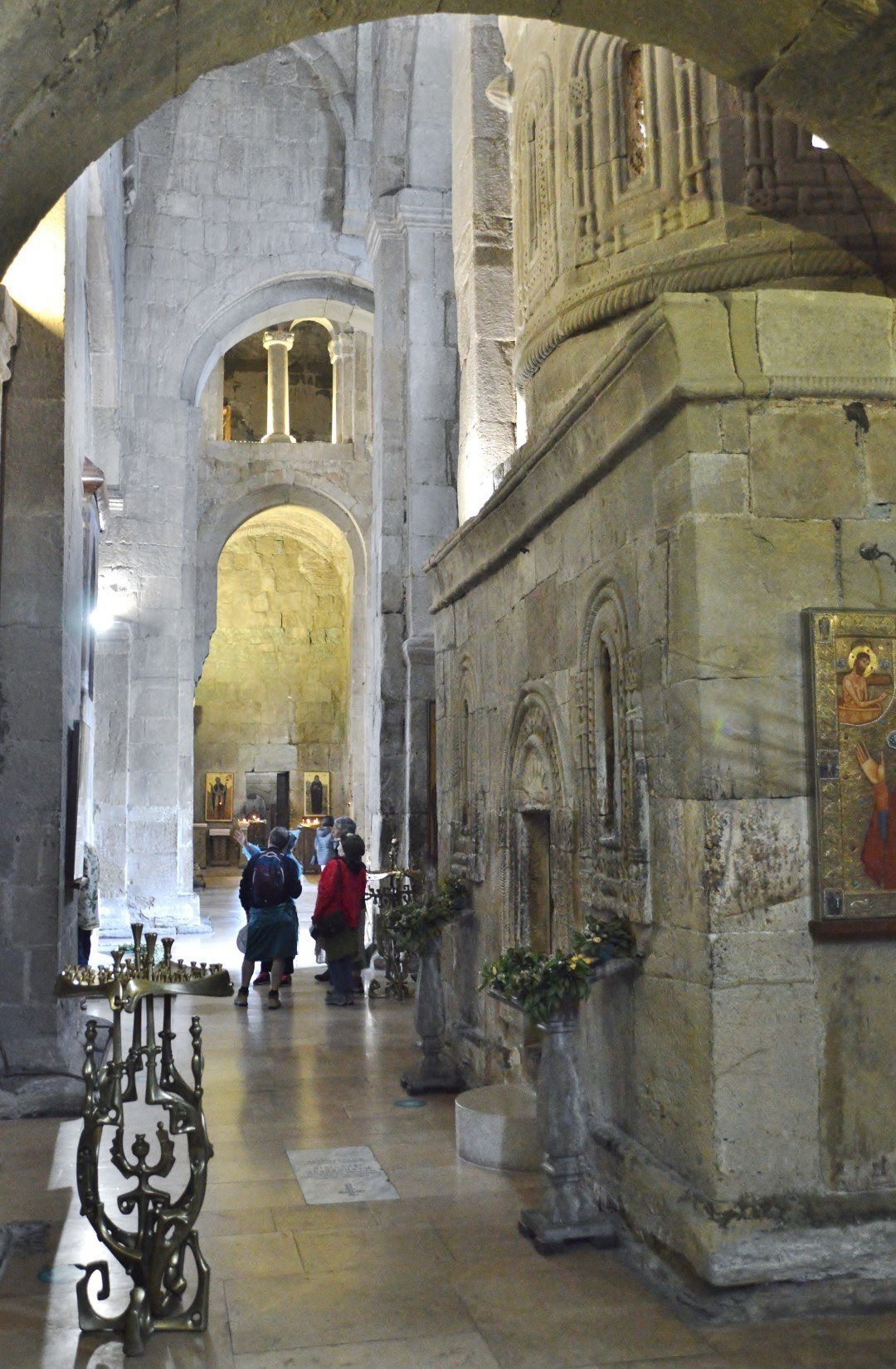
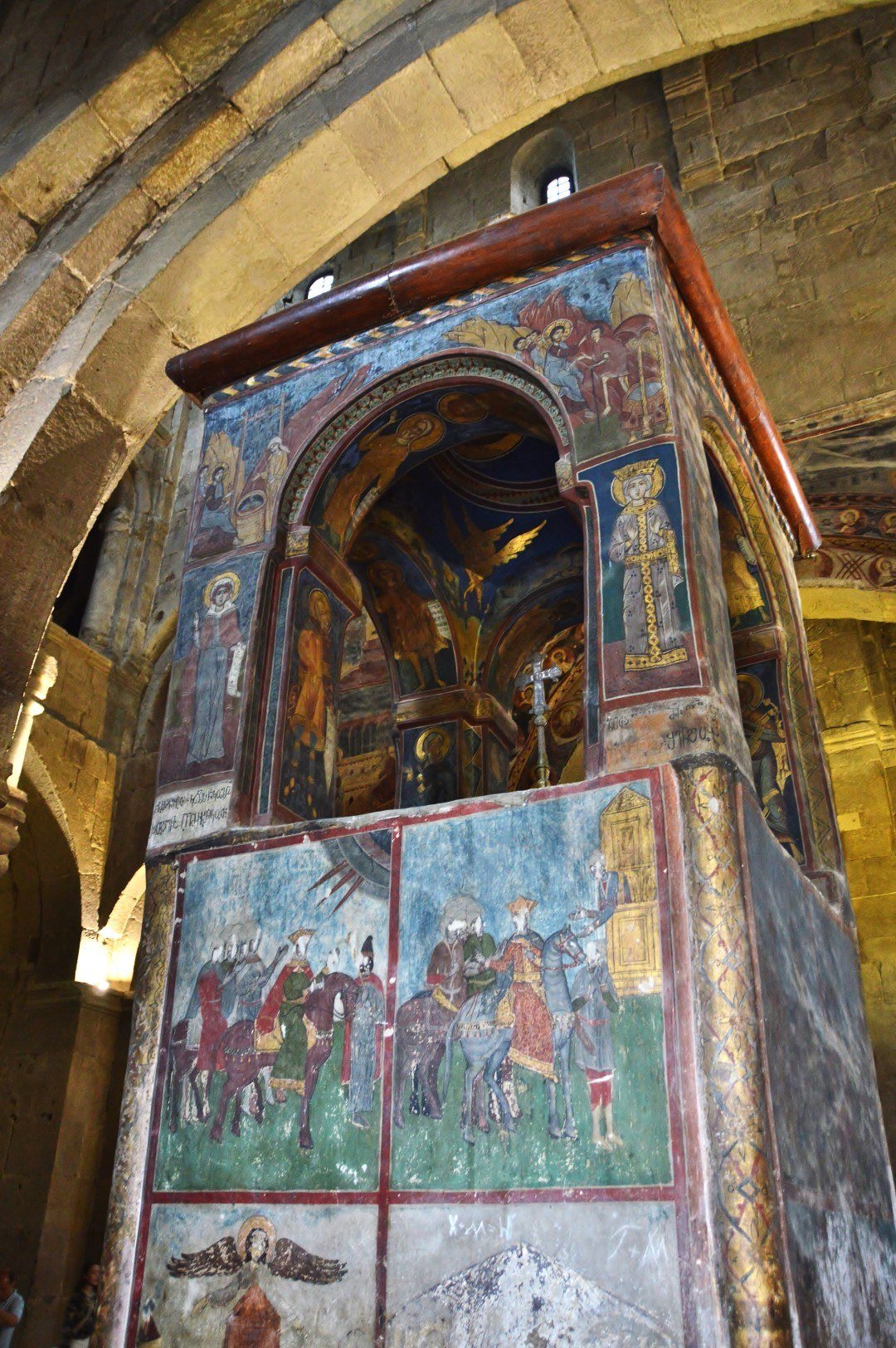
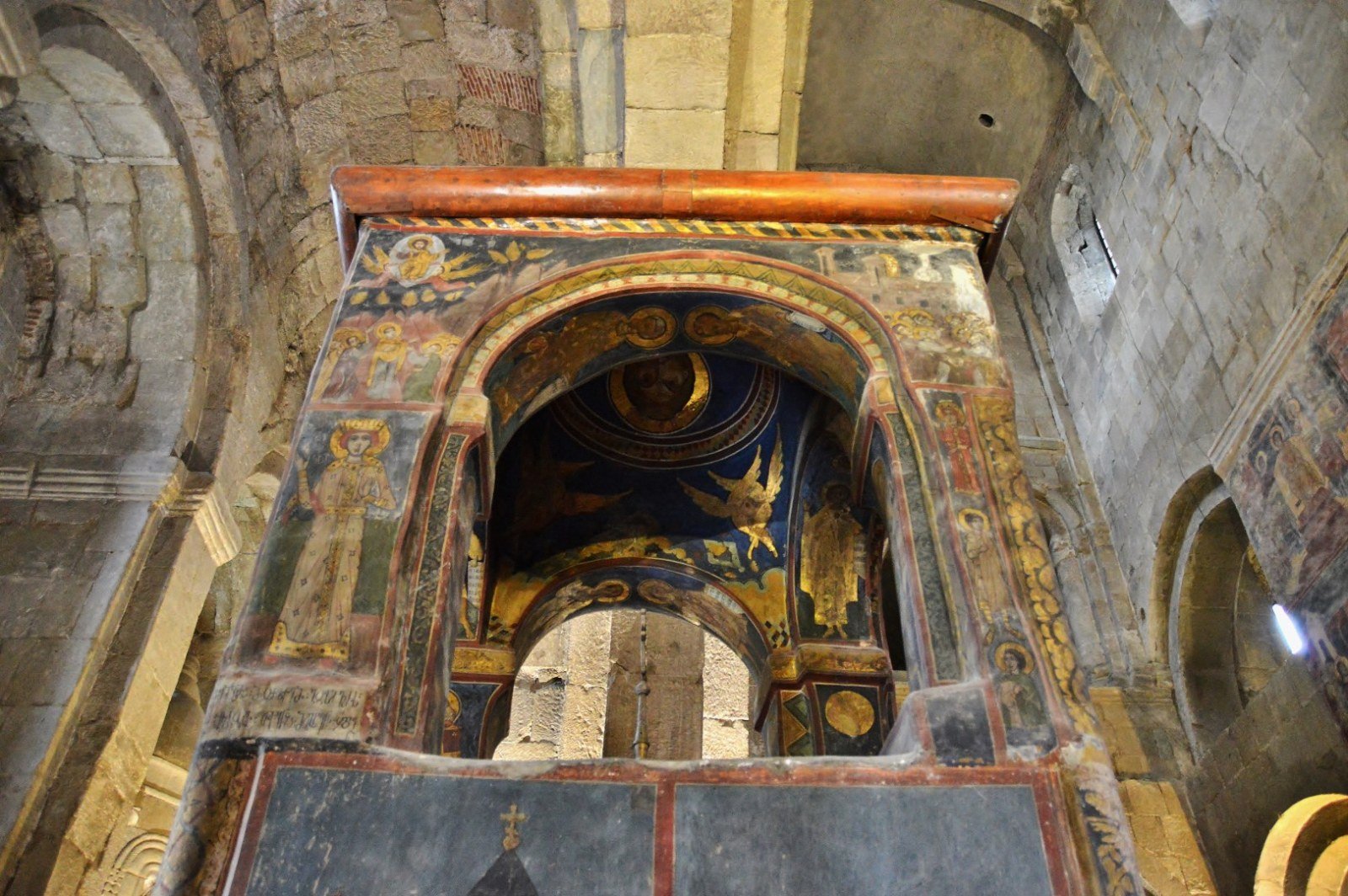
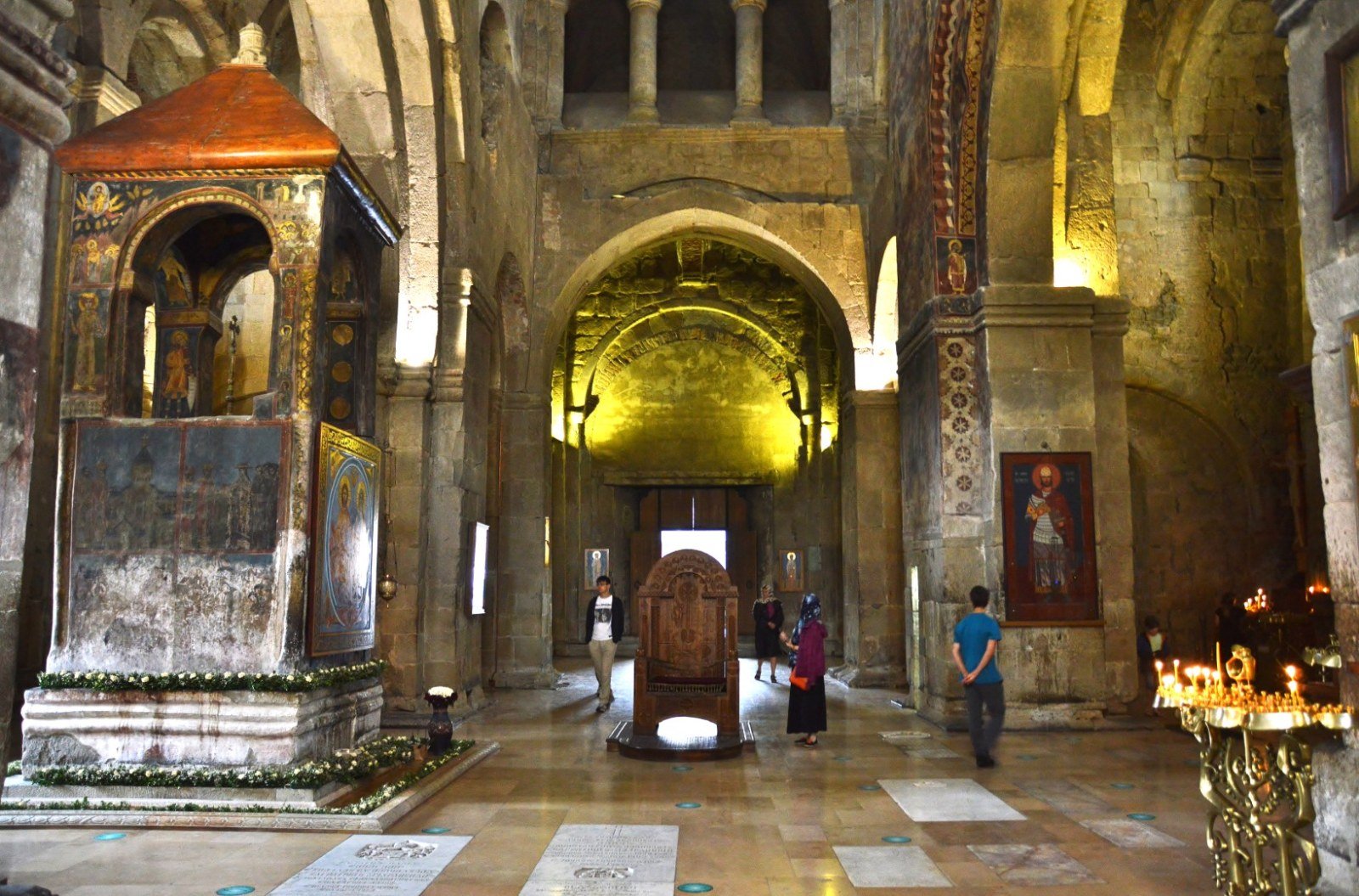
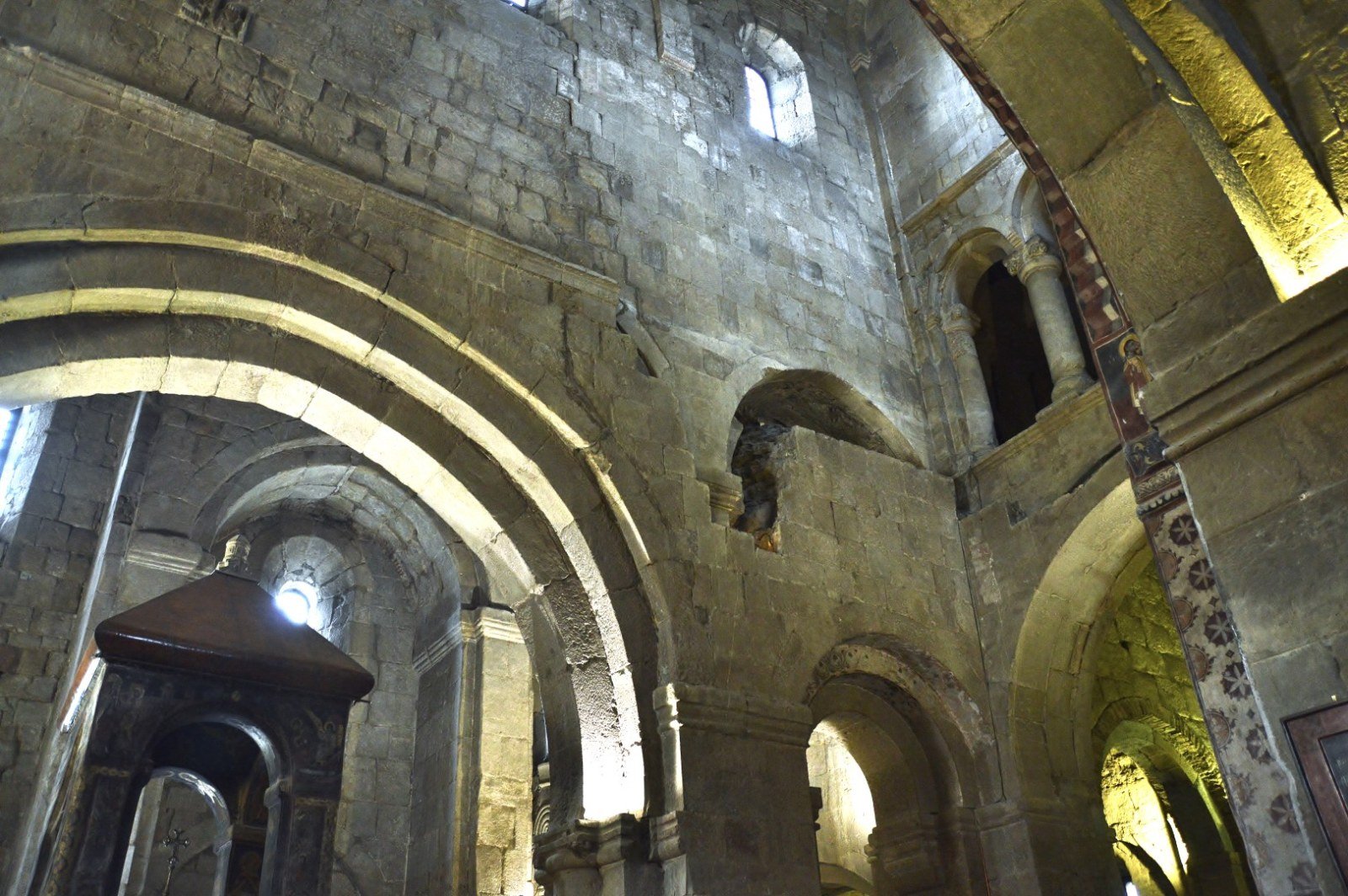
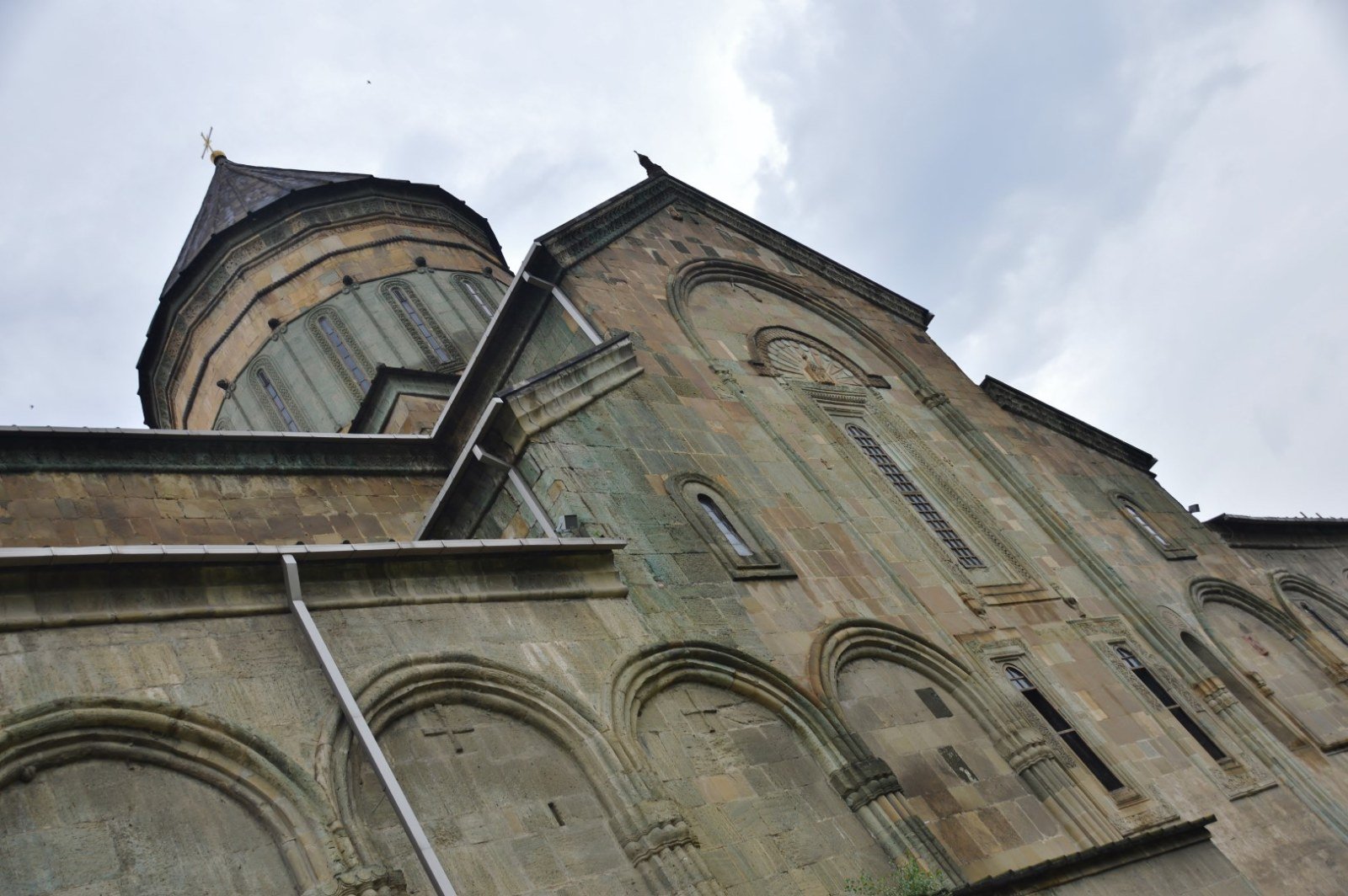
Approaching Mtskheta from Tbilisi along the motorway, the silhouette of Svetitskhoveli Cathedral appears before the town itself comes into view: the golden sandstone and the cylindrical dome rise above the low rooftops of the Mtkvari River valley. Inside the walled precinct, the scale of the building shifts your sense of space: the walls exceed twenty metres in height and the interior lies in a half-light warmed by the flicker of candles. The smell of wax and incense is constant. Medieval frescoes cover the side walls with elongated figures and ochre backgrounds that time has darkened in places.
Svetitskhoveli Cathedral remains a fully functioning liturgical temple. On any weekday morning a service is underway: the priest officiates, the faithful enter with lit candles and visitors move between the pillars without being stopped. There is no formal separation between the religious area and tourist zone. Move with discretion during services.
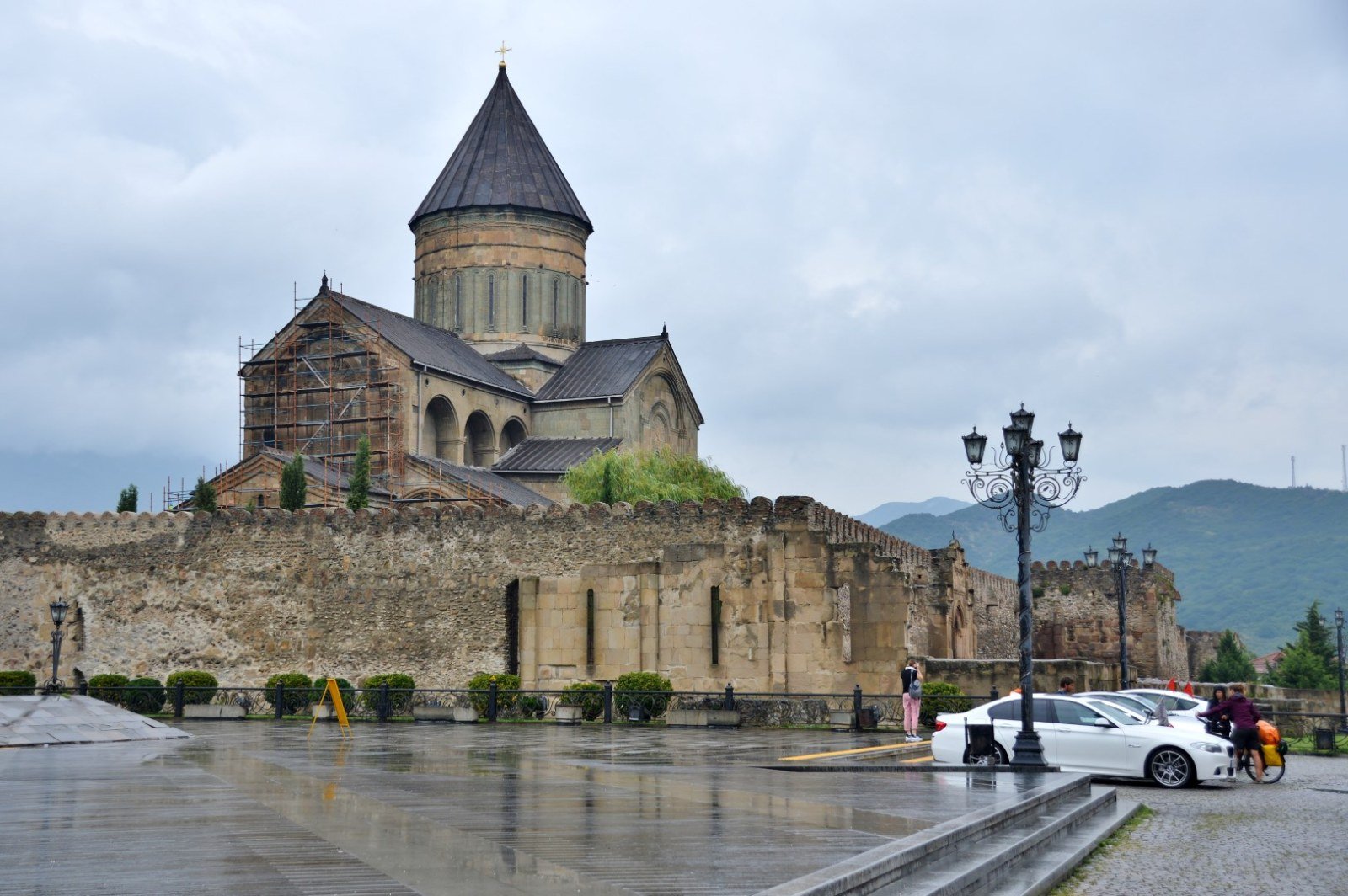
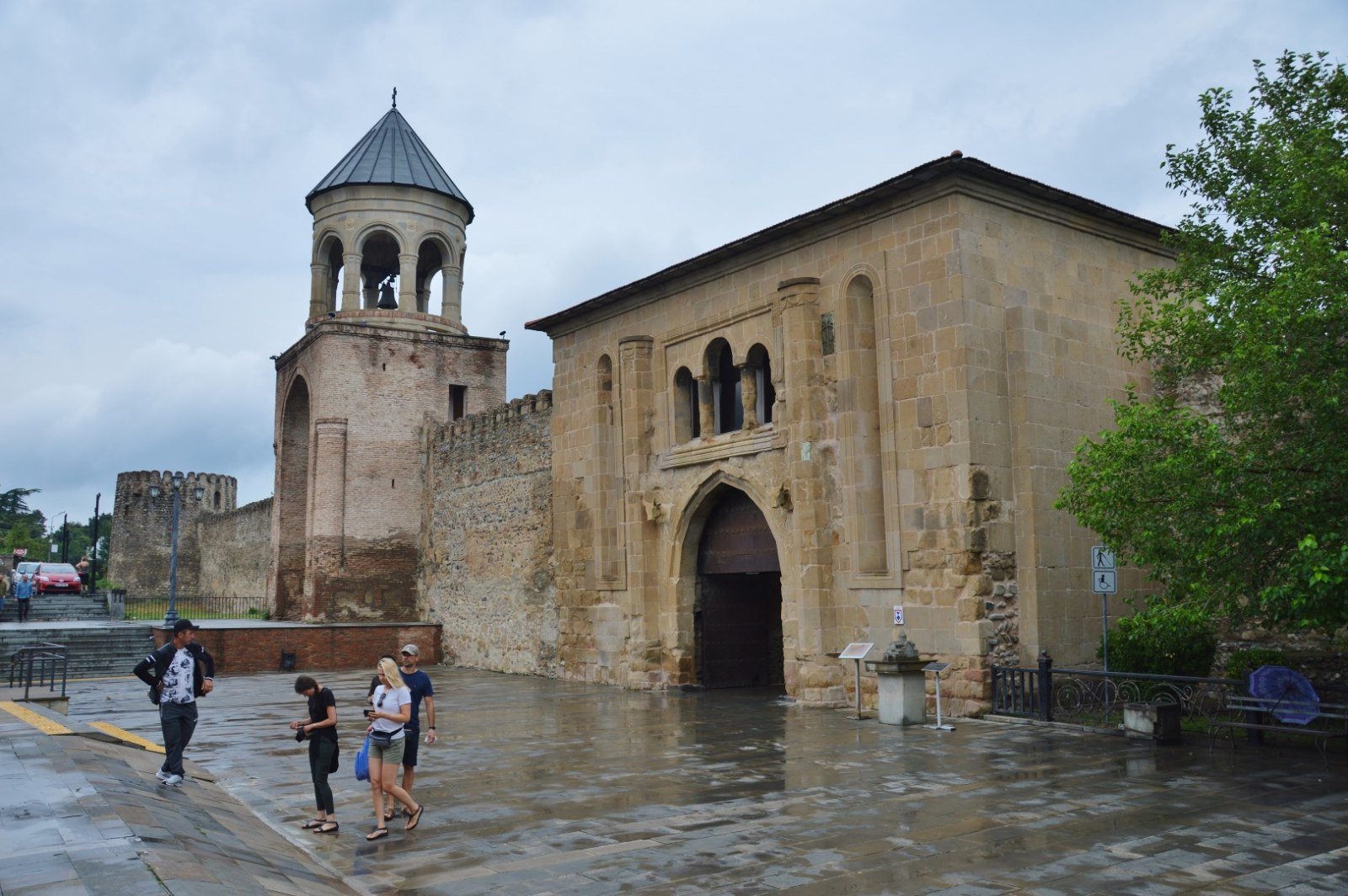
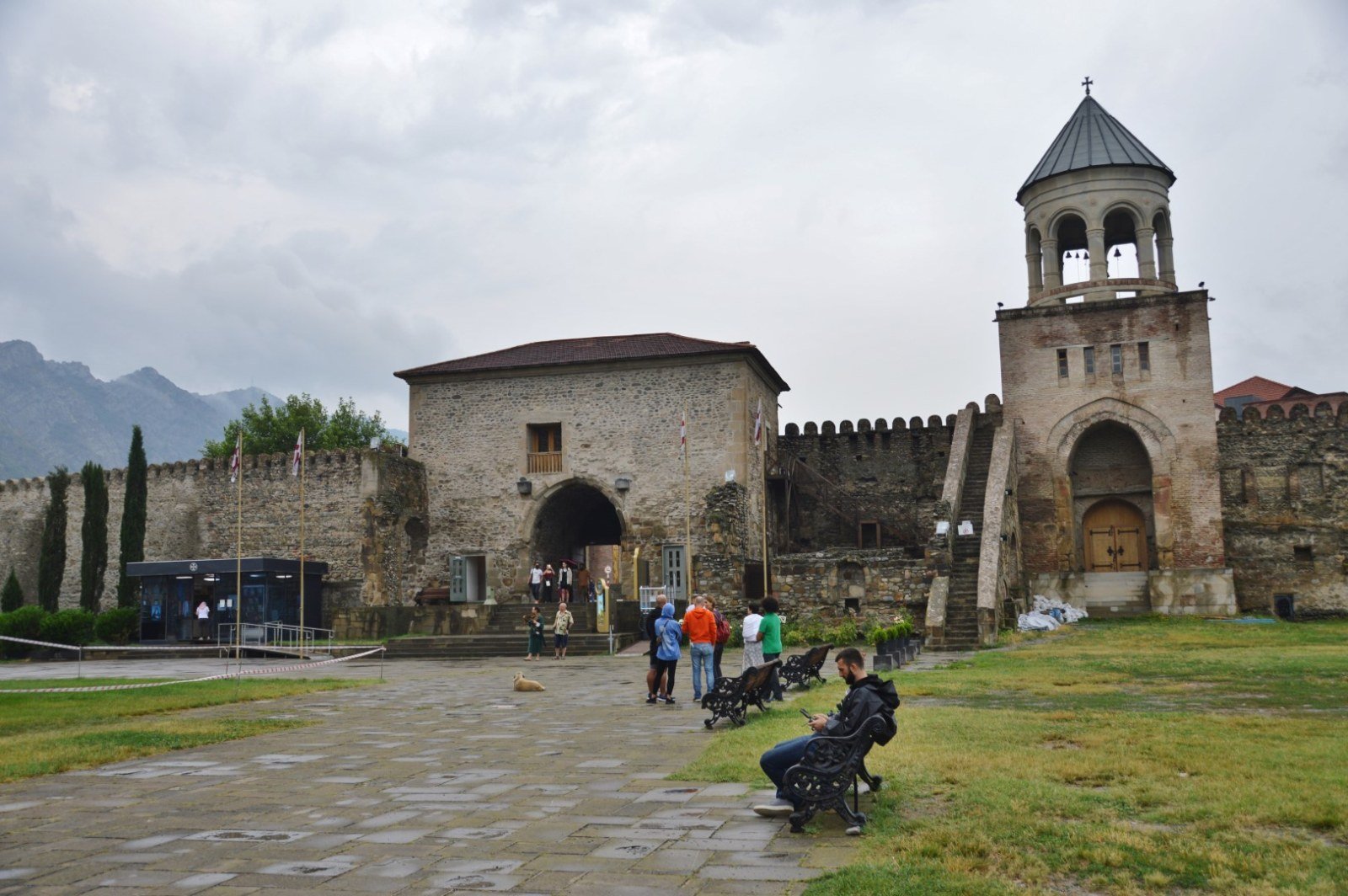
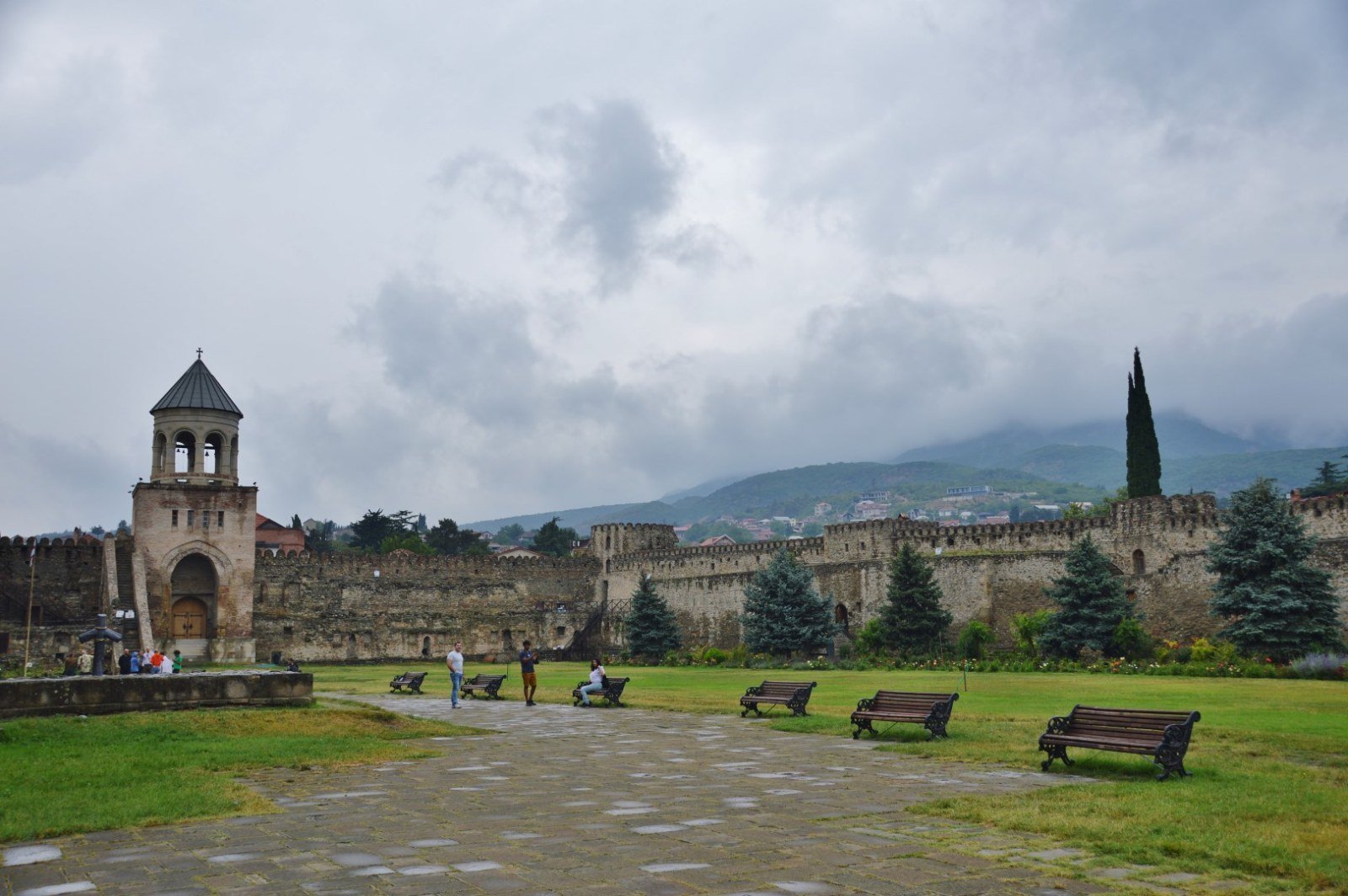
The exterior has its own rhythm: the perimeter wall with its towers allows a complete circuit on foot, and from the southwest corner you can see the confluence of the Aragvi River with the Mtkvari —the same landscape that made Mtskheta the capital of the ancient kingdom of Kartli. Entrance to the precinct is free; inside the cathedral a voluntary donation may be requested. There is informal bag storage for large backpacks near the entrance pavilion.
History
Mtskheta was the capital of the kingdom of Kartli until the 5th century and the place where Georgia officially adopted Christianity in 337 AD, through the work of Nino, the evangeliser venerated as a saint in Georgian tradition. The Svetitskhoveli Cathedral visited today was built in the 11th century by architect Arsukisdze on an earlier 4th-century basilica. Its name, Svetitskhoveli, means 'life-giving pillar' in Georgian, referring to a column that according to legend levitated during construction. Beneath the altar, tradition holds the burial place of Christ's tunic brought from Jerusalem by Elias, a Jew from Mtskheta present at the crucifixion. UNESCO declared the historic ensemble of Mtskheta a World Heritage Site in 1994.
What to see & do
- Cathedral interior The central nave with its stone pillars and 17th-century frescoes; the patriarchal throne to the right of the altar remains in active liturgical use. Light enters filtered and the half-light is part of the atmosphere.
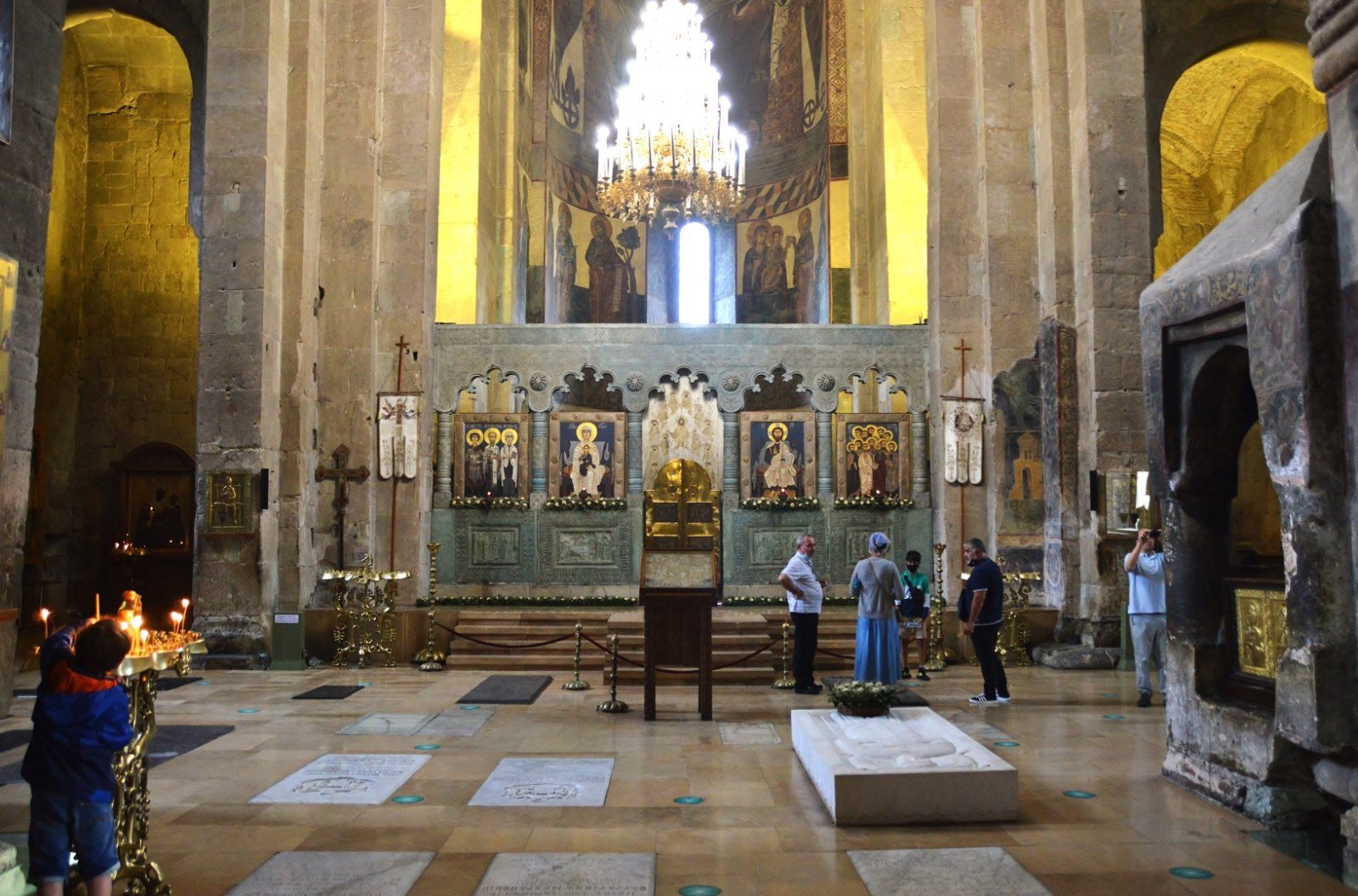
- Ciborium and tomb beneath the altar The spot where tradition places the burial of Christ's tunic and of Sidonia, the woman who brought it to Georgia. Pilgrims kneel on the flagstones; the ciborium above is a 17th-century structure with carved stone decoration.
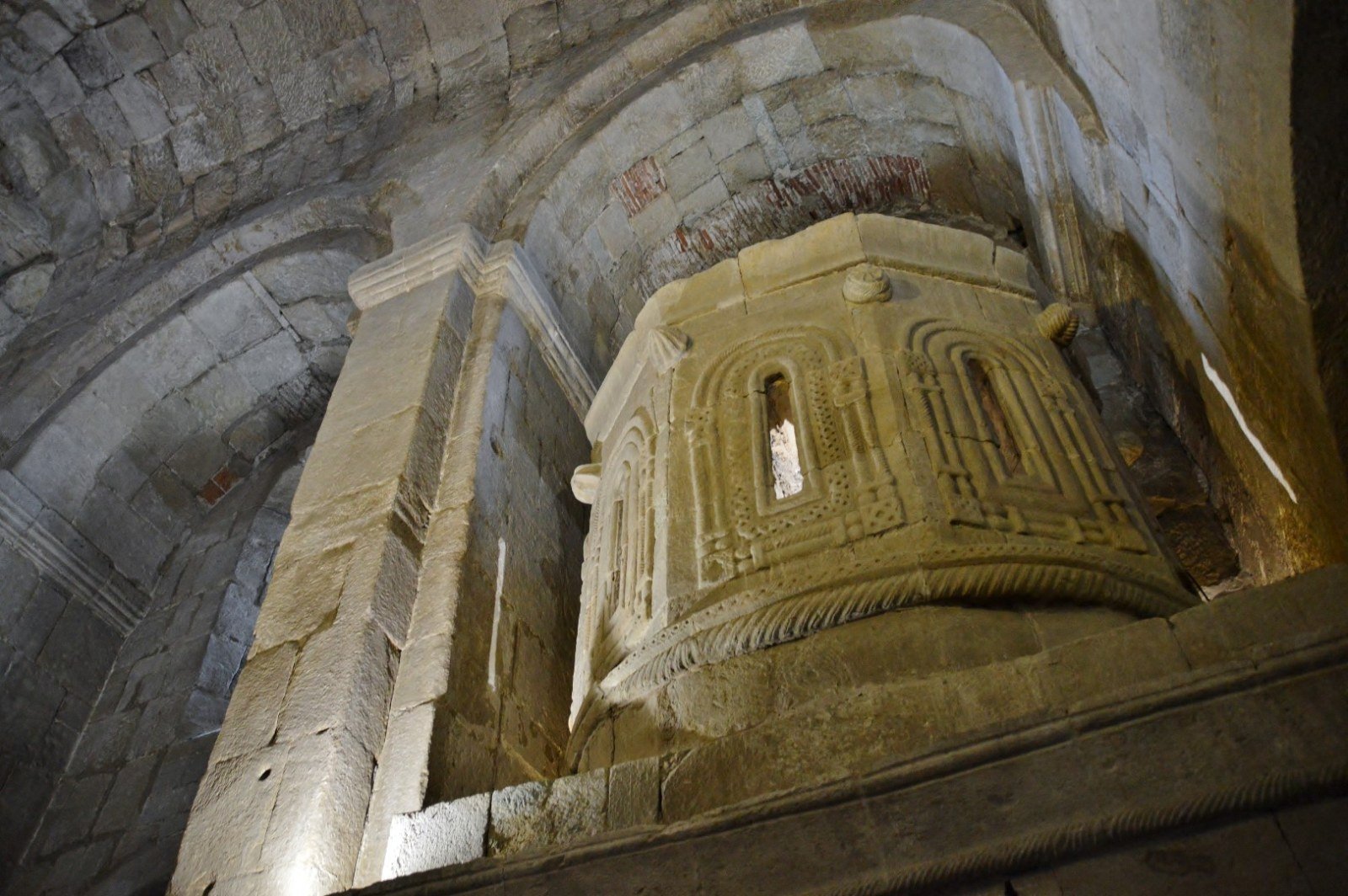
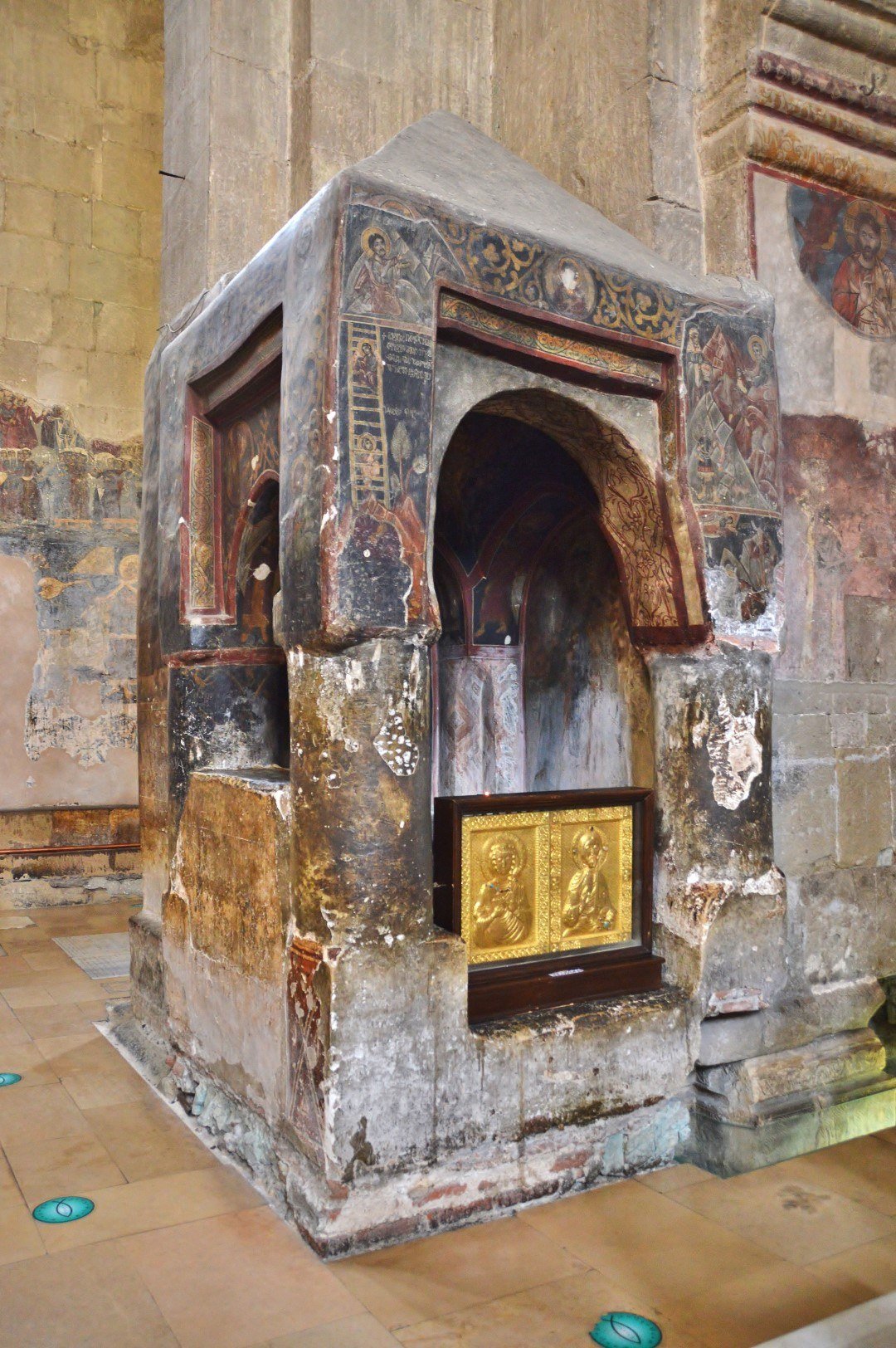
- Replica of the Chapel of the Holy Sepulchre A miniature built in the 15th century inside the side nave, with its own frescoes and surprisingly small dimensions. One of the least-known features — worth pausing at.
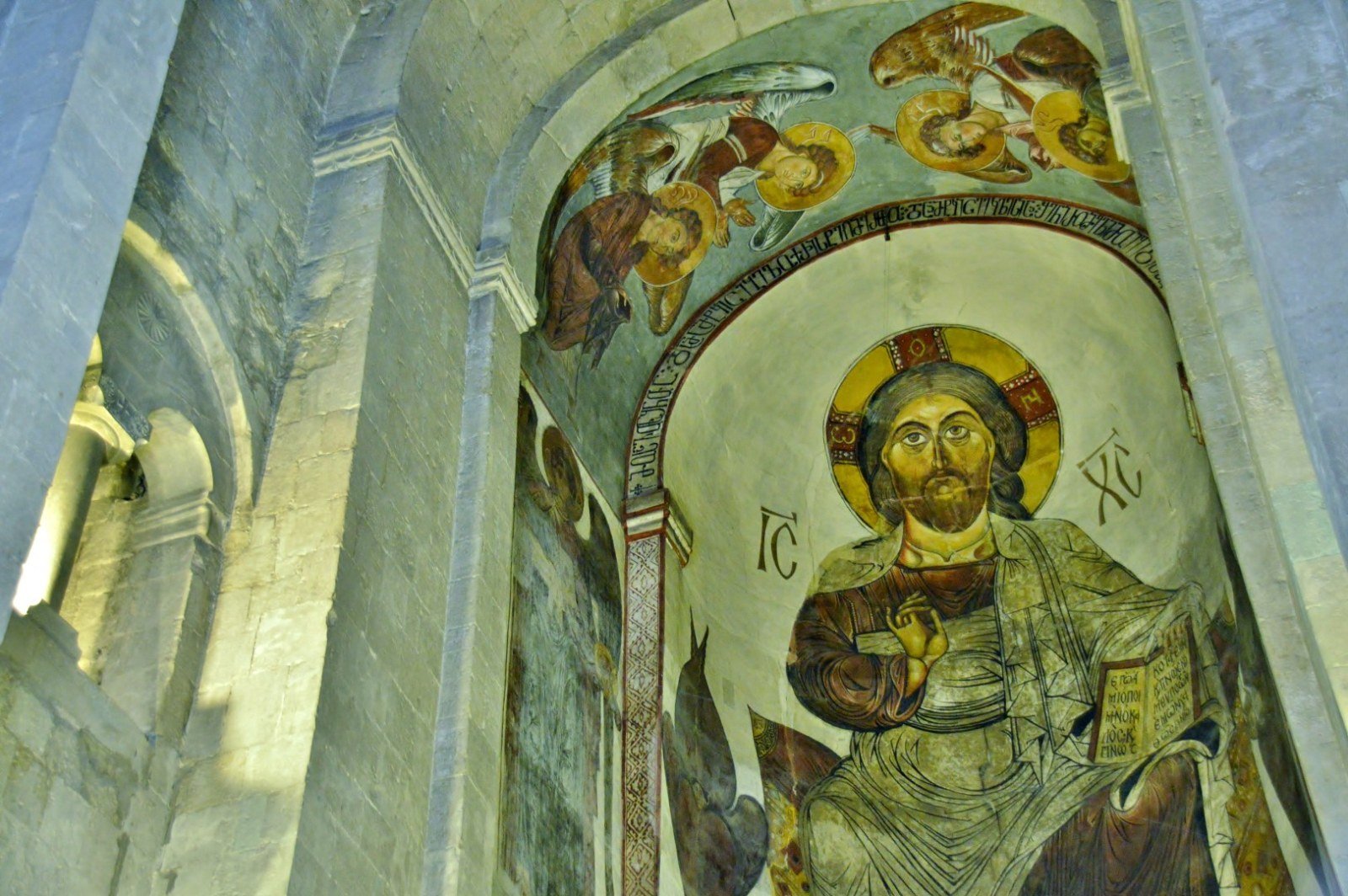
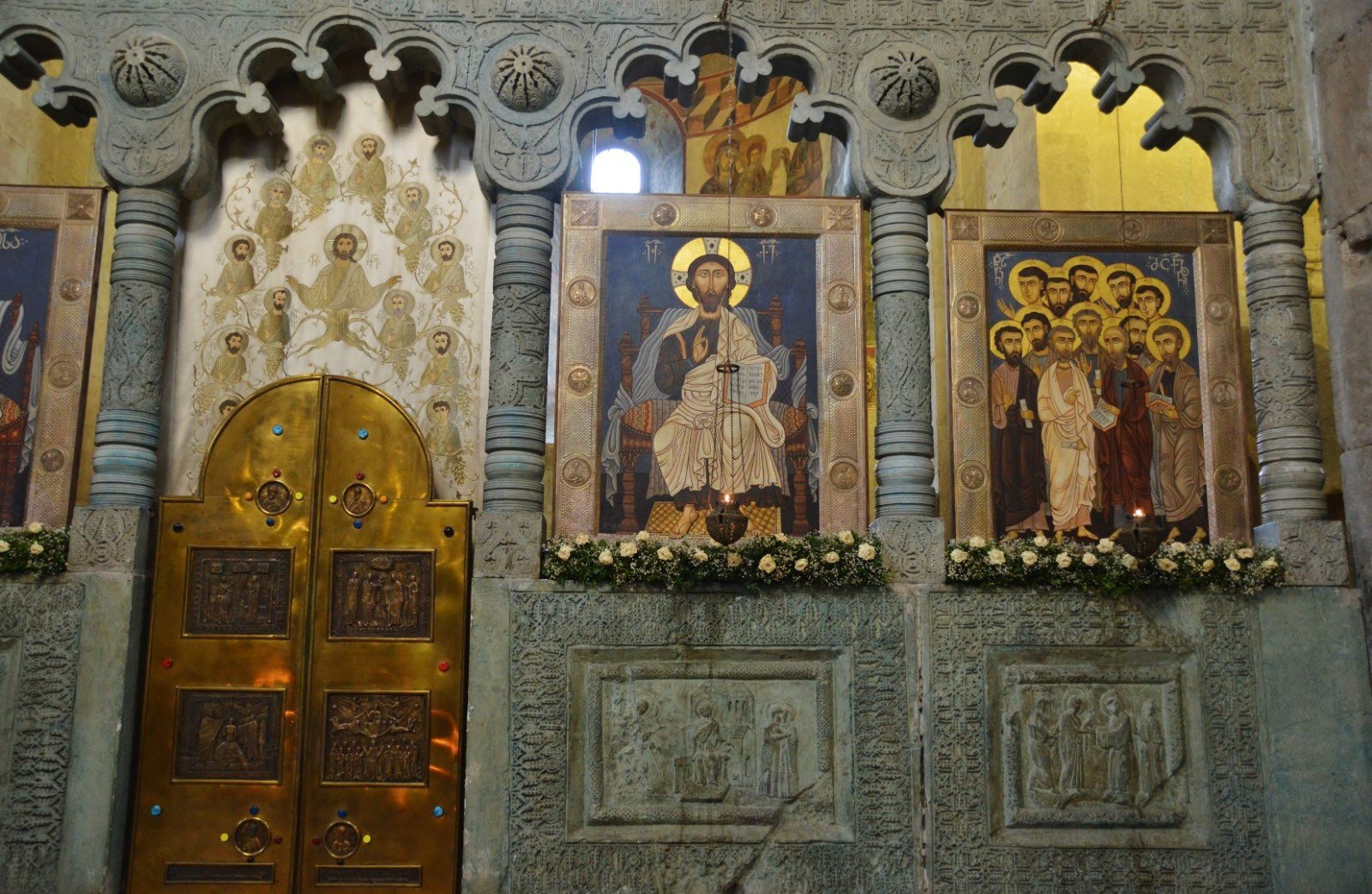
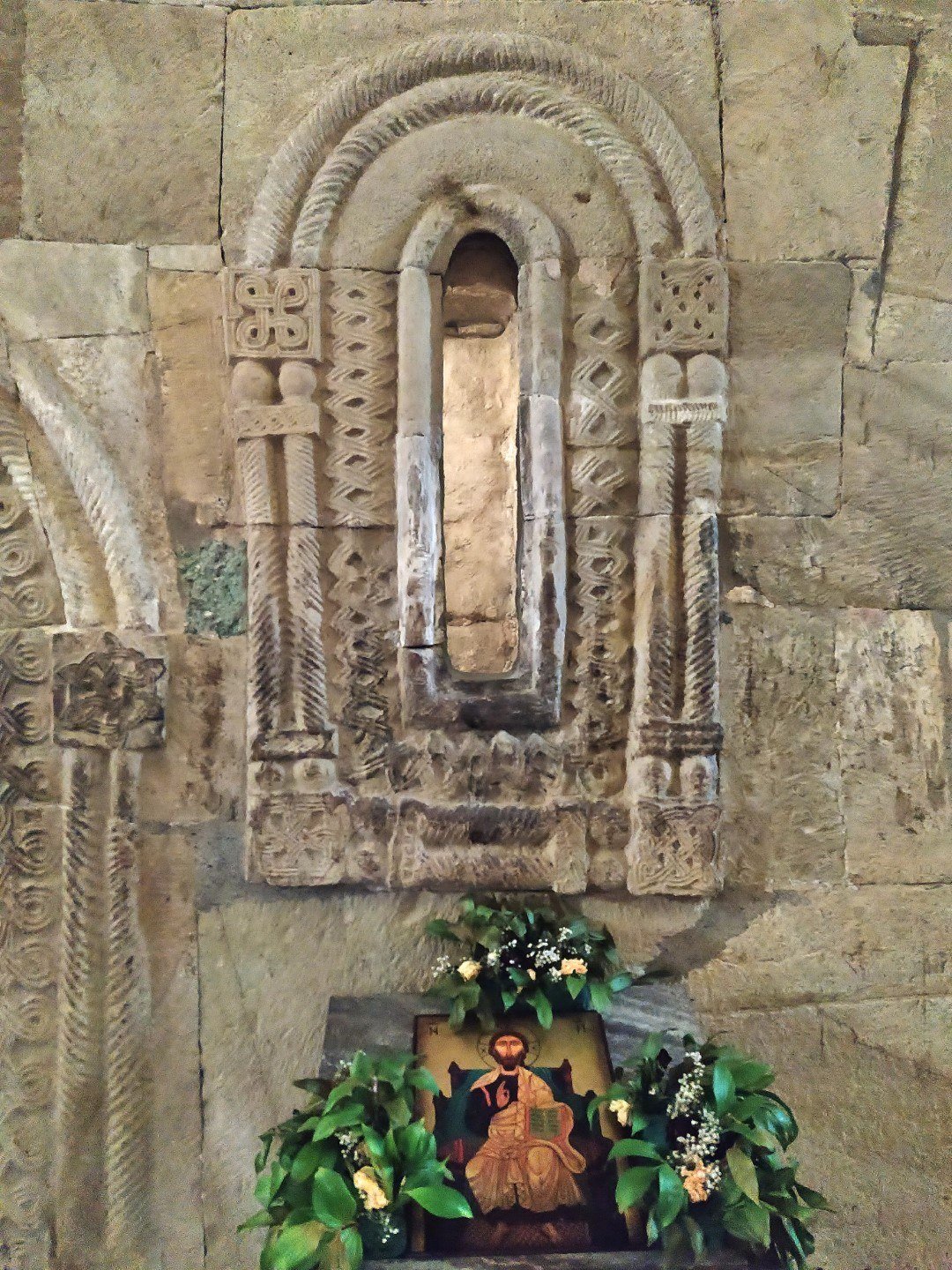
- Iconostasis and apse frescoes The right section of the iconostasis and the frescoes covering the altar apse are the best-preserved in the ensemble; the figures have a monumental scale that strikes from the nave.
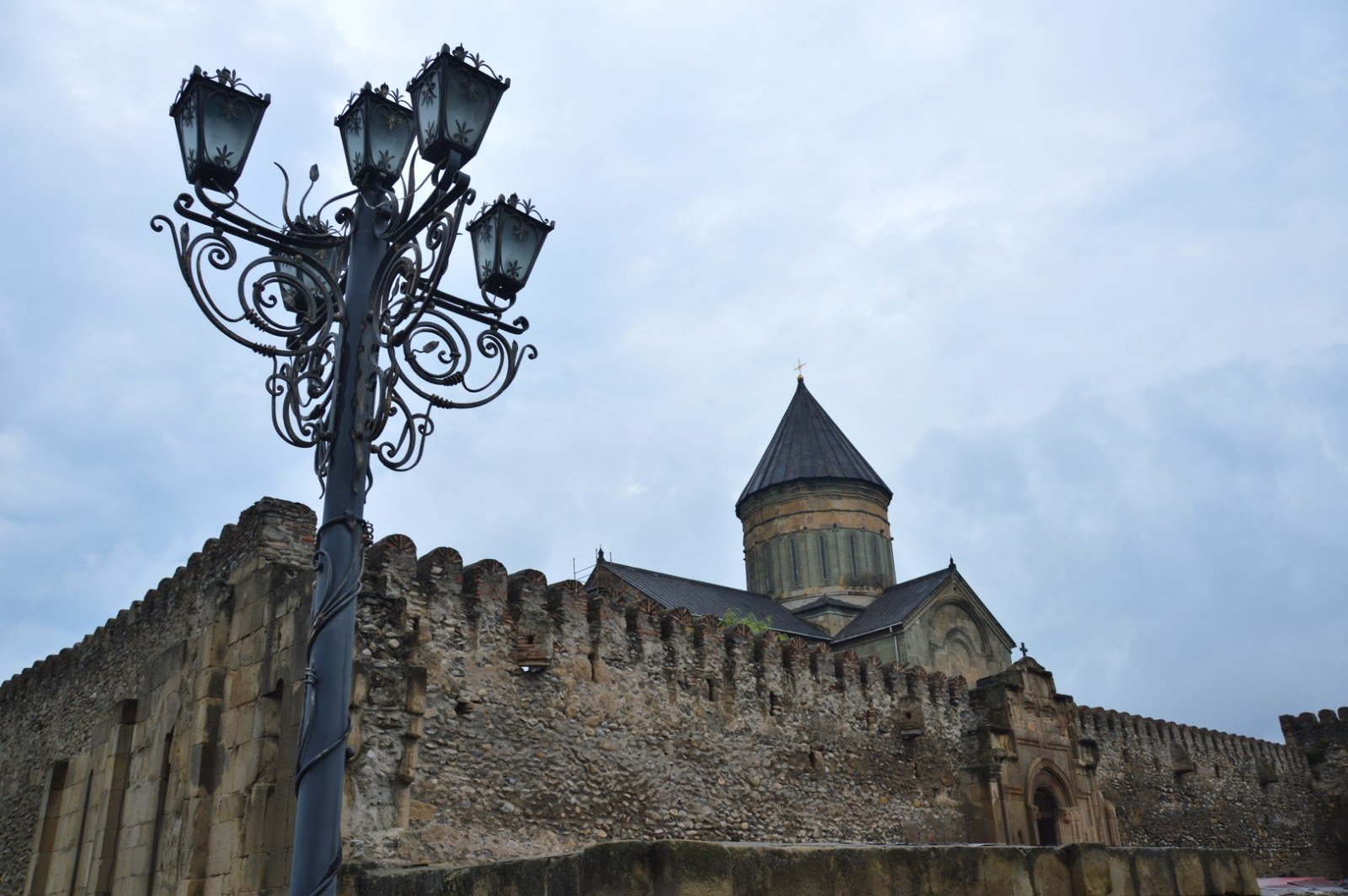
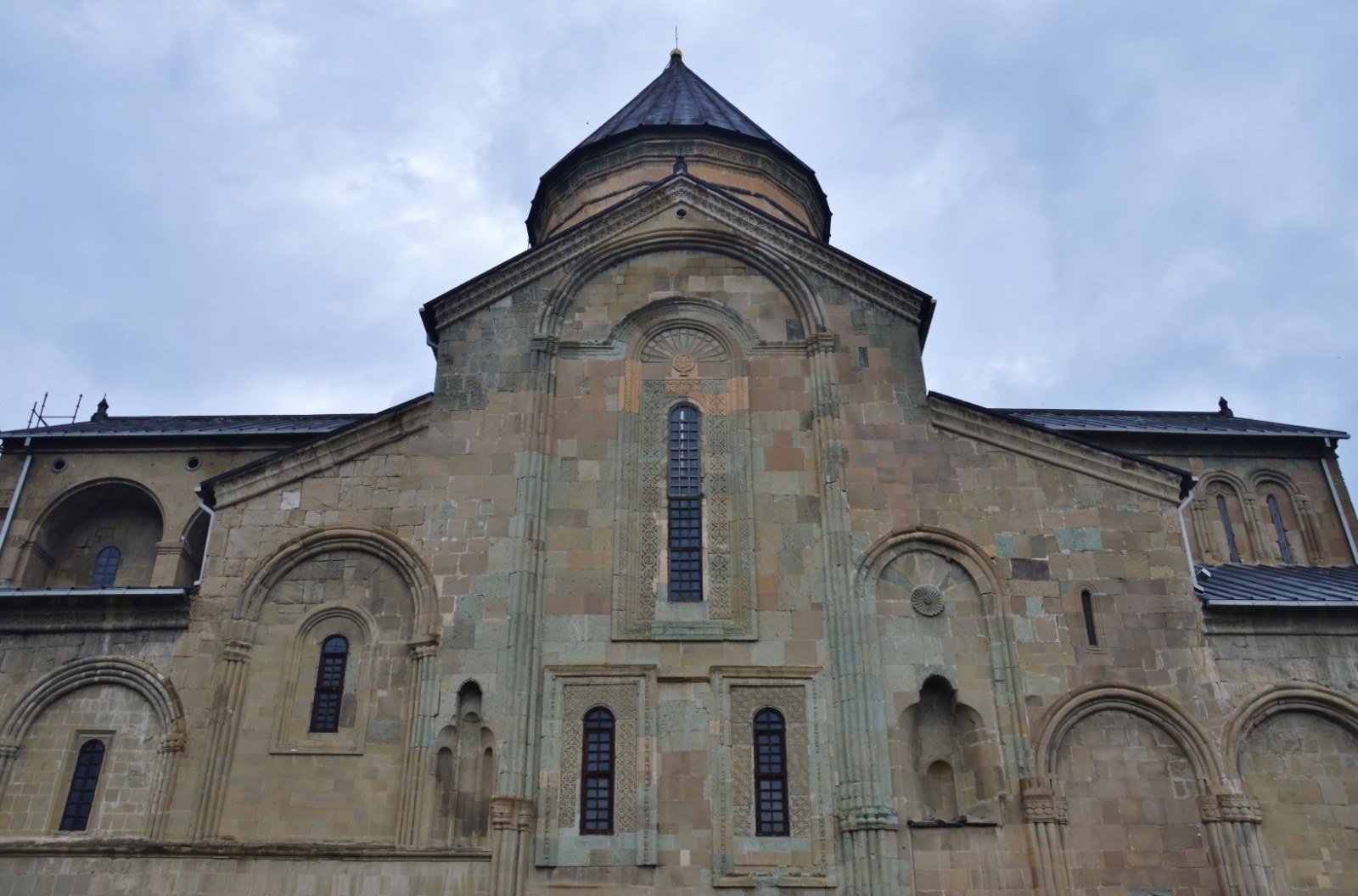
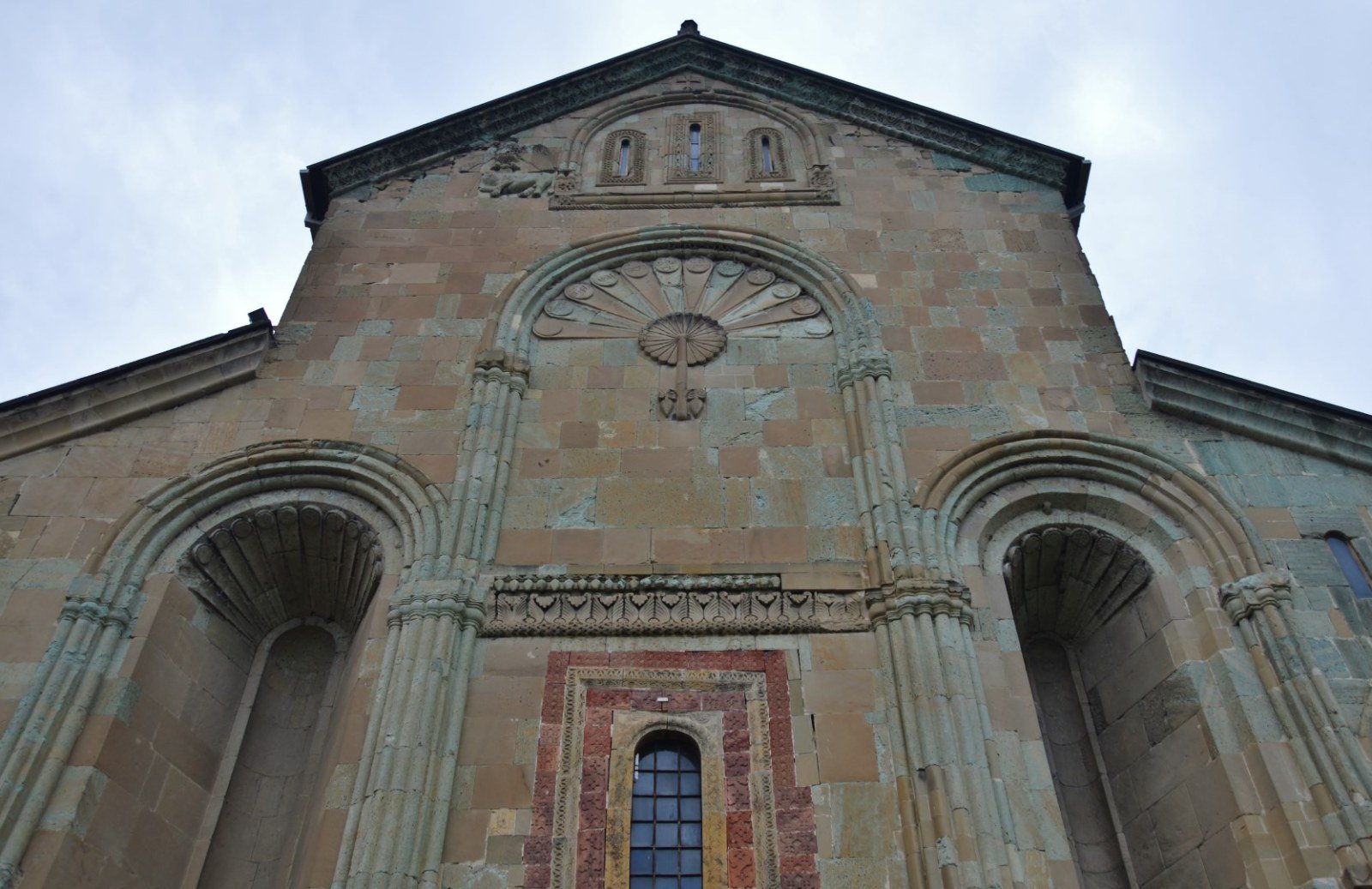
- Perimeter wall The walk around the exterior of the precinct, with its towers and reliefs on the eastern facades, also allows you to see the bell tower and entrance pavilion from outside. A full circuit takes about fifteen minutes.
- Views from the precinct From the southwest corner of the wall you can see the confluence of the Aragvi River and the Mtkvari, and on clear days the silhouette of Jvari Church atop the hill opposite.
Photo Gallery
How to get there
Mtskheta is 20 km northwest of Tbilisi. From Didube station, marshrutkas run every few minutes (about 20–25 minutes, 1 lari). By taxi from the centre of Tbilisi, it takes around 25–30 minutes along the motorway; the fare is roughly 15–20 GEL on apps like Bolt or Yandex. Svetitskhoveli Cathedral is ten minutes on foot from the marshrutka stop. It combines well in a day trip with Jvari Church and Shio-Mgvime monastery.
Best time to visit
Mtskheta can be visited year-round. Spring (April–May) and autumn (September–October) offer mild temperatures and fewer coach groups during the middle of the day. In summer the precinct fills at weekends with buses from Tbilisi; visiting on weekdays or before ten in the morning helps. Winter is cold but rarely snowy, and the low winter light gives a particularly warm tone to the golden sandstone of Svetitskhoveli Cathedral.
Photo: Iberogeorgia · Propietario