
Shaki Waterfall
Շաքիի ջրվեժ
18-metre waterfall over black basalt in southern Armenia, accessible from the road between Goris and Kapan in the Syunik region.
Location in the Caucasus
Description
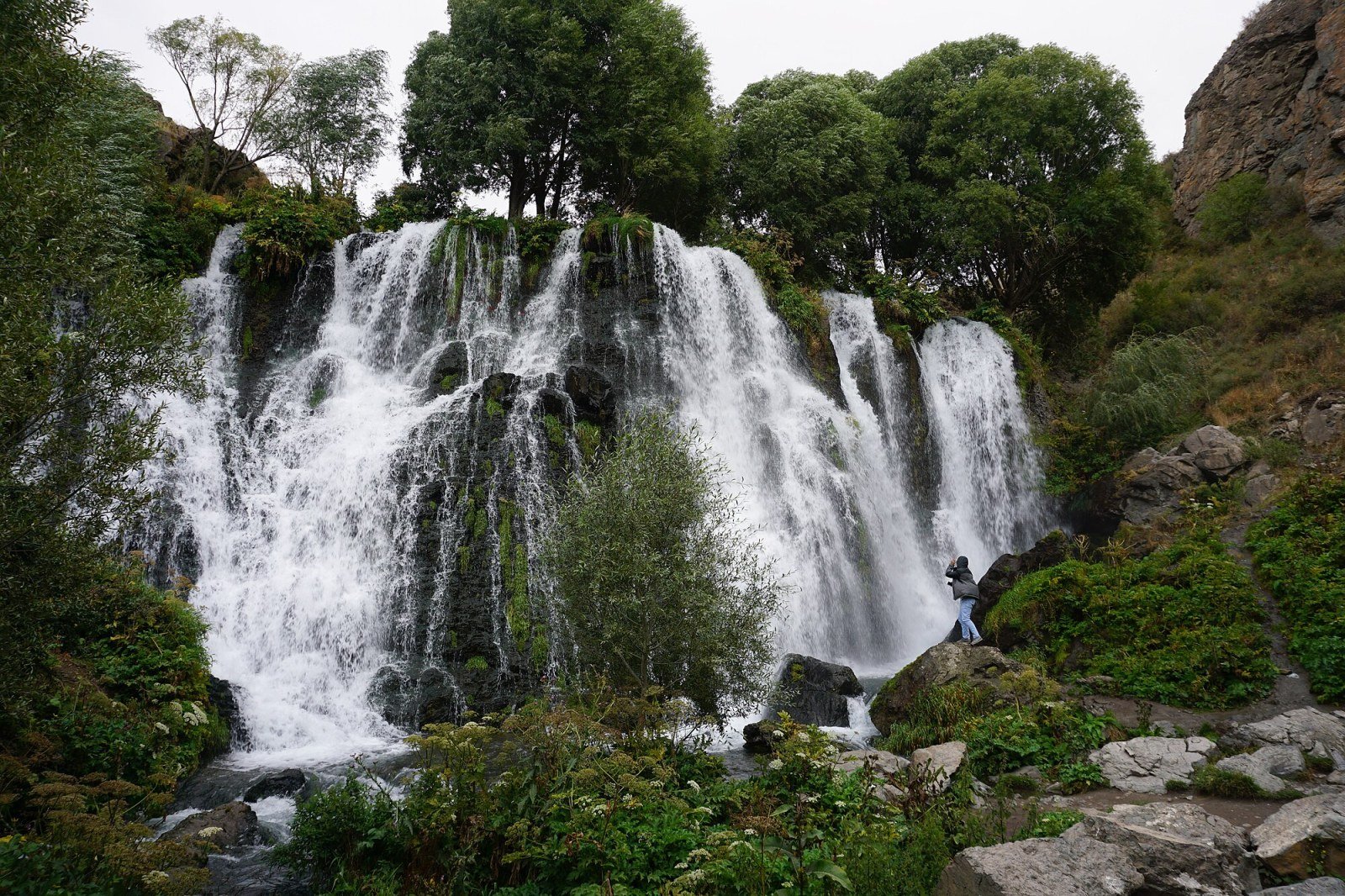
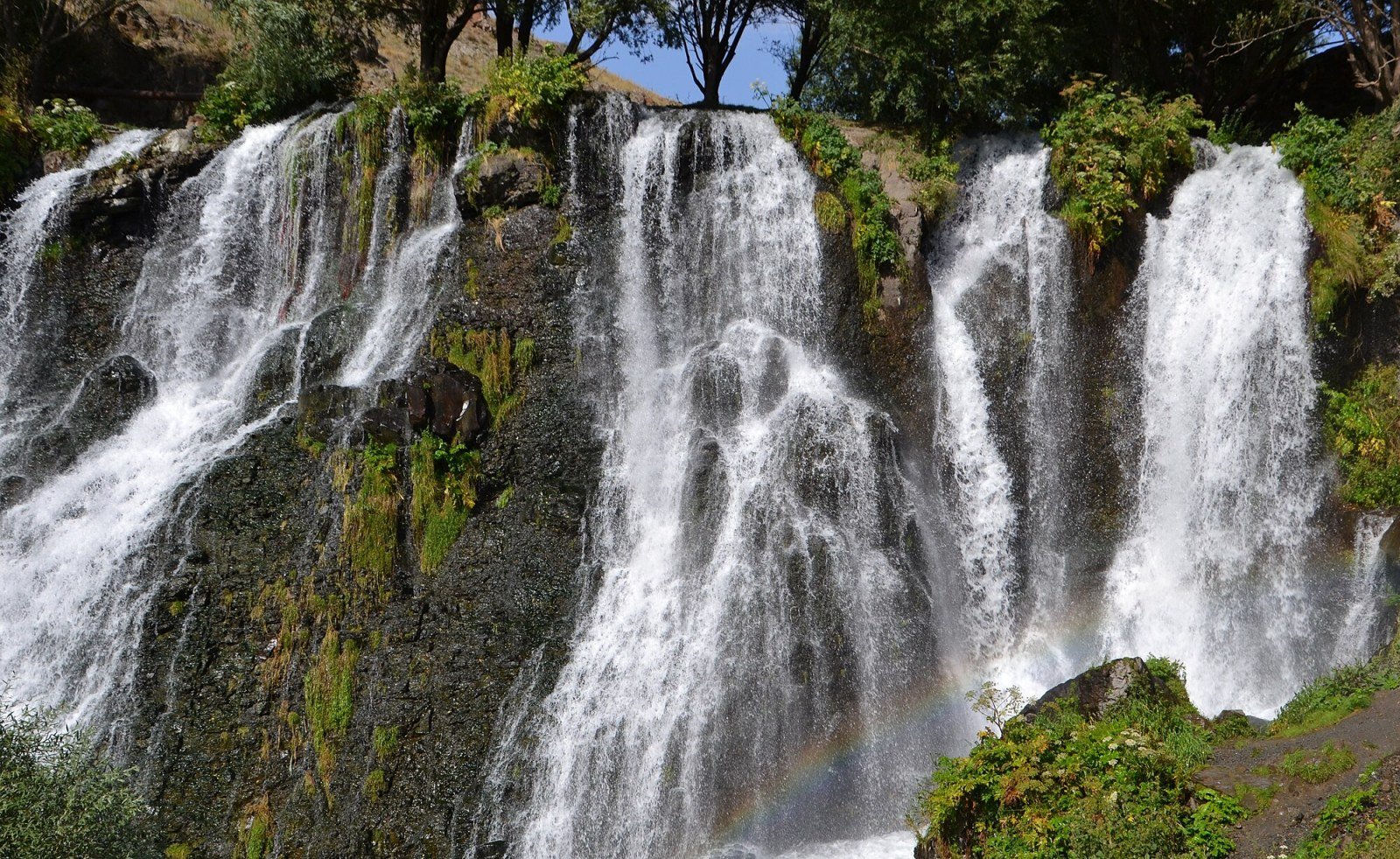
Shaki Waterfall drops around 18 metres down a moss-covered wall of black basalt in the gorge of the Shaki River, a tributary of the Vorotan. The path from the roadside of the M2 highway takes only five minutes, but the change in atmosphere is immediate: riparian vegetation — aspens, willows, the occasional oak — closes in overhead and the air turns cool and humid even in thirty-degree heat outside. The ground is soft earth with exposed roots; no technical equipment is needed, but grip-soled footwear prevents slipping.
In spring and early summer the flow is generous and the spray soaks anyone who gets within four metres. By August the flow drops considerably and Shaki Waterfall loses some of its character; the scenery is still pleasant but it is worth managing expectations. The greenish-black rock, the mossy edges and the small pool that forms at the base make mid-morning the best light for photography, when the sun enters the gorge at an angle.
There are no facilities by the waterfall — no café, no toilets, no ticket booth — which keeps the atmosphere peaceful. Parking is informal, on a widened shoulder of the M2. Goris is less than 30 km to the north and Kapan around 35 km to the south.
History
Shaki Waterfall takes its name from the Shaki River, a toponym of ancient Armenian origin. The area is part of the historic region of Syunik, one of the Armenian territories with the most continuous human presence in the Caucasus, whose medieval settlements such as Kapan and the village of Shaki itself have been inhabited since at least the tenth century. The Vorotan gorge served for centuries as a natural corridor between the inner valleys and the southern passes towards what is now Iran. Environmental protection of the area falls under the Shikahogh Reserve, which covers much of the Syunik forest and is one of the most extensive mixed-forest refuges in Armenia.
What to see & do
- Main drop over basalt The 18-metre fall over greenish-black rock is the central attraction; between April and June the roar can be heard from the parking area and the spray soaks clothing within seconds.
- Riverside path The approximately 300-metre track from the M2 highway passes through a tunnel of dense vegetation — willows, aspens, oaks — with the constant sound of water and a humid atmosphere even in summer.
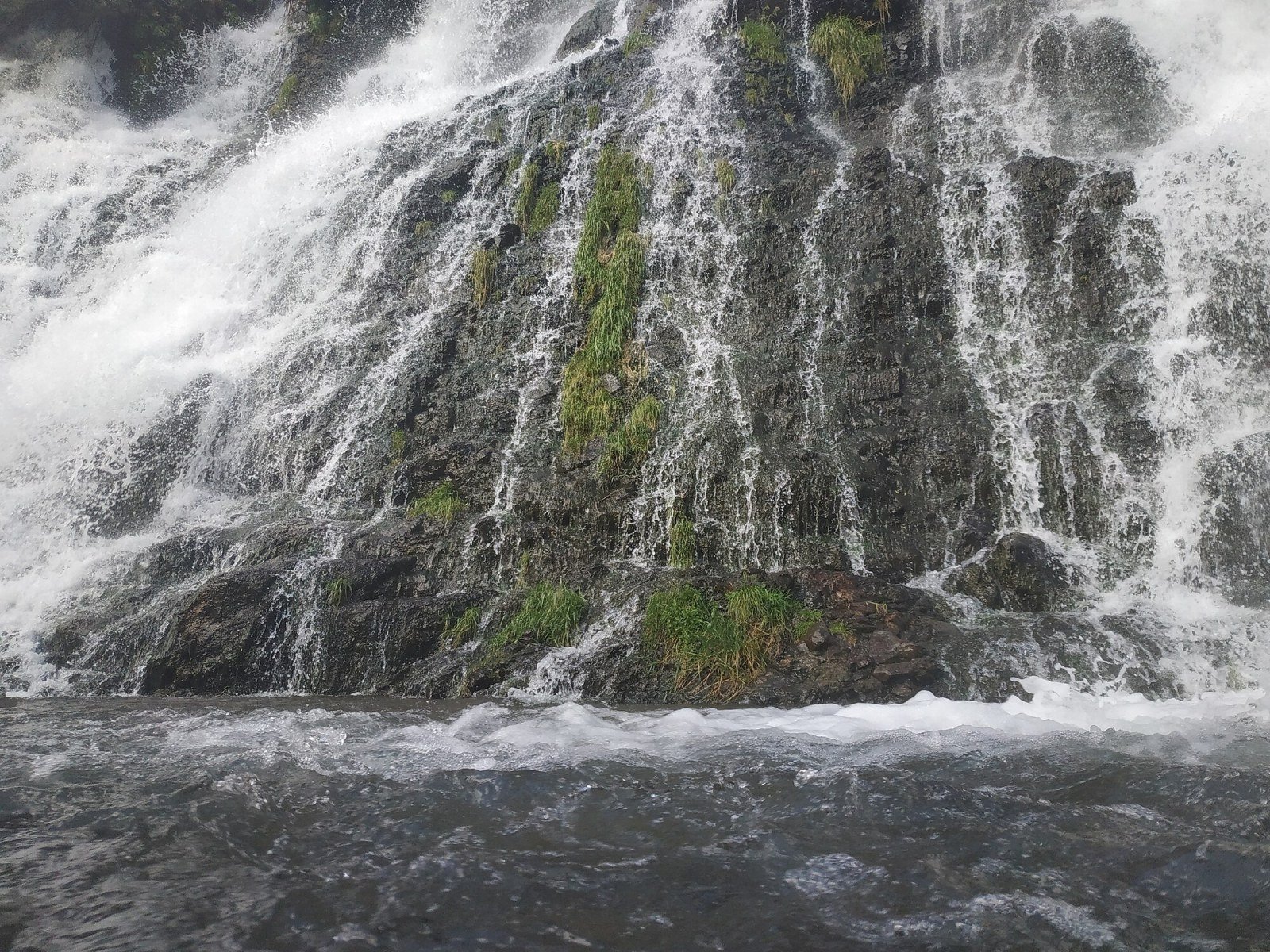
- Natural pool at the base In spring a small pool forms at the foot of the fall; too cold for swimming, but photogenic in mid-morning light when the sun enters the gorge.
- Views of the Vorotan gorge From the widened shoulder where visitors park, the rocky walls of the Vorotan valley and the river through dense vegetation are visible — a good stopping point on the route between Goris and Kapan.
- Shikahogh Reserve surroundings The forest around the waterfall is part of the protected area of the Shikahogh Reserve, with well-preserved riparian flora and occasional sightings of birds of prey over the gorge.
Photo gallery
How to get there
Shaki Waterfall is beside the M2 highway, about 28 km south of Goris and 35 km north of Kapan. By car from Goris it takes around 25 minutes. There is no direct public transport; the most practical option is to rent a car or take a taxi from Goris or Kapan (approximately 3,000–4,000 drams). From Yerevan, Goris is about 240 km along the M2, around 3.5 hours.
Best time to visit
April, May and June are the best months: snowmelt feeds the Shaki River at its maximum flow and the gorge vegetation is at its greenest. By July the water level drops; August can disappoint visitors looking for a full torrent. September recovers some flow with the first rains and sees fewer visitors. In winter the M2 highway can be icy and the waterfall partially frozen, creating a different landscape that requires caution.
More information
Photo: Dav Sargsyan · CC BY-SA 4.0